Attractions & Natural Wonders · Yemen
Why do dragon's blood trees grow on Socotra?
The umbrella-shaped trees are survivors of ancient forests that vanished from the mainland, kept alive on an isolated island by monsoon rain and mist.
By Globeway Editorial · 13 October 2026
The short answer
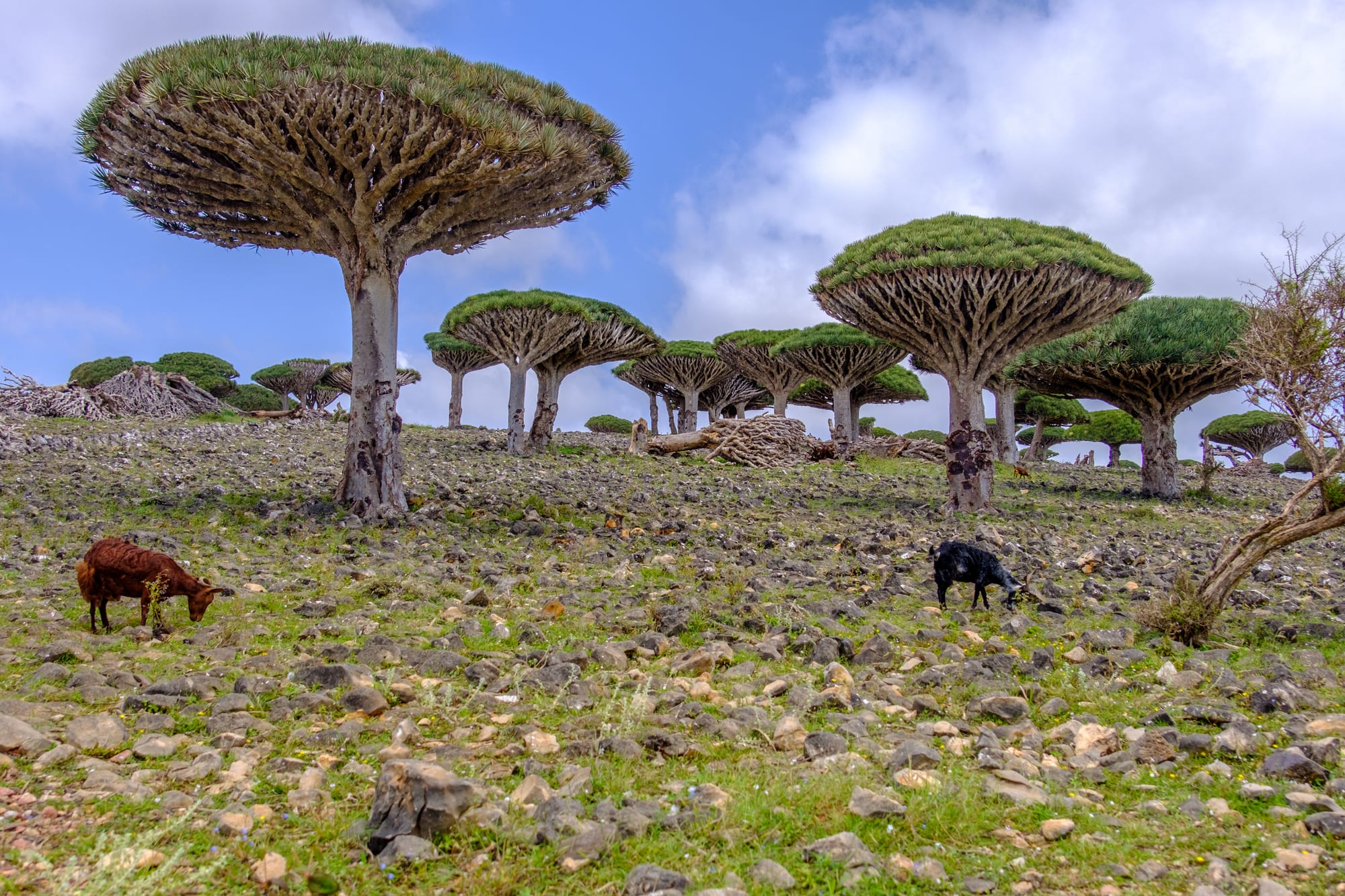
The dragon's blood tree, Dracaena cinnabari, grows on Socotra because the island is one of the last places where the world it evolved in still survives. Botanists consider it a remnant of subtropical forests that grew millions of years ago, in the Miocene and Pliocene epochs, and that have almost vanished as North Africa turned to desert. Socotra broke away from the mainland long ago and has been isolated ever since, and its mountains catch monsoon rain and mist. The tree hung on there while its habitat disappeared everywhere else.
It is also superbly built for the island's harsh conditions. Its dense, umbrella-shaped crown and tough leaves help it save water through long dry seasons, and it grows in a way most plants of its kind cannot. Today, though, the same island that sheltered it is drying out further, and the tree is struggling to produce a new generation.
An island cut adrift
Socotra lies in the Arabian Sea, 232 kilometres east of the Horn of Africa and 380 kilometres south of the Arabian Peninsula. It belongs to Yemen politically, but geologically it is a piece of Africa: a fragment of continent linked to the Somali plate. It was once part of the supercontinent Gondwana and broke away in the Miocene epoch, in the same rifting that opened the Gulf of Aden. That makes it one of the most isolated landmasses of continental, rather than volcanic, origin on Earth.
Long isolation and extreme local climates have made Socotra a laboratory of evolution. Of its 835 kinds of vascular plants, 37 per cent are found nowhere else; so are 90 per cent of its reptiles and 95 per cent of its land snails. The island's plants share similarities with those of north-east Africa and the Indian subcontinent, and the dragon's blood tree, perhaps the most famous of its endemic species, is the emblem of all this. It is the national tree of Yemen.
Relics of a vanished forest
The tree is thought to descend from what botanists call the Tethyan flora, and is regarded as a survivor of the subtropical forests of the Miocene and Pliocene epochs. As North Africa turned to desert, those forests almost disappeared. A related species, Dracaena draco, grows in the Canary Islands, Madeira and north-west Africa.
What saved the trees on Socotra was water arriving from the sea. The island's central massif, the Hajhir Mountains, rises to 1,503 metres. During the north-east monsoon from October to December, moist air is forced up the slopes, and the highest inland areas receive an average of as much as 800 millimetres of rain a year, with more than 250 millimetres a month in November and December. These higher, wetter places, along with cliffs and escarpments that catch more rain and mist than the rest of the island, act as refuges where species can survive even as the lowlands bake.
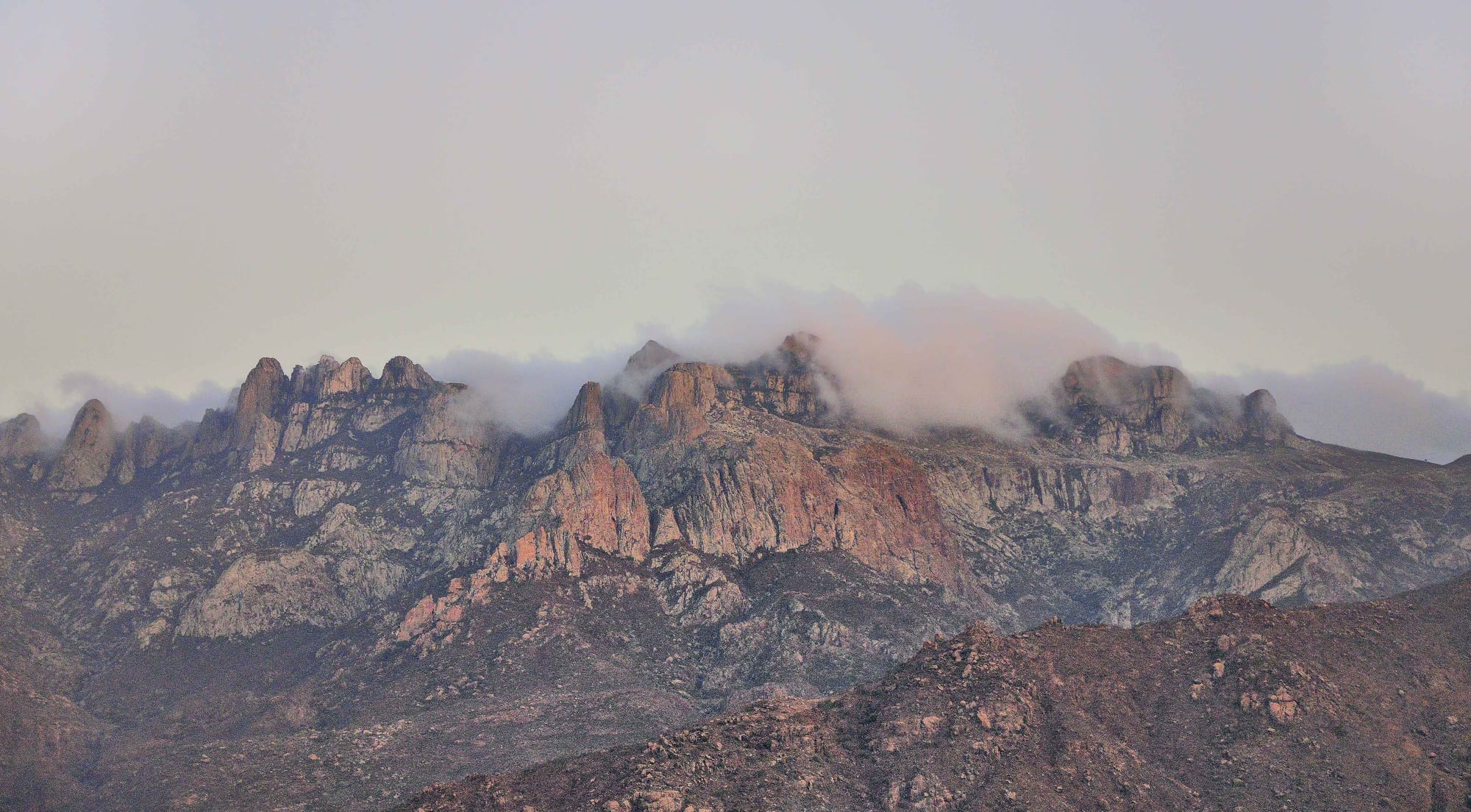
Species in these wet refuges are twice as likely to be endemic as those on the rest of the island, and the Hajhir massif is the largest of them.
Built like an umbrella
The tree's strange shape is part of the answer too. Like palms, it is a monocot, a group of plants that usually cannot thicken their stems as they grow. The dragon's blood tree breaks that rule: its trunk undergoes secondary growth, thickening over time to support a broad crown. Its branches fork again and again in pairs, and its long, stiff leaves, up to 60 centimetres long, grow only in dense rosettes at the tips of the youngest branches. The result is the famous upturned umbrella, a tree up to 9 metres tall with a crown up to 12 metres across.
That dense crown is an adaptation to arid conditions shaped by the moisture in the air, and its leathery, hard leaves cut down water loss. Several of Socotra's endemic plants have also adopted a strategy of longevity, putting their energy into a long individual life rather than frequent reproduction. That patience works on an island with long droughts, but it leaves them exposed when conditions change.
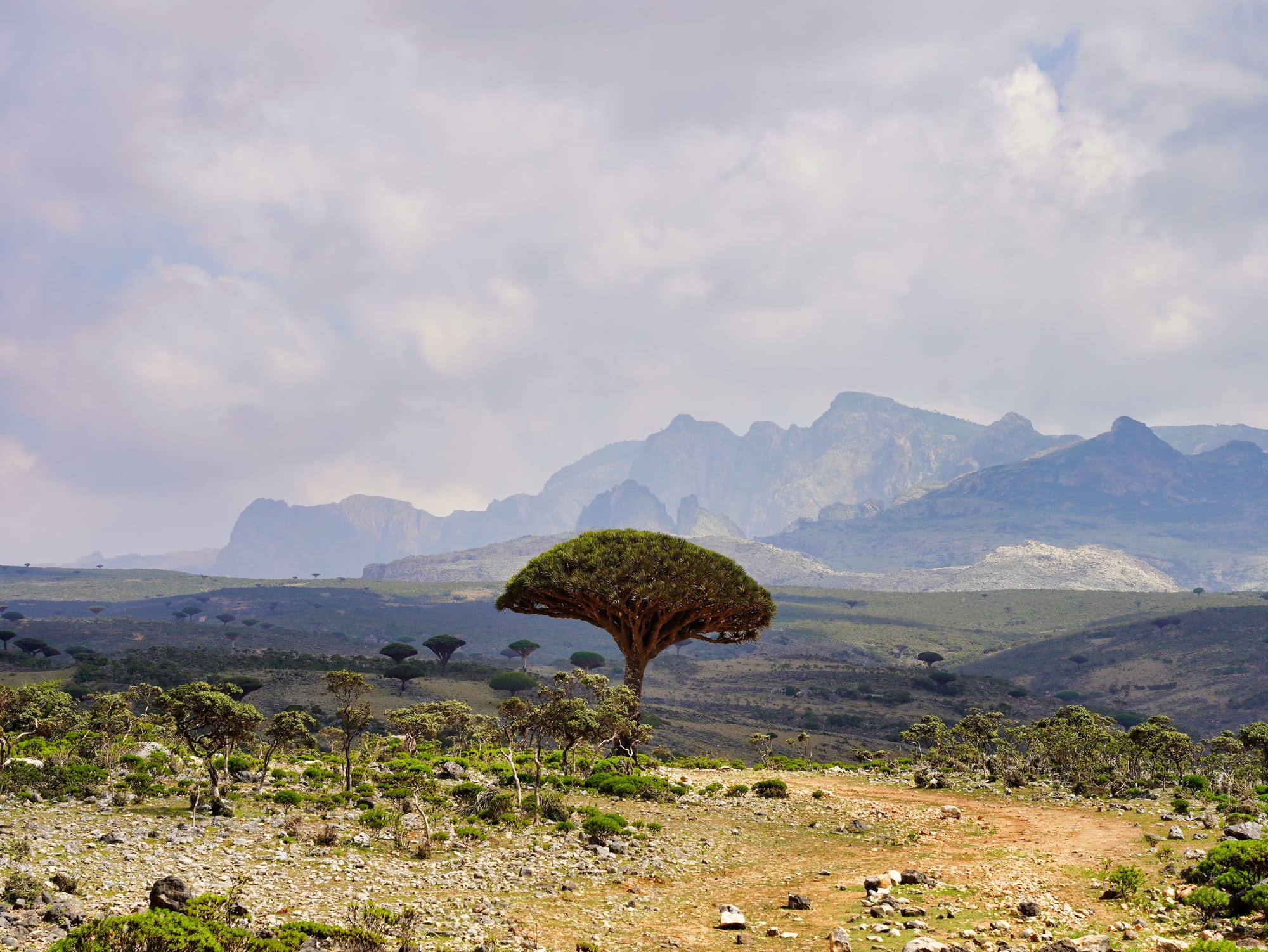
The trees usually flower around March, bearing small clusters of fragrant white or green flowers. Their berries take five months to ripen, turning from green to black and finally orange-red, and are spread by birds.
The blood that made Socotra famous
The tree is named after its dark red resin, called dragon's blood. The resin known in antiquity came mostly from this species: the 1st-century Periplus of the Erythraean Sea lists it among Socotra's products, and it reached Europe along the Incense Road. Greeks, Romans and Arabs prized it as a dye, pigment and medicine, and the Romans often confused it with cinnabar, a poisonous red mineral. One theory even derives the island's Arabic name, Suqutra, from words meaning "market" and "dragon's blood". Socotrans still use it today, for dyeing wool, gluing pottery and as a remedy for wounds.
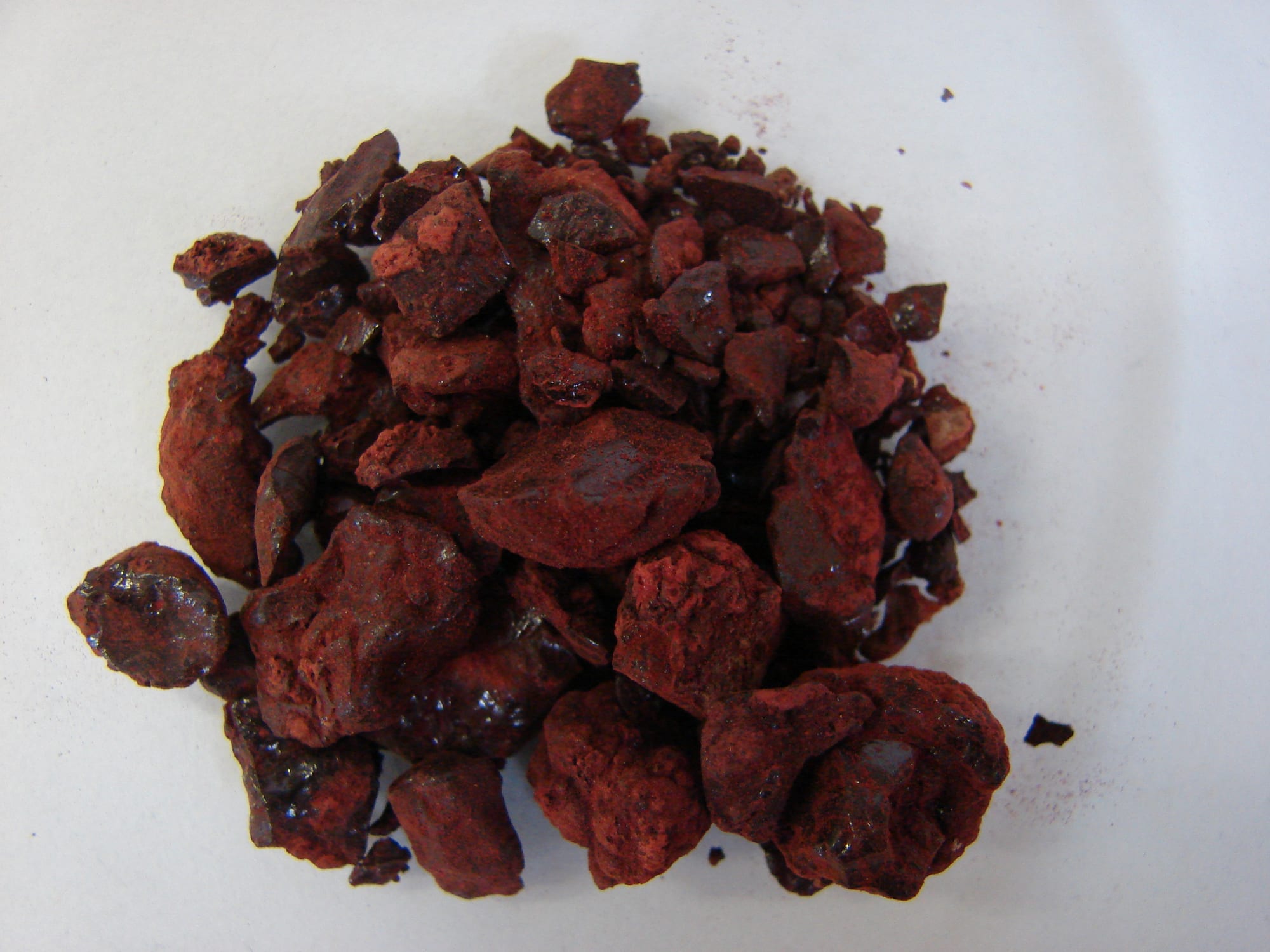
Medieval encyclopedias claimed the resin was the literal blood of elephants and dragons that had died fighting each other.
A tree that may be running out of time
The forces that sheltered the tree are now turning against it. Socotra has been drying out for the last few hundred years, and the mist and cloud seem to linger for shorter periods. Increasingly arid conditions are predicted to cut the tree's available habitat by 45 per cent by 2080. Goats eat the seedlings, so young trees survive mainly on rocky outcrops, and livestock are also fed its leaves, flowers and fruit. In 2015 cyclones Chapala and Megh struck the island; Megh was the only major cyclone on record to hit it directly.
The best preserved and largest stand grows on the limestone plateau of Rokeb di Firmihin, covering about 540 hectares, but research suggests its numbers will fall in the coming decades for lack of natural regeneration. Islanders, helped by the UK-based Friends of Socotra and Mendel University in Brno, have been watering saplings and fencing them against goats, and by 2022 about 600 had grown strong enough to survive without regular watering.
Socotra became a UNESCO World Heritage Site in 2008. It has been largely spared the fighting on the Yemeni mainland and receives a trickle of visitors, mostly on organised camping trips between October and April, outside the summer monsoon. Access is unreliable: in early 2026 a state of emergency closed Yemen's entry points and left hundreds of foreign visitors stranded on the island until they were flown out.