Culture & Customs · Ghana
Why do Ghana's Ashanti treasure a golden stool no one may sit on?
The Asante believe the Golden Stool holds the soul of their nation, the living, the dead and the unborn. Not even the king sits on it.
By Globeway Editorial · 13 October 2026

The short answer
The Golden Stool, Sika Dwa Kofi in the Twi language, is the throne of the Asante (Ashanti) kings of central Ghana, but it is far more than a seat. The Asante believe it holds the sunsum, the soul or spirit, of the whole nation: the living, the dead and those yet to be born. Their power, health, bravery and welfare are believed to be enshrined in it. To sit on it would be to treat the nation's soul as furniture.
So nobody sits on it, not even the king. According to tradition it came down from the sky around 1700 and landed on the lap of the first Asante king, Osei Tutu. It must never touch the ground, only the king may handle it, and when a new king is installed he is lowered over it and raised again without touching it. In 1900 a British governor demanded to sit on it, and the Asante went to war.
A stool from the sky
Among the Akan peoples of the forest, stools had long stood for authority: a chief's stool represented his right to rule, and a new chief is still said to be "enstooled". Each person's stool was understood to be the seat of its owner's soul. In the late 17th century the Asante states around Kumasi were a loose alliance paying tribute to a more powerful neighbour, Denkyira.
Osei Tutu, who was ruler of Kumasi by 1695, set out to unite them, with his adviser and chief priest, Okomfo Anokye. According to legend, before a great crowd, Anokye brought down from the sky, in a black cloud amid rumbling and white dust, a wooden stool partly covered in gold. It came to rest slowly on Osei Tutu's knees. The stool became the single symbol that bound the Asante states together, and in 1701 their combined army defeated Denkyira at the Battle of Feyiase. Osei Tutu became the first Asantehene, the king of all Asante, with Kumasi as his capital.
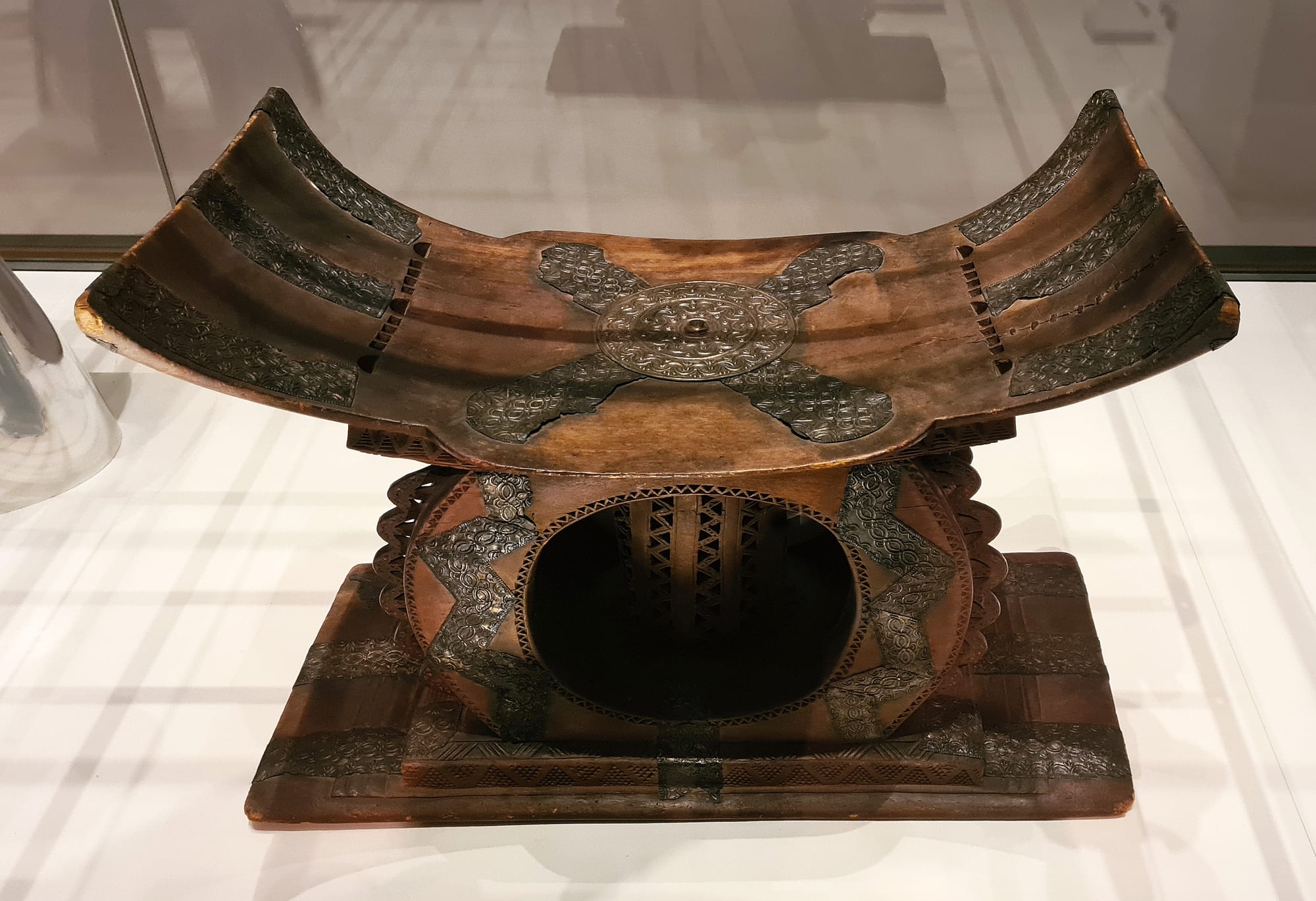
The Golden Stool shares the classic Asante shape: a curved seat on a flat base with a supporting structure between them, each carved from a single block of wood. The Golden Stool is about 46 centimetres high and 61 centimetres wide, its whole surface inlaid with gold.
Why no one sits on it
Because the stool is the nation, it is treated with the care due to a living being. It never rests on the ground but on a blanket. It is carried to the king on a pillow. On solemn occasions it is placed on the king's left on a throne of its own. Its full name, Sika Dwa Kofi, means "the Golden Stool born on a Friday". New kings are enthroned with it, and only the king, the queen and trusted advisers know where it is kept.
The king, in this system, is the stool's custodian rather than its owner. A king who broke the oaths sworn at his enstoolment, for instance by punishing people arbitrarily, could be destooled by the kingmakers.
The governor who asked for a seat
By the late 19th century Asante had fought a series of wars with Britain, which ruled the neighbouring Gold Coast colony. In 1896 British troops occupied Kumasi, and the Asantehene, Prempeh I, was sent into exile rather than risk losing both the war and the stool. On 25 March 1900 the governor of the Gold Coast, Sir Frederick Hodgson, arrived in Kumasi and addressed the assembled chiefs. He told them their king would not return, demanded payment for an earlier war, and asked why they had given him an ordinary chair instead of bringing the Golden Stool for him to sit on.
The chiefs heard him in silence and went home to prepare for war. Hodgson had treated the stool as an object and an emblem of power. To the Asante, he had asked to sit on the soul of the nation.
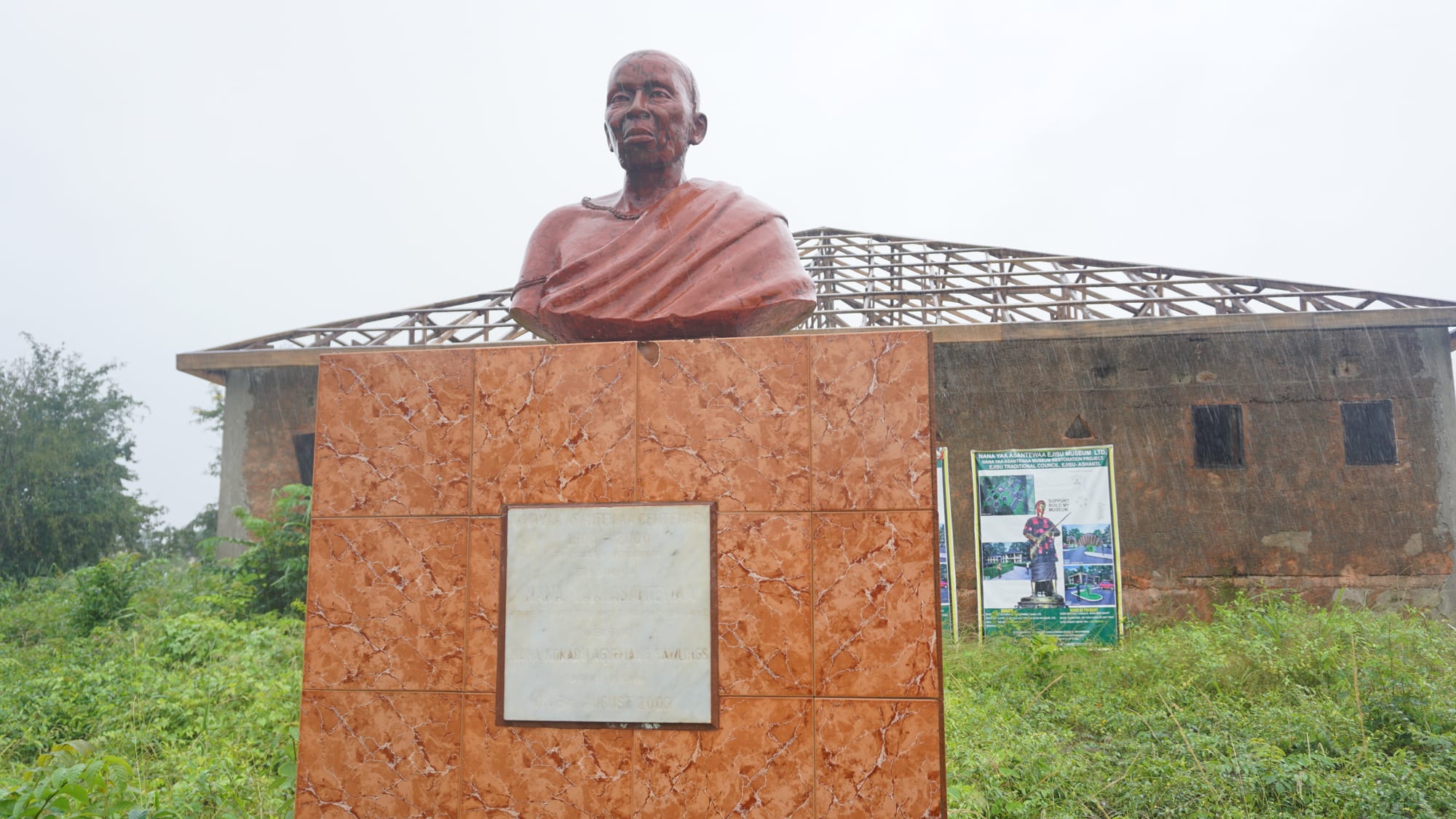
The resistance was rallied by Yaa Asantewaa, the queen mother of Ejisu, whose position made her responsible for protecting the stool. Shaming chiefs who hesitated, she declared that if the men would not fight, the women would. The conflict is still often called the Yaa Asantewaa War.
Asante forces besieged the British in their fort at Kumasi for months, until a relief column broke through in July 1900. The war cost the British and their allies around 1,000 dead, and Asante was annexed to the British Empire. Yaa Asantewaa and other leaders were exiled to the Seychelles, where she died in
- But the stool was never found. It had been hidden away, and
in Parliament David Lloyd George compared Hodgson's hunt for it to the quest for the Holy Grail.
Hidden until 1921
The British went on looking for the stool until 1921, when road workers came across it by accident. They stripped off some of its gold ornaments. An Asante court sentenced them to death for desecrating it; the British intervened, and they were banished instead. Britain then gave an assurance that it would not interfere with the stool, and it was brought out of hiding.
The Golden Stool through history
- 1701
Feyiase
United under the Golden Stool, the Asante states defeat Denkyira.
- 1896
Exile
British troops occupy Kumasi and Asantehene Prempeh I is deported.
- 1900
War of the Golden Stool
Governor Hodgson demands the stool; the Asante rise in revolt.
- 1921
Rediscovered
Road workers find the stool; Britain promises not to interfere with it.
- 1924
Return
Prempeh I is allowed to come home to Kumasi.
- 1935
Restoration
The stool is used to enthrone Prempeh II as the Asante Confederacy is formally recognised.
- 1999
Osei Tutu II
The present Asantehene is enstooled as the stool's 16th occupant.
The stool in Kumasi today
Asante became part of independent Ghana in 1957, and the Asantehene is now a traditional ruler rather than a head of state, but the stool remains the heart of Asante identity. The present king, Otumfuo Osei Tutu II, was enstooled on 26 April 1999 at Manhyia Palace in Kumasi and is described as the custodian of the Golden Stool.
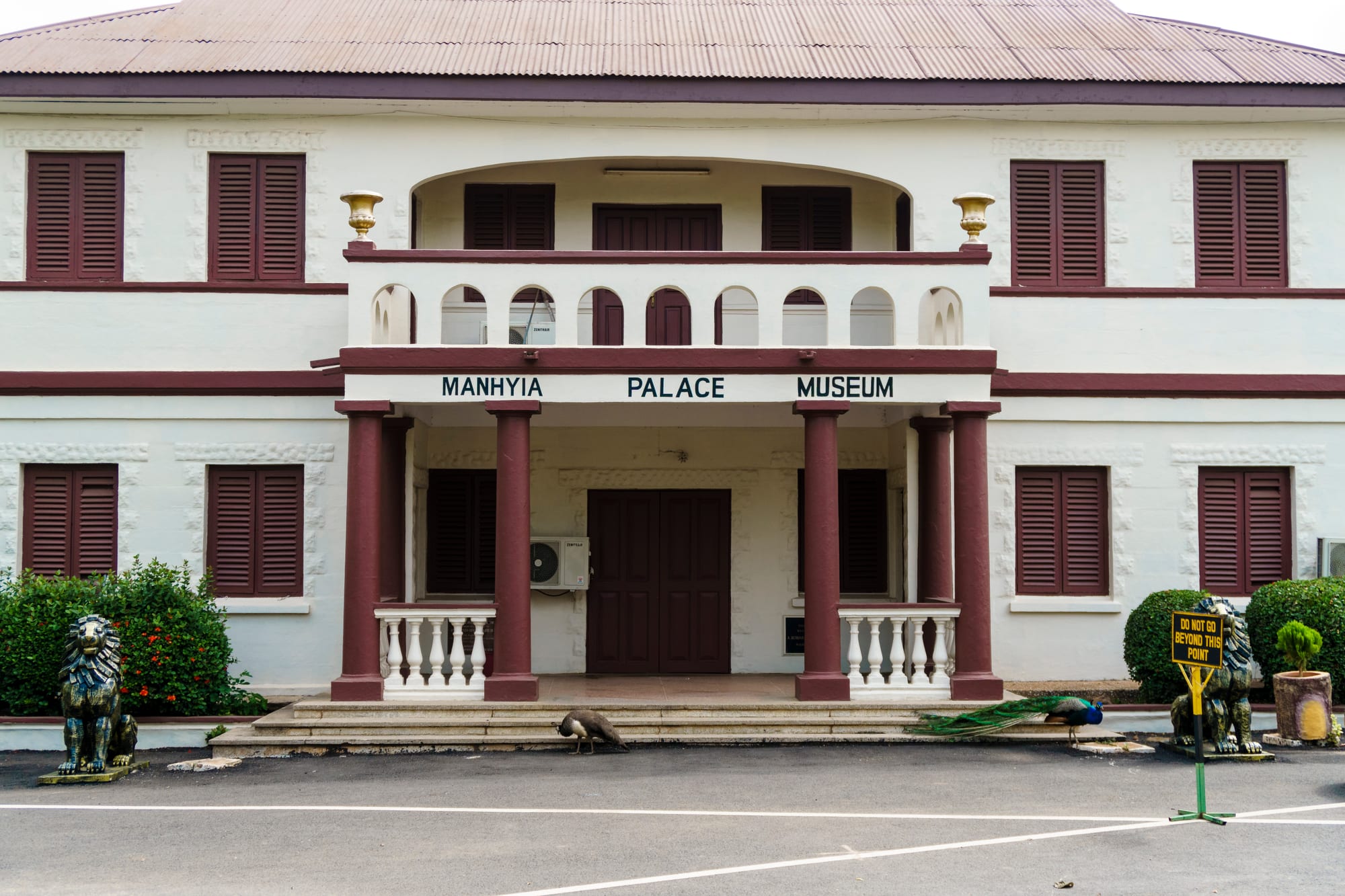
The British built this palace in 1925 after destroying the royal palace during the war, and Prempeh I lived in it after his return, paying for the building in full. The kings now live in a newer palace close by.
The stool is still seen in public. Every six weeks, at the Akwasidae festival, the Asantehene receives his chiefs in the courtyard of Manhyia Palace, the Golden Stool is displayed, and crowds come to sing and dance. At Adae Kese, a rarer and grander form of the festival, the stool is ritually cleansed. It is honoured, carried and guarded, and still no one sits on it.