💰 Budget
Kumasi is noticeably cheaper than Accra. Guesthouses and mid-range hotels are good value, chop bars cost very little, and taxis are inexpensive. The main extras are a hired taxi for a day around the craft villages and the crater lake, and the crafts themselves — hand-woven kente is expensive because of the labour in it.
- Daily Budget Midrange
- USD 80–170 (city hotel, restaurant meals, a hired taxi or car for day trips)
- Daily Budget Shoestring
- USD 30–50 (guesthouse, chop-bar meals, tro-tros and shared taxis)
One taxi hired for a full day covers Bonwire, Ntonso and Ahwiaa together, and the price is agreed before setting off.
📅 Best Time to Visit
November to March is the driest stretch, with easier roads to the craft villages and the lake. The Akwasidae ceremonies at Manhyia fall every six weeks and are the single best reason to time a visit, though the dates follow the Akan calendar rather than the Western one. The rains of April to July bring heavy afternoon storms.
⏳ Suggested Number of Days
Two days cover the royal quarter, the museums and the market. Three to five allow the craft villages, the crater lake and the forest reserves east of the city. A ceremony at the palace or a festival adds a day of its own.
- First Visit
- 2 days
- With Surroundings
- 3–5 days
🚆 Transportation
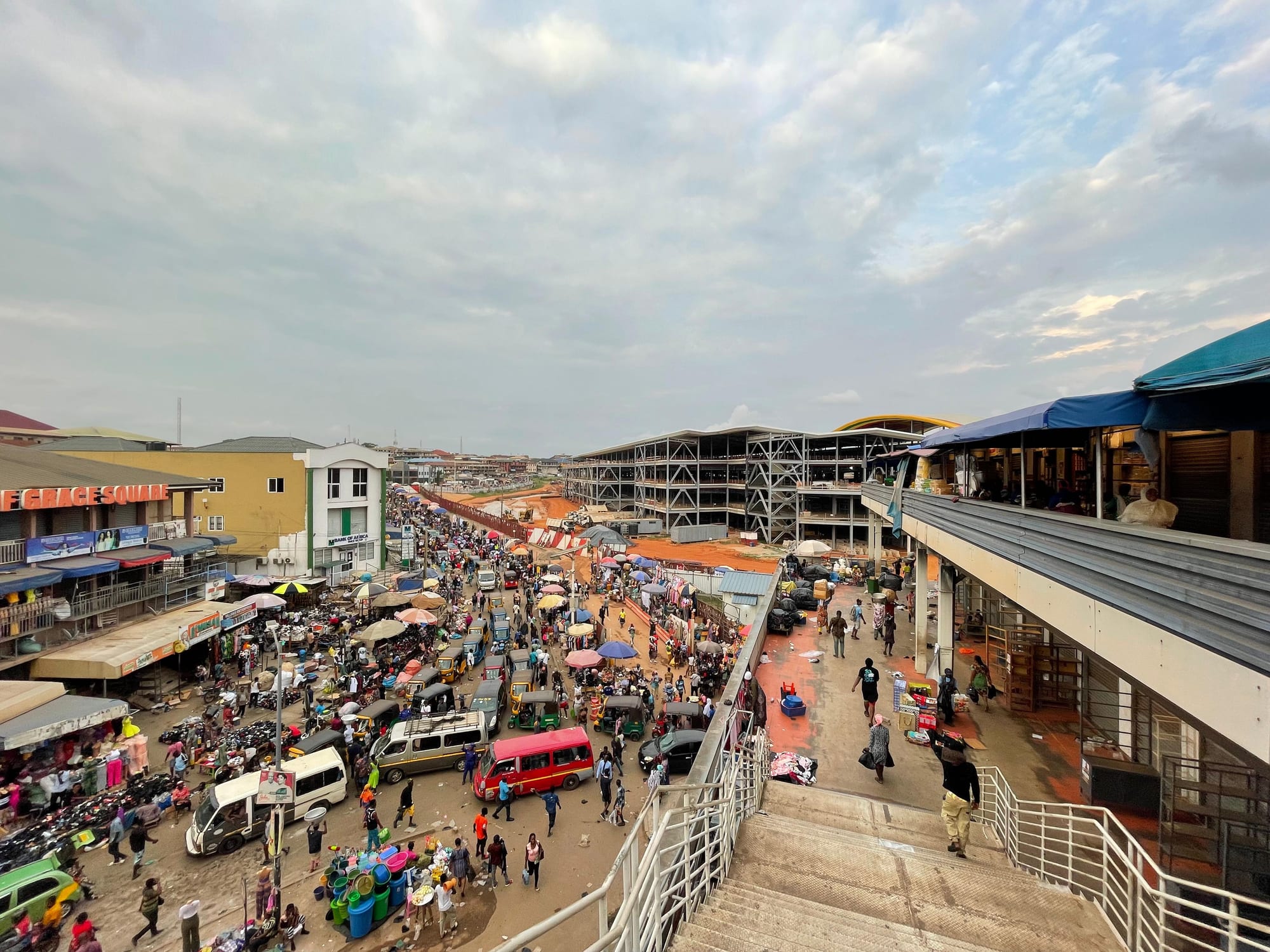
Shared taxis running fixed routes are the everyday way to move around, with tro-tros from Kejetia and the other lorry parks for the craft villages, the lake and the rest of the region. Taxis can be chartered by the trip or the day. Traffic around Kejetia, Adum and Suame is heavy for most of the daylight hours.
Shared taxis are flagged down on the main roads and the fare is stated before getting in; a chartered taxi is a separate and much higher price.
🛬 Airport & Station Connections
Kumasi is about 200 km from Accra, five to six hours by STC or VIP coach or private car on a busy and often slow highway. Prempeh I International Airport, renamed from Kumasi Airport in 2024 and about 6 km from the centre, has frequent flights to Accra. Coaches and tro-tros also run north to Tamale, west to Sunyani and south to Takoradi and Cape Coast.
🚶 Walkability
The central area around Adum and Kejetia is walkable and best seen on foot, though the pavements are taken up by traders and the crowds are dense. Beyond it distances are long, the city is spread over hills, and main roads are hard to cross, so almost everyone uses shared taxis. The craft villages and the lake need transport.
🛡️ Safety
Kumasi is generally safe and violent crime against visitors is uncommon. Pickpocketing and bag snatching happen in the crush at Kejetia and the lorry parks, and road traffic, including motorcycles weaving through queues, is the most serious everyday danger. Chieftaincy and land disputes occasionally cause local unrest in outlying towns.
Keep phones and cash secure in Kejetia, ask permission before photographing chiefs or ceremonies, and follow guides on waterfall paths in the wet. A known taxi is safer than walking through unlit areas at night. Check current official travel advice before travelling.
🌦️ Climate
Hot and humid, in the moist forest belt, with two rainy seasons — the main one from about April to July and a second in September and October. Nights are a little cooler than on the coast, and the Harmattan brings dust haze and drier air between December and February.
- Summer
- the main rains, about April to July: 22–30°C, humid, with heavy afternoon storms
- Winter
- the dry season, about November to March: 20–33°C, with Harmattan haze in December and January
🤝 Local Customs
Asante protocol is taken seriously. Chiefs are greeted through linguists, not addressed directly; hats and shoes may need to be removed at court; and the right hand is used for giving, receiving and waving. Red, black and brown cloth marks mourning, and turning up at a funeral is a normal courtesy rather than an intrusion. Photography at the palace, at shrines and during ceremonies is restricted.
Permission is asked before photographing chiefs, shrines or funerals, modest dress is expected in the royal quarter and at ceremonies, and tipping is not obligatory though guides and drivers appreciate small amounts.
💳 Common Payment Methods
The currency is the Ghanaian cedi. Mobile money and cash cover the markets, taxis and chop bars, and craft villages expect cash. Cards work at hotels, supermarkets and larger restaurants only; ATMs are common in Adum and the southern suburbs, and forex bureaux change dollars and euros.