💰 Budget
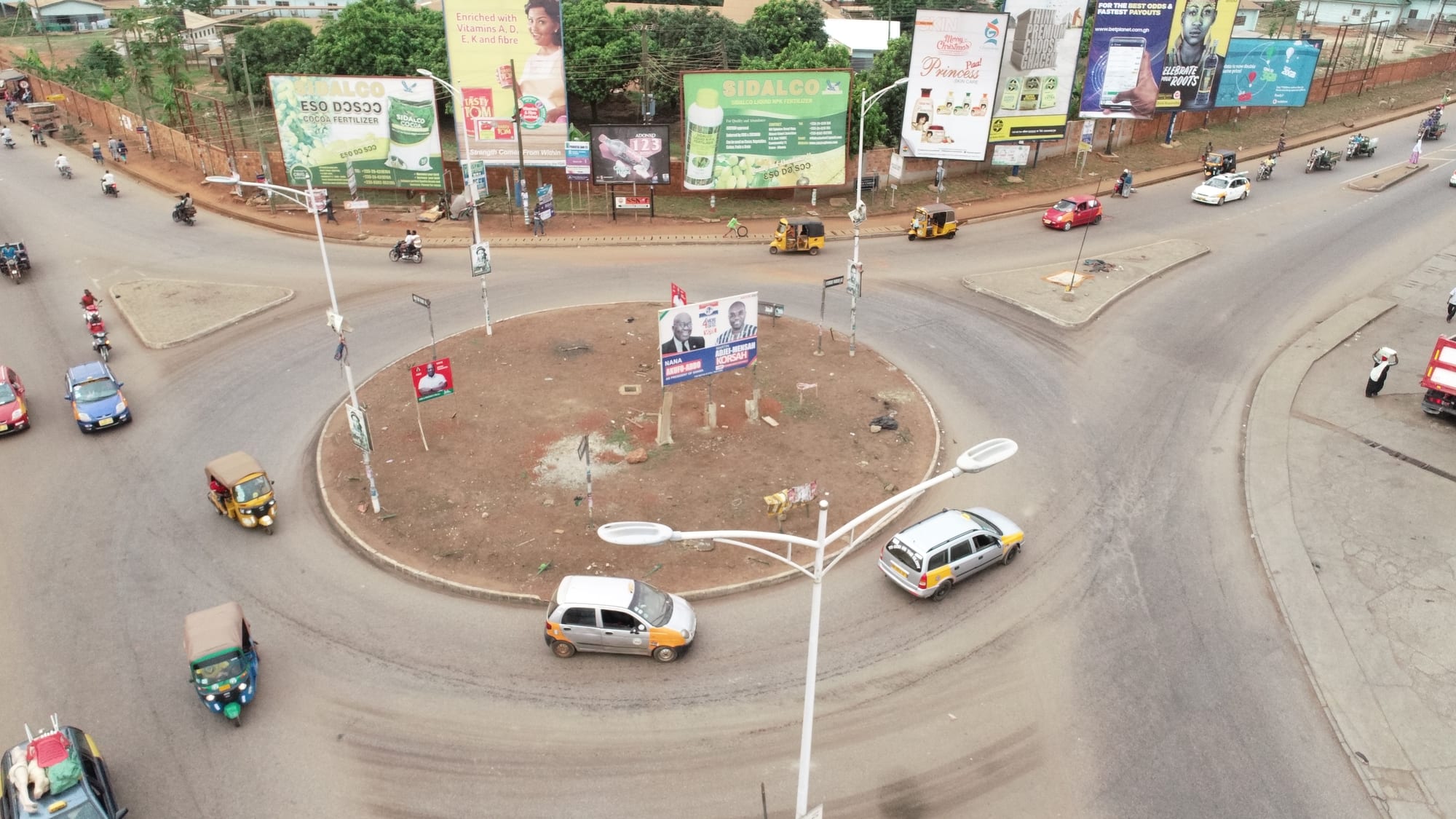
Techiman is cheap. Guesthouses are simple and plentiful because the town fills with traders, food costs little, and shared taxis and motor tricycles cover the town for small change. The main expense is hiring a taxi for the monkey sanctuary, the caves or the waterfalls, since public transport to the villages is slow.
- Daily Budget Midrange
- USD 60–120 (better hotel, restaurant meals, a hired taxi for trips into the countryside)
- Daily Budget Shoestring
- USD 20–40 (guesthouse, chop-bar meals, tro-tros and shared taxis)
Draw cash at the banks in town before heading to the villages, where mobile money is the only alternative to cash.
📅 Best Time to Visit
November to March is dry and easiest for the village roads, though the Harmattan brings dust haze in December and January. The waterfalls are fullest from about June to October, when tracks are muddier. The market runs all year and is at its fullest in the yam harvest from August.
⏳ Suggested Number of Days
A day covers the town and its market. One or two more take in the monkey sanctuary, the caves and the waterfalls on the road north, which need hired transport. Many travellers stop here for a single night while moving between Kumasi and the north.
- First Visit
- 1 day
- With Surroundings
- 2–3 days
🚆 Transportation
Techiman is a road junction first and foremost. Tro-tro minibuses and coaches leave the lorry parks for Kumasi, Sunyani, Wenchi, Kintampo and Tamale through the day, and shared taxis and motor tricycles work the town and the nearby villages. Taxis can be hired by the trip or the day for the countryside.
Agree the fare before setting off, and travel between towns by day, as the north road carries heavy lorry traffic.
🛬 Airport & Station Connections
The town sits on the main highway north from Kumasi to Tamale, about 105 kilometres from Kumasi, roughly two to three hours by road, and about 50 kilometres from Sunyani by a shorter road. Coaches between Accra, Kumasi and the north stop here. The nearest airports with scheduled flights are Kumasi and Tamale.
🚶 Walkability
The centre is small and walkable, and the market, lorry parks and banks are all close together. Pavements are few, the main road is busy with lorries, and loading traffic makes the market edges slow going on foot. Shared taxis and tricycles cover the outer neighbourhoods cheaply.
🛡️ Safety
The town is generally calm, and the main risks are ordinary ones: crowded market days and lorry parks where pockets are picked and phones snatched, and heavy traffic on the Kumasi–Tamale highway. Paths at the waterfalls and caves are steep and slippery in the rains.
Keep phones and cash secure in the market, ask permission before photographing chiefs or ceremonies, and follow guides on waterfall paths in the wet. Cave paths need a village guide as well. Check current official travel advice before travelling.
🌦️ Climate
Techiman lies in the transition zone between the moist forest and the savanna, drier and more open than Kumasi. Rain falls mainly between about April and October, with the heaviest months in the middle of that spell, and the Harmattan blows dust from the Sahara from December to February.
- Summer
- the rains, about April to October: 22–32°C, humid, with heavy storms
- Winter
- the dry season, about November to March: 20–35°C, hazy under the Harmattan, hottest in February and March
🤝 Local Customs
This is Bono country, where a dialect of Twi is spoken and Akan custom governs public life: chiefs are enstooled, linguists speak for them, and shrines and sacred groves are treated with care. The market is a working place, and traders dislike being photographed without being asked. Christian and Muslim communities live side by side, and Friday prayers empty the zongo's streets.
Ask before photographing people, shrines or the monkeys' cemetery, dress modestly around mosques and shrines, and use the right hand for giving and receiving.
💳 Common Payment Methods
The currency is the Ghanaian cedi. The market runs on cash and mobile money, and card payment is limited to a few hotels and the bank ATMs in the centre. Small notes matter for taxis, tricycles and stalls, and cash machines are scarce in the villages around the town.