Culture & Customs · India
Why do Hindu pilgrims travel to Varanasi to die?
Many Hindus believe that dying in Kashi, Shiva's city on the Ganges, frees the soul from rebirth for ever, so the end of life becomes a pilgrimage.
By Globeway Editorial · 13 October 2026
The short answer
Hindus go to Varanasi to die because of a belief that death there ends the cycle of rebirth. Most Hindu traditions hold that the soul is reborn again and again, and that the highest goal is moksha, final liberation from that cycle. Varanasi, also called Kashi, is counted among the seven sacred cities that can grant moksha, and by many accounts it is the holiest of them. Popular belief holds that the soul of someone who dies there is set free.
The belief is tied to the god Shiva, who is said to have founded the city and never to leave it. One Hindu text describes him imparting the knowledge that liberates to the dying there, as their last breaths depart. Varanasi also sits on the Ganges, the holiest of all rivers for Hindus, and its cremation grounds at Manikarnika Ghat are believed to carry the dead to liberation. Spending one's last days in the city is therefore a way of making the best possible death.
The cycle pilgrims hope to escape
In Hindu thought, samsara is the cycle of death and rebirth, and a person's actions in one life shape the next. Moksha is freedom from that cycle, a final spiritual liberation. The different schools of Hindu philosophy disagree about how it is reached, through knowledge, devotion, duty or discipline, and about whether it can be experienced while still alive or only after death.
Varanasi offers something different from long philosophical effort: a place where liberation is believed to be granted. Visiting the Kashi Vishwanath Temple, the city's great temple of Shiva, and bathing in the Ganges are among the many practices believed to set a person on the path to moksha, and Hindus from all over the world try to make the journey at least once in their lifetime. Dying in the city goes further still.
The city Shiva never leaves
Hindu scriptures say Kashi was founded by Shiva. Its Sanskrit epithets describe what the city means: Avimukta, "never forsaken by Shiva"; Anandakanana, "the forest of bliss"; and Mahashmashana, "the great cremation ground". According to one legend, after a quarrel with the god Brahma, Shiva carried one of Brahma's severed heads in his hand, and it finally dropped from his grasp only when he reached Kashi. That is one reason the city is considered so extraordinarily holy.
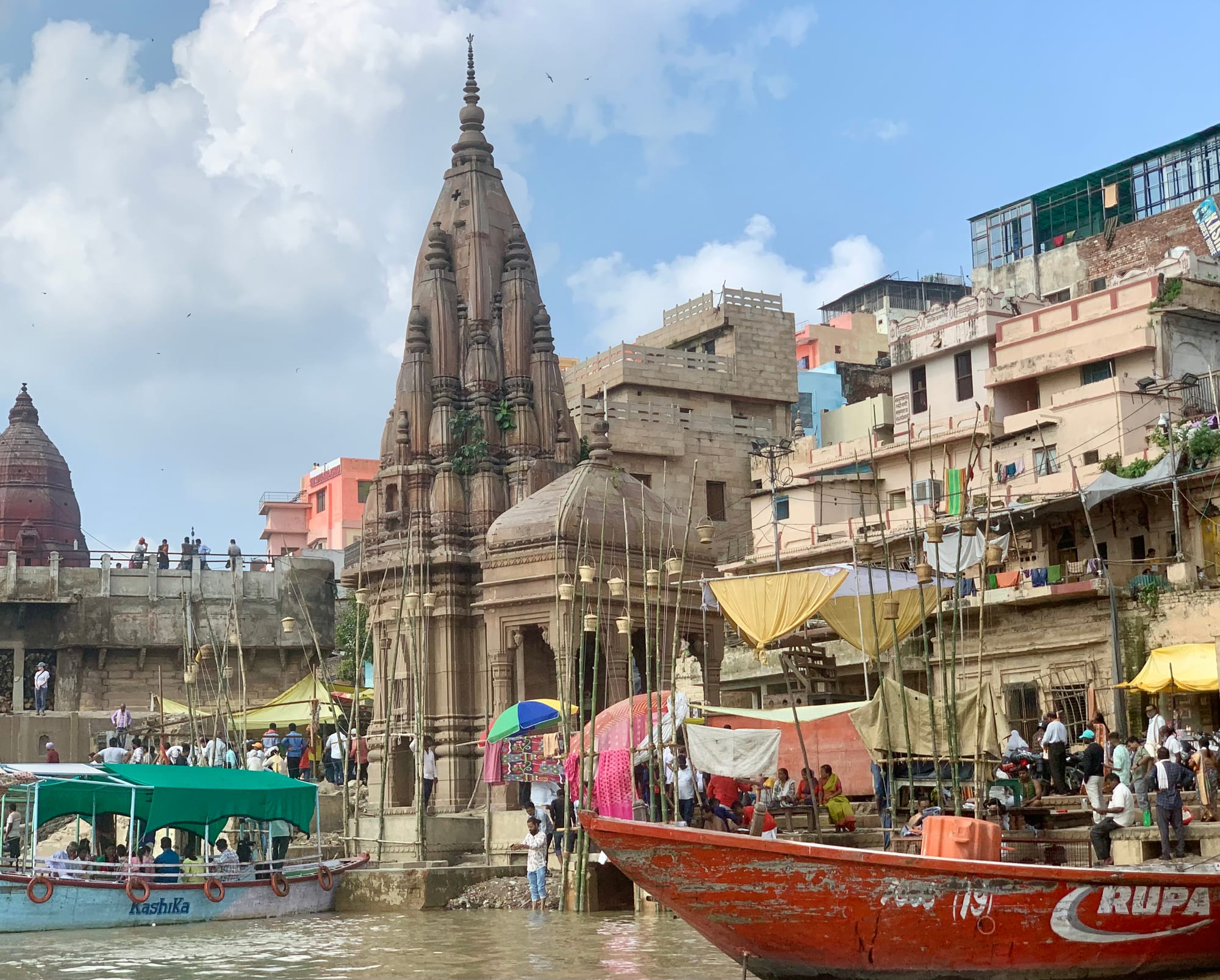
Hindus believe the soul of a person cremated at Manikarnika attains moksha. The Hindu genealogy registers of Varanasi are also kept here.
The most direct statement of the promise comes from the Jabala Upanishad, an ancient text that scholars date to before 300 CE. In it the sage Atri asks Yajnavalkya how to know the infinite. Yajnavalkya answers that it is to be found in Avimukta, the sacred ground between the Varana and the Nashi rivers, whose names he explains as the one that wards off the faults of the senses and the one that destroys their sins. There, the text says, as the last breaths of the dying depart, the god Rudra, a name of Shiva, imparts the knowledge that frees them, bringing salvation after death. It calls Avimukta a holy place to revere and never leave.
The city's two boundary streams are still there. Varanasi takes its name, according to tradition, from the Varuna in the north and the Assi in the south, and the stretch of riverbank between their confluences with the Ganges, about 4 kilometres long, is itself a sacred pilgrimage route.
Fire at the water's edge
The Ganges adds its own promise. It is the most sacred river to Hindus, who worship it as the goddess Ganga and consider its waters both pure and purifying. Pilgrims immerse the ashes of their relatives in its water in the belief that it brings their souls closer to moksha, and a dip in the river is believed to wash away sins.
Of the city's 84 ghats, the stone steps that line the river, two are used only for cremation: Manikarnika and Harishchandra. In Hinduism it is believed that a soul cremated at Manikarnika attains moksha. Harishchandra Ghat is named after a legendary king who, in one telling, was sold to an outcaste chandala in Kashi and put to work at his cremation ground. The Doms, historically treated as an untouchable caste, still carry out the cremations of Varanasi.
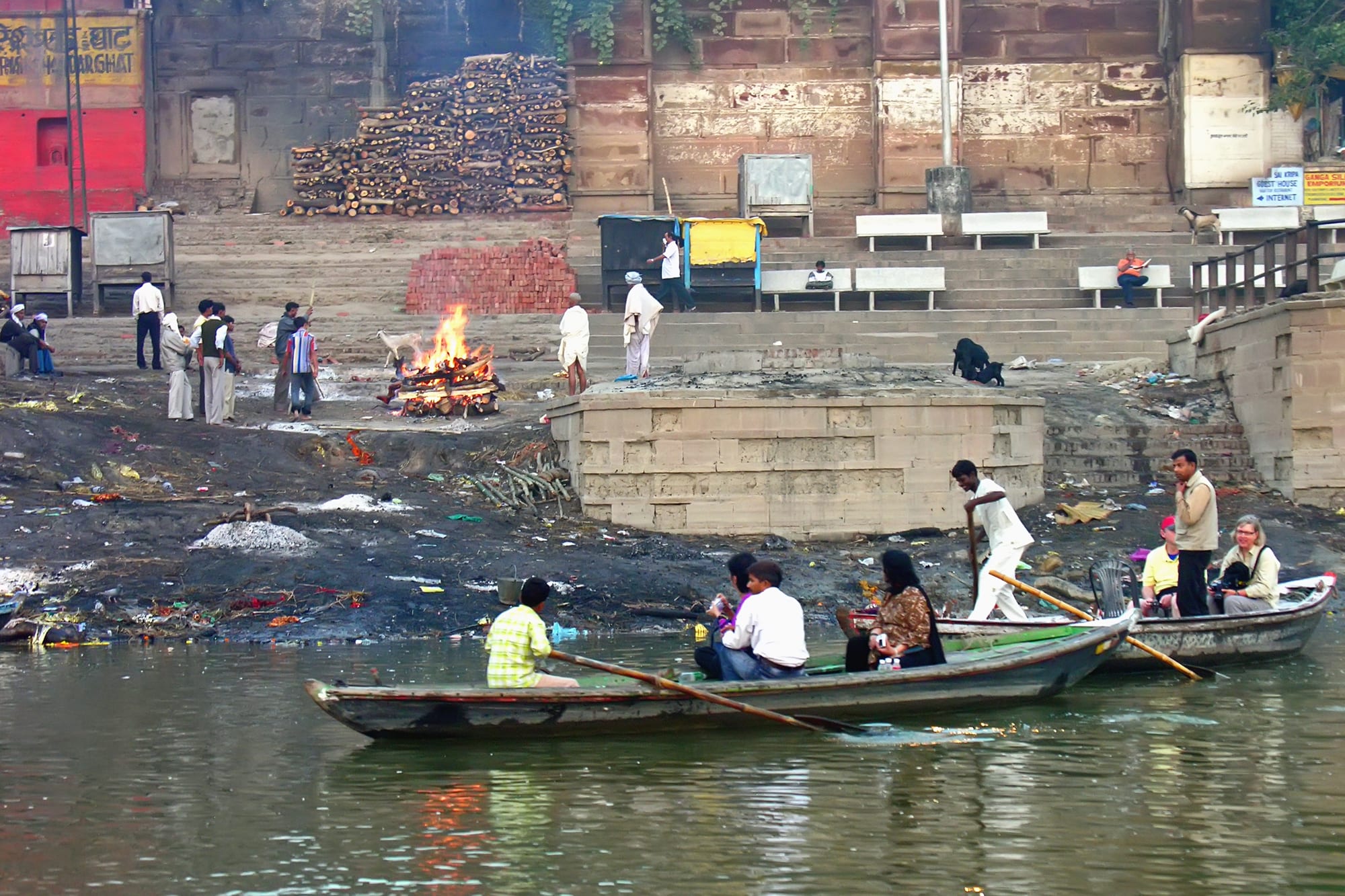
Hindu last rites are usually completed within a day of death, with prayers and mantras recited by priests as the pyre burns.
The numbers show both how important and how rare this is. Between 25,000 and 30,000 bodies are cremated on Varanasi's ghats every year, an average of about 80 a day. That is fewer than 2 in every 1,000 people who die in India. In many cases the cremation takes place elsewhere, and only the ashes are brought to be scattered on the river near the ghats.
Waiting for the end
For some elderly Hindus the journey is planned: they travel to Varanasi expecting to die there. The 2016 Indian film Hotel Salvation, known in India as Mukti Bhawan, turns this into a story. A 77-year-old man wakes from a nightmare convinced that his time is up and insists on going to Varanasi in the hope of dying there and attaining salvation. His reluctant son takes him to a lodging house devoted to people spending their last days in the city, where the old man, instead of fading, finds friendship and a new lease of life. The film was nominated for four Filmfare Awards and ran for months in Japanese cinemas.
The city of death and light today
Varanasi, which tradition calls the City of Light, from the Sanskrit root kas, "to shine", is one of the world's oldest continually inhabited cities, and it draws millions of pilgrims. Few places hold so central a place in the Hindu world's traditions of pilgrimage, death and mourning.
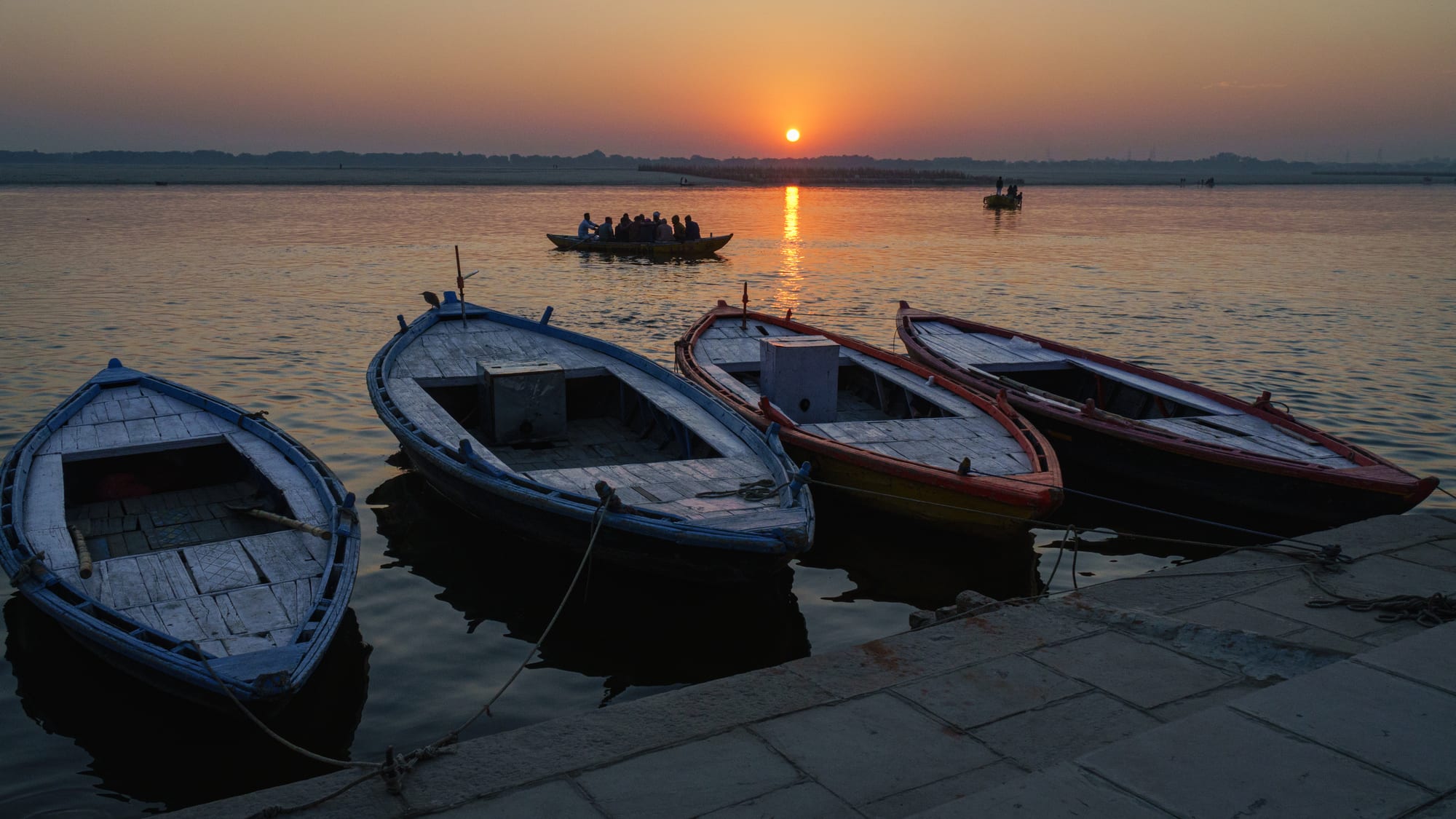
The cremations have also made the city controversial. Burning bodies beside the river adds to the pollution of the Ganges, and in the 1980s the Indian government funded a Clean Ganges initiative to tackle it. Even so, untreated sewage and city waste, not cremation, are the largest sources of pollution in the river at the ghats. A morning boat ride past the ghats, where bathing, prayer and cremation continue side by side, is the classic way to see the riverfront, and every evening an aarti, an offering of light, is performed at Dashashwamedh Ghat in honour of Shiva, the goddess Ganga and the sun.