💰 Budget
One of the cheapest large cities in India. Guesthouses in the ghat lanes, street food and cycle rickshaws cost very little, and the ghats themselves are free. The recurring costs are boat hire at dawn and dusk, entry to Sarnath's site and museum, guides, and taxis between the ghats, the station and the airport, which is a long way out.
- Daily Budget Midrange
- USD 45–100 (mid-range or riverside hotel, restaurant meals, a private boat and a car with driver for Sarnath)
- Daily Budget Shoestring
- USD 15–30 (guesthouse room in the lanes, street food and thalis, shared boats and rickshaws)
Agree the price of a boat before stepping into it, and expect rooms in the ghat lanes to be small and reached on foot.
📅 Best Time to Visit
October to March. The air is cool, the light on the river is at its best early and late, and the festival season runs from Dussehra through Dev Deepawali to Shivaratri. December and January bring dense morning fog that can hide the river and delay trains. April to June is fiercely hot, and the monsoon from late June raises the Ganges so far that the lower ghats and the boat landings are submerged.
⏳ Suggested Number of Days
Two to three days suits most first visits. Allow four or five to take in the wider city and the settlements across and beyond the river at an unhurried pace. Pilgrims and students of music or Sanskrit often stay far longer.
- First Visit
- 2–3 days
- With Surroundings
- 4–5 days
🚆 Transportation
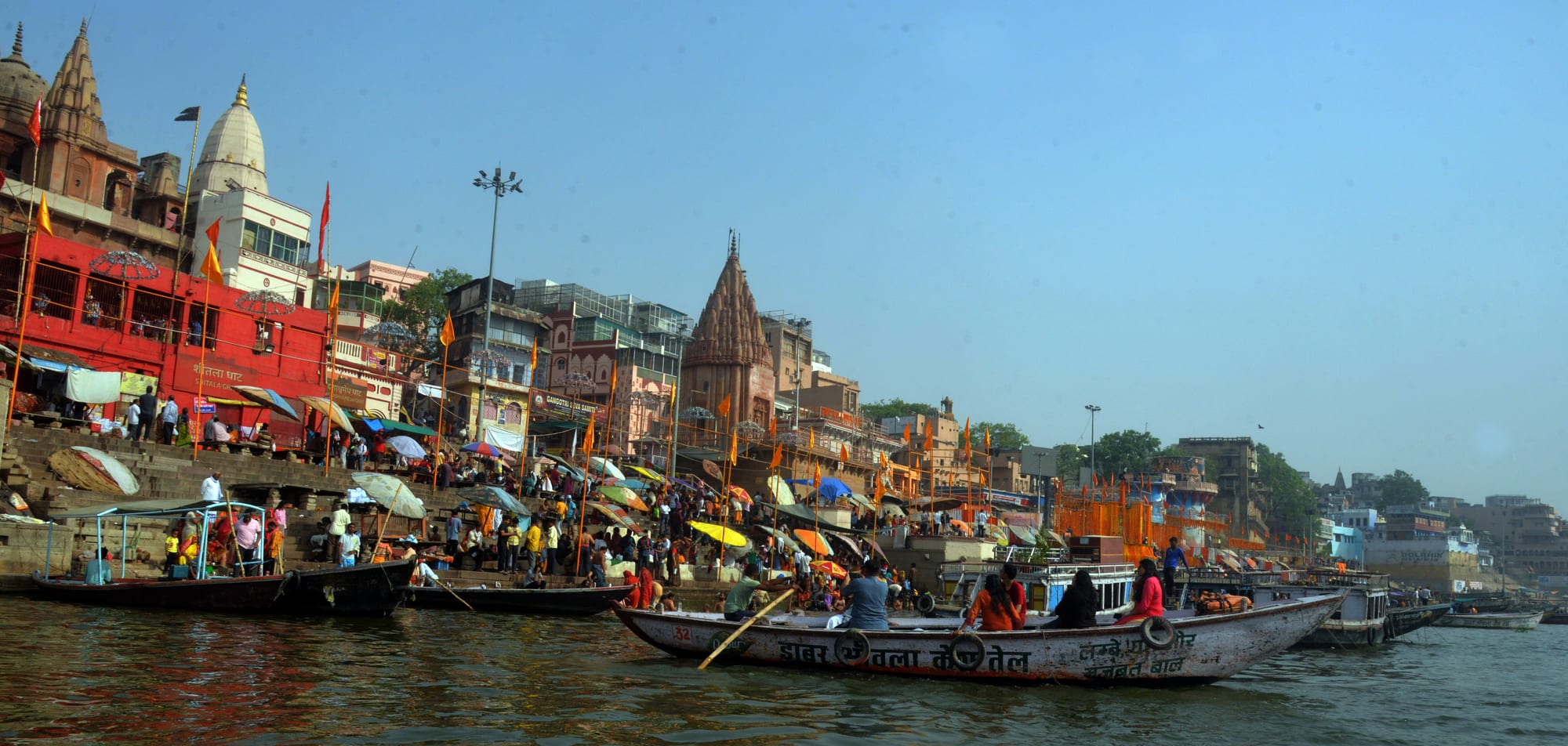
Cycle rickshaws, auto rickshaws and app-based taxis cover the city, and shared autos run fixed routes for a few rupees. The old city between Godowlia and the ghats is barred to cars and mostly too narrow for autos, so arrivals are dropped at the edge and walk in. Rowing boats and small motor boats run along the riverfront and across to Ramnagar, and are the easiest way to see the ghats in sequence.
Fix a fare before starting any rickshaw journey, and expect heavy congestion around Godowlia in the evening.
🛬 Airport & Station Connections
Lal Bahadur Shastri International Airport at Babatpur lies about 25 kilometres north-west of the centre, with domestic flights and a few regional international services; the drive takes roughly an hour. Varanasi Junction, in the Cantonment, is a major station on the Delhi–Kolkata routes, with overnight trains from Delhi, Agra, Lucknow and Kolkata; Banaras and Mughalsarai, now Pandit Deen Dayal Upadhyaya Junction across the river, handle many other services. Buses run to Allahabad, Gorakhpur and the Nepal border at Sonauli.
🚶 Walkability
The old city is walked rather than driven. A continuous route along the ghats runs for several kilometres from Assi to Raj Ghat when the river is low, and is the pleasantest way to move between sights. Inland, the lanes are narrow, stepped, crowded with people, cows and motorcycles, and very easy to get lost in; they flood with slippery mud in the monsoon. The Cantonment, Sarnath and the university are too far apart to link on foot.
🛡️ Safety
Serious crime against visitors is uncommon, and the usual problems are persistence and pressure rather than danger: touts and self-appointed guides at the ghats and the station, boatmen quoting one price and asking another, commission shops selling silk, and demands for donations near the cremation grounds. Crowds at festivals and on temple approaches can be dense. Heat, winter smog and river water quality are the practical health risks.
Do not photograph cremations or mourners at the burning ghats, use licensed guides, agree every fare and boat price in advance, and treat the Ganges as unsuitable for swimming. Check current official travel advice before travelling.
🌦️ Climate
A humid subtropical climate with three clear seasons: a long hot spring and early summer, a monsoon from late June to September that can push the Ganges over the lower ghats, and a short cool winter with fog.
- Summer
- very hot — May and June days commonly reach 40–45°C, with dusty hot winds before the rains
- Winter
- cool and often foggy — December and January days around 20–25°C with nights near 10°C
🤝 Local Customs
This is above all a pilgrimage city, and the ghats are places of worship and mourning rather than sightseeing. Shoes come off before entering temples, and shoulders and knees are covered; some shrines admit only Hindus, and cameras, phones and leather are often barred at the main temple. Photography of cremations is forbidden. Leather goods and public displays of affection are best avoided near shrines, and the right hand is used for eating and giving.
Tipping is modest — rounding up a fare, or about ten per cent in a sit-down restaurant. Alcohol is sold but not drunk openly, and many restaurants in the ghat lanes are strictly vegetarian and serve none.
💳 Common Payment Methods
The currency is the Indian rupee. Hotels, larger shops and silk dealers take cards, and QR-code payment by phone is used even at small stalls, but it generally needs an Indian bank account. Cash in small notes matters here for boats, rickshaws and lane shops. ATMs are common in the Cantonment and around Godowlia, less so in the lanes.