Attractions & Natural Wonders · United States
Why do New England's leaves change colour in autumn?
Trees strip the green from their leaves to save nutrients, unmasking hidden yellows, and New England's maples add fresh reds made in bright, cold weather.
By Globeway Editorial · 13 October 2026
The short answer
Leaves change colour because trees take them apart before winter. Through the summer a leaf is packed with chlorophyll, the green pigment that captures sunlight to make sugar, and its green hides everything else. As the days shorten and cool in late summer, the tree stops renewing its chlorophyll and breaks it down to recover valuable nutrients such as nitrogen. With the green gone, yellow and orange pigments called carotenoids, present in the leaf all along, show through.
The reds are different. They come from pigments called anthocyanins, which many trees make fresh in autumn, and they form best when days are bright and cool and nights are chilly but not freezing. Only about one temperate tree species in ten produces them, but in northern New England up to seven in ten do. Add a forest dominated by maples, a continental climate that delivers the right weather, and an unusually rich mix of tree species, and the result is one of the most celebrated autumn displays on Earth.
Green that hides everything
Chlorophyll sits inside tiny structures in the leaf's cells called chloroplasts. Some of it breaks down in sunlight, but during the growing season the tree keeps replacing it, so summer leaves stay a uniform green.
In late summer the shortening days and cooler temperatures trigger senescence, the programmed ageing of the leaf. The tree begins to reclaim what it invested in it. Chlorophyll is dismantled first and turned into colourless compounds, and the nitrogen it contains is carried back into the rest of the tree.
At the same time a layer of special cork cells, the abscission layer, grows across the base of each leaf stalk. It gradually closes the veins that carry fluids into and out of the leaf, and eventually cuts the leaf free. The veins themselves often stay green for a while after the tissue between them has turned.
Yellows unmasked, reds made new
Carotenoids are the same family of pigments that colour carrots, sweetcorn, daffodils and egg yolks. They are in the leaf all summer, but masked by the far stronger green of chlorophyll. Once the green fades, their yellows and oranges appear in hickories, ashes, aspens, birches and maples. They are the main autumn pigment in roughly 15 to 30 per cent of tree species.
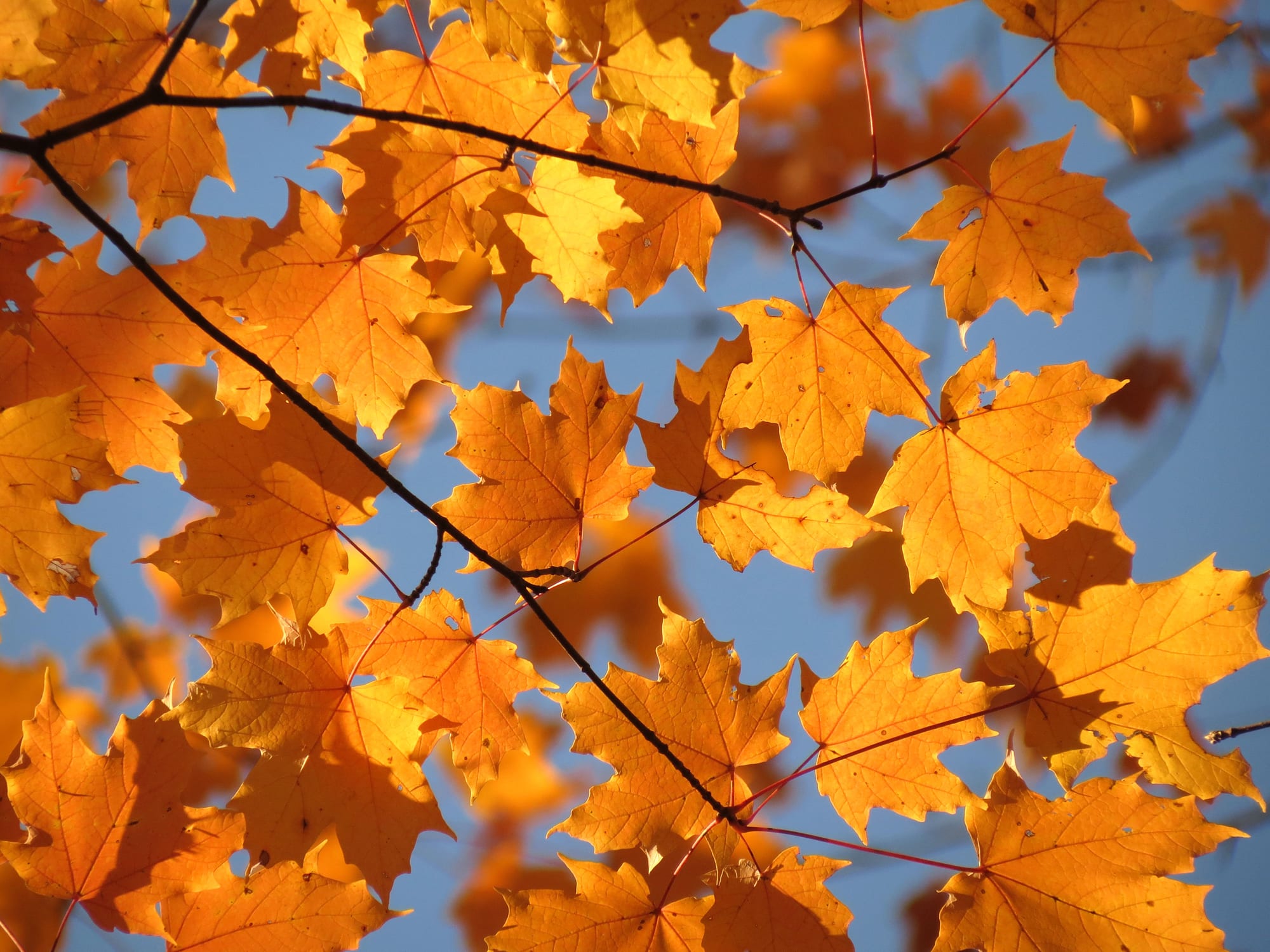
The sugar maple, the tree of maple syrup and the backbone of New England's northern forests, can turn anything from bright yellow to fluorescent red-orange, sometimes all on the same tree.
Anthocyanins are not waiting in the leaf. The tree builds them in late summer and autumn in the sap of the leaf cells. As phosphate drains out of the leaf with the other nutrients, the way the leaf processes its remaining sugar changes, and in bright light that leads to anthocyanin. The more sunshine, the more pigment and the more brilliant the red. These are the same pigments that colour cranberries, blueberries, cherries and red apples. Mixed with the carotenoid yellows, they give the deep oranges, scarlets and bronzes of maples and oaks.
Browns have two sources. They can appear early, when the leftover green and new red blend, or late, when the leaf's cells die and chemical compounds called quinones link together into dark pigments.
Why go to the trouble of red?
Making a new pigment in a leaf that is about to fall costs the tree energy, and several explanations have been proposed for why it bothers. One leading idea is photoprotection: anthocyanins act as a sunscreen, shielding the dying leaf from light damage in cold weather so the tree can finish pulling nitrogen out of it.
Another, proposed by the biologist W. D. Hamilton in 2001, is that red is a warning sign to insects such as aphids looking for a tree to spend the winter on. Supporting evidence comes from apples: aphids do worse on varieties with red autumn leaves. A third idea is that some maples use the pigments against their neighbours, since their anthocyanins have been found to stunt the growth of nearby saplings. The explanations are not mutually exclusive.
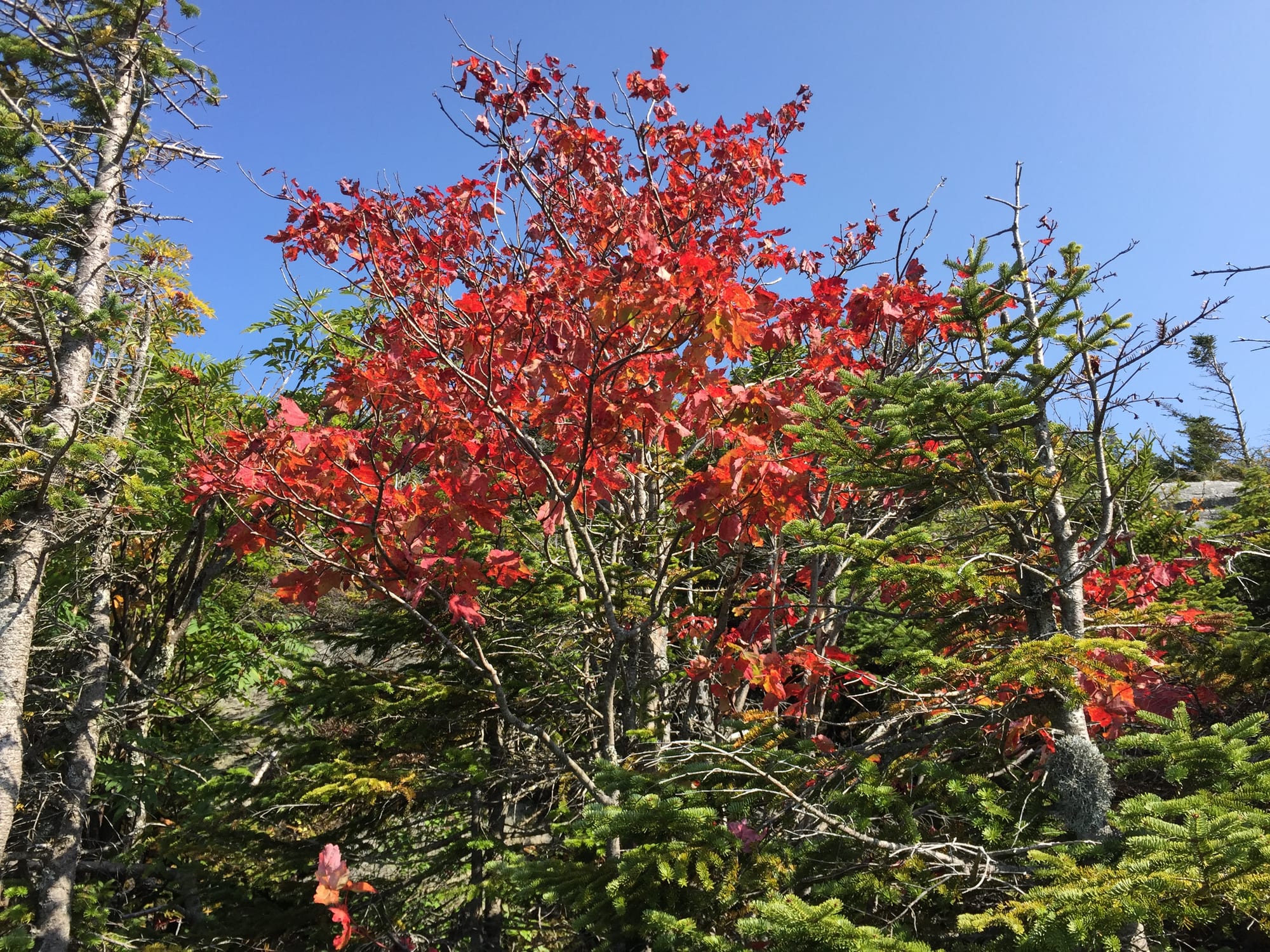
Red maples from the north of their range tend to have the reddest autumn colour, and the species is now one of the most abundant trees in the north-eastern United States.
Why New England in particular
Autumn colour happens wherever deciduous trees grow, but the brightest displays are in the northern hemisphere: southern Canada, parts of the northern United States, northern and western Europe and East Asia. New England stands out for three reasons.
The first is its trees. Much of the region is covered by the northern hardwood forest, dominated by sugar maple, yellow birch, American beech and white ash, mixed with dark conifers such as eastern hemlock and white pine that frame the colours. Red maple is far more common than when Europeans arrived, helped by the end of the regular burning once practised by Native Americans and by logging and the regrowth of young forests on land cleared in the past.
The second is variety. North America has more than 800 tree species, against 51 in western Europe, and around 70 oaks against three. During the ice ages, North America's mountain ranges ran north to south, so trees could shelter further south and survive; in much of Europe they had no such refuge.
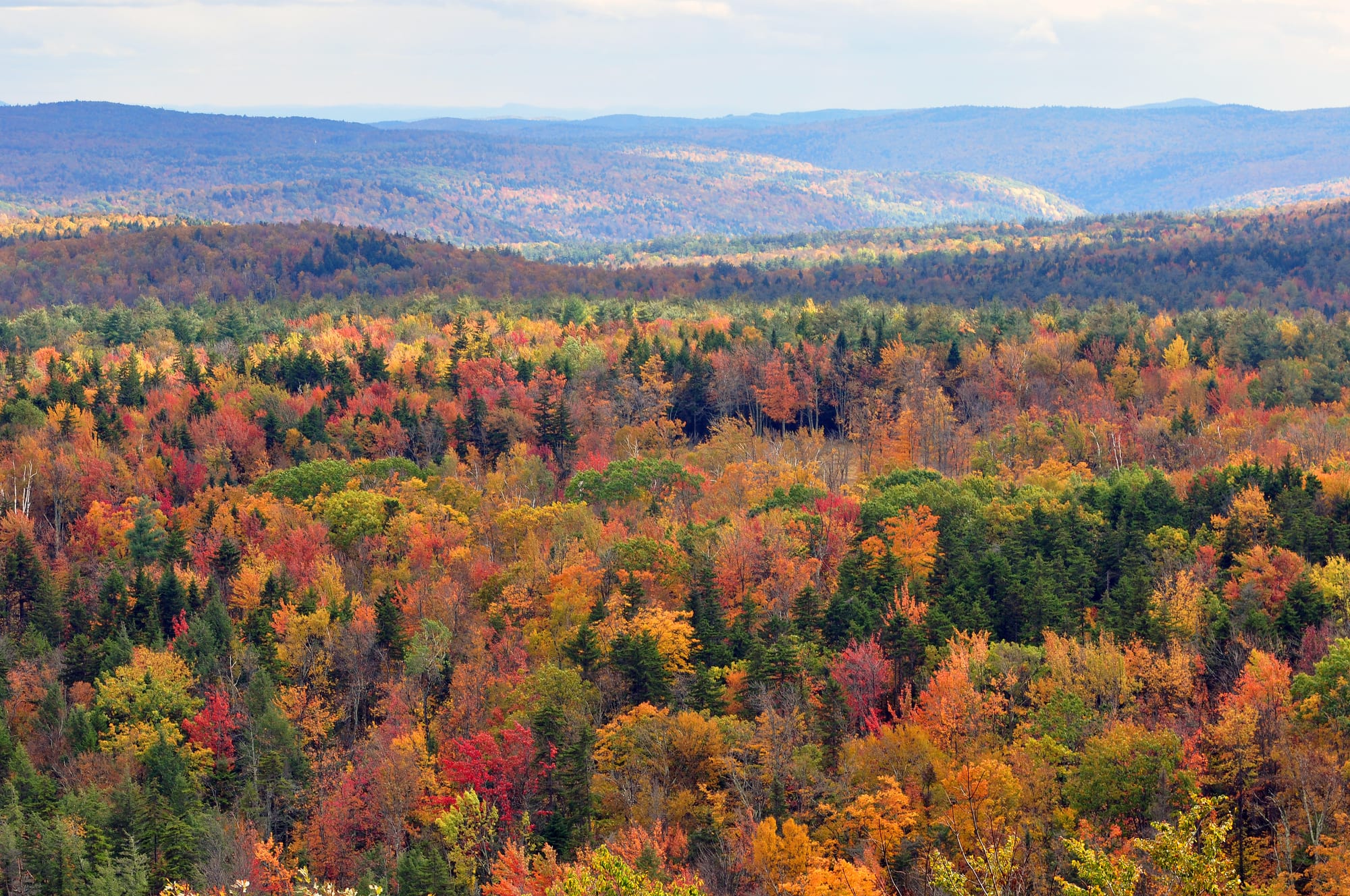
The third is weather. Most of northern and western New England has a humid continental climate with long, cold winters and short summers. The reds need sunny, cool days and chilly nights, and as the cold arrives the hills of Vermont turn red, orange and the gold of sugar maples.
Seeing it today
The American foliage season runs from September into early November. The White and Green Mountains, the Berkshires and Maine's Acadia National Park are all northern hardwood country. In New Hampshire the 32-mile Kancamagus Highway through the White Mountains is especially popular with leaf peepers, as autumn colour tourists are called, in September and October.
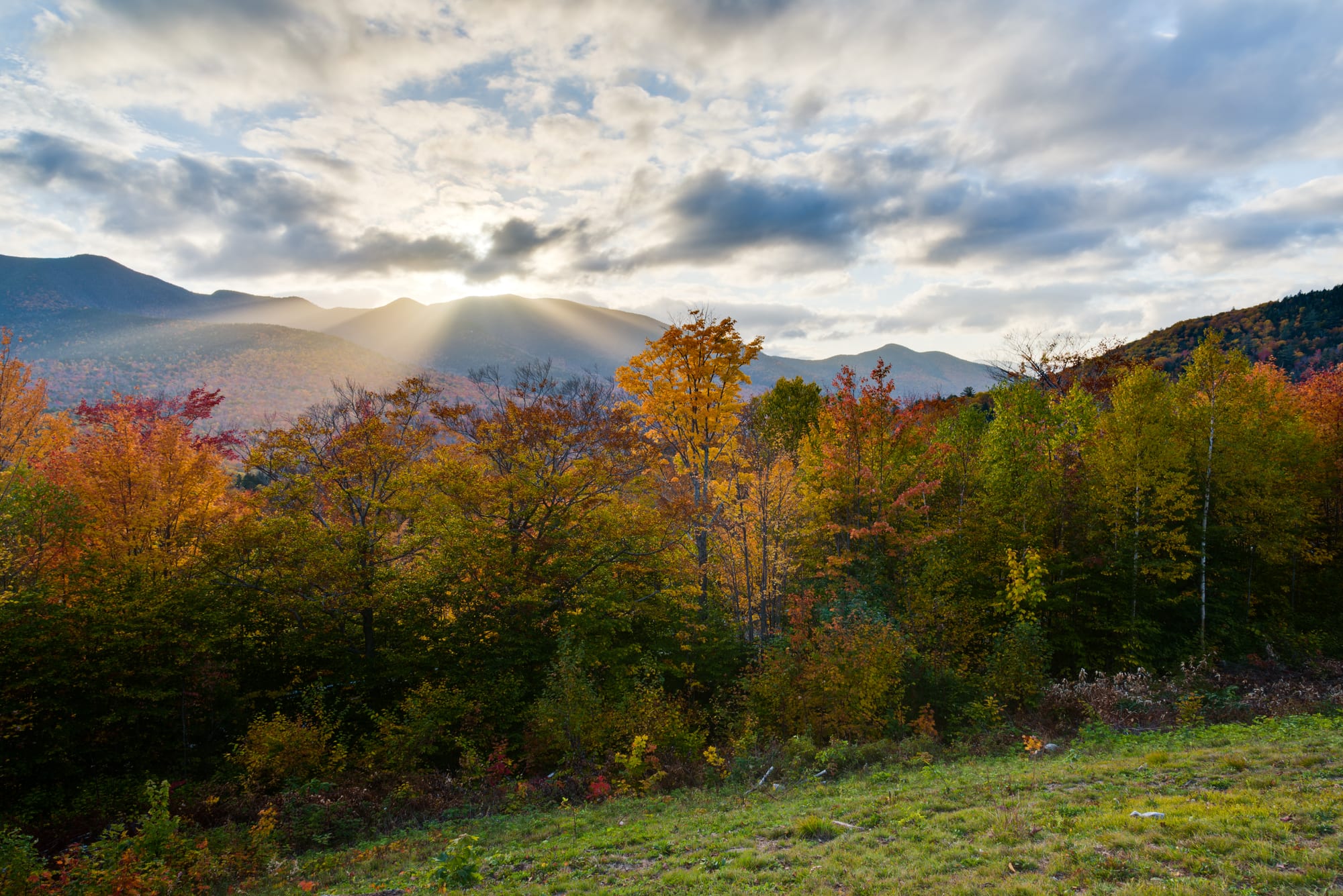
The highway climbs through Kancamagus Pass, and 26.5 miles of it are a National Scenic Byway.
The display is shifting. Warmer autumns in the north-eastern United States are delaying the colour change, and studies of herbarium specimens spanning 150 years point to autumn starting more than a month later than in the 19th century. Drought can mute the colours or make leaves fall early.