Culture & Customs · United Kingdom
Why do ravens guard the Tower of London?
Legend says the kingdom will fall if they leave. Historians suspect the tradition is far younger than it claims, perhaps no older than Queen Victoria's reign.
By Globeway Editorial · 13 October 2026
The short answer
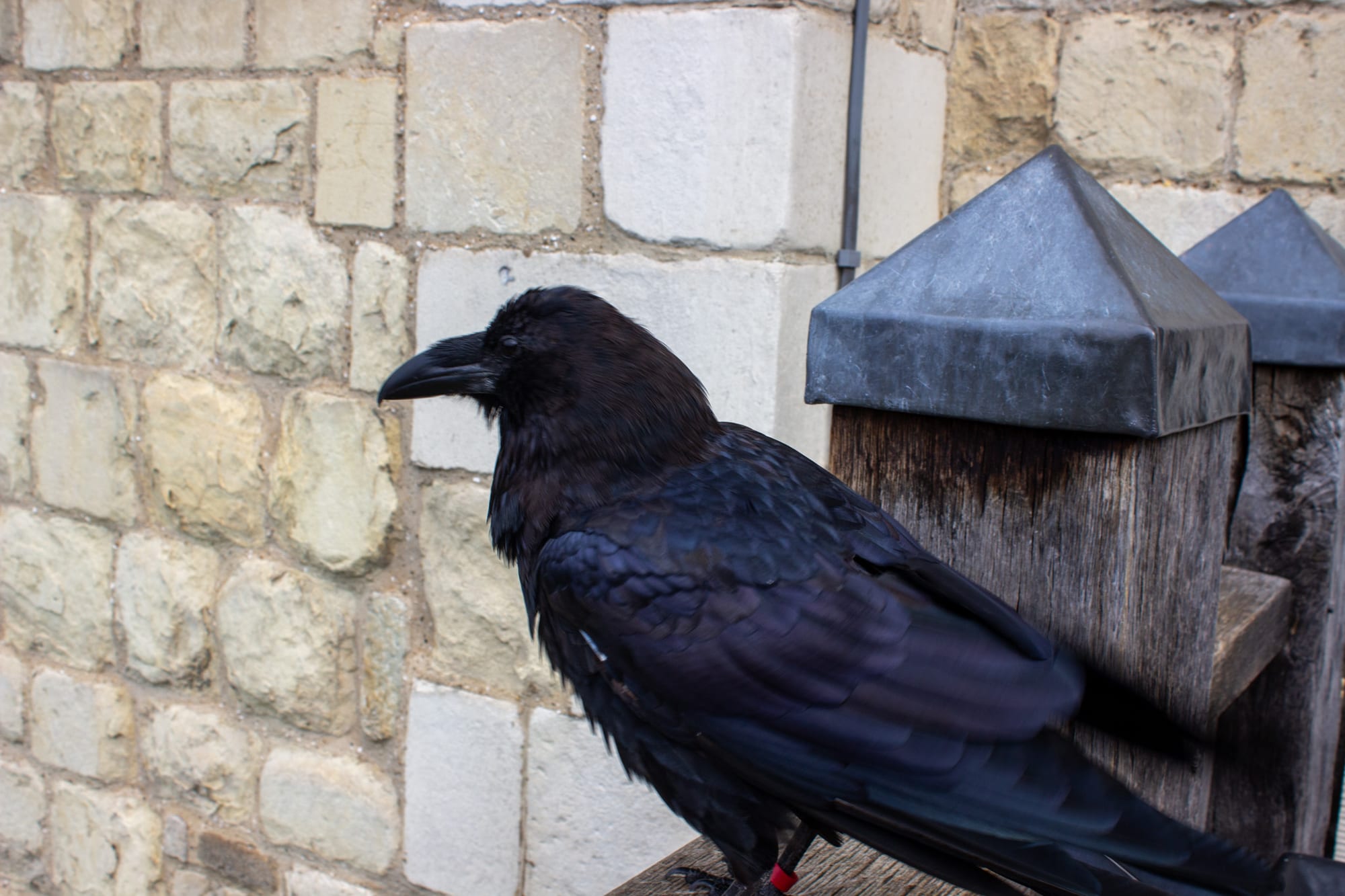
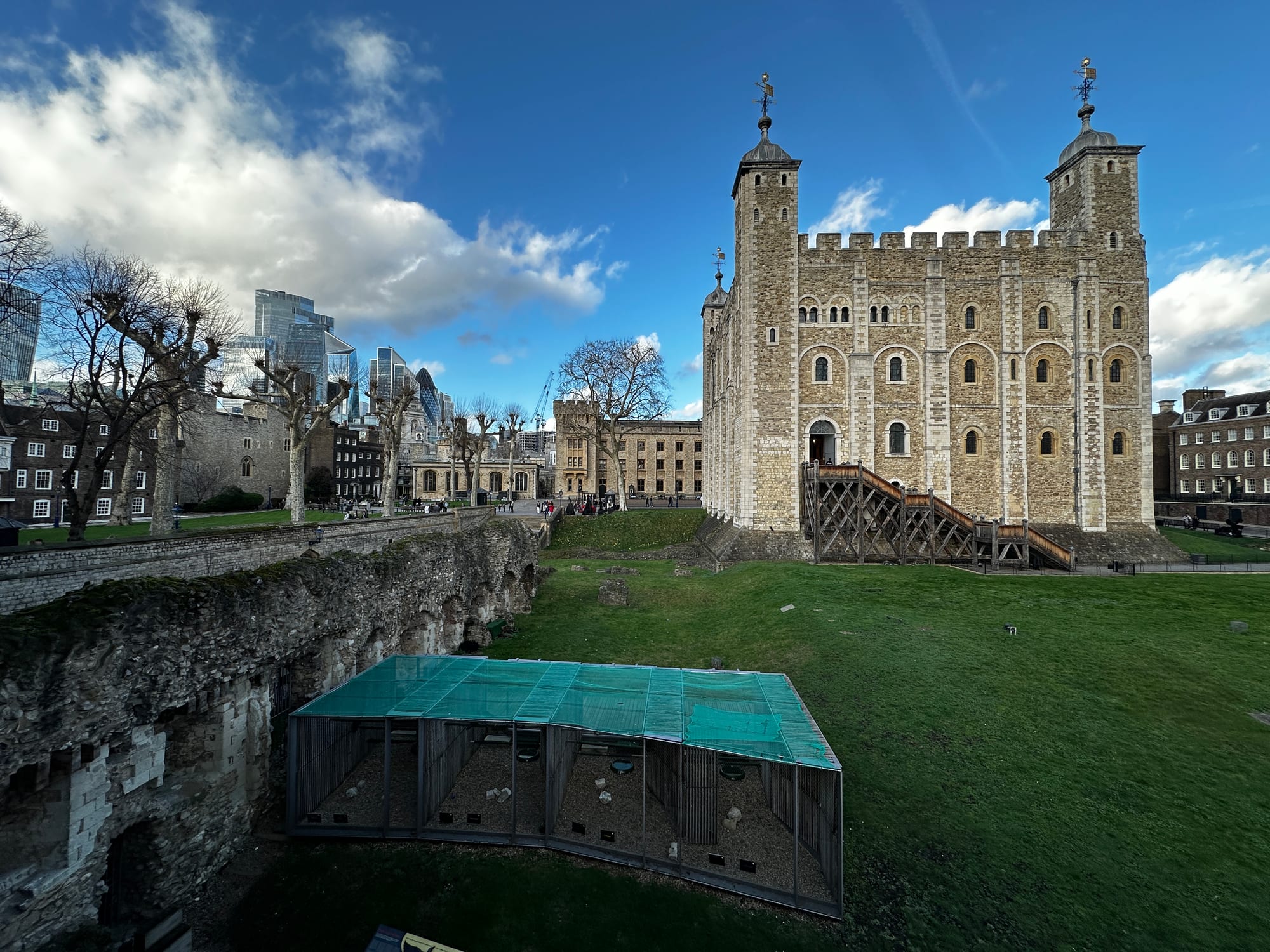
The ravens do not guard the Tower of London in any practical sense. They are kept there because of a legend: as long as the ravens remain, the Crown and the Tower are safe, and if they are lost or fly away, "the Crown will fall and Britain with it". To make sure that never happens, at least six ravens live at the Tower at all times, with their flight feathers trimmed on one wing so that they cannot fly far. There were eight in 2025.
The legend claims great age. Popular stories trace it to King Charles II in the 17th century, and even further back to a Welsh myth about a king whose name means "raven". But the Tower's own official historian believes the raven mythology is most likely a Victorian invention. The earliest known picture of captive ravens at the Tower dates from 1883, and the first recorded version of the prophecy that Britain will fall without them comes from 1944.
A king named Raven under the White Hill
The oldest tale linking the site with a raven comes from Welsh legend. Brân the Blessed, a king of the Britons, ordered his followers to cut off his head and bury it beneath the White Hill, where the Tower now stands, facing France as a talisman to protect Britain from invasion. Brân is the modern Welsh word for raven, and Celtic mythology often gives ravens magical and protective powers. The head under the hill was a promise of safety, much as the living birds are today.
For most of history, ravens did not need to be kept at the Tower at all. Wild ravens were common in London and other British towns for centuries, and were welcomed because they scavenged and helped keep the streets clean. Later they came to be seen as a threat to livestock, and during the 19th century they were hunted and shot out of many urban areas. The last recorded wild nest in 19th-century London was in Hyde Park in 1826. From then on, ravens could only live at the Tower in captivity, with official support.
The king, the astronomer and the observatory
The best-known story involves Charles II, who reigned from 1660 to 1685, and his royal astronomer, John Flamsteed. In one version, Flamsteed complained that wild ravens were flying past his telescope in the White Tower. In another, the king himself grew tired of their droppings. Either way, the order went out that the ravens must go, until someone pointed out that killing ravens was terribly unlucky and could cost Charles the kingdom he had only just regained. The ravens stayed, and the observatory moved instead, to Greenwich, where the king commissioned it in 1675.
A third version ties the birds to the Great Fire of London in 1666, when survivors turned on the ravens for scavenging and Charles supposedly ordered six to be kept at the Tower. No record of captive ravens at the Tower survives from that time, and the three stories do not even agree with one another.
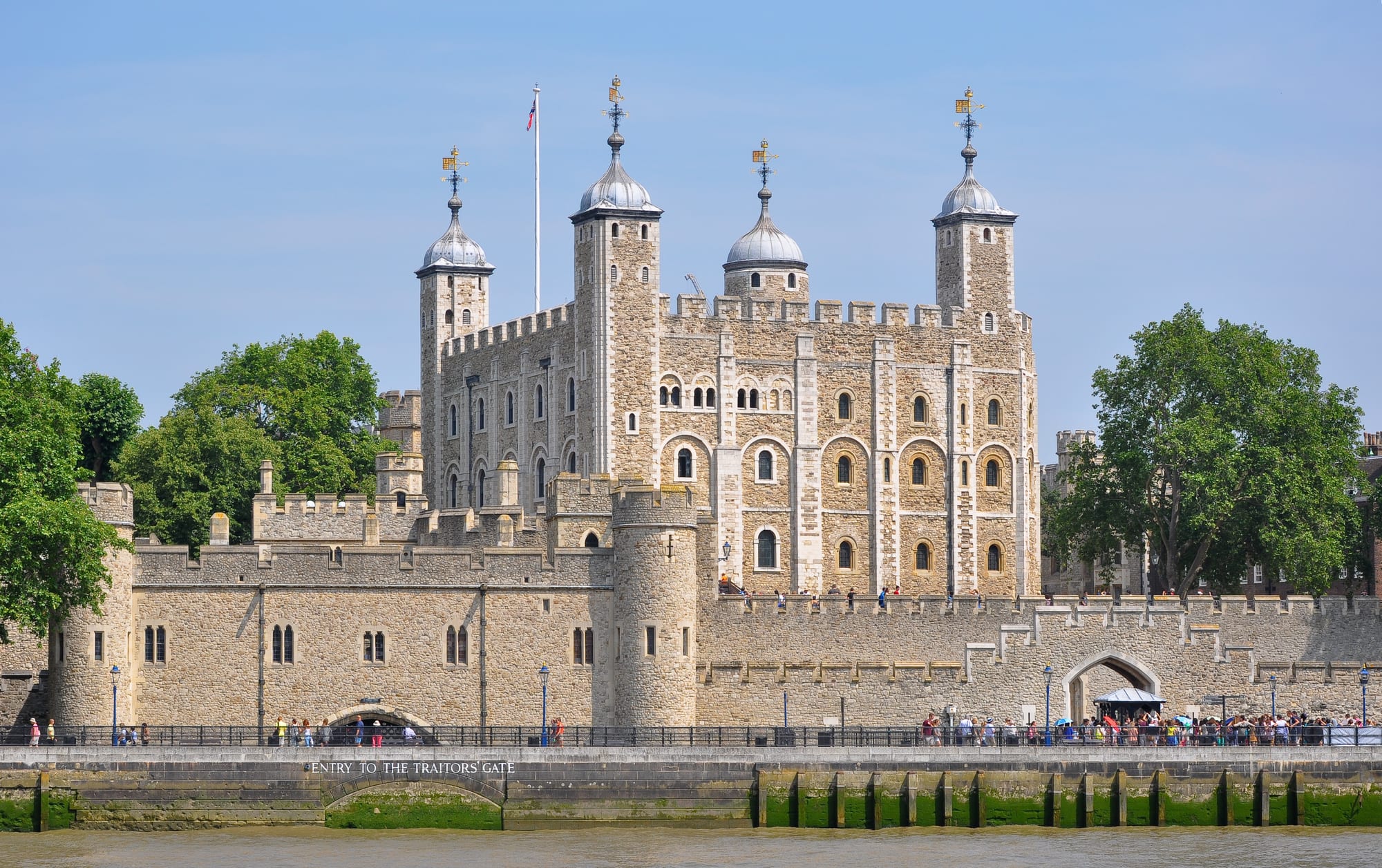
The White Tower gives the whole castle its name. In the legend of Charles II and Flamsteed, it was from here that the astronomer tried to watch the sky while the ravens flew past his telescope.
What the records actually show
Geoffrey Parnell, the Tower's official historian, considers the supposedly ancient history of the captive ravens to be a legend invented in the Victorian era. The first two known depictions of ravens at the Tower both date from 1883: one in a special edition of a newspaper, The Pictorial World, the other in a children's book, London Town. Parnell has suggested the first captive birds may simply have been pets of the Tower staff.
The timing fits. Edgar Allan Poe's poem "The Raven", first published in January 1845, had made the Western world fascinated with the birds. The American writer Boria Sax, who has studied the subject, concluded that the ravens were originally brought in to dramatise the alleged site of executions at the Tower. He also found a 1918 account saying the birds had been supplied by the 4th Earl of Dunraven, whose family had been persuaded that their castle in Glamorgan was once the home of Brân. The earls may have seen the ravens as Brân's representatives and wished to assert a spiritual claim over the Tower.
A wartime prophecy
The specific belief that Britain will fall if the ravens leave first appears in July 1944, during the Second World War. The birds were then being used as unofficial spotters for enemy bombs and planes. The bombing took a heavy toll: all but three of the ravens died from bombs or stress, and two of the survivors, a mated pair called Grip and Mabel, soon disappeared. Parnell has found the blunt line "there are none left" in the records, though the monarchy survived. Winston Churchill, then prime minister, ordered more ravens to bring the flock back up to strength.
The ravens are formally enlisted as soldiers of the Kingdom and were issued attestation cards, like soldiers and police, which means they can also be dismissed for bad conduct.
Life with the Ravenmaster
Today the ravens are tended every day by the Ravenmaster, one of the Yeomen Warders who guard the Tower, helped by a team of assistants. The post is an appointment rather than a rank. Barney Chandler took over in March 2024 from Christopher Skaife, who had reduced the clipping of the birds' feathers so that they could fly rather than merely hop or glide.
Each raven wears a different coloured band on one leg so that it can be told apart from the others. In captivity at the Tower, ravens have lived for more than 40 years.
Their diet is raw meat every day, usually liver, lambs' hearts and beef or pork trimmings, with boiled eggs and blood-soaked bird biscuits every other day. The flock is kept up by a captive breeding programme that has run since
- In 2019 the pair Huginn and Muninn, named after the god Odin's ravens in
Norse myth, hatched four chicks, the first born at the Tower since 1989, and in May 2025 two more young birds, Henry and Poe, joined the flock. Visitors are asked not to feed them: a raven will bite if it feels threatened. Whether or not the kingdom depends on them, the Tower has made very sure it will never have to find out.