Daily Life · Hungary
Why does Budapest have so many thermal baths?
Hot water rises naturally along a fault under the Buda Hills, and Romans, Ottoman governors and Habsburg-era engineers each built baths to use it.
By Globeway Editorial · 13 October 2026
The short answer
Budapest sits on hot water. More than 100 thermal springs rise under the city, together delivering about 70 million litres (18 million US gallons) a day. On the Buda side of the Danube, hot water comes to the surface on its own, along a fault at the foot of the hills. Where the water simply flows out of the ground, people have always built somewhere to bathe in it.
Three waves of builders turned that gift into dozens of baths. The Romans chose the site of their regional capital partly for its springs. The Ottomans, who ruled Buda from 1541 to 1686, added domed bathhouses, several of them still in use. Then, from the late 19th century, engineers drilled deep wells and the city built grand spa palaces, earning the official title "City of Spas" in 1934.
Water heated deep under the Buda Hills
A hot spring forms when groundwater sinks deep enough to be warmed by the heat of the Earth's interior and then finds a way back up. Rock gets hotter with depth even far from any volcano, and faults, where the rock is shattered, give water an easy route down and up again.
Budapest has exactly that arrangement. The Buda Hills on the west bank are made mainly of limestone and dolomite, rocks that rainwater slowly dissolves into cave systems. Gellért Hill and its neighbours rose along a tectonic break line, and that fracture explains the hot springs all around it. In Buda the warm water breaks out by itself; on Margaret Island and in flat Pest, wells had to be drilled to reach it.
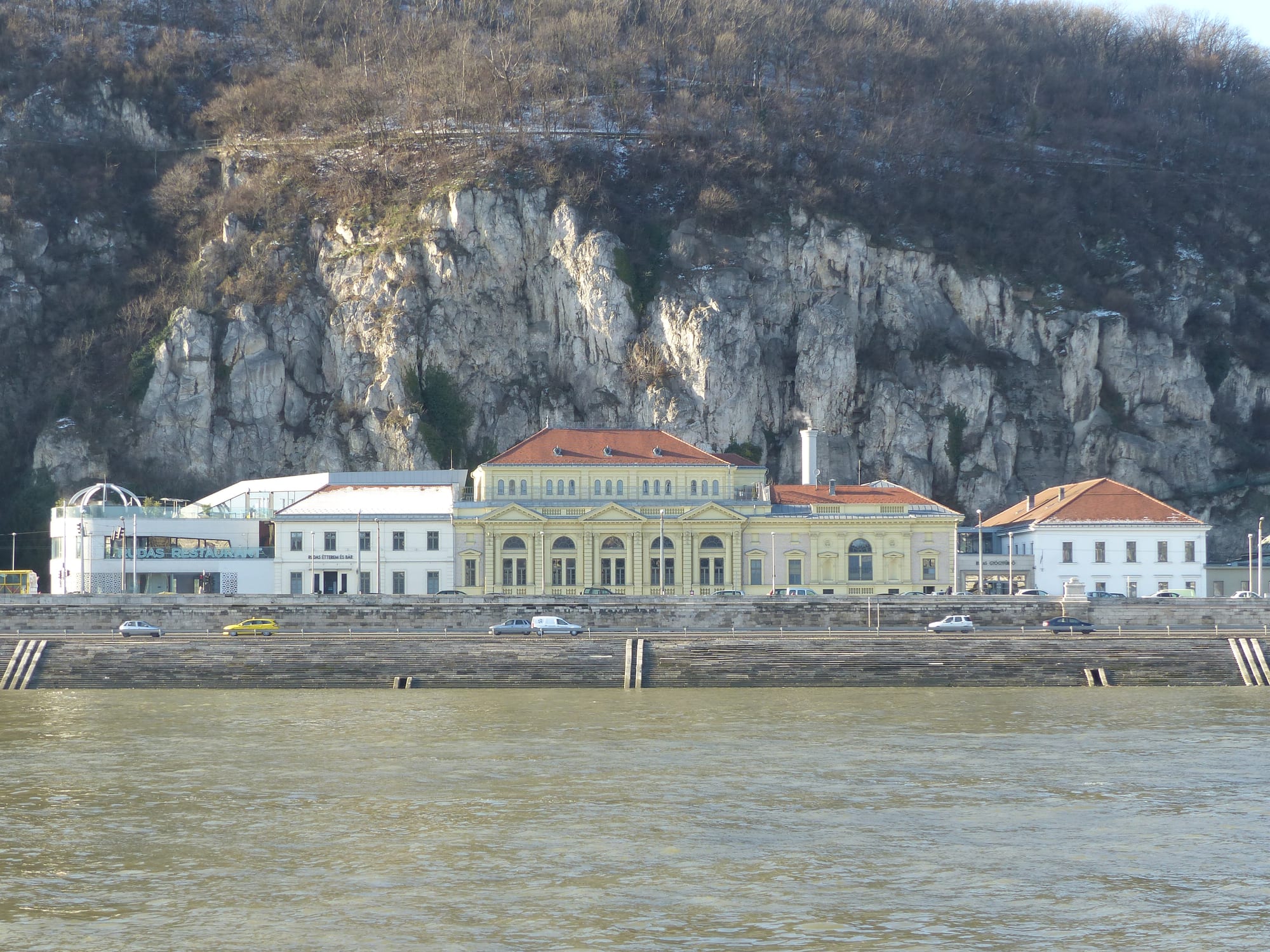
The springs follow the line where the hills meet the river, so the oldest baths sit on a narrow strip of land between rock and water. Over hundreds of thousands of years the rising hot water also dissolved caves inside the hills.
Underground, the water has also hollowed out caves. The Molnár János Cave, beneath the Rózsadomb district, is flooded with water and has more than 5 kilometres of explored passages, some reaching 100 metres deep. Its water is a mix of warm water rising from depth and cold water flowing in from the Buda Hills, and it feeds the Lukács Baths.
Romans at Aquincum
The Romans came for the springs. One reason they settled the west bank of the Danube and made Aquincum, now part of Óbuda in northern Budapest, the capital of the province of Pannonia Inferior was to use the thermal water. Their town, with at least 30,000 people by the end of the 2nd century, had public baths and houses with central heating, and the ruins of its large baths can still be seen. The town was largely destroyed by about 350 AD.
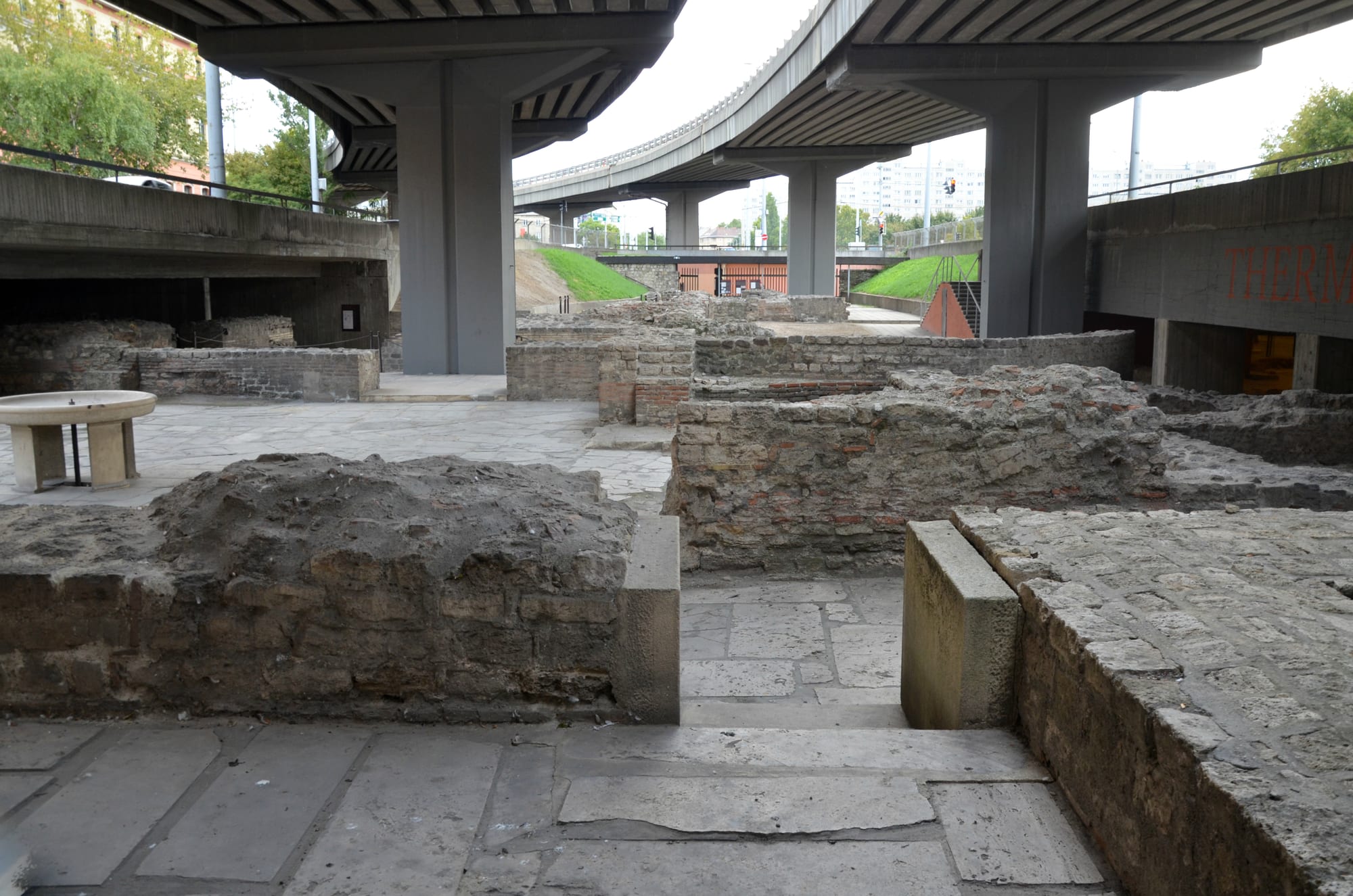
A Roman legion of 6,000 men was stationed at Aquincum by AD 89, and the town grew up around its fortress on the empire's frontier.
Bathing did not stop with the Romans. Healing waters on the site of today's Gellért Baths are mentioned from the 13th century, and a hospital stood there in the Middle Ages; the Knights Hospitallers used the springs where the Lukács Baths now stand from at least the 12th century.
The Ottoman bathhouses
The biggest early building boom came after the Ottomans took Buda in 1541. In Islamic societies the hammam, or public bathhouse, served both faith and everyday life: Muslims perform ablutions before prayer, and before private plumbing a public bath was also the place to keep clean and meet people. The Ottomans brought hammams to much of central and eastern Europe, and in Buda they had natural hot water to fill them.
Sokollu Mustafa Pasha, the longest-serving Ottoman governor of Buda, from 1566 to 1578, commissioned several baths that still stand. The Rudas Baths, founded in 1571 or 1572, keep their octagonal pool under a dome 10 metres across, held up by eight pillars, and echo monumental Ottoman buildings in Istanbul. The Rác Baths keep a Turkish cupola built in 1572. The Király Baths, begun in the 1560s, were fed through underground pipes from springs near today's Lukács Baths.
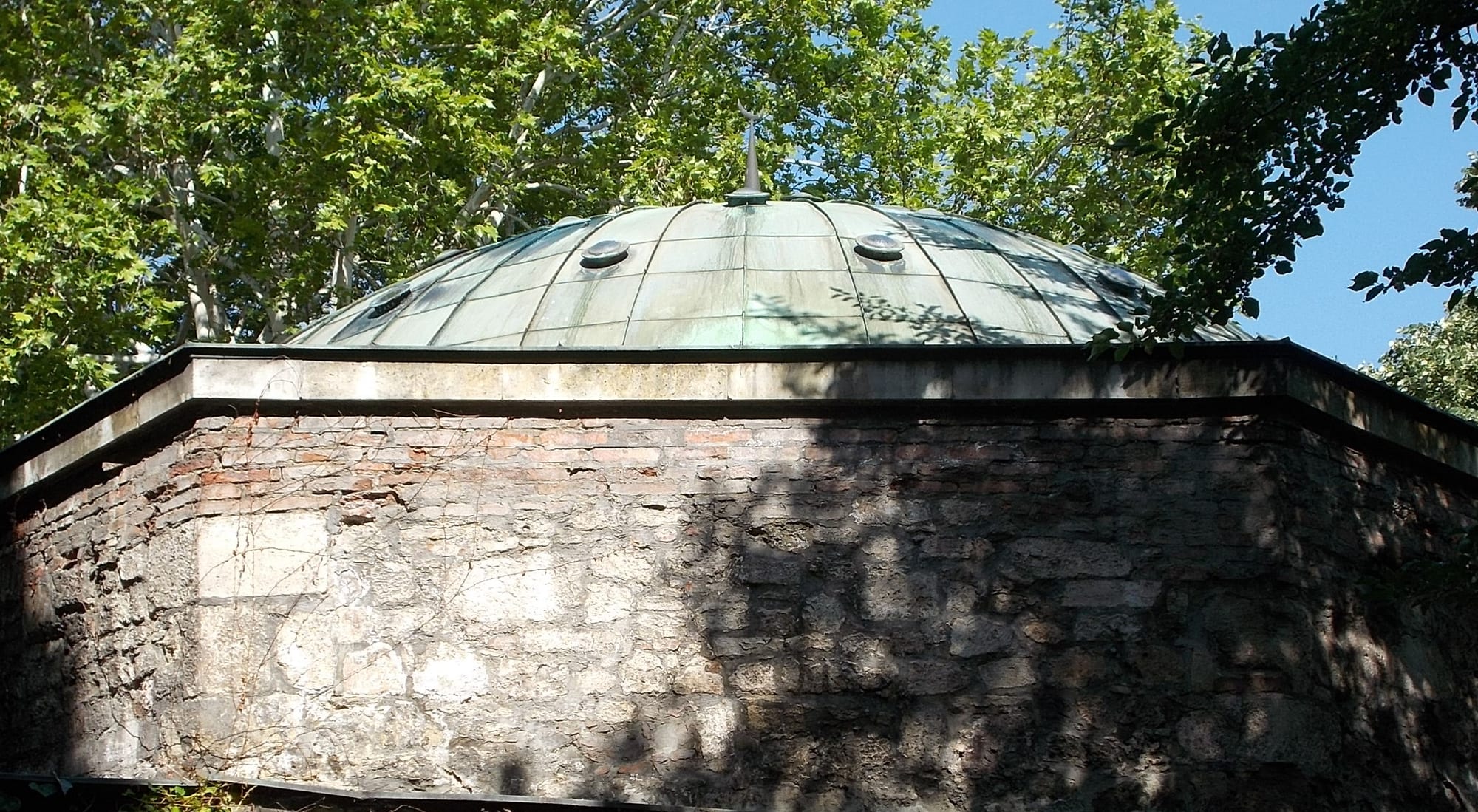
In the 18th century the bath was sold to the König family, which is how it got its name: Königsbad in German, Király, meaning king, in Hungarian.
Drilling for heat: the spa city
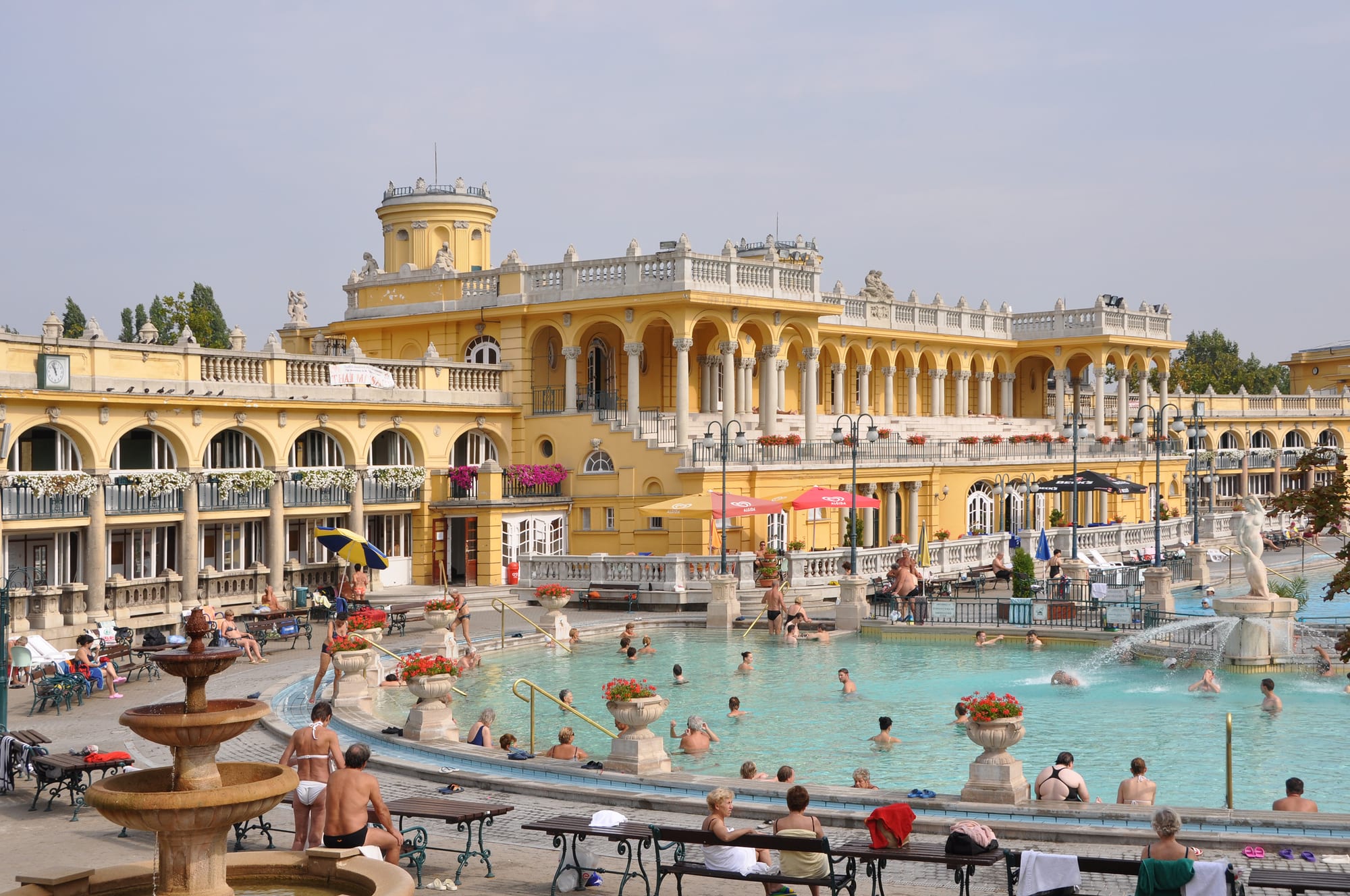
In the 19th century Budapest began to tap its water systematically. In the 1860s and 1870s the engineer Vilmos Zsigmondi drilled a well 975 metres deep under City Park, and that hot artesian water, which rises under its own pressure, supplied the Széchenyi Baths when they opened on 16 June 1913. Expansion in 1927 brought the complex to its present size, with three outdoor and 15 indoor pools, and a second well drilled in 1938 to a depth of 1,256 metres produces water at 77 °C, around 6 million litres a day. More than 200,000 bathers came in the opening year.
Grand new spas followed or were rebuilt. The Art Nouveau Gellért Baths opened in 1918 with mosaics, marble columns and stained glass, adding a wave pool in
- The Lukács Baths gained a spa hotel in the 1880s. The city realised in
the 1920s that its waters could draw visitors, was officially ranked a City of Spas in 1934 and hosted the first International Spa Congress in 1937. Many baths are formally "medicinal baths", and their mineral-rich waters are used to treat rheumatism, joint problems and breathing complaints.
The baths in daily life today
The baths remain part of ordinary life rather than only a tourist sight. They are used mostly by older people, while younger residents tend to prefer the open-air lidos in summer, apart from the occasional evening water party. The three outdoor pools at Széchenyi stay open all year, so bathers sit in warm water outdoors even in winter. Around the courtyard at the Lukács Baths, marble tablets record the thanks of patrons who believed they had been cured.
Not every famous bath is open. The Király Baths have been closed for renovation since 15 March 2020, and the Gellért Baths closed in October 2025 for refurbishment, with reopening planned for 2028. Széchenyi, Rudas and Lukács continue to draw on the same hot water that brought the Romans here almost two thousand years ago.