Attractions & Natural Wonders · Slovenia
Why does Lake Bled have a church on an island?
Slovenia's only natural lake island has drawn worshippers since the first Christian chapel around 800, and pilgrims slowly built the island itself up.
By Globeway Editorial · 13 October 2026
The short answer
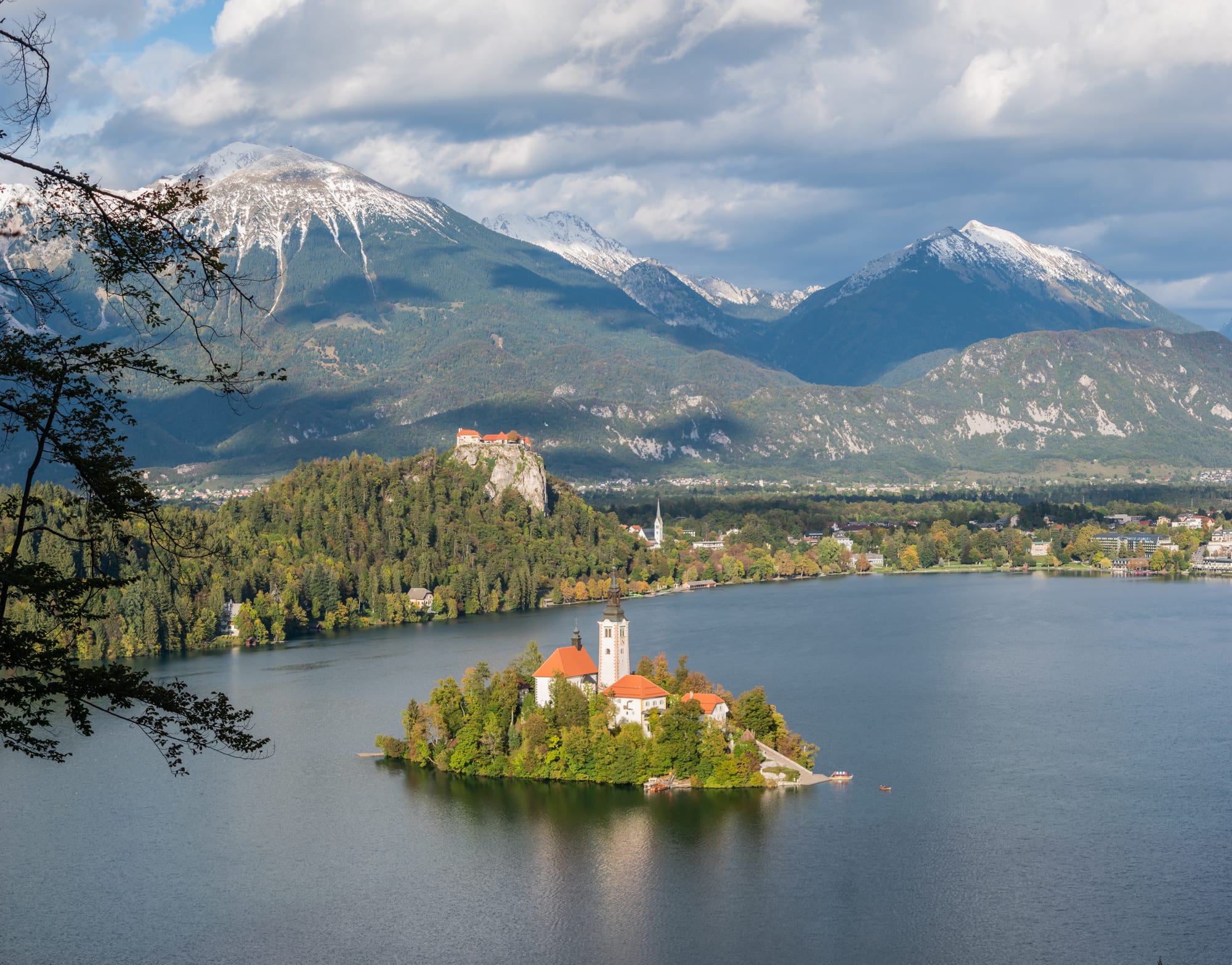
Bled Island is the only natural island in any Slovenian lake, a small rocky hill left standing when glaciers and lake water filled the basin around it. People treated it as a special place very early. Archaeologists have found that a wooden Christian chapel stood on its summit by the end of the 8th or the start of the 9th century, when the Frankish empire took control of the region and its Slavic inhabitants were being converted to Christianity. A church has stood on the same spot ever since.
The church seen today, dedicated to the Assumption of Mary, stands on the foundations of five earlier buildings. Each was larger than the last, paid for by bishops, wealthy farmers and pilgrims who came to pray to Mary on the lake. To make room for each enlargement, builders raised retaining walls and filled them with earth, so the island's tidy terraced shape is partly man-made. The story of a pagan temple to the goddess Živa on the island, often repeated, comes from 19th-century Romantic poetry rather than from the ground.
An island made by ice
Lake Bled lies in a basin closed off by the end moraine, the ridge of debris pushed up at a glacier's front, of the old Bohinj glacier. Geologists describe it as being of mixed glacial and tectonic origin: movements of the earth's crust deepened the basin, and the ice ground down and rounded the rocky hills around it. One of those hills, a little to the west of the lake's centre, was left poking above the water when the basin flooded.
The result is a small, steep island of just 0.82 hectares that rises up to 18 metres above the lake. The lake itself is 2,120 metres long and 1,380 metres wide, with a maximum depth of about 30 metres. A rock in the middle of a lake, cut off but visible from every shore, is the kind of place that invites reverence, and the island's history suggests people felt that from the start.
Five churches under one floor
Between 1962 and 1965 archaeologists from the National Museum in Ljubljana dug beneath the church and found the foundations of five earlier buildings, parts of which can still be seen through glass panels in the floor.
The oldest was a wooden chapel about 9 by 5 metres, with walls of woven branches plastered with clay and a horseshoe-shaped apse, the rounded end that holds the altar, pointing almost exactly east. The dead were buried around it, and excavators documented 124 burials in an early medieval cemetery dating back to the 9th century. In the 10th century the first stone church replaced the chapel, with its apse in the very same place.
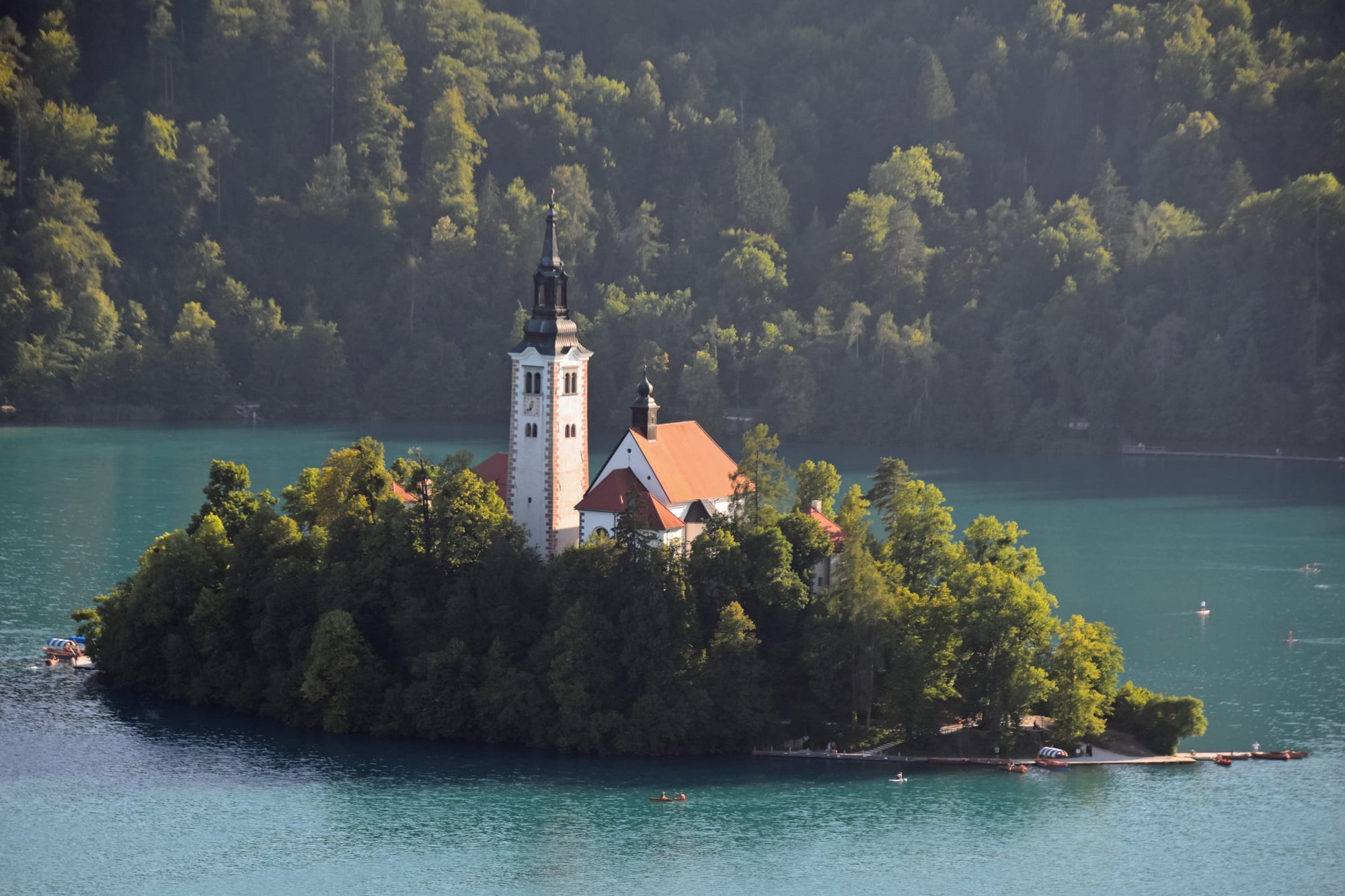
The little roof turret above the nave that holds the wishing bell stands over the spot where the apses of the first two churches stood, the holiest part of each building. The free-standing bell tower beside the church kept its 15th-century lower section and gained a Baroque roof.
Bled's fortunes changed in 1004, when the German king Henry II gave the estate to the bishops of Brixen, who held it for the next 800 years. In the following century a larger church with two aisles was built on the island in the style of churches in Brixen. In the 12th century, with money from rich farmers, it became a three-aisled Romanesque basilica, and builders began walling and filling the ground around it to create a terrace for pilgrims. The church first appears in writing in 1185, as Saint Mary in the lake of Veldes, the German name for Bled.
A Gothic church followed in the 14th century, and in 1431 the right to grant indulgences, the remission of punishment for sins promised to pilgrims, helped pay for further work. The rebuilt church was consecrated on 15 December 1465 and soon painted with frescoes, some of which survive in the chancel. A severe earthquake in 1511 badly damaged it, and it was consecrated again in 1523.
A Baroque makeover and a staircase
In the second half of the 17th century the church was gradually given its present Baroque form: side chapels, a choir loft and an entrance porch were added, the Gothic paintings were plastered over and the walls whitewashed. The bell tower was raised. Builders also added a second ring of retaining walls lower down the slope and filled the space inside, and only then did the island take on the outline familiar from postcards. A Baroque stone staircase of 99 steps, leading up to the church, dates from 1655.
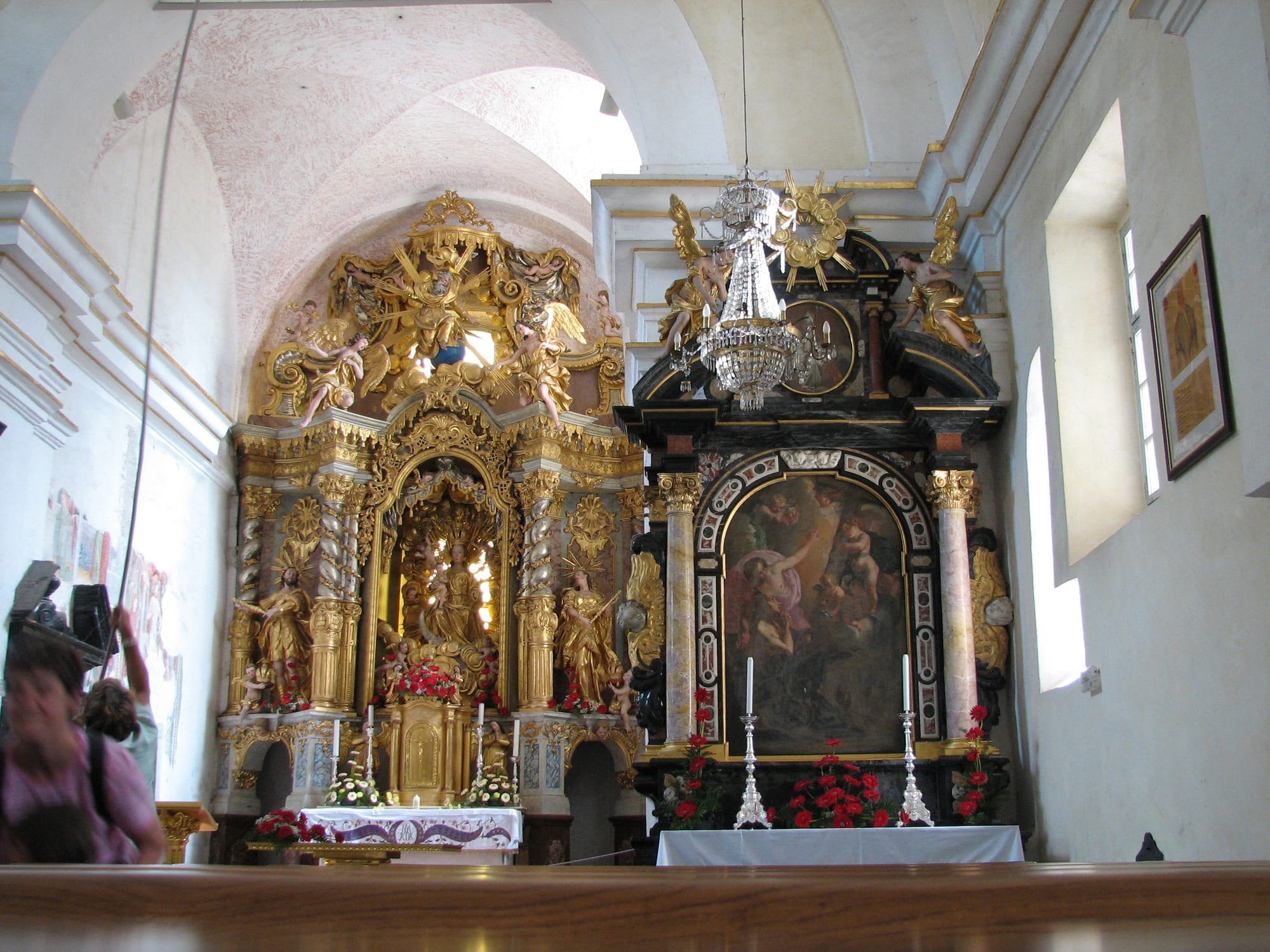
The carved and gilded high altar, made in 1747 by an unknown woodcarver, shows Mary and the Christ Child among angels, flanked by statues of Emperor Henry II and his wife Kunigunde, a reminder of the gift that tied Bled to Brixen. The two marble side altars were made in 1699 in the Ljubljana workshop of Mihael Kuša.
The goddess who was never there
Many accounts say a temple to Živa, a Slavic goddess of life, once stood where the church is now. The idea comes mainly from France Prešeren's epic poem The Baptism on the Savica, published in 1836 and often called the Slovene national epic. Its heroine, Bogomila, is a priestess of Živa, whose temple the poem places on Bled Island before the region is converted to Christianity. Prešeren modelled his goddess partly on the Roman Venus. Živa herself is recorded in only one medieval chronicle, as the goddess of one of the tribes of the Polabian Slavs, far from Bled.
The archaeology is more cautious. Beneath the oldest church, excavators found the outline of a rectangular wooden building that may also belong to the early Middle Ages, and the dating leaves open the possibility that an older pre-Christian shrine once stood there. Traces of people on the island go back to the New Stone Age, though experts think it was then only a temporary fishing post. The archaeologist Andrej Pleterski has proposed that early Slavic settlers treated the island as one point of a sacred triangle in the landscape, but no tradition survives to confirm it.
Pilgrims, boatmen and a wishing bell
The church may be the oldest pilgrimage centre in Slovenia, and its traditions are still alive. In 1740 the Habsburg empress Maria Theresa granted 22 local families the exclusive right to ferry pilgrims across the lake, and many of today's oarsmen descend from them. They still row the pletna, a flat-bottomed wooden boat seating 20 passengers, standing up and working two oars.
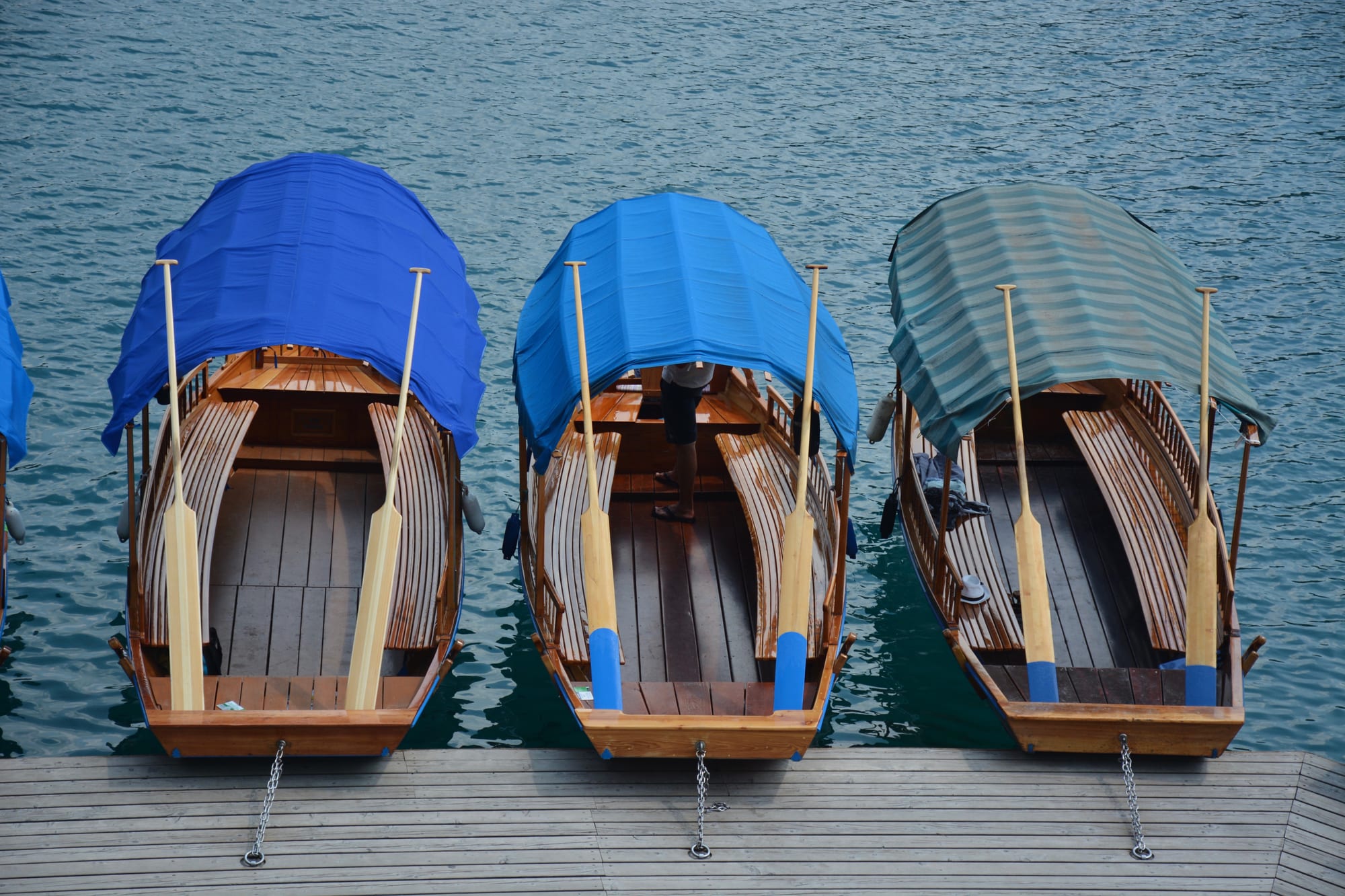
The word pletna comes from a Bavarian German word for a flat-bottomed boat. Most historians date the first boats on the lake to 1590, though some sources claim they were used as early as 1150.
Inside the church hangs a bell that, according to local belief, grants the wish of whoever rings it. Legend says a young widow from Bled Castle, whose husband had been murdered and thrown into the lake, had a bell cast from her silver and gold for the island church. She gave her fortune to the church and retired to a convent in Rome, and after her death the Pope sent another bell. Couples who marry on the island keep another custom: the groom carries his bride up the 99 steps before they ring the bell and make a wish. In colder winters the whole lake freezes and the island can be reached on foot.