💰 Budget
Bled is one of the most expensive places in Slovenia, especially in July and August, when rooms by the lake cost the most and restaurant prices are at their highest. The pletna crossing, the castle and lakeside parking add to the day's costs. Walking round the lake and the viewpoints costs nothing, and staying in Radovljica or Bohinj is cheaper.
- Daily Budget Midrange
- USD 150–290 (hotel or guesthouse by the lake, restaurant dinners, pletna and castle tickets, parking)
- Daily Budget Shoestring
- USD 70–110 (hostel or private room, bakery and supermarket food, local buses)
Carry cash for the pletna crossing, and come by bus from Ljubljana rather than paying for lakeside parking in summer.
📅 Best Time to Visit
Late May, June and September give the best mix of weather and space. July and August are warmest and best for swimming but very crowded, especially at weekends. Winter is cold and quiet; in the coldest years the lake freezes over and the island can be reached on foot.
⏳ Suggested Number of Days
The lake itself is seen in a day or two. Three or four days make room for the gorges, the plateau forests and the neighbouring lake valley, and longer stays suit those who come to hike or cycle in the Julian Alps.
- First Visit
- 1–2 days
- With Surroundings
- 3–4 days
🚆 Transportation
The town is small and most of it is reached on foot around the lake. Local buses link the centre with Lesce-Bled railway station, about 4 km away, and regional buses run on to Bohinj and Ljubljana. A car is useful for the plateaus and valleys, but lakeside parking is limited and charged.
Use the bus station on the north-east side of the lake as the base for trips; trains from Bled Jezero station, across the lake, run roughly every two hours on an irregular timetable.
🛬 Airport & Station Connections
Ljubljana is about 50 km to the south-east, and Ljubljana Jože Pučnik Airport is linked to the town by bus and taxi. Buses run hourly from Ljubljana's bus station. Regional trains from Ljubljana and international trains to Villach stop at Lesce-Bled, about 4 km from the lake, and trains on the scenic Bohinj Railway call at Bled Jezero above the western shore.
🚶 Walkability
Very walkable. The path around the lake connects all the shores, the centre and the swimming areas, and the climbs to the castle and to Mala Osojnica are short but steep. Roads near the centre are busy with cars and coaches in summer.
🛡️ Safety
Slovenia is one of the safest countries in Europe, with low crime. In Bled the main concerns are the crowds on the lakeside paths in summer, where pickpocketing is possible, and the usual care needed on steep paths, cold water and mountain trails.
Keep valuables close on crowded summer days, and stay on marked paths on the steep viewpoints. Check current official travel advice before travelling.
🌦️ Climate
Bled lies at about 500 metres in the eastern foothills of the Julian Alps and has cold winters in which the lake sometimes freezes. In Ljubljana, the nearest city, the warmest months are July and August.
- Summer
- warm — in Ljubljana, the nearest city, July and August highs are generally 25–30°C
- Winter
- cold — in Ljubljana, January temperatures are mostly around 0°C; in colder winters the lake at Bled freezes over
🤝 Local Customs
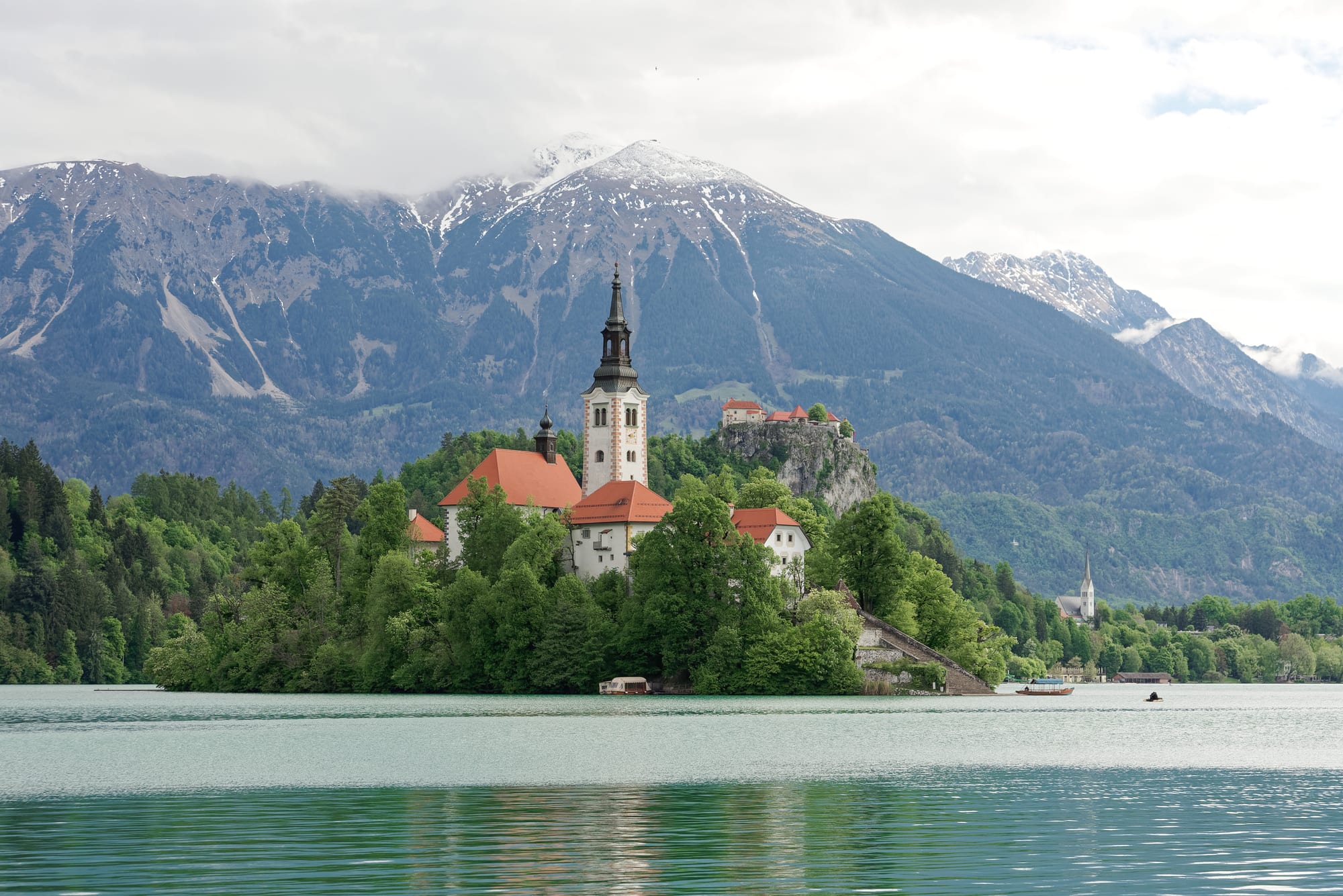
The island church is a working pilgrimage church where weddings are held regularly; by tradition the groom carries the bride up the 99 steps before the bell is rung. Visitors are expected to behave quietly inside. English is widely spoken in the town's shops and restaurants.
Respect weddings in progress on the island, and swim only in the designated bathing areas.
💳 Common Payment Methods
The currency is the euro. Cards are accepted in most hotels, restaurants and shops, but the pletna boatmen are paid in cash, so keep some euros to hand. Cash machines are found in the town centre.