Culture & Customs · Papua New Guinea
Why does Papua New Guinea have more than 800 languages?
Tens of thousands of years of settlement, a country three-quarters mountains and a world of small, self-governing communities gave each valley its own tongue.
By Globeway Editorial · 13 October 2026
The short answer
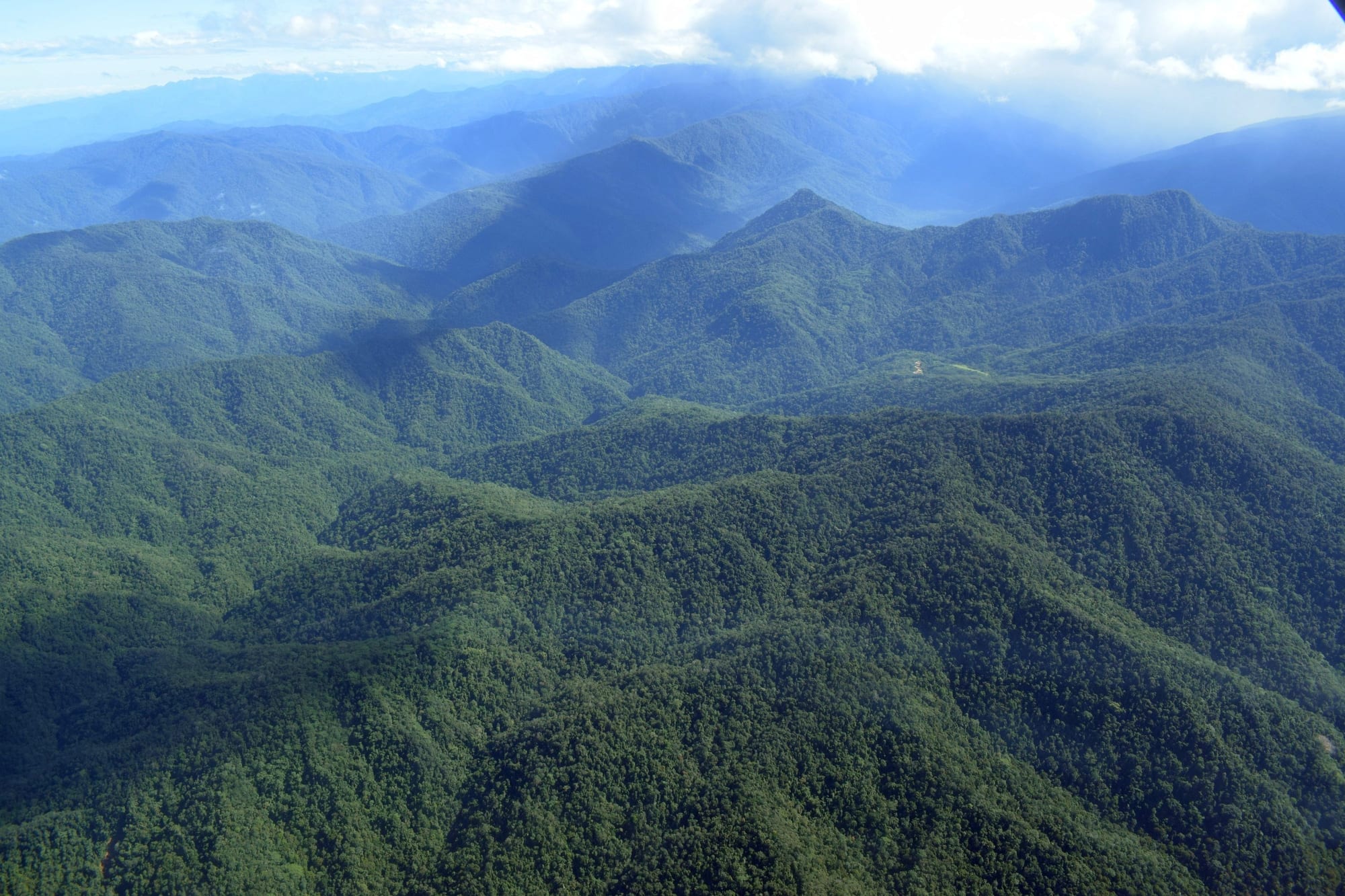
Papua New Guinea has about 840 living languages, more than any other country, and roughly 12% of all the languages spoken on Earth. The reasons are time, terrain and the way people lived. Humans reached New Guinea some 42,000 to 45,000 years ago, giving languages an enormous span in which to divide and divide again. A spine of mountains covers at least 72% of the country, cutting it into steep valleys, islands and swamps where communities could live for millennia with only their neighbours for company.
Just as important, those communities were small and ran their own affairs. No kingdom or empire ever united the island and spread a single language across it, as happened in much of the world. The result is a country where most languages have fewer than a thousand speakers, and where the common languages people use today, Tok Pisin and English, arrived only in the last 150 years.
Counting the languages
The exact number depends on where the line is drawn between a language and a dialect. Ethnologue and other sources count 840; in 2006 Prime Minister Sir Michael Somare put it at 832, "languages, not dialects". Whichever figure is used, the average language has only about 7,000 speakers, and the majority are spoken by fewer than a thousand people. The largest local language, Enga, in the highlands, has about 200,000 speakers, and even it is split into dialects.
What makes the country remarkable is not only the number but the variety. Most of its languages are grouped as "Papuan", but that label is simply geographical, meaning languages of the region that are not Austronesian. It does not mean they are related. Linguists divide the Papuan languages of New Guinea and nearby islands into dozens of separate families, plus many isolates, languages with no known relatives at all; one recent classification counts 70 independent families and 55 isolates.
Forty thousand years of drift
Modern humans arrived in what became New Guinea, Australia and the Bismarck Archipelago around 42,000 to 45,000 years ago, among the earliest migrations out of Africa. Bougainville was settled by around 28,000 years ago and remote Manus Island by about 20,000 years ago. People were living in the highlands at least 35,000 years ago. For almost all that time, the island's populations remained relatively isolated from the rest of the world.
That depth of time matters because languages never stand still. Two groups that stop talking to each other every day gradually drift apart in their words, sounds and grammar until they can no longer understand one another, and then each may split again. Rising seas cut the island off from Australia about 10,000 years ago, but New Guineans and Aboriginal Australians had already diverged some 37,000 years ago.
A country made of valleys
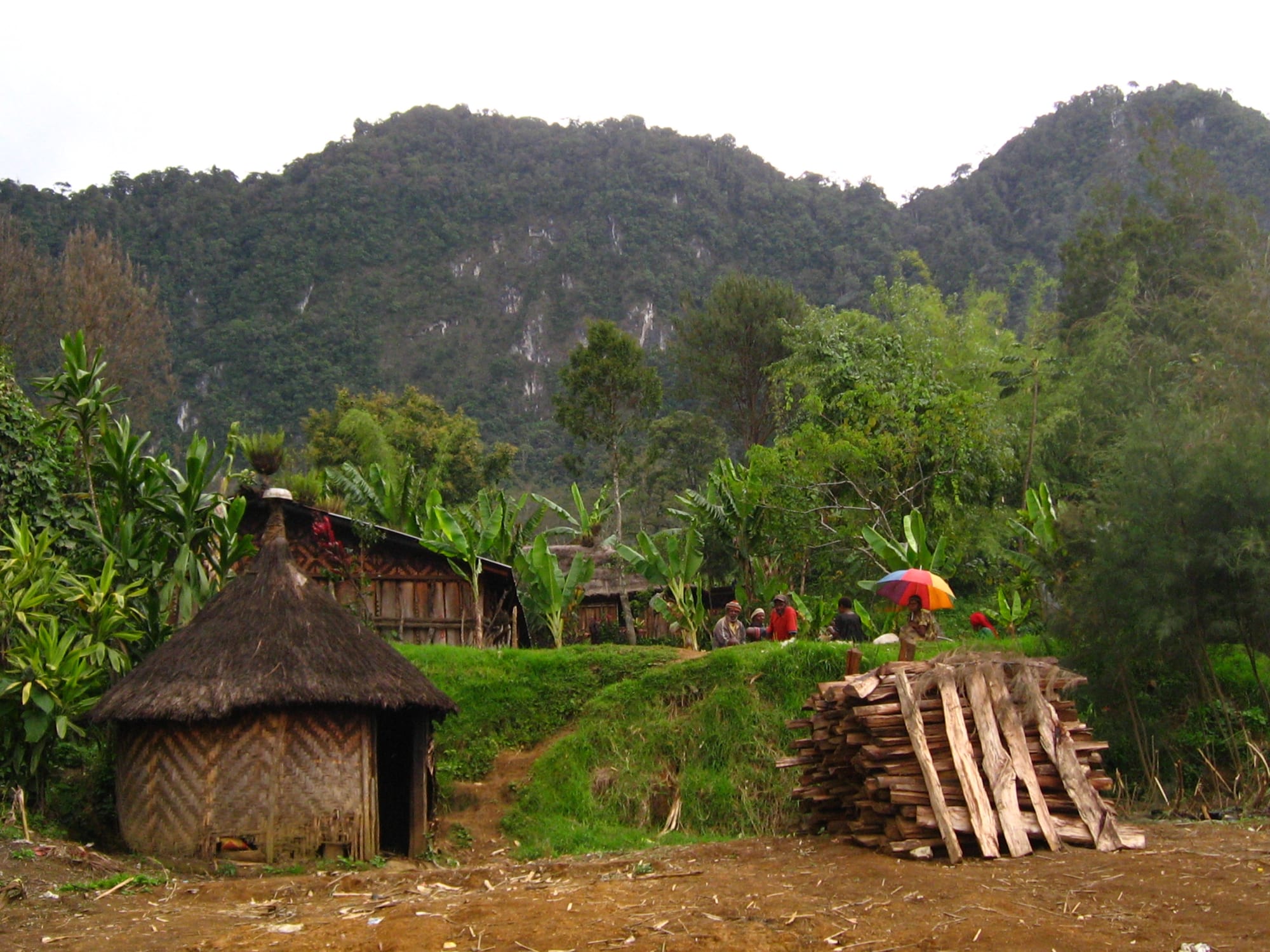
Geography did the rest. Mountains dominate the mainland and the main islands, rising to Mount Wilhelm, 4,509 metres (14,793 ft) high, with steep valleys between them. The country's rural, scattered and diverse population is itself a product of this mountainous geography. The same fragmentation helps explain why the country supports around 5% of all known species: isolated habitats breed variety, in living things as in speech.
The highlands show how sealed off these worlds could be. Agriculture was invented there independently: at Kuk Swamp, now a UNESCO World Heritage Site, people were digging drainage ditches to farm the wetland about 9,000 years ago, and were growing bananas and sugar cane between 6,900 and 6,400 years ago. Farming supported large populations in the high valleys. Yet when outside explorers such as Mick Leahy first entered the Wahgi Valley and the Mount Hagen area in the 1930s, they found that the highland valleys were home to over a million people.
Small worlds, no empires
Before colonial rule, each community functioned largely independently, living on its own gardens, apart from some political alliances. Trade linked them in chains, with goods passing from village to village over long distances even though people themselves rarely travelled far. Villagers often knew the languages of their immediate neighbours, and speaking the same language was not, in itself, a sign of belonging to the same political group.
That pattern helps explain why so many languages survived side by side. No larger state ever existed to push people towards a single tongue. When Germany and Britain, and later Australia, drew borders round these communities, they created larger political units that had no precedent, often joining groups that had been enemies or had never had any contact at all.
Newcomers and the languages that bridge the gaps
Not every language is ancient on the island. Speakers of Austronesian languages arrived about 3,500 years ago, and people of the seafaring Lapita culture had reached the Bismarck Archipelago by about 3,300 years ago. All the Austronesian languages of Papua New Guinea today belong to the family's Oceanic branch, and they add another layer to the mix.
The bridges came much later. In the 19th century, Pacific Islanders speaking many different languages were taken to work on plantations in Queensland and on other islands, a trade known as blackbirding, and a pidgin drawing mostly on English grew up among labourers who shared no language. It became Tok Pisin ("talk pidgin"), which spread through German New Guinea, while Hiri Motu, a simplified form of the Motu language of the Port Moresby area, served the British and later Australian territory of Papua. Today Tok Pisin is the most widely used language in the country, used to some degree by five to six million people, and many urban children grow up with it as their first language.
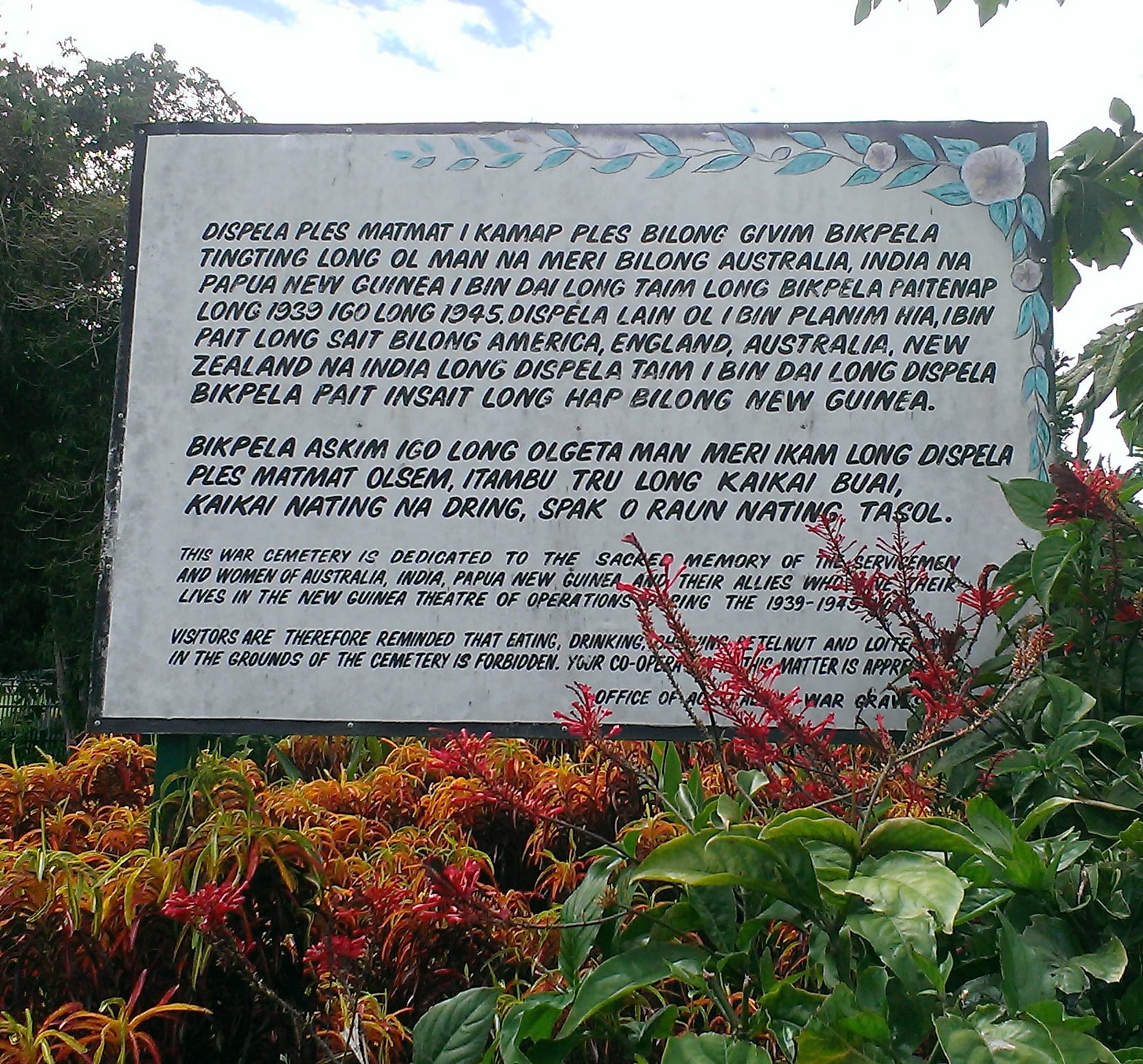
That success puts pressure on the old diversity. The use of almost all local languages is declining, and some have fewer than 100 speakers left. After independence the government taught early literacy in local languages, and by 2000 some 837 languages had educational support, but in 2013 schooling shifted back towards English. Even so, local languages, known in Tok Pisin as tok ples, are widely valued, and language has rarely been a cause of conflict.