Culture & Customs · Paraguay
Why does Paraguay speak Guaraní?
A small Spanish colony grew up inside a Guaraní-speaking world, and isolation, war and national pride kept the language alive for five centuries.
By Globeway Editorial · 13 October 2026
The short answer
Paraguay speaks Guaraní because the colony that became the country was built inside a Guaraní-speaking world and never left it. The Spanish settlers who arrived in the 1530s were few, the region had no silver or gold to draw more, and their children were born to Guaraní mothers. Guaraní became the common language of the colony, both in the Jesuit missions and, just as importantly, outside them.
After independence the language survived long stretches of official contempt, including more than a century in which it was kept out of state schools, because ordinary Paraguayans never stopped using it at home, in the fields and on the battlefield. Since 1992 it has been an official language equal to Spanish. Today it is spoken by most of the population, which makes Paraguay unusual in the Americas, where Indigenous languages have almost everywhere given way to European languages.
A colony of few Spaniards
The Guaraní were long established in eastern Paraguay before the Spanish arrived, and there were an estimated 400,000 of them when Europeans first met them. They farmed in scattered villages, united by language and culture rather than by any state.
On 15 August 1537 the Spanish founded a fort on the Paraguay River and named it Asunción. Paraguay became a neglected corner of the Spanish Empire, isolated and without mineral wealth, and only a small group of Spanish settlers stayed. The relationship with the Guaraní shaped everything. Under a Guaraní custom called the cuñadazgo, chiefs gave women to newcomers to seal alliances; after 1541 this gave way to violent mass seizures of women known as rancheadas. Modern historians describe the society that resulted as a product of coercion rather than partnership.
Its children, however, were legally Spaniards, and they grew up speaking their mothers' language. These mestizo (mixed Spanish and Indigenous) families gave rise to Paraguay's predominantly mixed-race society, and Guaraní, not Spanish, remained the colony's main language. When church leaders met at the First Synod of Asunción in 1603, they set guidelines for teaching Christianity to the Indigenous population in Guaraní, the region's common tongue.
The Jesuits wrote it down
In the 17th century Jesuit missionaries gathered Guaraní communities into mission towns, called reductions, to convert them and to shield them from forced labour and from slave raiders from Brazil. At their peak in 1732 the missions held about 141,000 Guaraní in around 30 towns.
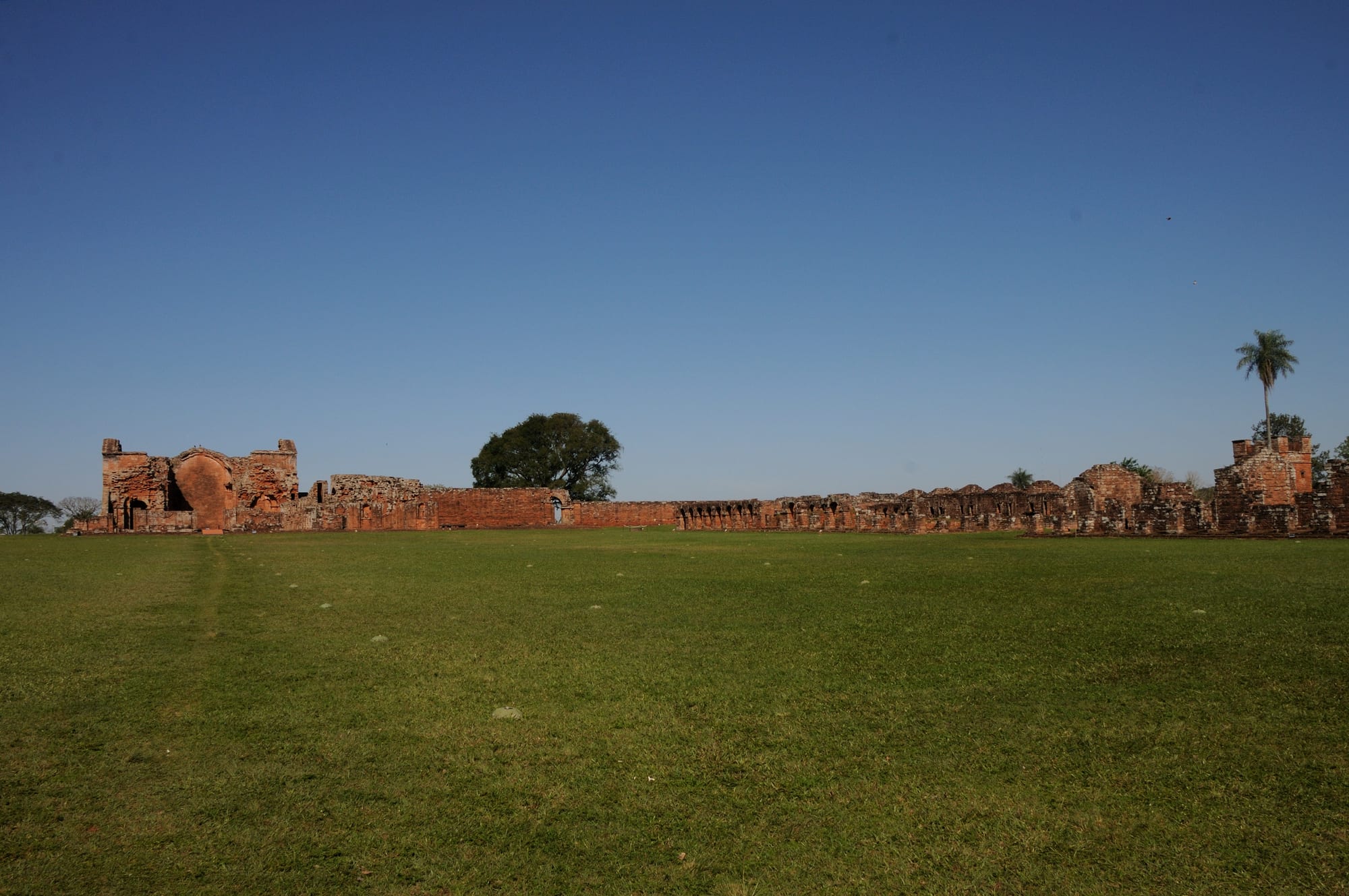
In mission towns like this one, Guaraní was the only language spoken.
The Jesuits turned Guaraní into a written language. Antonio Ruiz de Montoya published a Guaraní dictionary in 1639 and a grammar in 1640 that later scholars still treat as a reference point. Inside the missions the missionaries shaped a careful, formal Guaraní, building new words from Guaraní roots instead of borrowing Spanish ones. For "communion" they coined Tupârahava, from Tupâ, God.
The modern language, though, did not come mainly from the missions. Guaraní was the main language of colonial Paraguay inside and outside the reductions, and the everyday Guaraní of farms and towns freely absorbed Spanish words: in today's Paraguayan Guaraní, communion is simply komuño. After the Spanish king expelled the Jesuits in 1767, leaving 89,000 Guaraní in 30 missions, many mission families drifted towards Asunción. The two varieties met, and most speakers dropped the formal mission version in favour of the colloquial one. That everyday mixture is the ancestor of Jopara, a name that means "mixture" in Guaraní.
Isolation, war and a language of the nation
Paraguay declared independence in 1811. Its first ruler, José Gaspar Rodríguez de Francia, who spoke Guaraní and was known by the Guaraní title Karai Guasu, "great lord", sealed the country off from the outside world. In 1814 he decreed that Spaniards could not marry other Spaniards, only mestizos, Indigenous people or Africans. Francia was not a mestizo himself, but he feared that racial divisions would breed tensions that could threaten his rule.
Paraguay's Spanish-speaking elite kept its distance from the language, and President Carlos Antonio López, who took power in the 1840s, leaned towards Spanish. Yet when the War of the Triple Alliance began in 1864, the government of his son, Francisco Solano López, turned to Guaraní to rally its soldiers, alongside Spanish. The war, fought against Argentina, Brazil and Uruguay until 1870, was the deadliest war between states in Latin American history, and much of Paraguay's civilian population died from fighting, hunger and disease.
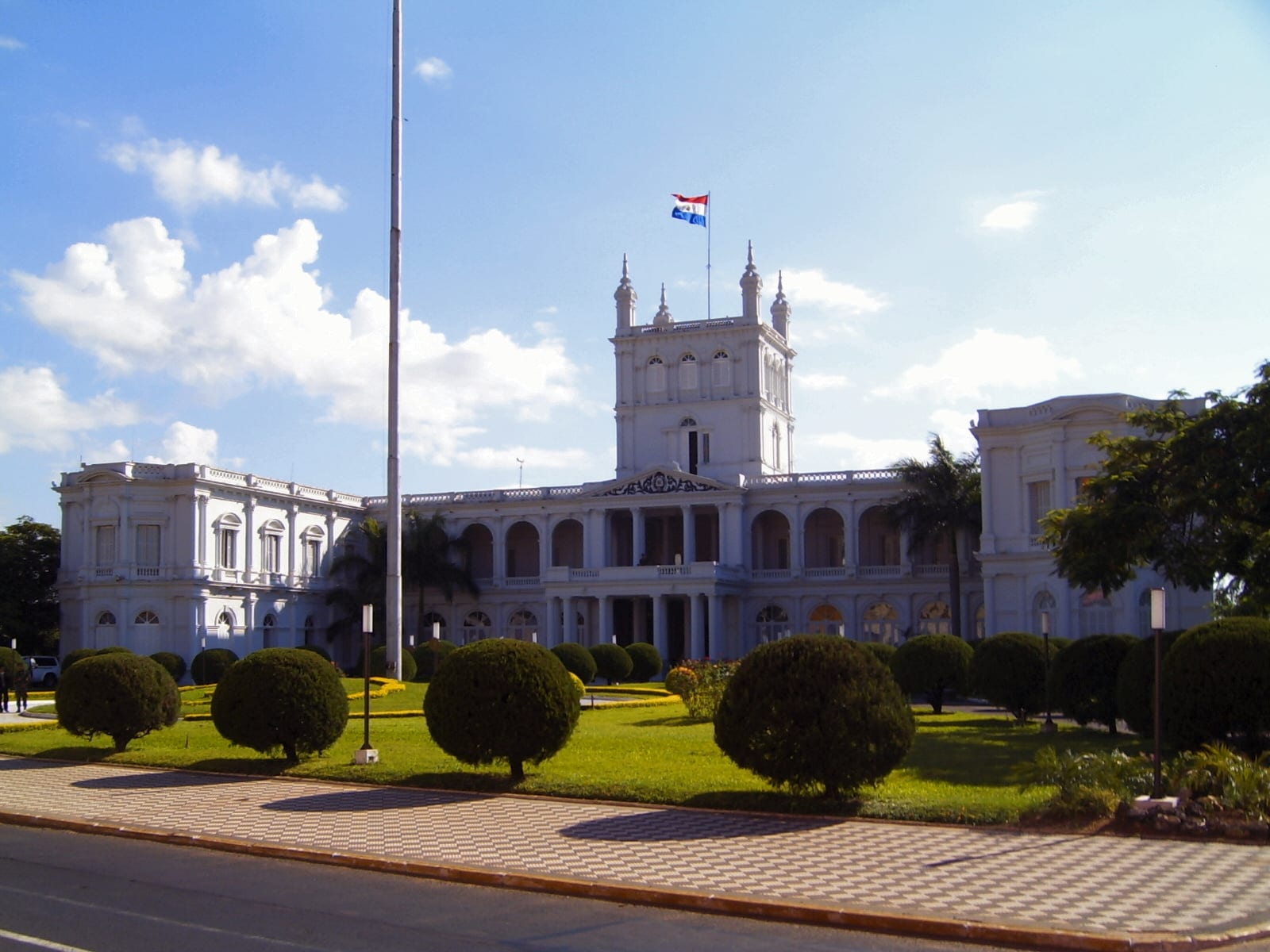
For most of Paraguay's history, government business was done in Spanish even while the nation's soldiers and farmers spoke Guaraní.
After the defeat, governments repressed Guaraní and banned its use and teaching in state schools, where it stayed prohibited for more than 100 years. It survived anyway, and in the Chaco War against Bolivia from 1932 to 1935 it became a weapon. Paraguayan troops used Guaraní for their communications at the front, and they gave their weapons Guaraní names: a light mortar was an angu'a, a "corn-masher", and a pineapple-shaped hand grenade a carumbe'i, a "little turtle".
How Guaraní became official
- 1537
The Spanish found Asunción in Guaraní country.
- 1603
The First Synod of Asunción adopts Guaraní for teaching Christianity.
- 1640
Antonio Ruiz de Montoya publishes his grammar of Guaraní.
- 1864–1870
Guaraní-speaking soldiers fight the War of the Triple Alliance.
- 1932–1935
Paraguayan troops use Guaraní at the front in the Chaco War.
- 1992
The new democratic constitution makes Guaraní an official language equal to Spanish.
- 2010
A Languages Law is passed and an Academy of the Guaraní Language is created.
From banned to official
Under the dictator Alfredo Stroessner, who ruled from 1954 to 1989, the governing Colorado Party used Guaraní to appeal to ordinary Paraguayans, although Stroessner himself never gave a speech in it. After democracy returned, the 1992 constitution made Guaraní an official language equal to Spanish, and from the 1990s it was taught as a school subject. In 2010 a Languages Law created an Academy of the Guaraní Language to guide its spelling and grammar. In 2015 a Paraguayan president issued the first official decree written in Guaraní.
A bilingual country, still changing
Guaraní is the Indigenous language most widely spoken by non-Indigenous people anywhere in South America, and a majority of Paraguayans speak it. Most move between the two languages, often in the same sentence, using more Spanish for official and business matters and more Guaraní at home, in everyday life and in art. Older and rural Paraguayans tend to use more Guaraní, younger city dwellers more Spanish.
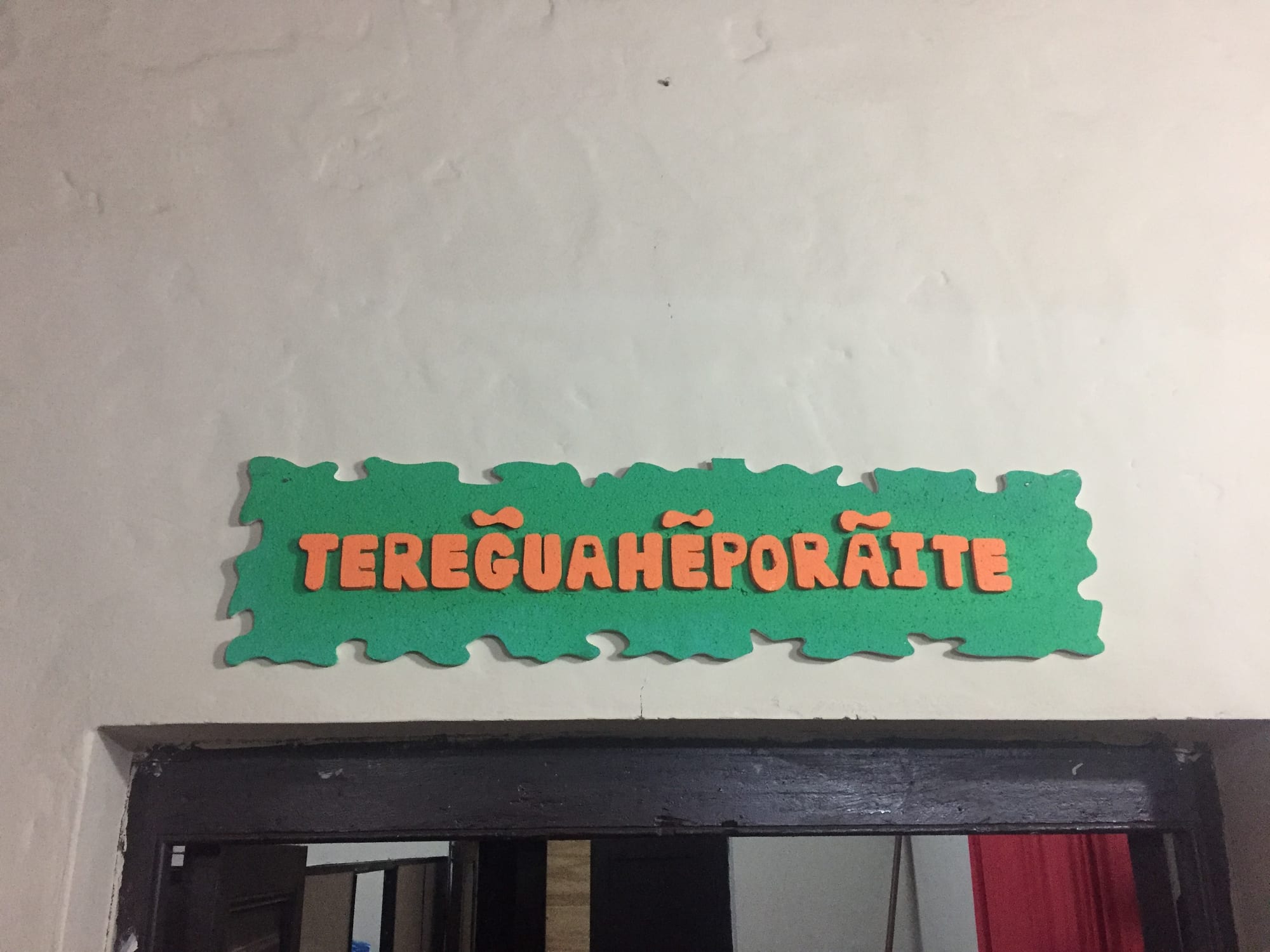
Signs, place names and everyday speech in Paraguay are full of Guaraní.
The balance is shifting. In 2002, 28 per cent of Paraguayans spoke only Guaraní; by 2022 the figure was 12 per cent. Spanish-only speakers did not increase over the same period, which suggests people are adding Spanish rather than abandoning Guaraní. UNESCO nonetheless classes the language as "vulnerable", because many children who speak it use it mainly within the family, and Spanish still dominates government, the courts, business and the media. Even so, the language is everywhere: Paraguay's currency is called the guaraní, and in Spanish "guaraní" can mean any Paraguayan.