Attractions & Natural Wonders · United States
Why does San Francisco have fog in summer?
Cold ocean water chills the sea air into fog, and California's hot interior pulls it through the Golden Gate just when the rest of the state bakes.
By Globeway Editorial · 13 October 2026
The short answer
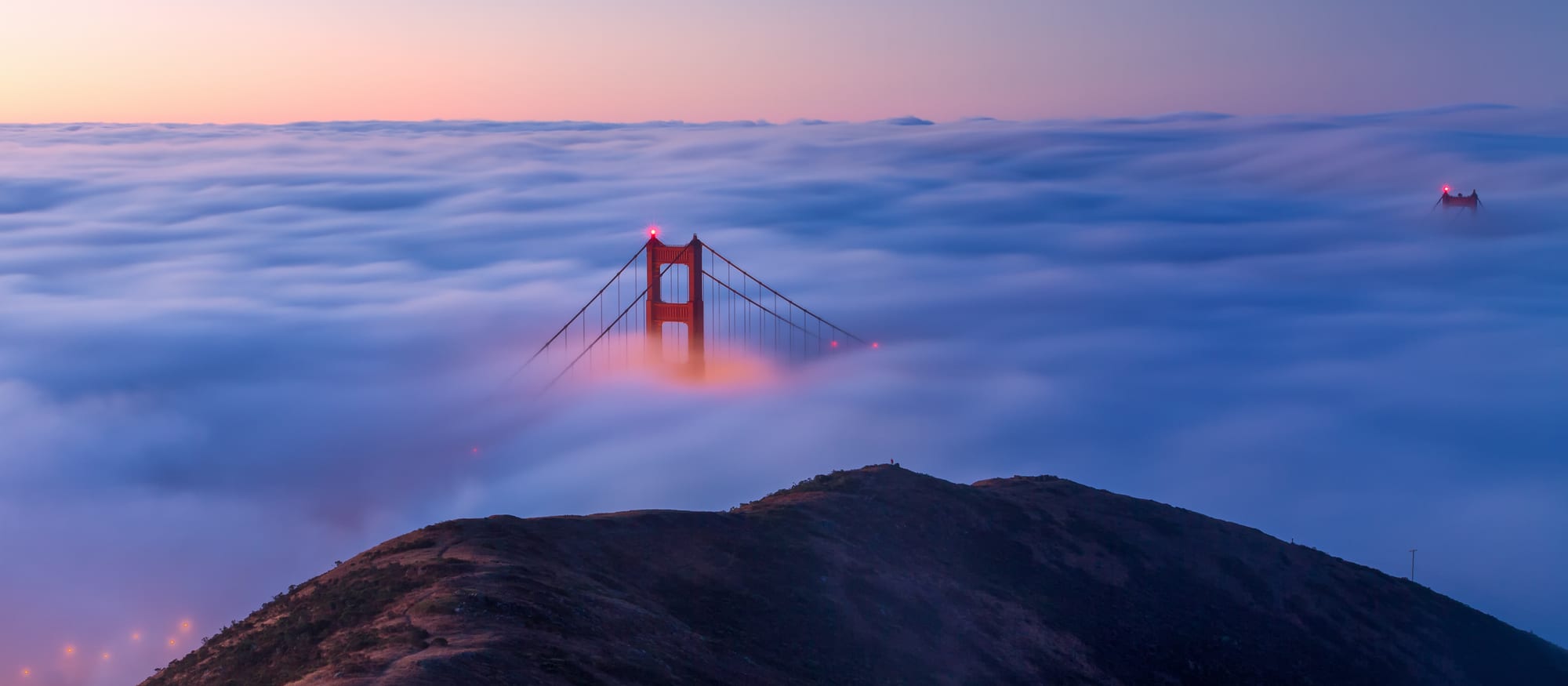
San Francisco's summer fog is made by the ocean and pulled in by the land. Off the California coast the Pacific is unusually cold, because a current flowing down from the North Pacific is chilled further by cold water welling up from the depths. Moist air resting on that cold water cools until its water vapour condenses into tiny droplets, forming a low layer of cloud and fog over the sea.
In summer, California's interior valleys heat up, at times above 100°F. The hot air rises, creating an area of low pressure that sucks the cool, foggy sea air inland. The Golden Gate, the strait at the mouth of San Francisco Bay, is the largest gap in the coastal hills, and the city sits right beside it. So while inland California swelters, fog pours through the Golden Gate and over San Francisco, often arriving in the late afternoon and lingering until the next morning.
A cold ocean on a warm coast
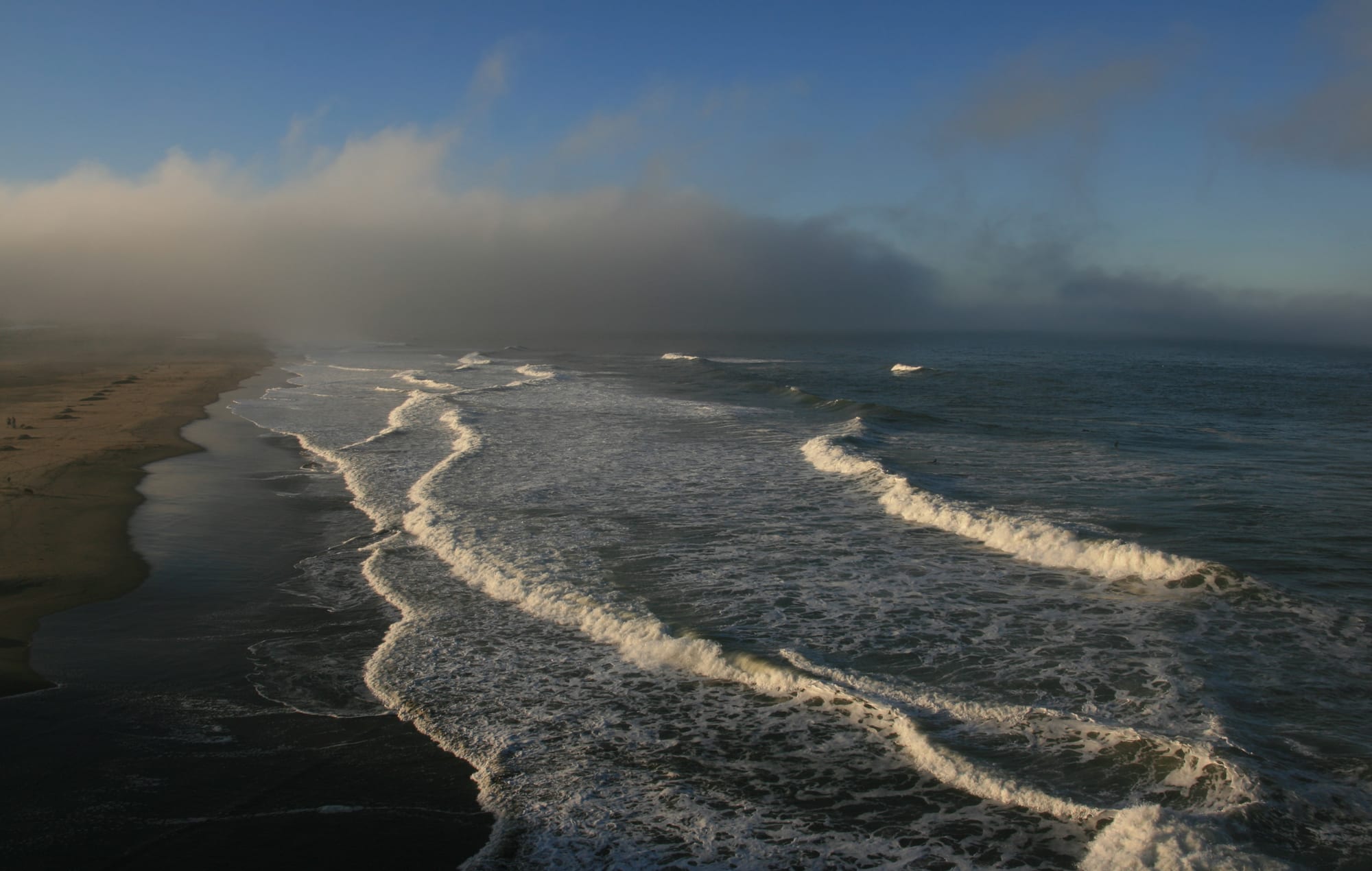
The water off California is much colder than at the same latitude on the Atlantic coast. The California Current carries cool water south from the North Pacific along the coast. On top of that, the prevailing northwest winds push surface water away from the shore, through what is called the Ekman effect, which drives surface water to the right of the wind, and colder water rises from below to replace it. This rising, called upwelling, cools the sea further. Sea surface temperatures along the coast are generally 52 to 58°F all year.
Air that has crossed thousands of miles of open Pacific picks up moisture on the way. Over the cold coastal water, the lowest layer of that air is chilled and becomes trapped beneath warmer air above it, a situation called a temperature inversion. This cool, damp bottom layer is the marine layer. When it cools to its dew point, the temperature at which air can hold no more water vapour, droplets form around tiny particles, mostly salt from surf and spray with a little iodine from kelp. These particles work so well that fog can form even before the air is fully saturated.
The great inland vacuum
On its own, the prevailing northwest wind would keep the marine layer pressed along the coast and over the sea. What drags it inland is the enormous summer contrast between the cool coast and the hot interior, especially the Central Valley. In July, Sacramento in the valley averages a daily high of 93°F, while downtown San Francisco averages 66°F. The difference creates a strong pressure gradient that swings the wind round to blow from the west and south-west, driving the marine layer and its clouds onshore and through every gap in the Coast Ranges.
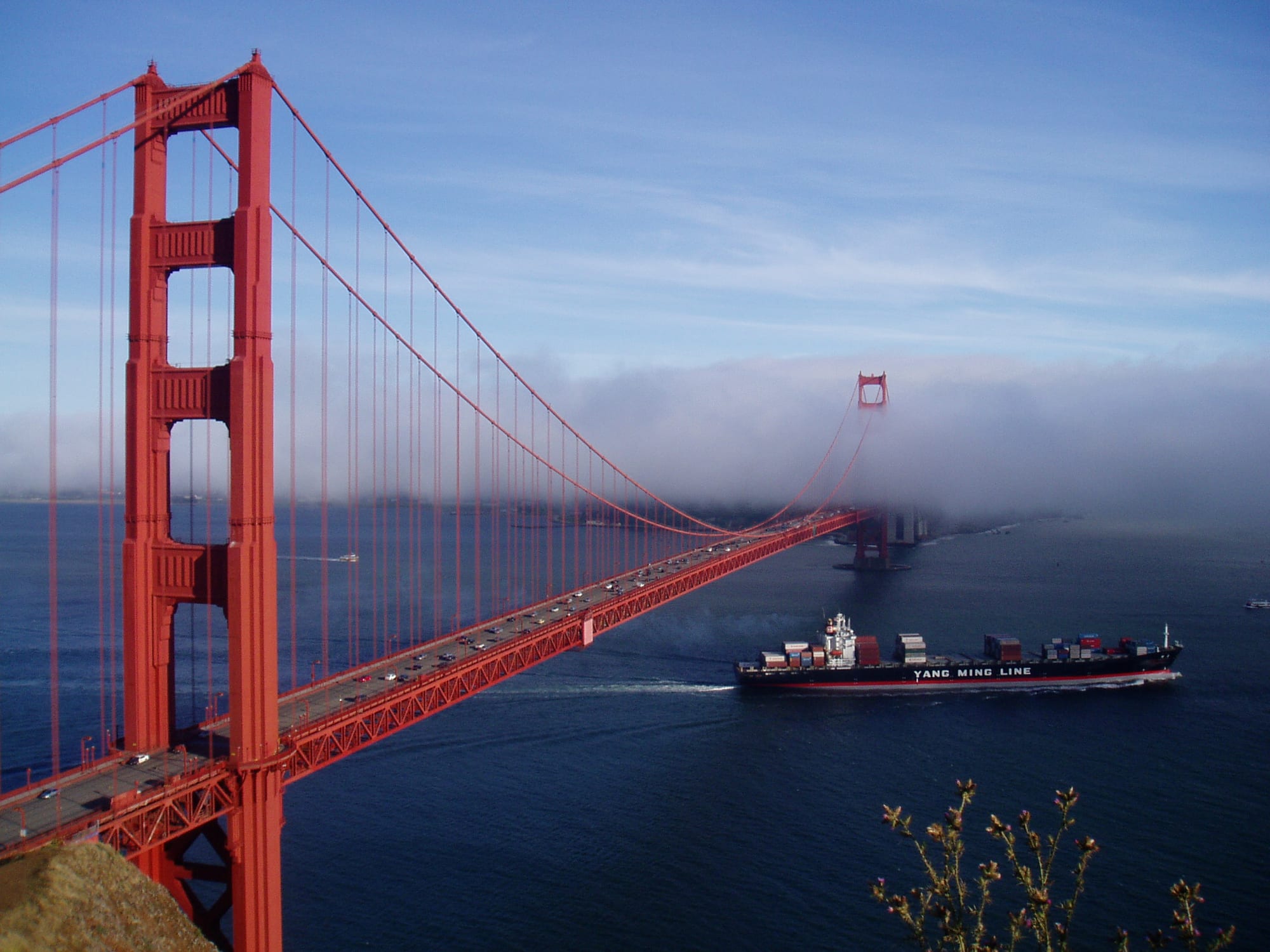
The Golden Gate is the biggest of those gaps, connected via the bay to the Carquinez Strait and the Central Valley beyond. A persistent, dense stream of fog enters the bay there. Even on days without fog, the cool marine air and strong winds chill the city, which is why San Francisco is sometimes described as "naturally air-conditioned".
A daily rhythm
On a typical summer day the fog follows a cycle. Morning sunshine warms the ground, which warms the marine layer over land and stirs it up until its clouds evaporate; the fog usually retreats towards the coast by noon. By mid-afternoon the interior is hot enough to lower the air pressure further and strengthen the onshore wind. By late afternoon that wind pushes fog from offshore inland faster than the sun can burn it away, and it streams over the bay and through the gaps. How far it reaches depends on the depth of the marine layer and the strength of the wind. At night the winds usually ease, but the fog stays where it has settled until the morning, when the cycle begins again.
Sometimes the overcast does not clear for days, usually when a weak low-pressure system above deepens the marine layer so that the sun cannot burn through it. Locals have names for these spells: "May Gray", "June Gloom", "No Sky July" and "Fogust".
Why summer, and why September is warmest
The ingredients of the fog are especially prevalent in summer, when the interior is hottest and upwelling along the coast is strong. The result is one of the oddest climates of any American city: among major US cities, San Francisco has the coolest average, maximum and minimum temperatures for June, July and August. Its warmest month on average is September, with a mean temperature of 62.7°F, and October is usually warmer than July, especially by day, partly because the fog is less pronounced in late summer and early autumn. The eastern neighbourhoods, further from the ocean, see less of it.
Winter brings a different kind of fog, known as tule fog, and on occasion both types are present in the Bay Area at once.
Living with the fog
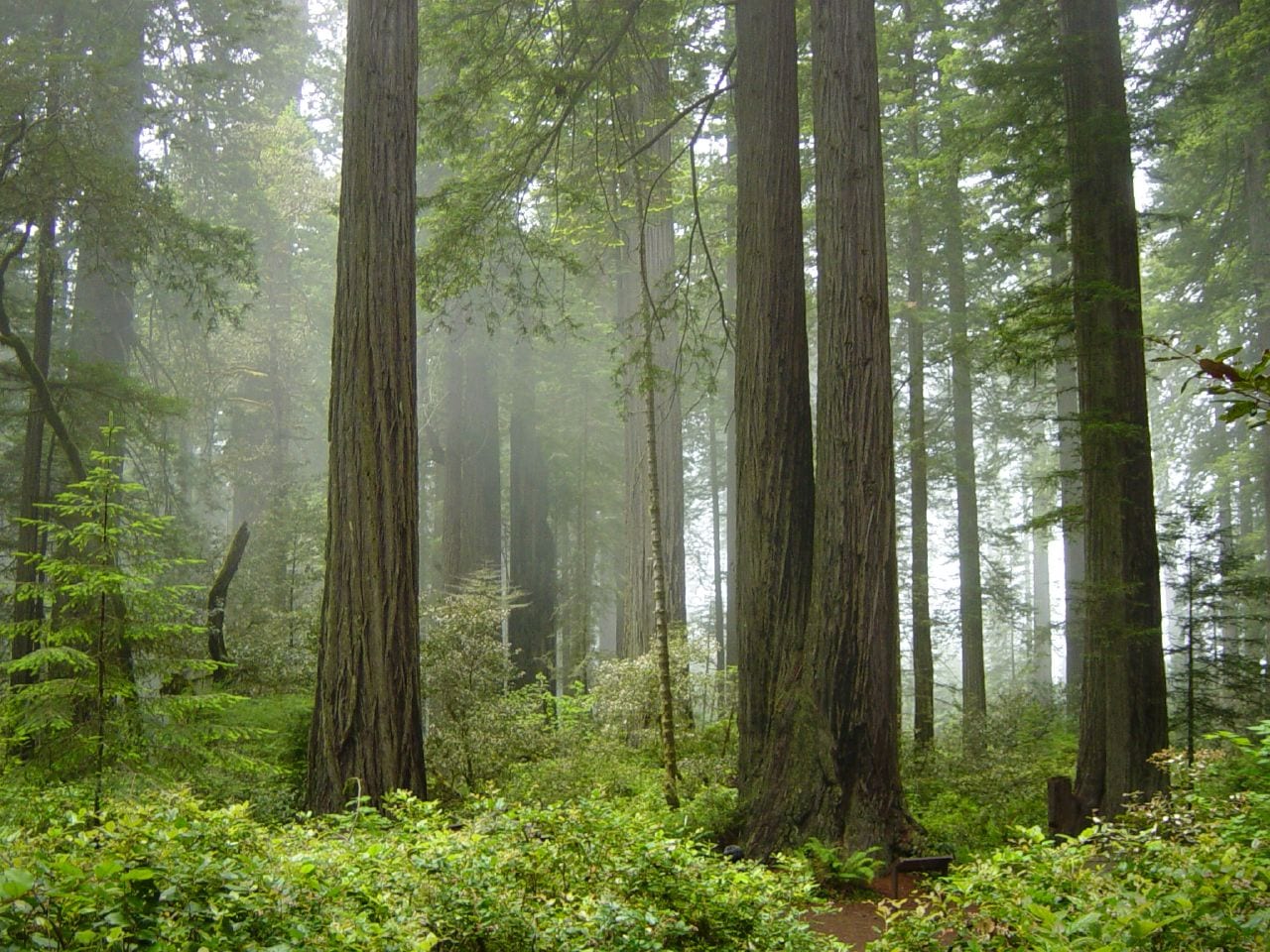
The fog shapes the region's landscape and its history. Coast redwoods depend on it: fog cuts the water they lose in the dry summer, and fog that collects on their needles and drips to the ground can supply 30 percent of the water a tree uses in a year. The tallest redwoods grow where fog is most frequent.
It has also been a hazard. The strait, with strong currents, rocky reefs and fog, is the site of over 100 shipwrecks. In 1901, 128 people died when the SS City of Rio de Janeiro struck a reef in fog, and in 2007 a container ship hit the Bay Bridge in fog, causing a large oil spill. The Golden Gate Bridge's colour was chosen partly because it makes the bridge more visible in fog, and a system of five foghorns installed on it in 1937 still operates.
There are signs the fog is thinning. Research published in 2010 found that summer fog in California fell by 33 percent between 1950 and 2010, with the season shrinking from May to October to June to September; other scientists question whether the data are good enough to be sure. The fog even has a nickname, Karl, from a social media account started in 2010, though many longtime residents dislike the name.