Culture & Customs · Romania
Why does Transylvania have a Dracula?
An Irish novelist who never went there set his vampire in Transylvania, borrowed the name of a Wallachian prince, and tourism did the rest.
By Globeway Editorial · 13 October 2026
The short answer
Transylvania has a Dracula because Bram Stoker put one there. His 1897 novel Dracula sends an English solicitor to the castle of a Transylvanian nobleman who turns out to be a vampire. Stoker never visited the region; he built it from books, above all the Transylvanian folklore collected by the Scottish writer Emily Gerard, and the novel and the films that followed tied Transylvania to vampires in the popular imagination.
The name, though, is real. Stoker took it from a history of Wallachia, the principality south of the Carpathians, where Dracula was the byname of a 15th-century ruler, Vlad III, remembered as Vlad the Impaler. Vlad ruled Wallachia, not Transylvania, but he was probably born in the Transylvanian town of Sighișoara and fought and raided across the region. How much Stoker knew about him is disputed; tourism has blended the two Draculas ever since.
A land "beyond the forest"
Transylvania, bounded by the Carpathian Mountains to the east and south and the Apuseni Mountains to the west, takes its name from the medieval Latin ultra silvam, "beyond the forest". It became part of the Kingdom of Hungary in 1002, was known for its many cultures, including German-speaking Saxons, and joined Romania only after the First World War.
Stoker's notes, begun in March 1890, show that he first planned to set the story in Styria. By the time the novel was written the setting was Transylvania, and his picture of it owed much to Emily Gerard. Her husband had been stationed in the Transylvanian towns of Hermannstadt and Kronstadt, today Sibiu and Brașov, from 1883 to 1885, and her essay "Transylvanian Superstitions" and book The Land Beyond the Forest described a countryside where every peasant was said to believe in the nosferatu, or vampire. Elements of that account, including the villagers' fearful suspicions, appear in the novel's opening chapters, and Gerard's essay gave Stoker the word "nosferatu".
Stoker's Count is a proud Székely who boasts of his people guarding the frontier against the Turks, lives in a crumbling castle near the "Borgo Pass" and must sleep in boxes of Transylvanian soil.
Where the name came from
Stoker found the word Dracula in William Wilkinson's 1820 account of Wallachia and Moldavia, copying out a footnote that began "Dracula means devil". The real origin is more specific. Vlad III's father, Vlad II, joined the Order of the Dragon, a fraternity of knights founded by Sigismund, King of Hungary, to fight the Ottoman advance into Europe, and he became known as Vlad Dracul, "Vlad the Dragon". Dracula is an old Slavonic form meaning "son of Dracul". In modern Romanian, dracul means "the devil", which only darkened the family's reputation.
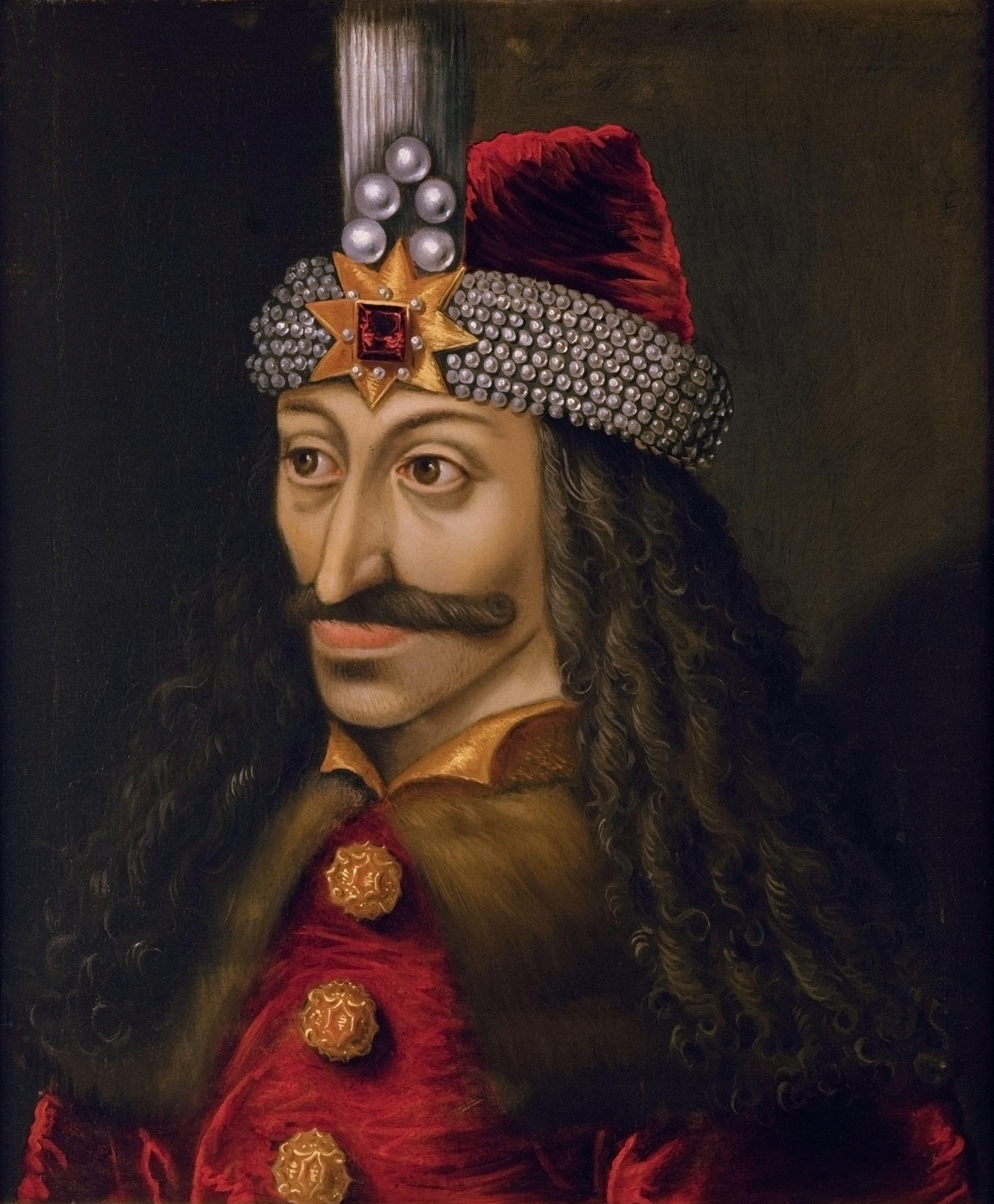
The Ambras copy hung in a gallery of "monster" portraits. Even the colour of Vlad's hair is uncertain: one early description calls it black, while the portrait appears to show it fair.
The real Dracula and Transylvania
Vlad III was Voivode, or prince, of Wallachia three times: in 1448, from 1456 to 1462 and in 1476. He was probably born between 1428 and 1431, after his father had settled in Transylvania, and the historian Radu Florescu places his birth in the Saxon town of Sighișoara, where Vlad Dracul lived in a three-storey stone house from 1431 to 1435.
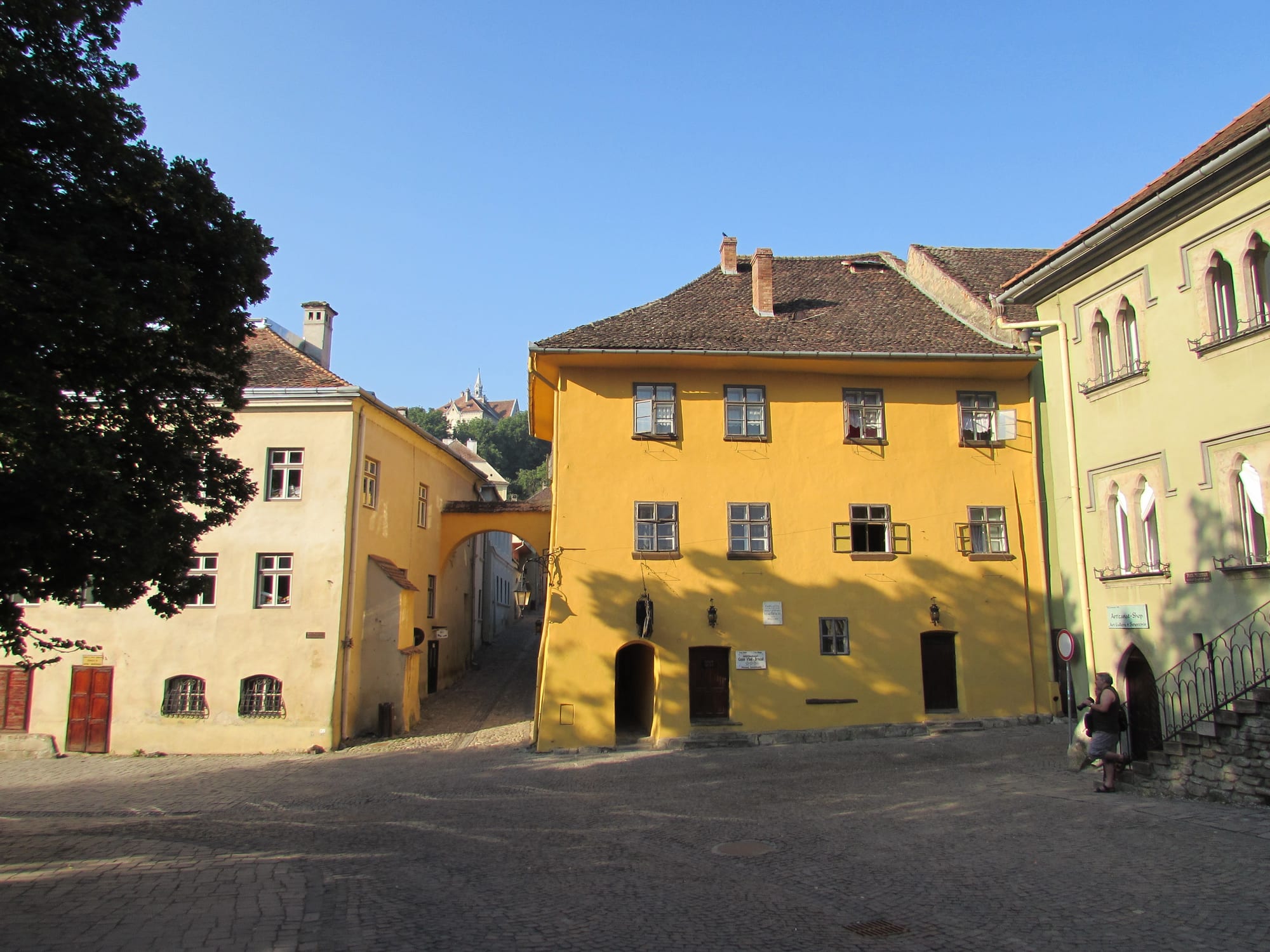
Sighișoara's walled old town has been a UNESCO World Heritage Site since 1999. Vlad Dracul had coins minted here while living in exile, although coinage was otherwise a monopoly of the Hungarian kings.
As ruler, Vlad clashed with the Transylvanian Saxons, who backed his rivals for the throne. He plundered Saxon villages and had captives impaled, the punishment that gave him his Romanian name, Vlad Țepeș, the Impaler. The Saxons answered with poems and stories that cast him as a sadistic drinker of blood. Thanks to the new printing press, German pamphlets about his cruelty, such as editions printed in Nuremberg in 1499 and Strasbourg in 1500, became some of the first bestsellers in the German-speaking lands. Scholars caution that his enemies may have exaggerated, but it is certain that he executed thousands.
His Transylvanian story ended in a cell. In late 1462, after a campaign against the Ottoman Sultan Mehmed II, Vlad crossed into Transylvania to seek help from the Hungarian king Matthias Corvinus, who imprisoned him instead; he was held at Visegrád until 1475. He died in battle near Snagov before January 1477. In his own region, his resistance to the Ottomans made him a folk hero, and the Romanian poet Mihai Eminescu later celebrated him in verse.
How the two Draculas merged
Did Stoker base his vampire on Vlad? Vlad is not mentioned in Stoker's notes for the novel, although in the book Van Helsing wonders whether the Count is the Voivode Dracula who "won his name against the Turk". The idea that the Count was modelled on Vlad was proposed only decades later, by Cecil Kirtly in 1958, and was popularised by Raymond McNally and Radu Florescu's book In Search of Dracula in 1972. The Dracula scholar Elizabeth Miller calls the link "tenuous", pointing out that Stoker, who copied plenty of minor detail, never used Vlad's notorious cruelty.
Dracula on the map today
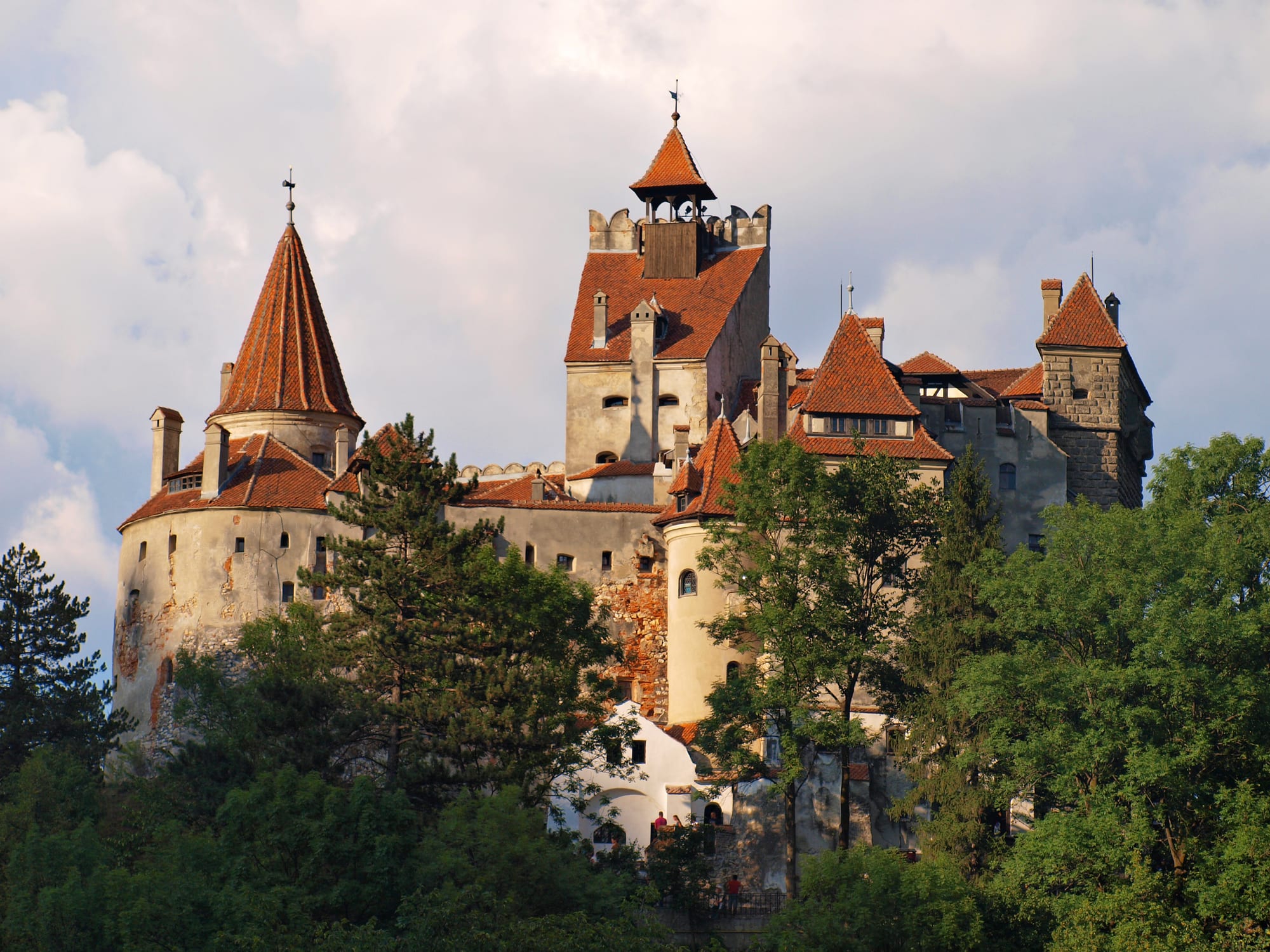
Visitors still go looking for him. Bran Castle, 25 kilometres southwest of Brașov on the old border with Wallachia, is marketed abroad as Dracula's Castle. It was built by the Saxons of Brașov after a royal charter of 1377 and later became a favourite home of Queen Marie of Romania. There is no evidence that Stoker knew of it, his fictional castle looks nothing like it, and most historians agree Vlad never lived there.
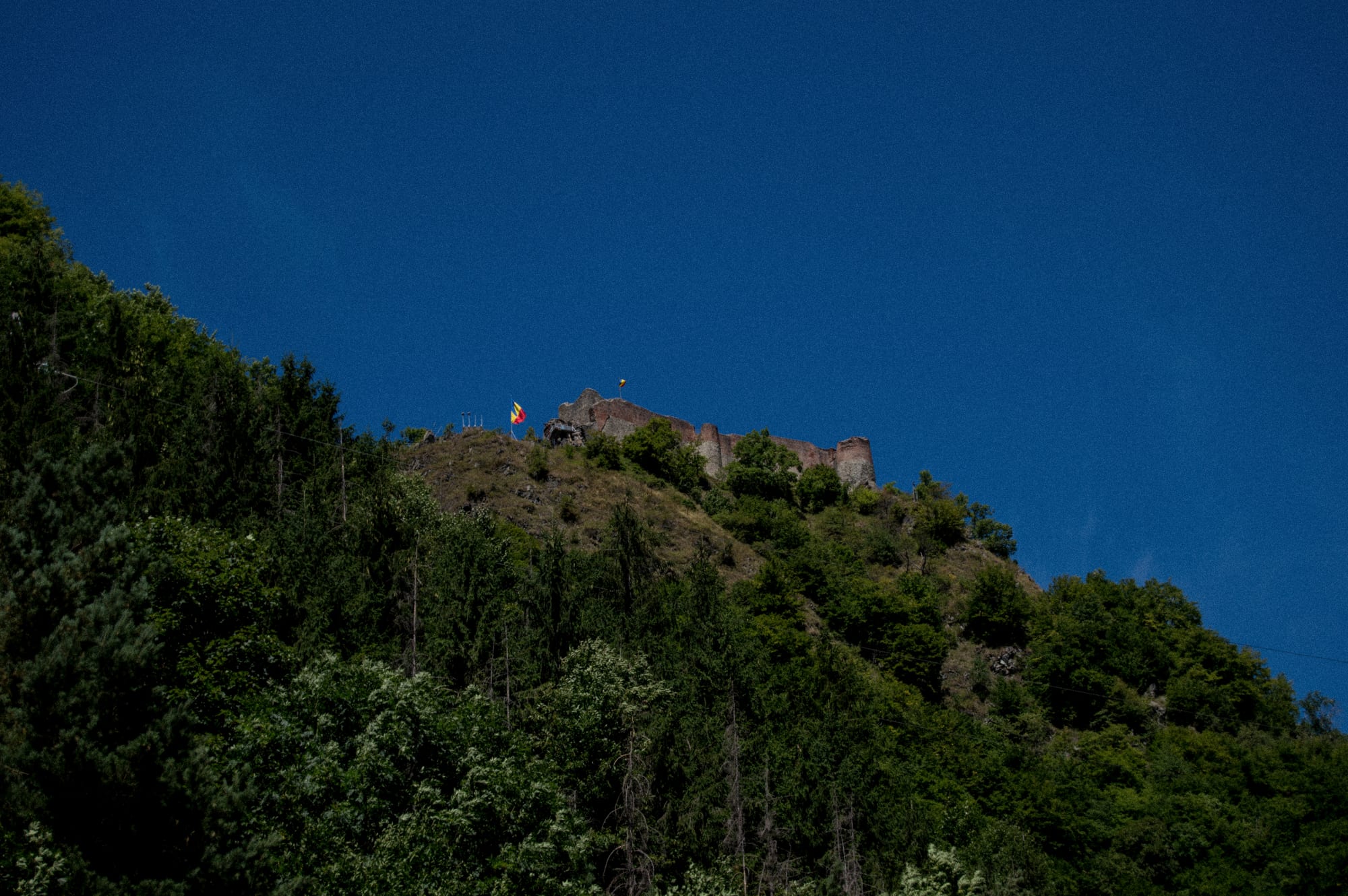
Vlad repaired the castle in 1459, using nobles he had arrested as forced labour. It is reached today by climbing 1,480 concrete steps.
The places with a genuine link to Vlad lie elsewhere: his likely birthplace at Sighișoara and his mountain fortress at Poenari, south of the Carpathians. The Romanian state has been uneasy about the whole business, preferring the country not be defined by a fictional vampire, and plans for a Dracula theme park were dropped in the early 2000s amid controversy over the harm to Romania's image. Yet Transylvania keeps its Dracula, a figure assembled from Irish imagination, Scottish folklore collecting and a real Wallachian prince's name.