Culture & Customs · Indonesia
Why is Bali Hindu when most of Indonesia is Muslim?
Bali became the last refuge of Java's Hindu court culture as Islam spread, then held on through Dutch rule and won a place for Hinduism in the new republic.
By Globeway Editorial · 13 October 2026
The short answer
Bali is Hindu because it was the place where the old Hindu world of Java survived. For more than a thousand years Hindu and Buddhist kingdoms ruled much of the archipelago, and one of the last and greatest of them, Majapahit, conquered Bali in 1343. When Islam spread along the trade routes and Majapahit collapsed, Javanese nobles, priests and artists fled across the narrow strait to Bali, and the island's own Hindu kingdoms stayed independent for centuries afterwards.
Later, Dutch colonial rulers deliberately restricted both Muslim and Christian preaching on the island, and after independence the Balinese fought for, and won, official recognition of their faith. Strictly, Bali is not an island of Hindus in an otherwise Muslim country: about 87 per cent of Indonesians are Muslim, but around 10 per cent are Christian, with Christian majorities in several eastern provinces. Bali is the only province with a Hindu majority.
When Java was Hindu too
Hindu and Buddhist ideas reached the islands from about the first century CE, carried by trade with the Indian subcontinent. Local rulers adopted Sanskrit, Indian epics and Indian models of kingship, and blended them with older Austronesian beliefs about ancestors and sacred places. Central Java's rulers raised the great Hindu temple of Prambanan, and Hindu and Buddhist culture reached its peak in the 14th century under Majapahit, an empire based in eastern Java.
Bali took in these ideas mainly by way of Java rather than directly from India. In 1343 Majapahit's prime minister, Gajah Mada, defeated the Balinese king at Bedulu, and Majapahit installed a vassal dynasty. According to later chronicles, its descendants, ruling first from Samprangan and then from Gelgel, sat on Balinese thrones until 1908.
A refuge across the strait
Islam was spreading in the meantime. Muslim rulers were established in northern Sumatra by the late 13th century, and the faith travelled along the coasts with merchants, taking root in the ports of Java's north shore. Majapahit declined during the 15th century and fell in the early 16th, as Muslim sultanates such as Demak rose in its place.
For Java's Hindu elite, Bali was the obvious escape. Aristocrats, priests, artists and scholars crossed the strait, bringing court culture, Old Javanese literature, temple architecture and Brahmin ritual with them. Many ordinary people followed. Bali became independent of Java around the same time, and its kings, far from shrinking, expanded: in the 16th century Dalem Baturenggong extended his rule to eastern Java, Lombok and western Sumbawa.
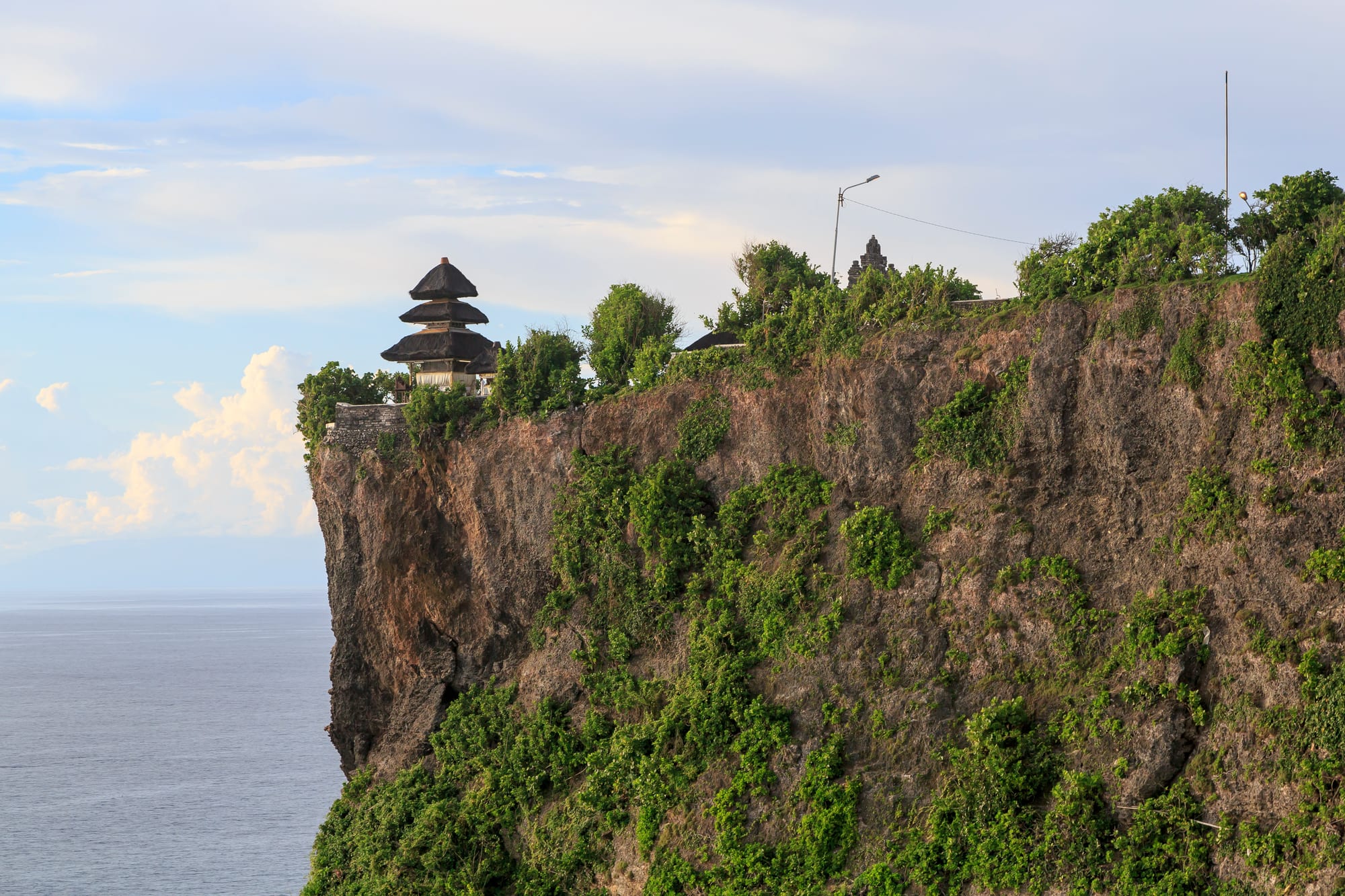
Nirartha added padmasana shrines, empty thrones for the supreme god, to temples along the coasts during his travels around the island.
The newcomers also reshaped the religion itself. The most influential was the priest Dang Hyang Nirartha, said to have been sent to Bali by the Majapahit court in 1492. He founded the Shaivite priesthood that is now found everywhere on the island, promoted the idea of moksha, release from the cycle of death and rebirth, and introduced the padmasana, the empty-throne shrine to the supreme god. Buddhism, as in Java, was largely absorbed into the dominant Hindu tradition.
The Muslim states of Java did try their hand. Mataram invaded Bali in 1639, and the Balinese ruler drove the invaders back without the Dutch help he had asked for.
Sealed off under Dutch rule
The Dutch took Bali slowly and violently. They conquered the northern kingdoms between 1846 and 1849, Lombok and Karangasem in 1894, and the south in 1906 and 1908. Facing defeat in Badung in 1906, and again in Klungkung, members of the royal households and their followers chose a puputan, a ritual mass suicide, rather than surrender.
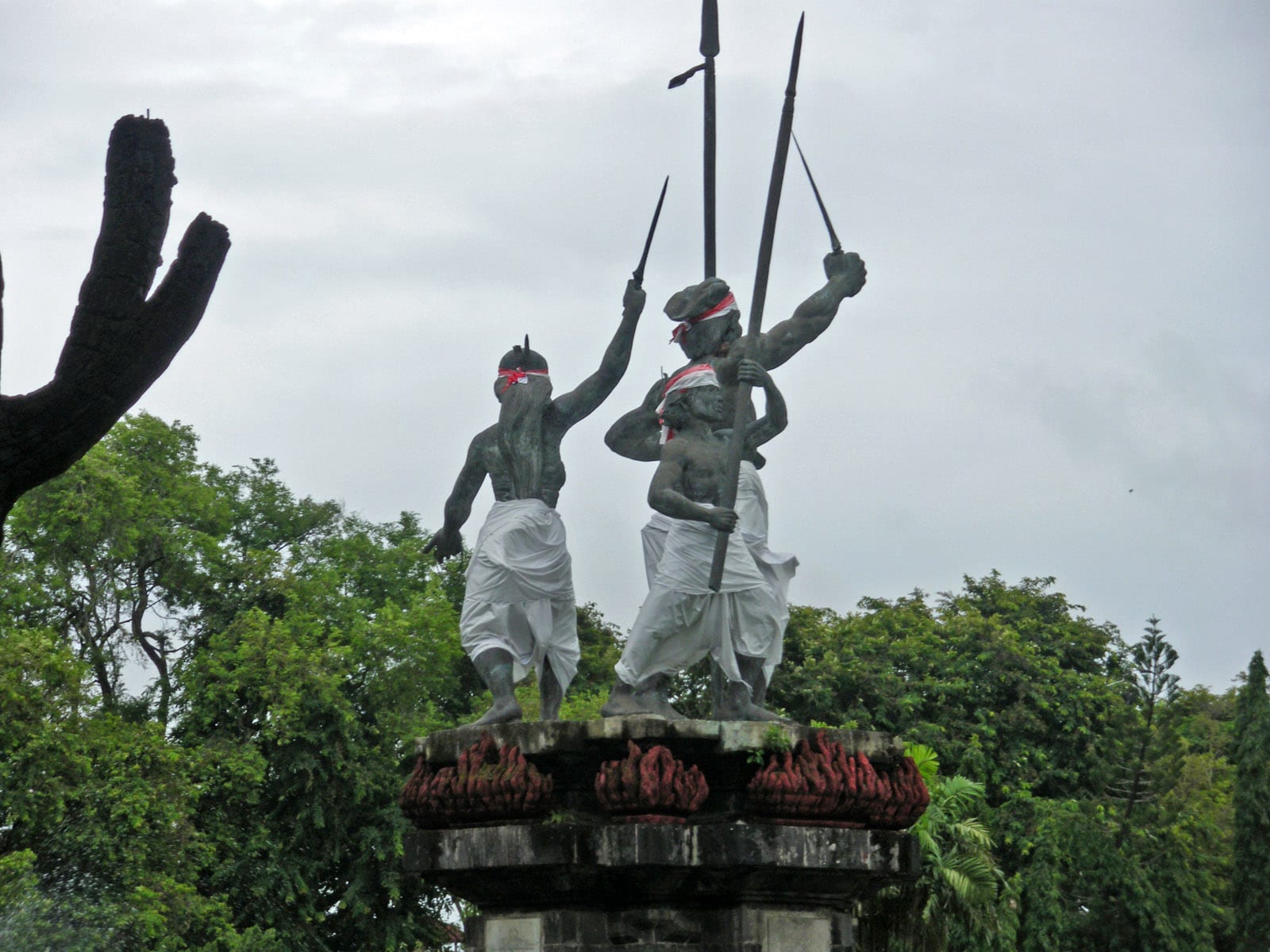
The Dutch landed near Sanur in 1906 on the pretext of stopping the plunder of wrecked ships, and the rulers of Badung and Tabanan died with their families and followers.
Once in charge, the Dutch treated Bali as something to be preserved. Christian missions in the north proved a total failure, and the colonial administration restricted both Islamisation and missionary work on the island to protect its existing traditions, a policy later known as Baliseering, or "Balinisation". Scholars and officials described Balinese religion as a preserved, classical Hinduism. In the 1930s visiting anthropologists and artists spread an image of Bali as an enchanted land of art and ritual, and Western tourists began to arrive.
The Balinese themselves were the other half of the story. Religion on Bali was never mainly a matter of doctrine; it lived in temple membership, village duties and a calendar of rites shared by whole communities. Colonial conquest ended the independence of the royal courts, but the temples and communal rites that carried the faith went on.
Fighting for recognition
Independence brought a new threat. The young republic's ideology, Pancasila, required belief in one God, and in 1952 the Ministry of Religion, then under Islamist control, defined an acceptable religion as one with a prophet, a holy book and a single God. Hindus were classed as people without a religion, and the ministry called for a campaign to bring Bali and other Hindu islands to Islam.
Bali's local government responded in 1953 by declaring itself an autonomous religious area. Balinese leaders set up student and cultural exchanges with India to help set out the core principles of their faith, and presented their faith in monotheistic terms: all the gods are manifestations of one supreme principle, Sang Hyang Widhi Wasa. After a joint petition in 1958, Hinduism became Indonesia's fifth recognised religion in 1962. Officially the faith is now called Agama Hindu Dharma.
Bali's faith today
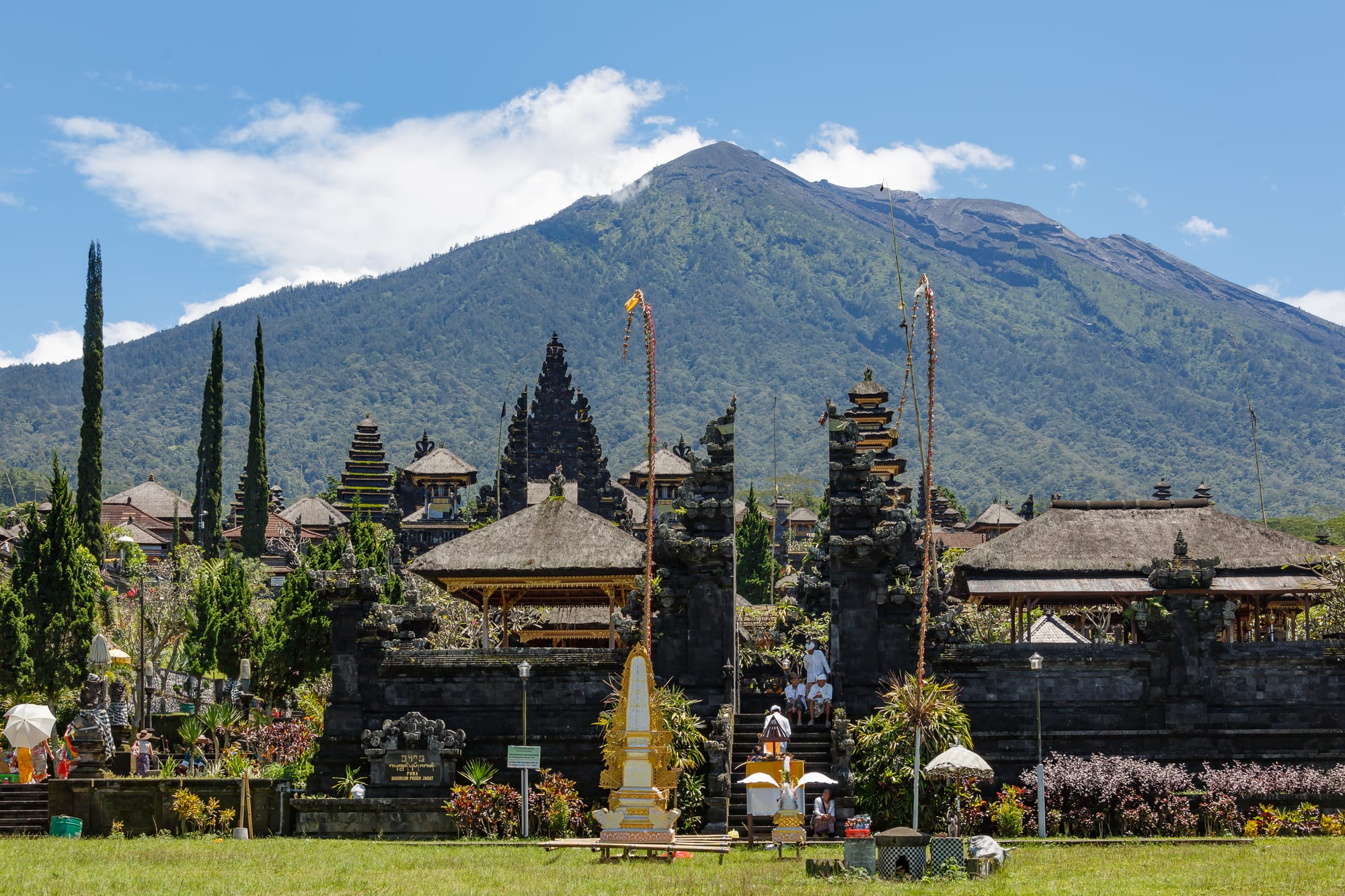
Today 86.4 per cent of Bali's people follow Balinese Hinduism, a distinct religion that weaves Hindu ideas of dharma, karma and rebirth together with ancestor veneration and the spirits of the landscape. The island has more than 20,000 temples, about one for every 100 to 200 people, and every Balinese belongs to a temple by descent, residence or affiliation. The holiest, Pura Besakih, stands on Mount Agung, the island's highest volcano at 3,031 metres. Festivals that do not exist in India, such as Galungan and Nyepi, the Day of Silence that marks the new year of the Balinese Saka calendar, set the rhythm of the year.
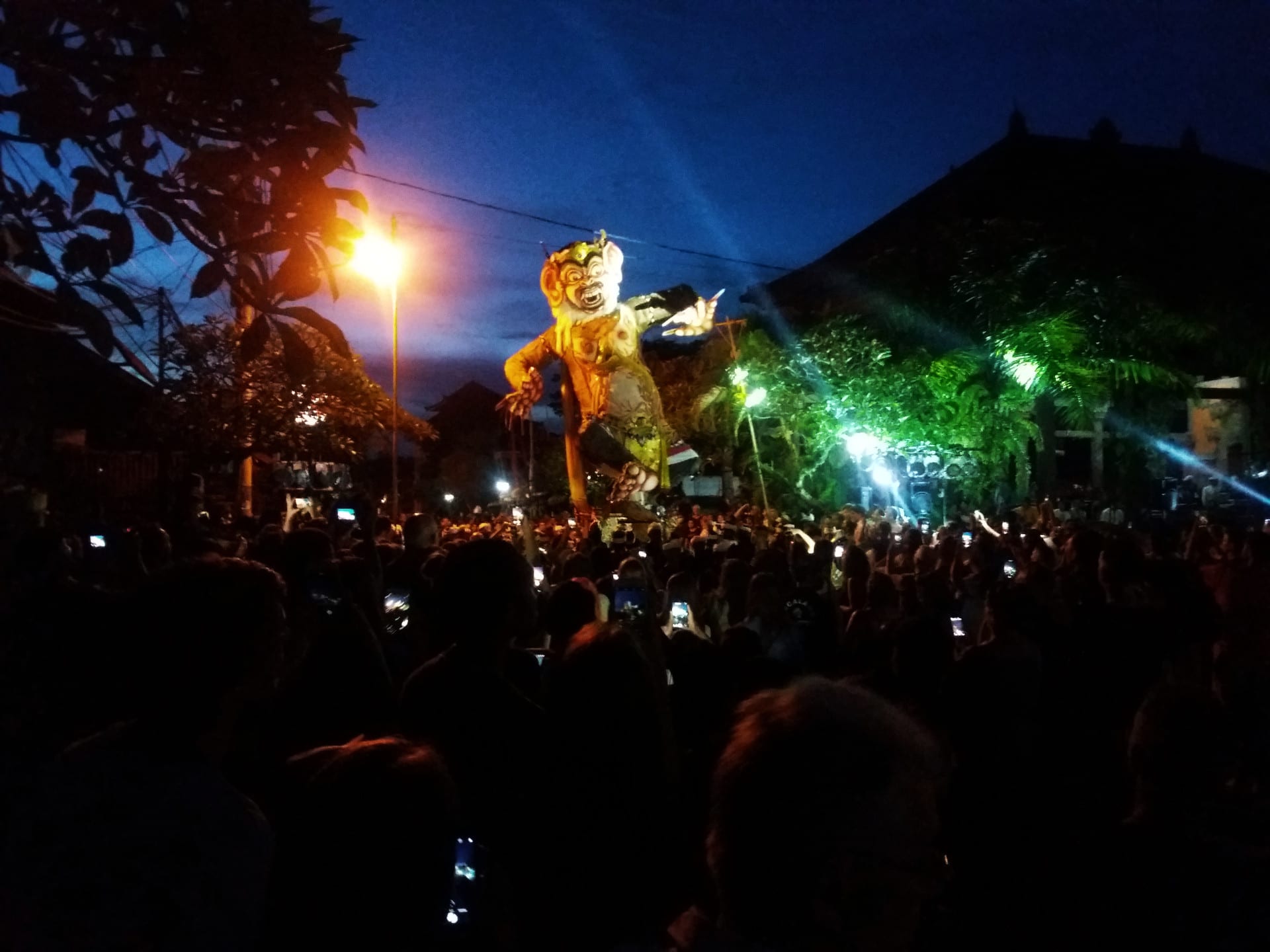
Before the island falls silent for Nyepi, demonic ogoh-ogoh figures are paraded through the streets on the eve of the holiday.
Bali is not quite alone. Balinese communities live on neighbouring Lombok and at the eastern tip of Java, descendants of the old Balinese kingdoms that ruled there. In the Tengger mountains around Mount Bromo in eastern Java, the Tenggerese, most of whom profess a Javanese Hinduism, keep traditions rooted in the customs of Majapahit and speak an archaic Javanese dialect.