Culture & Customs · Thailand
Why is Bangkok's full name 168 letters long?
A royal ceremonial name, polished by three kings, that piles up Pali and Sanskrit praise for a capital founded by gods, and one many Thais learned from a rock song
By Globeway Editorial · 13 October 2026
The short answer
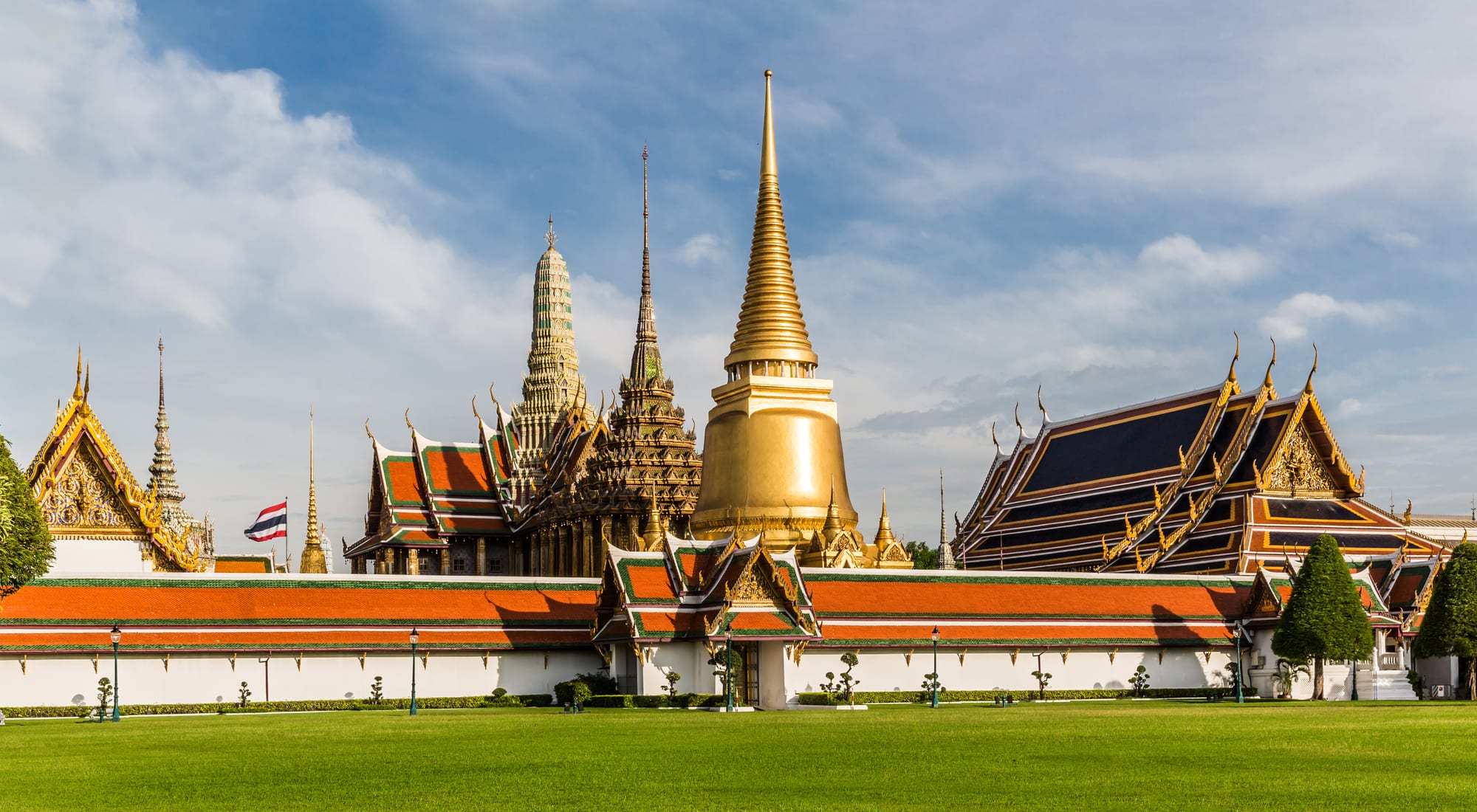
Bangkok's full name is not an everyday name at all but a ceremonial one, a royal title for the capital in the tradition of the old Siamese kingdom of Ayutthaya, whose capitals also bore long, formal names. It was built up over several reigns and given its final form by King Mongkut (Rama IV), who reigned from 1851 to 1868. Strung together from Pali and Sanskrit, the classical languages of Buddhist and Hindu scripture, it is less a name than a short poem of praise: the city of angels and immortals, home of the Emerald Buddha, seat of kings, created by the divine architect at the god Indra's command.
The 168 comes from writing that Thai name out in the Latin alphabet, and Guinness World Records lists it at that length as the world's longest place name. The exact count depends on how the Thai is romanised: other spellings give other totals, such as 169 letters. In Thai the city is officially called by the first part of the name, Krung Thep Maha Nakhon, and people usually say just Krung Thep. "Bangkok" is the old name of the riverside village the capital grew from, which foreigners never stopped using.
A name inherited from Ayutthaya
Before Bangkok, the Siamese capital was Ayutthaya, whose name came from Ayodhya, the city of the hero Rama in the Sanskrit epic the Ramayana, by way of its Thai version, the Ramakien. Ayutthaya's capital was formally styled Krung Thep Dvaravati Si Ayutthaya, and its ceremonial name existed in many variants.
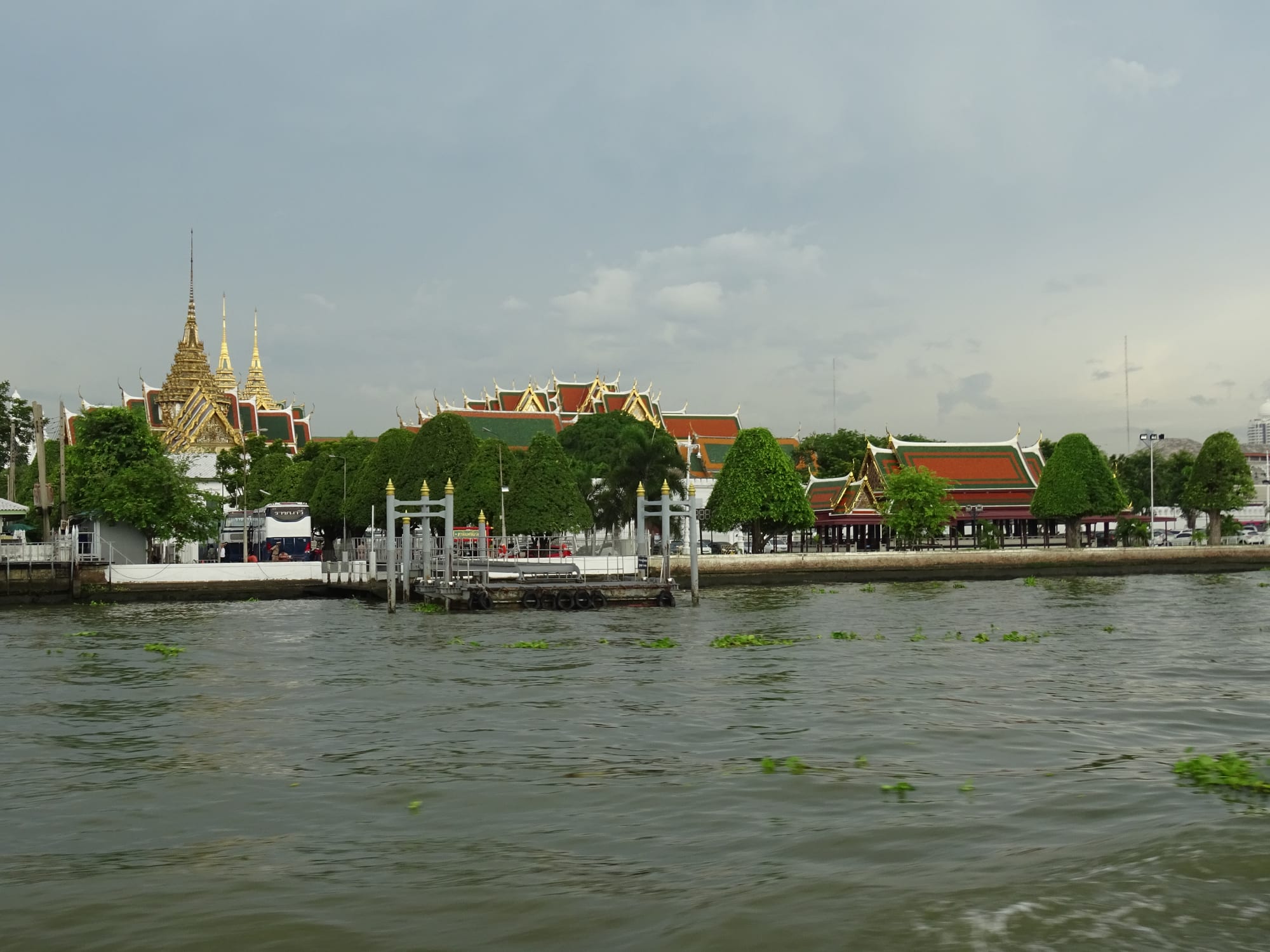
When Ayutthaya fell to the Burmese in 1767, King Taksin set up a new capital at Thonburi, on the west bank of the Chao Phraya River. In 1782 his successor, King Phutthayotfa Chulalok (Rama I), moved the capital across the river to the eastern bank, to the river bend now called Rattanakosin Island, and erected the City Pillar on 21 April 1782, the date regarded as Bangkok's foundation as capital. The new city took on Ayutthaya's ceremonial name and its prestige.
The name then grew in stages. Rama I's first name for the city was Krung Rattanakosin In Ayothaya. King Nangklao (Rama III) revised it to Krung Thep Maha Nakhon Bowon Rattanakosin Mahinthayutthaya. King Mongkut changed "Bowon" to "Amon", fused "Mahinthayutthaya" into "Mahintharayutthaya", adjusted the spelling and added a further string of honorific phrases, producing the full name used today.
What the long name actually says
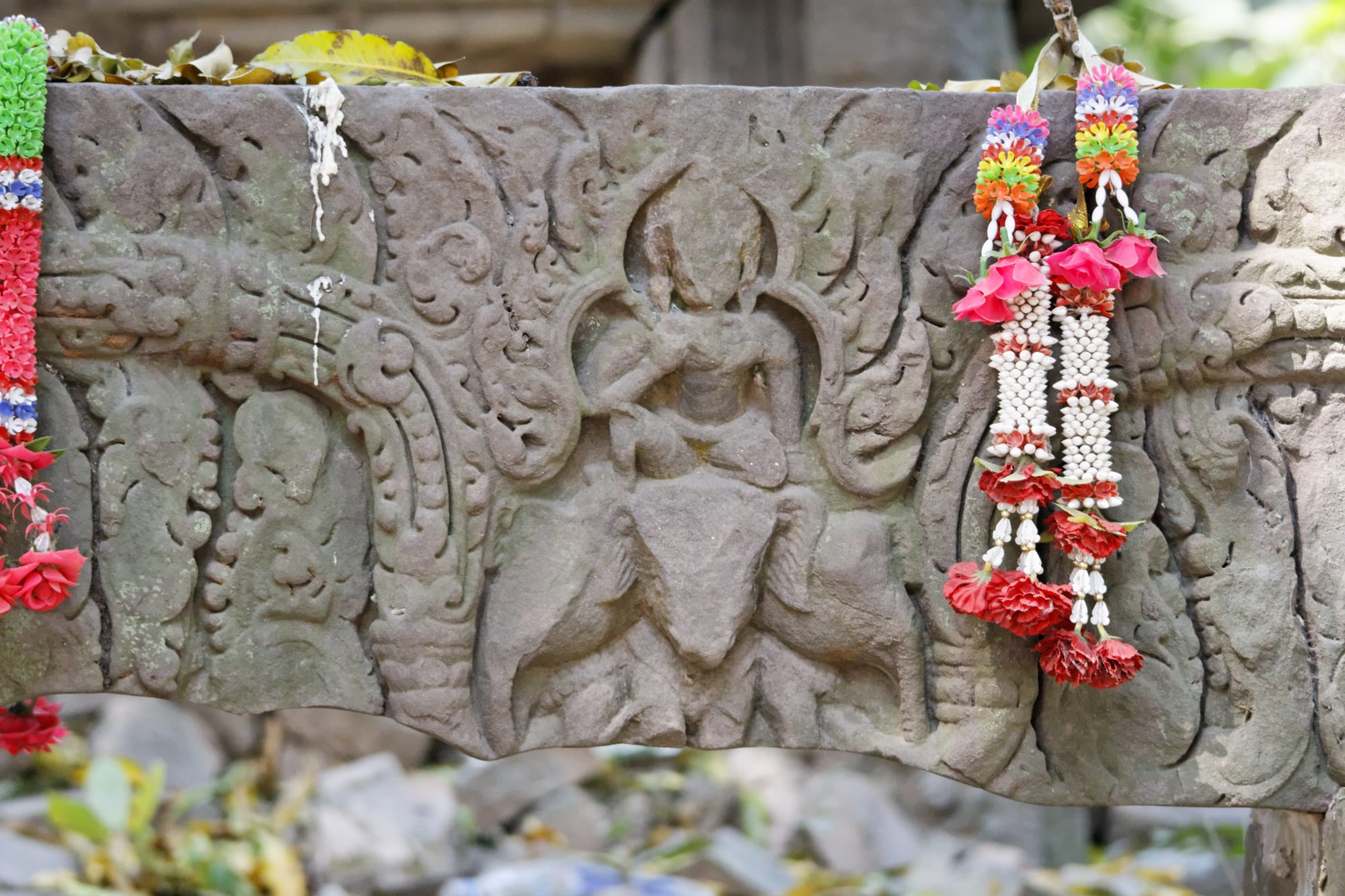
Romanised, the name reads: Krung Thep Maha Nakhon Amon Rattanakosin Mahintharayutthaya Mahadilok Phop Noppharat Ratchathani Burirom Udomratchaniwet Mahasathan Amon Phiman Awatan Sathit Sakkathattiya Witsanukam Prasit. A common English rendering is: "The city of angels, great city of immortals, magnificent city of the Nine Gems, seat of the King, city of royal palaces, home of gods incarnate, erected by Vishvakarman at Indra's behest."
Each phrase carries a layer of meaning. Krung is a word of Khmer origin meaning capital or king; thep comes from the Pali and Sanskrit deva, a god. The Thai explanation of the name describes the city as the abode of the Emerald Buddha, the green-stone image regarded as the sacred protector of Thailand, which Rama I installed in Wat Phra Kaew in 1785. "Mahintharayutthaya" echoes Ayutthaya and presents the city as a great capital no one can conquer in war. Another phrase praises a capital endowed with the nine kinds of gems. The final words name two figures shared by Hindu and Buddhist tradition: Indra, king of the gods, known in Buddhism as Sakka, and Vishvakarman, the divine craftsman and architect of the gods, who in Hindu legend built cities such as Lanka and Dvaraka. Taken together, the name presents Bangkok as a divine dwelling for a king seen as a god incarnate, granted by Indra and built by Vishvakarman.
Why the number keeps changing
A letter count only makes sense in an alphabet. Thai script writes the name in eight words with its own consonants, vowel signs and tone marks, and the length in Latin letters depends entirely on the romanisation used and where the word breaks fall. Guinness World Records accepts 168 letters. The Thai-language encyclopaedic spelling, written as eight long compounds, comes to 169. Whichever spelling is used, the record rests on the same Thai name.
From Bang Makok to Bangkok
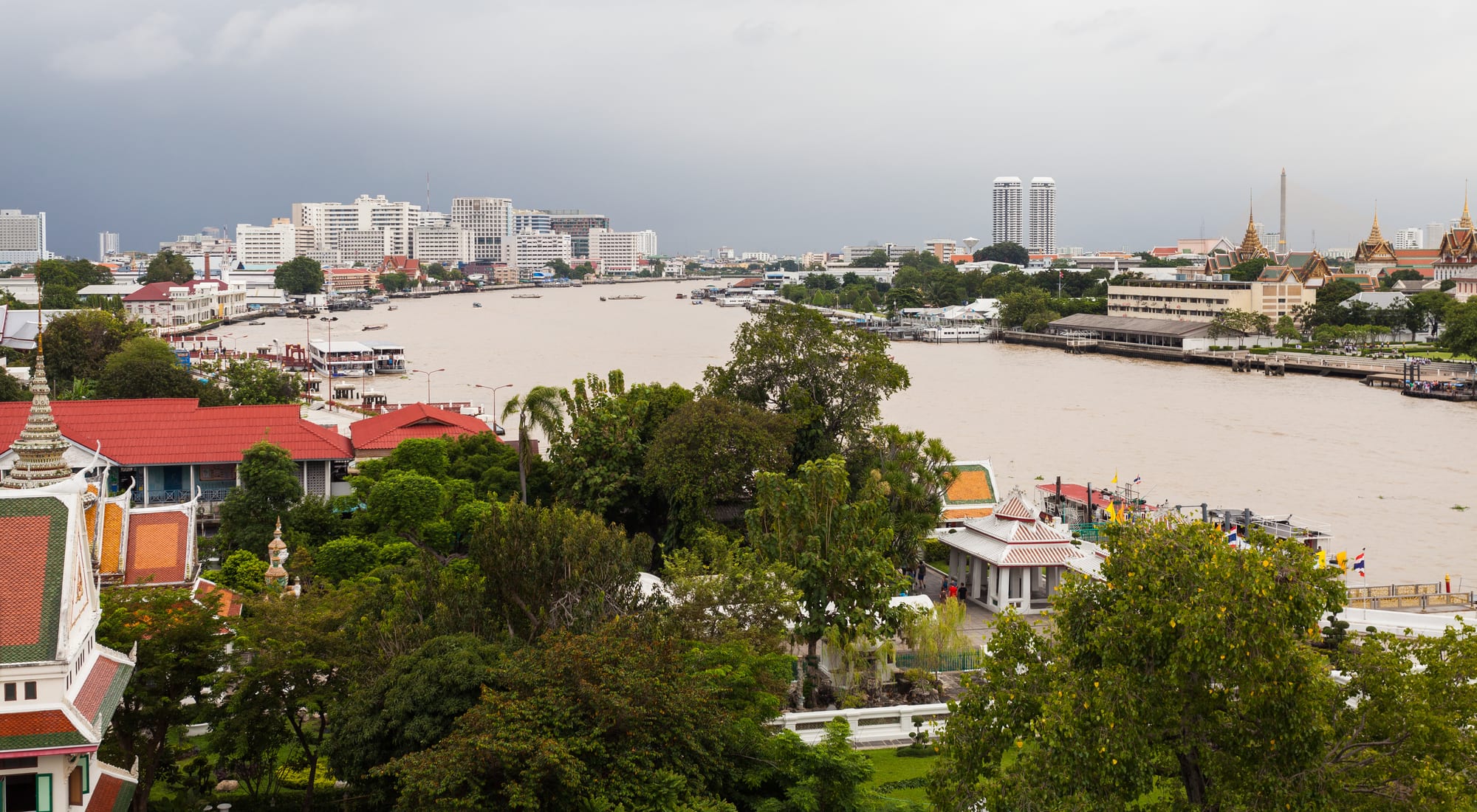
The name the rest of the world uses is far humbler. Long before it was a capital, Bangkok was a village and customs post on the west bank of the Chao Phraya, under the rule of Ayutthaya, and its official name then was Thonburi Si Mahasamut, "city of treasures gracing the ocean". "Bangkok" was a colloquial name, but foreign visitors adopted it and kept using it after the capital moved.
Its origin is uncertain. Bang is a Thai word for a village on a stream. One theory derives the name from Bang Ko, ko meaning island, after the watery landscape; another from Bang Makok, after the makok, a tree with olive-like fruit. The second is supported by the old name of Wat Arun, the riverside Temple of Dawn in Thonburi, which was once called Wat Makok.
How Thais use the name today
In daily life, almost nobody recites the whole thing. The official Thai name is the shortened Krung Thep Maha Nakhon, which people cut further to Krung Thep or to the initials Ko Tho Mo. The Royal Society of Thailand accepts two English names for the city: Krung Thep Maha Nakhon and Bangkok. "City of Angels", the usual English gloss of Krung Thep, invites comparisons with Los Angeles.
Many Thais who can recite the full name learned it from a song. In 1989 the rock band Asanee–Wasan released "Krung Thep Maha Nakhon", whose lyrics consist entirely of the city's full name, sung over and over, seven times through. The song made the long name easy to memorise, and it is still the reason many Thais can recite it in full.