💰 Budget
Bangkok is the most expensive place in Thailand but still cheap by the standards of most capital cities. Street food, markets and public transport cost very little; hotels, malls, rooftop bars and foreign-priced temple tickets are where money goes. Prices rise around New Year and Songkran.
- Daily Budget Midrange
- USD 75–160 (comfortable hotel, restaurant meals, taxis, entry to the palace and temples, a day trip out of the city)
- Daily Budget Shoestring
- USD 30–55 (hostel or guesthouse, street food, Skytrain, river boats and local buses)
Ride the Chao Phraya Express boats and the Skytrain rather than taxis in rush hour; many temples and all markets and parks cost nothing or very little to enter.
📅 Best Time to Visit
November to February is the most comfortable stretch, dry and a little cooler, with Loy Krathong on the river in November. March to May is very hot, with Songkran in mid-April. The rains from about June to October bring heavy afternoon storms, lower prices and, in September and October, street flooding.
⏳ Suggested Number of Days
Three or four days covers the old city, Chinatown and the modern centre without rushing. Traffic and the size of the city slow everything down, so add time rather than sights. A longer stay allows day trips out to the Central Plains.
- First Visit
- 3–4 days
- With Surroundings
- 5–7 days
🚆 Transportation
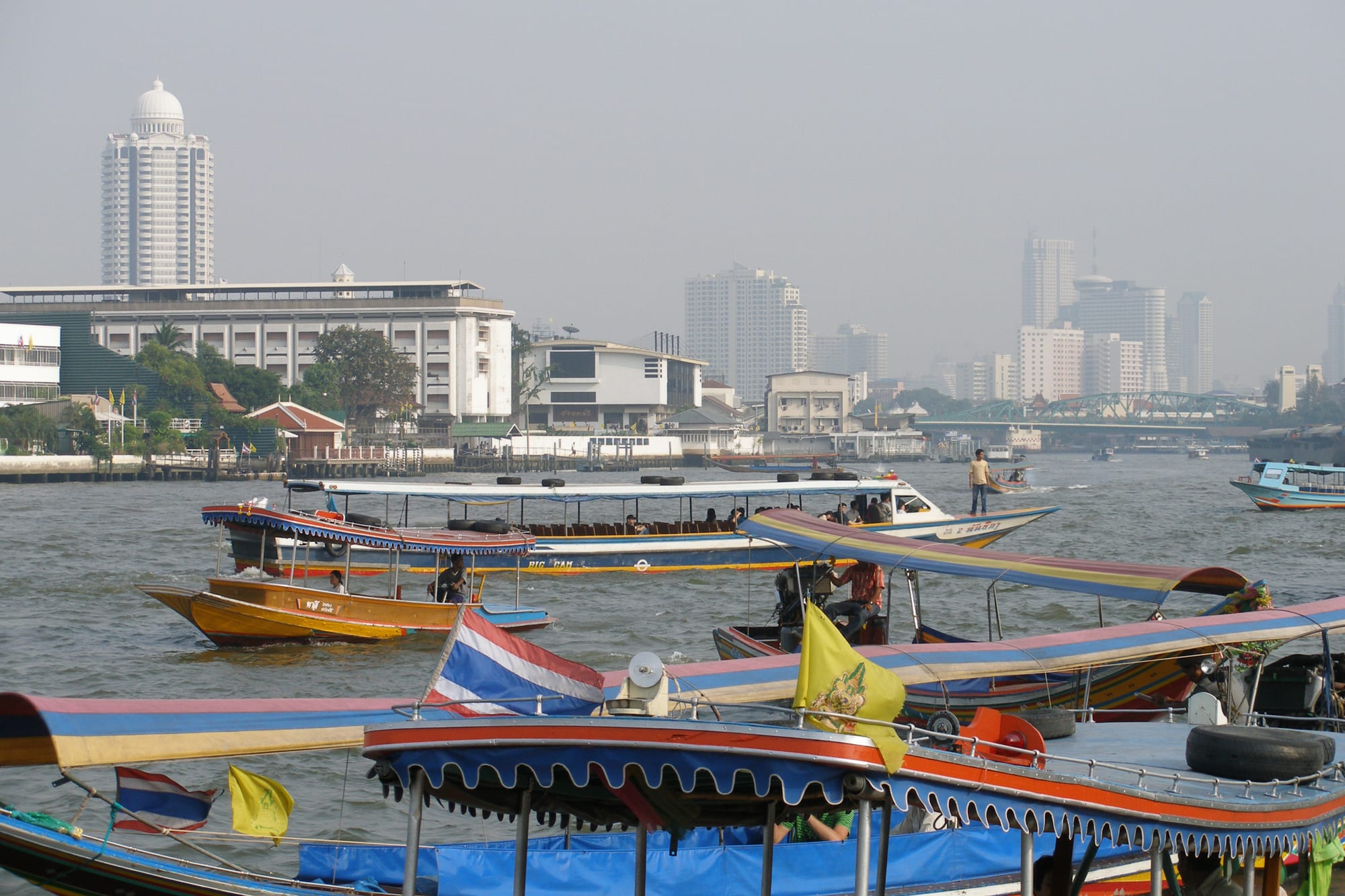
The BTS Skytrain and the MRT underground cover the modern centre and the main shopping and business districts, and the Airport Rail Link runs in from Suvarnabhumi. The old city is not on the rail network and is reached by river boat, bus or taxi. Chao Phraya Express boats stop at piers along the river, long-tail boats work the Thonburi canals, and a canal boat runs east along Khlong Saen Saep. Taxis are metered, motorcycle taxis wait at the mouth of most lanes, and ride-hailing apps are widely used.
Ask for the meter in taxis, and treat road crossings with care — traffic is heavy and pedestrian priority is limited.
🛬 Airport & Station Connections
Suvarnabhumi Airport, about 30 kilometres east of the centre in Samut Prakan, handles most international flights and is linked by the Airport Rail Link and by road. Don Mueang, in the north of the city, serves low-cost carriers. Long-distance trains use Krung Thep Aphiwat Central Terminal in Chatuchak, and buses leave from terminals on the northern, eastern and southern edges of the city.
🚶 Walkability
Individual districts walk well — Rattanakosin's temples, Chinatown's lanes, the riverside at Bang Rak — but the distances between them are long and the heat, humidity, broken pavements, street stalls and wide traffic-filled roads make walking across the city impractical. Elevated walkways link buildings around Siam and Sukhumvit, and most visitors combine short walks with trains and boats.
🛡️ Safety
Bangkok is safe for visitors by the standards of large cities, and violent crime against foreigners is rare. The common problems are scams: touts saying a temple is closed and steering people to gem shops, tuk-tuk drivers on fixed detours, overcharging, pickpocketing in crowds and drink spiking in nightlife areas. Traffic is the real danger, particularly on motorbikes, and dry-season PM2.5 smog can be poor for several weeks. Political demonstrations occasionally gather around government buildings.
Ignore strangers who say a temple is closed, insist on the meter in taxis, keep bags zipped in crowds, and stay away from protests. Check current official travel advice before travelling.
🌦️ Climate
Tropical and hot all year, with three seasons: hot, rainy and cool. The city's concrete traps heat, so nights stay warm, and the dry months can be hazy with smog.
- Summer
- the hot season, March to May, is the hardest — 35–40°C at midday with high humidity; the rainy season that follows is slightly cooler with heavy afternoon storms
- Winter
- the cool season, November to February, is dry and pleasant by local standards, roughly 20–32°C
🤝 Local Customs
Shoulders and knees should be covered to enter temples and the Grand Palace, and shoes come off before entering a temple building or a home. Feet are considered low and should not be pointed at people or images of the Buddha; the head is not touched. Greetings are made with a wai, palms together. The monarchy is protected by a strict lèse-majesté law, and criticism of it is a criminal offence. Tipping is not obligatory, though small amounts are left in restaurants.
Dress modestly at religious sites, stand for the royal anthem in cinemas, ask before photographing monks or worshippers, and note that cannabis, decriminalised in 2022, was restricted again in 2025, with legal sales limited to medical use.
💳 Common Payment Methods
The currency is the Thai baht. Cards work in hotels, malls and larger restaurants, but street stalls, markets, small shops and taxis run on cash or on Thai QR payment apps. ATMs are everywhere and charge a fixed fee per foreign withdrawal, and money changers in the centre often beat bank rates.