History · Belgium
Why does Bruges look so perfectly medieval?
Centuries of poverty froze the medieval city in place, wars passed it by, and 19th-century restorers polished it into the Gothic dream seen today
By Globeway Editorial · 13 October 2026
The short answer
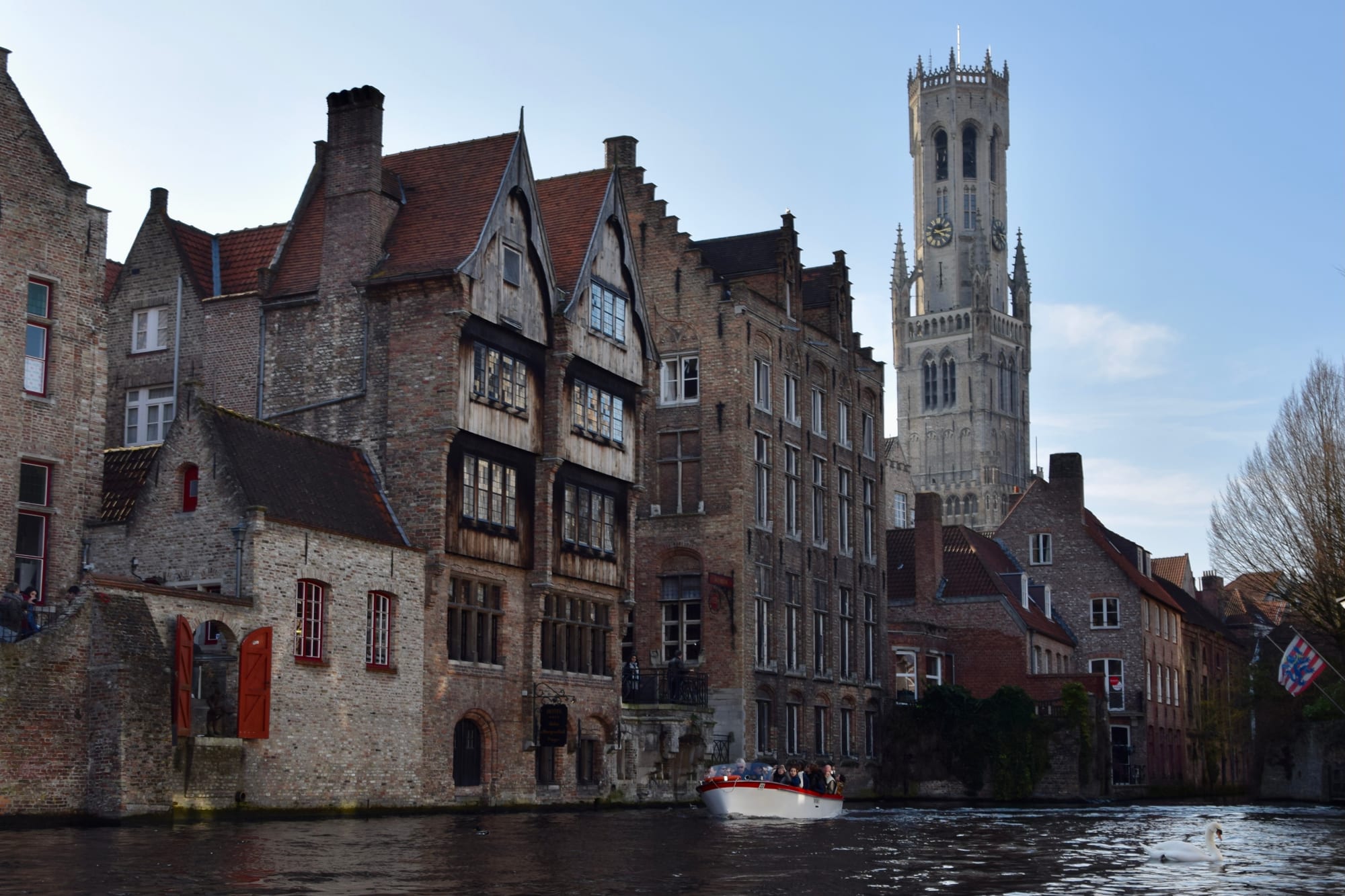
Bruges survived because it went to sleep. In the Middle Ages it was one of the richest trading cities in Europe, reached from the sea by a tidal inlet called the Zwin. Around 1500 the inlet silted up, trade moved to Antwerp, and Bruges sank into centuries of decline. A poor city has little money to tear down old buildings and put up new ones, so much of the medieval street plan, canals and brick houses stayed as they were. Both world wars then passed it by almost untouched.
But "perfectly preserved" is only half the story. When writers and tourists rediscovered Bruges in the 19th century, the city restored its old buildings with enthusiasm, and in places rebuilt or invented them in a Gothic Revival style. Its medieval architecture is mostly intact, which makes it one of the best-preserved medieval towns in Europe, but some of what looks oldest is younger than it seems.
A golden inlet to the sea
Bruges grew rich on water. By about 1050 silting had cut the town off from the sea, but a storm in 1134 broke through the Flemish coast and carved a new tidal channel, the Zwin, reaching some 15 kilometres inland. Ships could now sail to Damme, which became the city's outport, and Bruges rose to become one of the foremost medieval port cities of Europe.
It sat where the northern trade of the Hanseatic League, the alliance of German merchant towns, met routes from the south. Genoese fleets arrived from 1277, Venetian galleys from 1314, and merchants from Castile, Portugal and the Basque country set up their own communities. The Bourse, opened in 1309, was most likely the first stock exchange in the world. Bruges weavers were thought the best anywhere, and by around 1350 the city had at least 46,000 people. In the 15th century the Dukes of Burgundy kept a court there, painters of the Flemish school made oil painting famous, and William Caxton printed the first book ever published in English in the city.
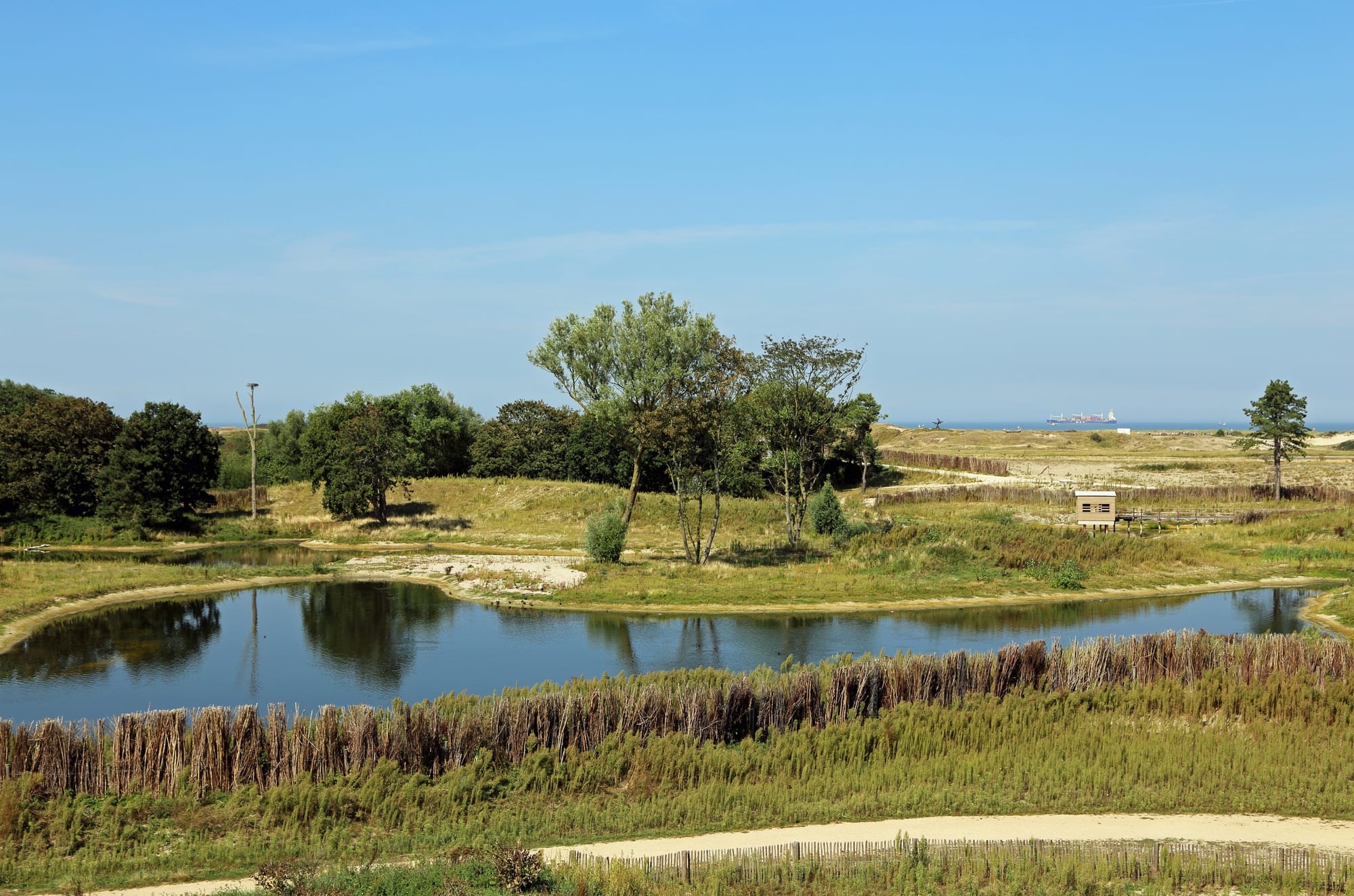
What remains of the Zwin's entrance, on the Belgian and Dutch border, has been a nature reserve since 1952, known for salt-loving plants such as sea lavender.
The sea walks away
The channel that made Bruges also undid it. From the late 13th century the Zwin slowly filled with silt, and from around 1500 it could no longer be used, leaving the harbour cut off from the sea. The city's golden age ended. After the secession of the Spanish Netherlands in 1584, Bruges fell decisively behind Antwerp as the economic leader of the Low Countries.
There were attempts at revival. Lace-making took off in the 17th century, and the city built new links to the sea, without much success. Bruges grew poor and faded. By some accounts it was among the poorest cities in the Low Countries from 1600 until 1885. That long stagnation is the main reason the medieval city survived: few people had the means to replace what was already standing.
How Bruges was kept
- 1134
The Zwin opens
A storm cuts a tidal channel that gives Bruges its access to the sea.
- 1309
The Bourse
Bruges opens what was most likely the world's first stock exchange.
- c. 1500
The inlet fails
Silting makes the Zwin unusable and the golden age ends.
- 1584
Antwerp takes over
Bruges falls behind its rival after the secession of the Spanish Netherlands.
- 1892
Bruges-la-Morte
Georges Rodenbach's novel casts Bruges as a dead city.
- 1902
The great exhibition
A show of the Flemish Primitives launches modern cultural tourism.
- 1944
Spared again
Canadian troops liberate the undamaged city on 12 September.
- 2000
World Heritage
The historic centre is listed by UNESCO.
The romance of a dead city
Decay became the attraction. From the early 19th century English writers praised Bruges as a place to live and as a historic town, and in the second half of the century it became one of the world's first tourist destinations, drawing wealthy British and French visitors.
In 1892 the Belgian Symbolist writer Georges Rodenbach published Bruges-la-Morte, "Bruges the Dead", a short novel in which the silent, decaying city is almost a character in its own right. It was later turned into Erich Wolfgang Korngold's opera Die tote Stadt, The Dead City. In 1902 an exhibition in Bruges of the Flemish Primitives, the 15th-century painters such as Jan van Eyck and Hans Memling, made the term famous and launched the strong cultural and tourist development the city has seen ever since.
Restored, rebuilt and reimagined
The rediscovery came with a building boom of its own. The Gothic Revival, a 19th-century movement that copied medieval architecture, took hold in Bruges. The city architect Louis Delacenserie led a long series of restorations: the Basilica of the Holy Blood in the 1870s, the City Hall and the Belfry in the 1890s and 1900s, and the west front of the Church of Our Lady from 1905 to
- He knew medieval architecture so well that he could imitate it
in every detail, even when he used modern techniques and materials.
Some landmarks are not medieval at all. The grand building on the Markt, the main square, that looks like a Gothic palace is the Provinciaal Hof, begun in 1887 after a fire in 1878 destroyed an earlier classical building. It stands where a 13th-century water hall once let boats unload in the heart of the city. Even the Belfry's openwork stone parapet was added in 1822. Many other houses were embellished, restored, rebuilt or newly built in what is called the neo-Bruges style, so the present look of the old town owes a good deal to the 19th century.
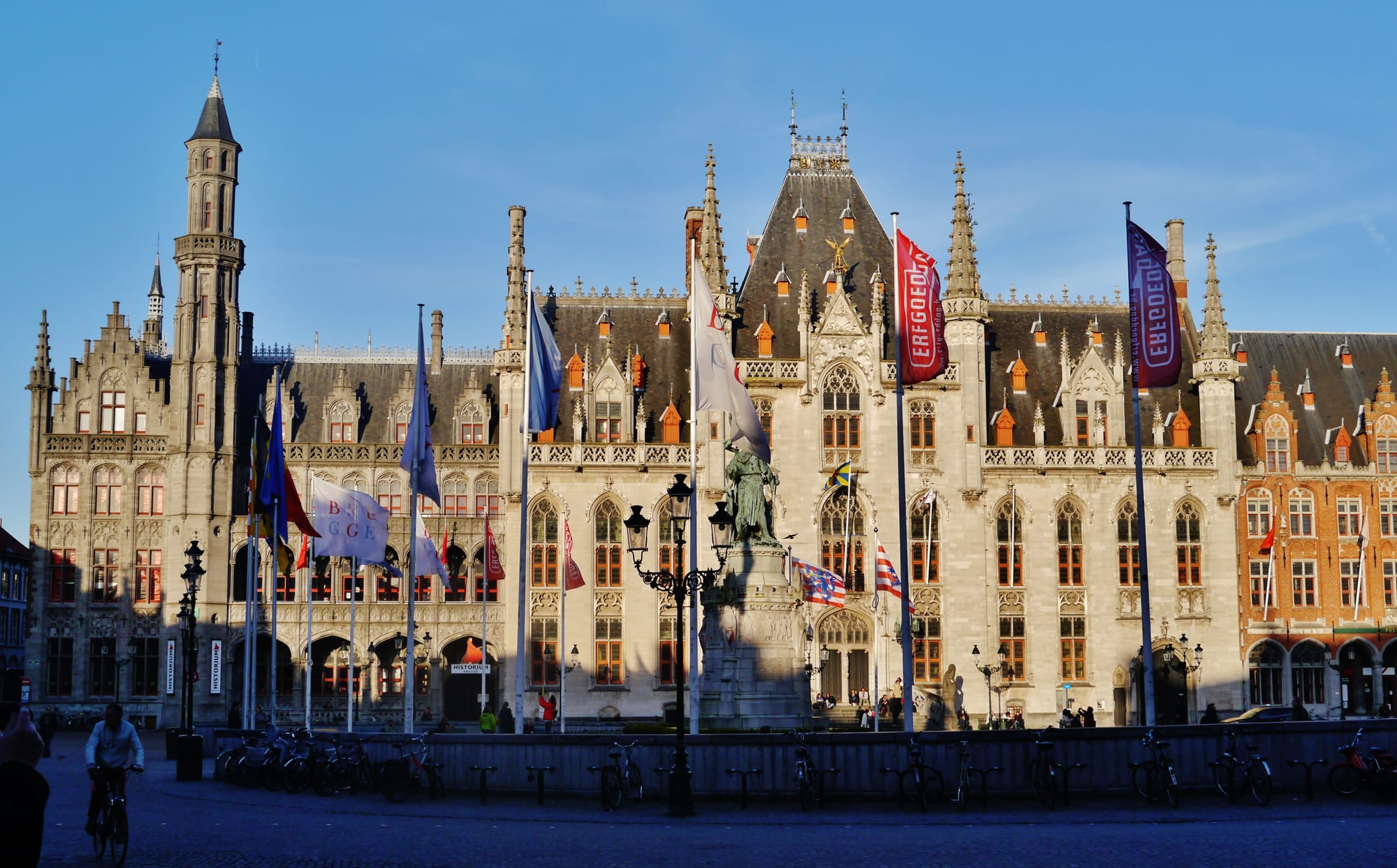
The statue in front shows Jan Breydel and Pieter de Coninck, leaders of the 1302 uprising against the French, and was unveiled in 1887.
Spared by two world wars
Luck did the rest. German forces occupied Bruges in the First World War and used it as a base for U-boats, yet the city suffered virtually no damage. It was occupied again from 1940 and was again spared, and on 12 September 1944 Canadian troops of the 12th Manitoba Dragoons liberated it.
Modern shipping went to the coast instead: the port of Zeebrugge, built in 1907 and greatly expanded in the 1970s and early 1980s, is now the city's harbour. After 1965 a new wave of restoration renewed houses, monuments and churches across the centre. The historic centre became a UNESCO World Heritage Site in 2000, and the city now draws some eight million tourists a year.