Culture & Customs · Morocco
Why is Chefchaouen painted blue?
Nobody knows for certain. Jewish tradition, faith, folk belief and, more recently, tourism all claim the blue of Morocco's mountain town.
By Globeway Editorial · 13 October 2026
The short answer
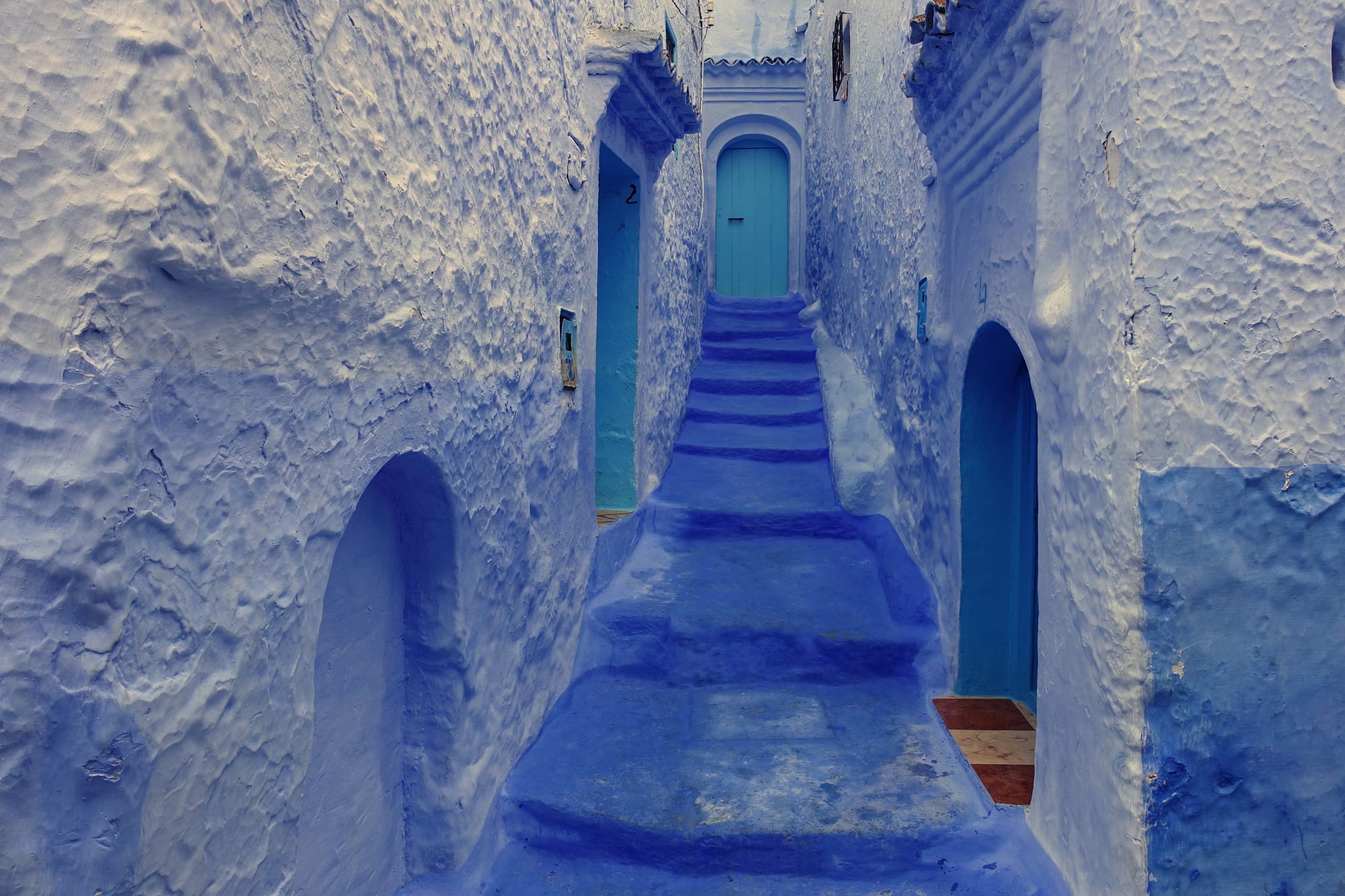
There is no single, documented reason. Chefchaouen, a mountain town in north-western Morocco, is famous for the blue and white of its old houses, but the explanations people give for the colour are traditions and theories rather than recorded decisions. One is that the town's Jewish community began painting it blue; one tradition dates this to the 18th or 19th century and links it to the mystical teachings of the Kabbalah. Others say the blue stands for the sky and heaven, a reminder to live a spiritual life, or that it keeps away mosquitoes.
There is also a plainer answer, offered by some local people: the walls were required to be painted blue in the 1970s to attract tourists. What is certain is that refugees from Spain built much of the old town in the style of Andalusia, and that tourism has since made the blue its trademark.
A refuge in the Rif
Chefchaouen sits at about 600 metres above sea level in the foothills of the western Rif mountains. Its name joins an Arabic word for "look" with a Berber word for "horns", a reference to the two peaks above it. It was founded in 1471 by Ali ibn Rashid al-Alami as a small fortress, the kasbah, to defend the region against Portuguese attacks on northern Morocco.
The town grew with the Reconquista, the Christian conquest of Muslim Spain, which ended with the fall of Granada in 1492. During and after it, Andalusi Muslims, Moriscos (descendants of Spain's Muslims, the last of whom were expelled between 1609 and 1614) and Spanish and Portuguese Jews settled here alongside the local Ghomara people. The newcomers built their quarters on the steep slopes in the style they knew, very like the old quarters of Granada: narrow lanes spanned by curved brick archways. The houses were built of stone, brick, tile, wood, earth and lime, each around an open central yard.
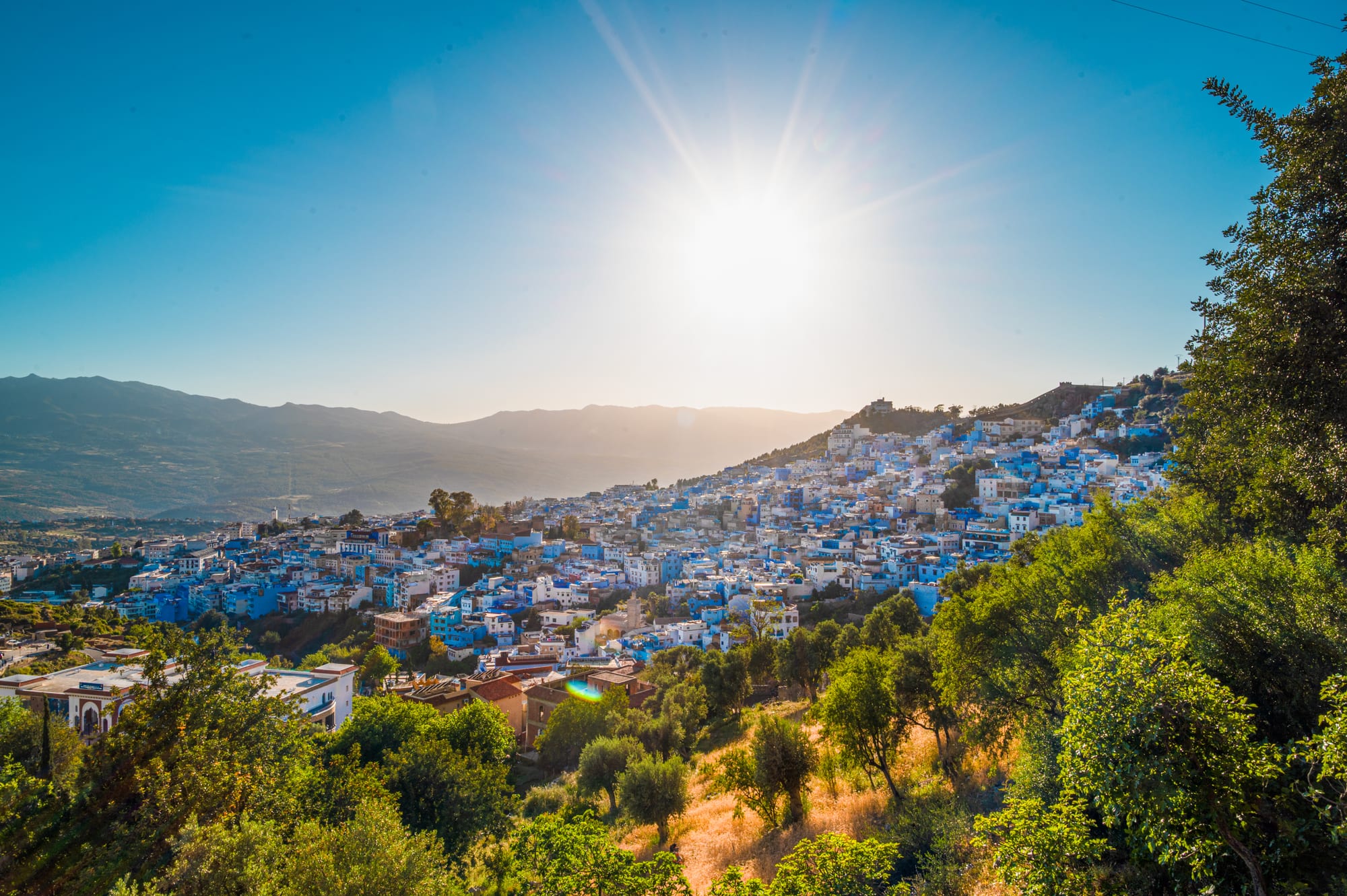
From a distance the medina, the historic walled town, reads as one sheet of blue and white against the green of the mountains. The newer town that has grown up outside the old walls is far less uniform.
The Jewish explanation
The best-known story credits the town's Jews. Chefchaouen had a Sephardic Jewish community with roots in Spain, one of the communities that spoke Haketia, the Judaeo-Spanish language of North Africa's Sephardim. According to one tradition recorded in Hebrew sources, it was the Jews of the 18th or 19th century who painted the streets blue, under the influence of the Kabbalah.
Blue carries real weight in Jewish tradition. Tekhelet, a precious blue dye named in the Hebrew Bible, was used on the ritual fringes of garments and was difficult to obtain and expensive; the knowledge of how to make it was later lost. Rabbinic writers compared its colour to the sea and the sky, and one well-known passage links it in a chain of resemblances from the sea to the sky to the Throne of Glory, the seat of God. Painting a house blue, in this reading, is a way of keeping heaven in view. It is a coherent explanation, but it remains one tradition among several.
Sky and mosquitoes
The other explanations are just as widespread and just as hard to prove. The spiritual reading is not only Jewish: many people describe the blue as symbolising the sky and heaven and serving as a reminder to lead a spiritual life. A popular practical theory holds that the colour keeps mosquitoes away.
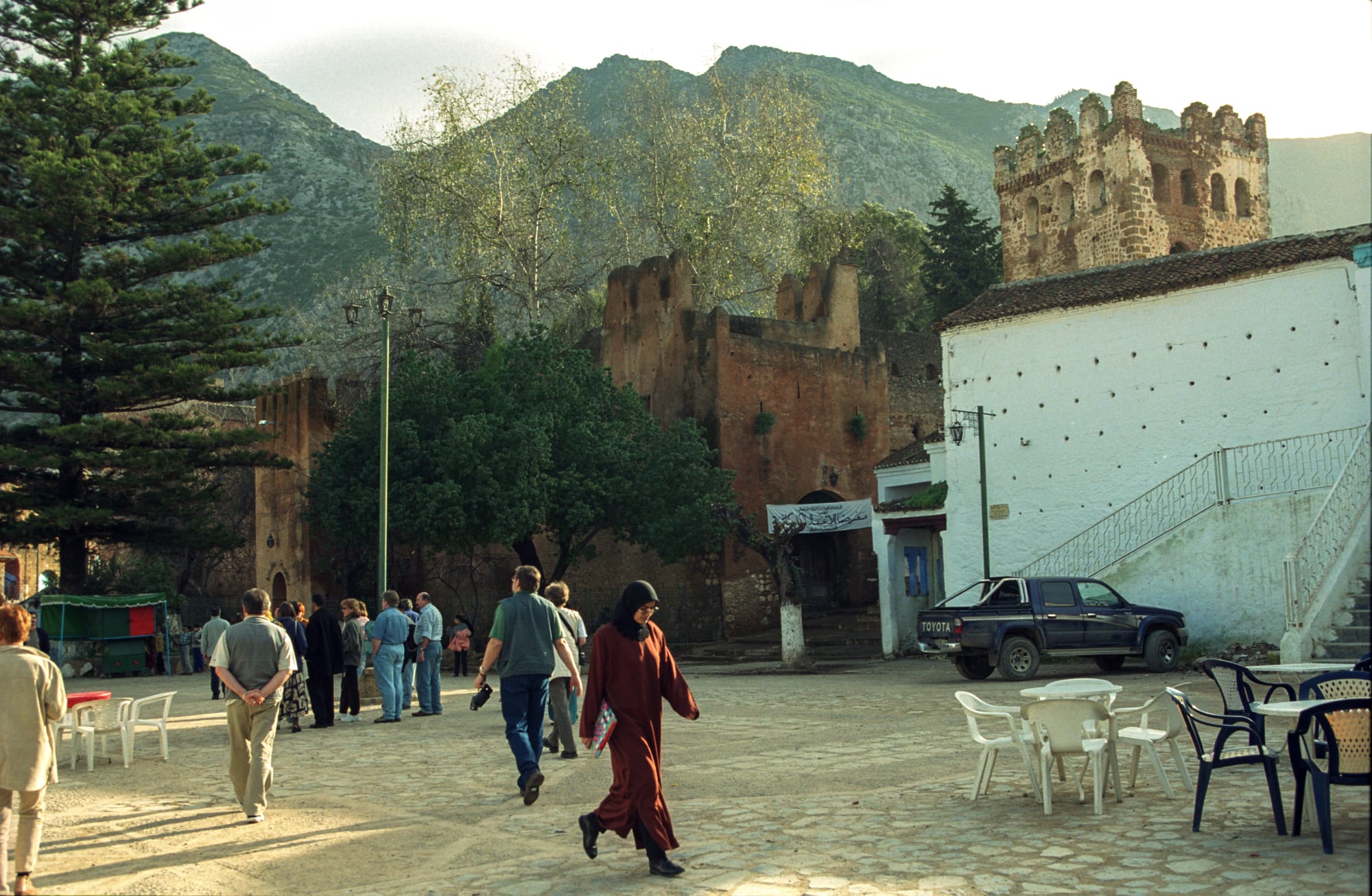
Not everything in Chefchaouen is blue. The kasbah, the original fortress, is built of rammed earth and keeps its warm reddish colour, and the heart of the medina, Uta el-Hammam square, is framed by it, the Great Mosque and an old caravanserai, an inn for merchants and travellers.
Blue for the visitors
The least romantic explanation may be the most important today. According to some locals, painting the walls blue was made compulsory in the 1970s to draw tourists. Whatever its origins, the colour became the town's identity: it is nicknamed the Blue City and the Blue Pearl of Morocco, and its blue walls are a large part of its appeal.
Tourism has grown largely on the appeal of the medina. In 2018 the town was estimated to receive 120,000 visitors a year, and around 200 hotels in the province cater mainly to an influx of European tourists in summer. The municipality itself had 46,168 people at the 2024 census.
Walking the Blue City
The blue is at its most intense in the oldest lanes of the medina, such as Souika, one of the earliest neighbourhoods, established in the 15th century around a small market from which it takes its name, "Little Souk". Old fountains, which once supplied the town's water, are scattered through the lanes, including a four-sided fountain in the middle of Uta el-Hammam square. The Spanish Mosque, a disused mosque on a hill to the east, looks out over the whole town.
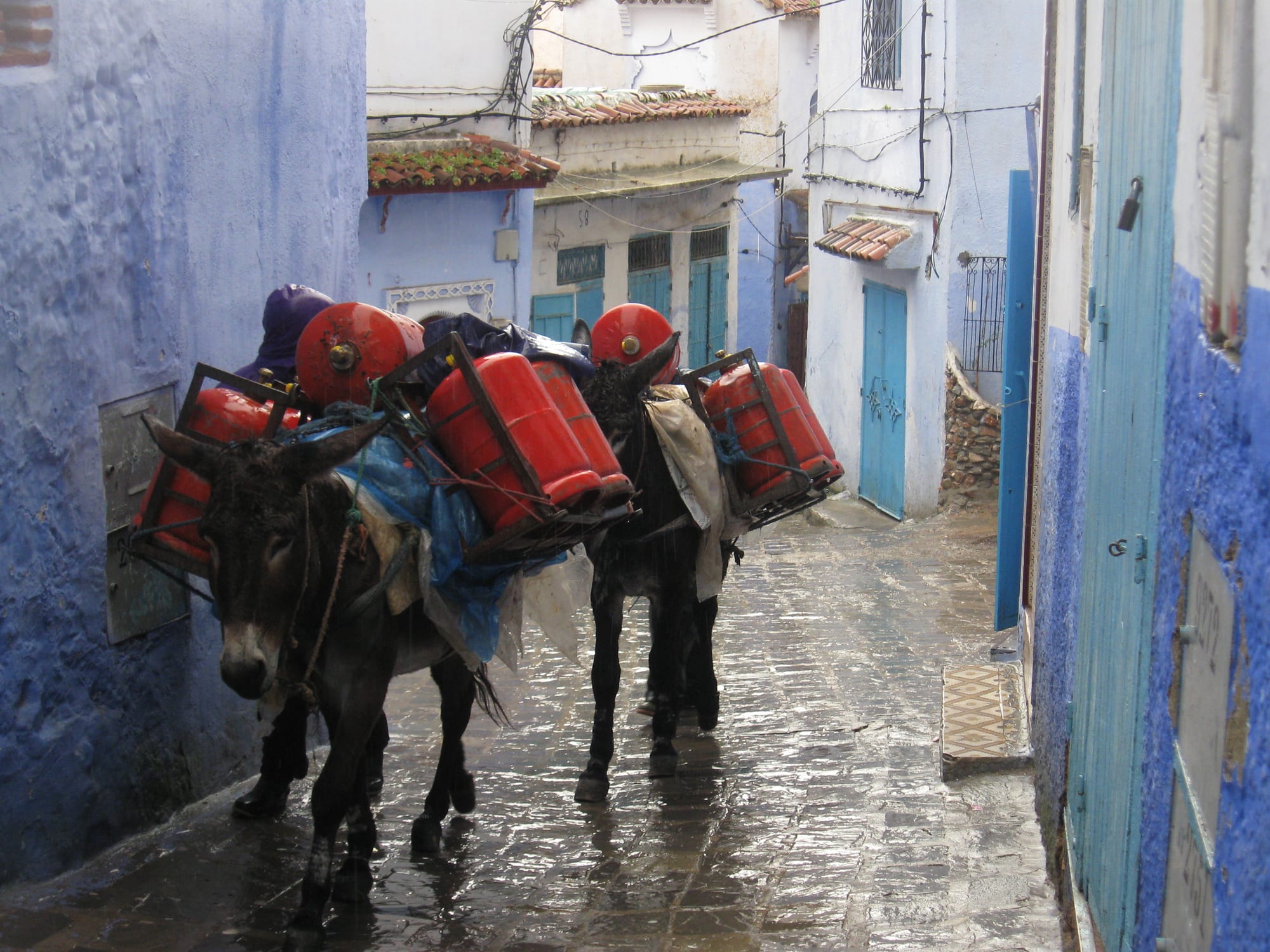
Chefchaouen remains a working town as well as a picturesque one. Its traditional handicrafts, from leatherwork and textiles to ironwork and carpentry, are closely tied to the tourist trade.
The town lies in a Mediterranean climate, with rainfall that varies widely from year to year, and the busiest season is summer, when tourists and emigrant workers returning home fill its streets.