History · Cuba
Why is Cuba full of 1950s cars?
Cuba imported American cars until the revolution and the US embargo cut the supply in 1960, so Cubans kept the old ones running for more than sixty years.
By Globeway Editorial · 13 October 2026
The short answer
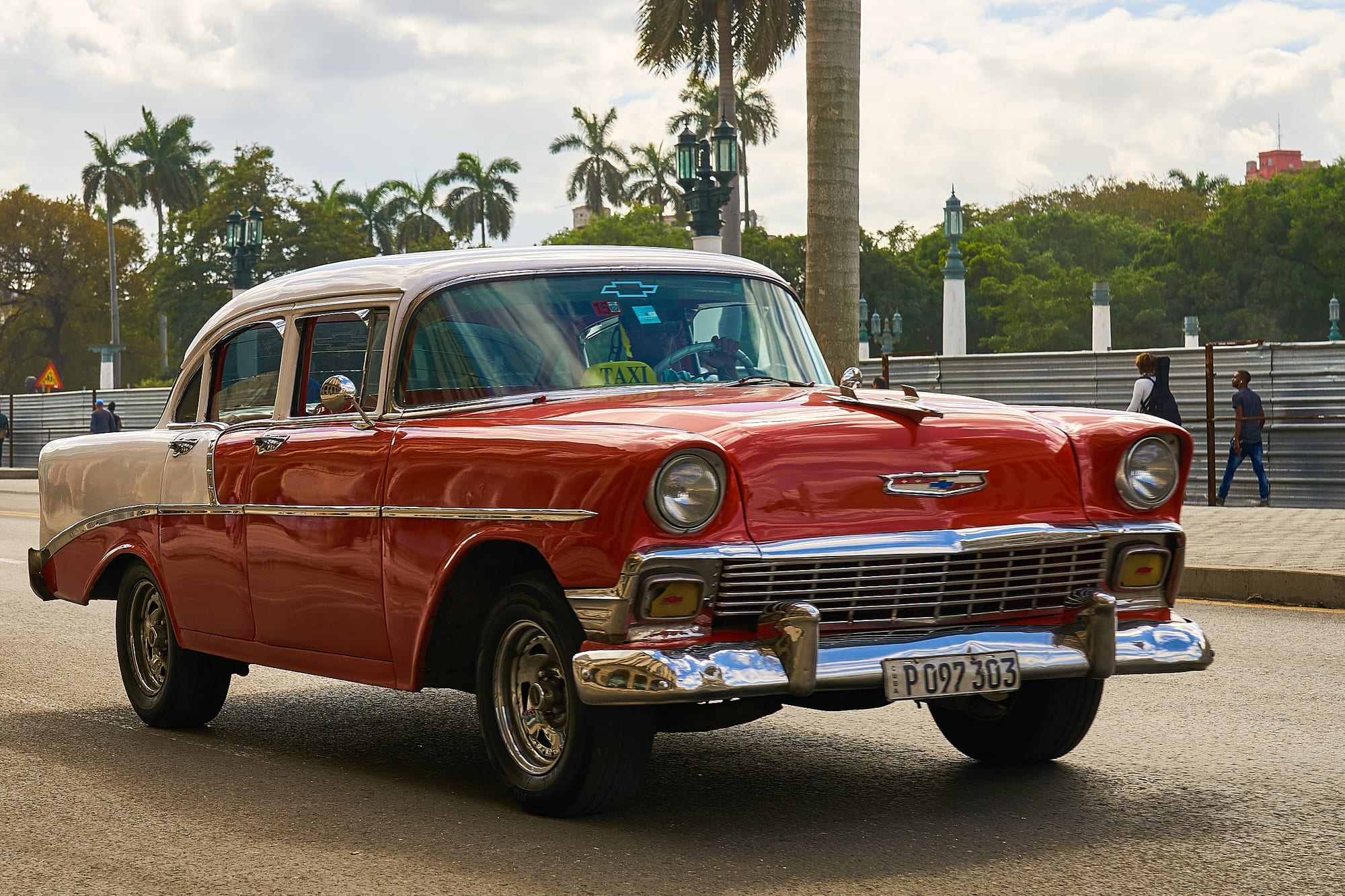
Before 1959 Cuba bought most of its new cars from the United States, and it bought a lot of them: in the 1950s it had one of the highest rates of car ownership in Latin America. Then came Fidel Castro's revolution, a wave of nationalisations and, in 1960, a US trade embargo that ended imports of American cars and the parts to repair them. The cars already on the island became the last ones Cubans were likely to get.
For decades afterwards the Cuban government tightly controlled who could own a new car, and the Soviet-made Ladas and Volgas it imported went mostly to the state. The pre-revolution cars were among the few vehicles ordinary Cubans could own and sell, so they were never thrown away. Kept alive with scavenged parts, Soviet engines and a great deal of improvisation, an estimated 60,000 of them are still in use.
A rich market next door
Until 1960 most new vehicles arriving in Cuba came from the United States, which is why the survivors are names like the 1957 Chevrolet, the 1953 Ford and the 1958 Dodge. After Fulgencio Batista's coup of 1952, Cuba had Latin America's highest per capita consumption of automobiles, telephones and radios, although about a third of the population was considered poor and shared little of that wealth. The large middle class is the main reason there were so many American cars to preserve in the first place. Even Batista's son owned a 1956 Corvette.
Revolution and embargo
Castro's rebels took power on 1 January 1959. Relations with Washington soured quickly. In 1960 the United States refused to sell oil to the island and cut its purchases of Cuban sugar, and Cuba nationalised American-owned oil refineries, the electricity and telephone companies and dozens of sugar mills. The Eisenhower administration answered with the first trade embargo, banning the sale of all products to Cuba except humanitarian aid. In October 1960 Cuba nationalised all remaining American businesses. President John F. Kennedy widened the restrictions in 1962, and the embargo has stayed in place, in one form or another, ever since.
For car owners the effect was immediate and permanent. New American cars stopped arriving, and so did spare parts. When something broke, it had to be made, adapted or salvaged from another car.
Why nobody replaced them
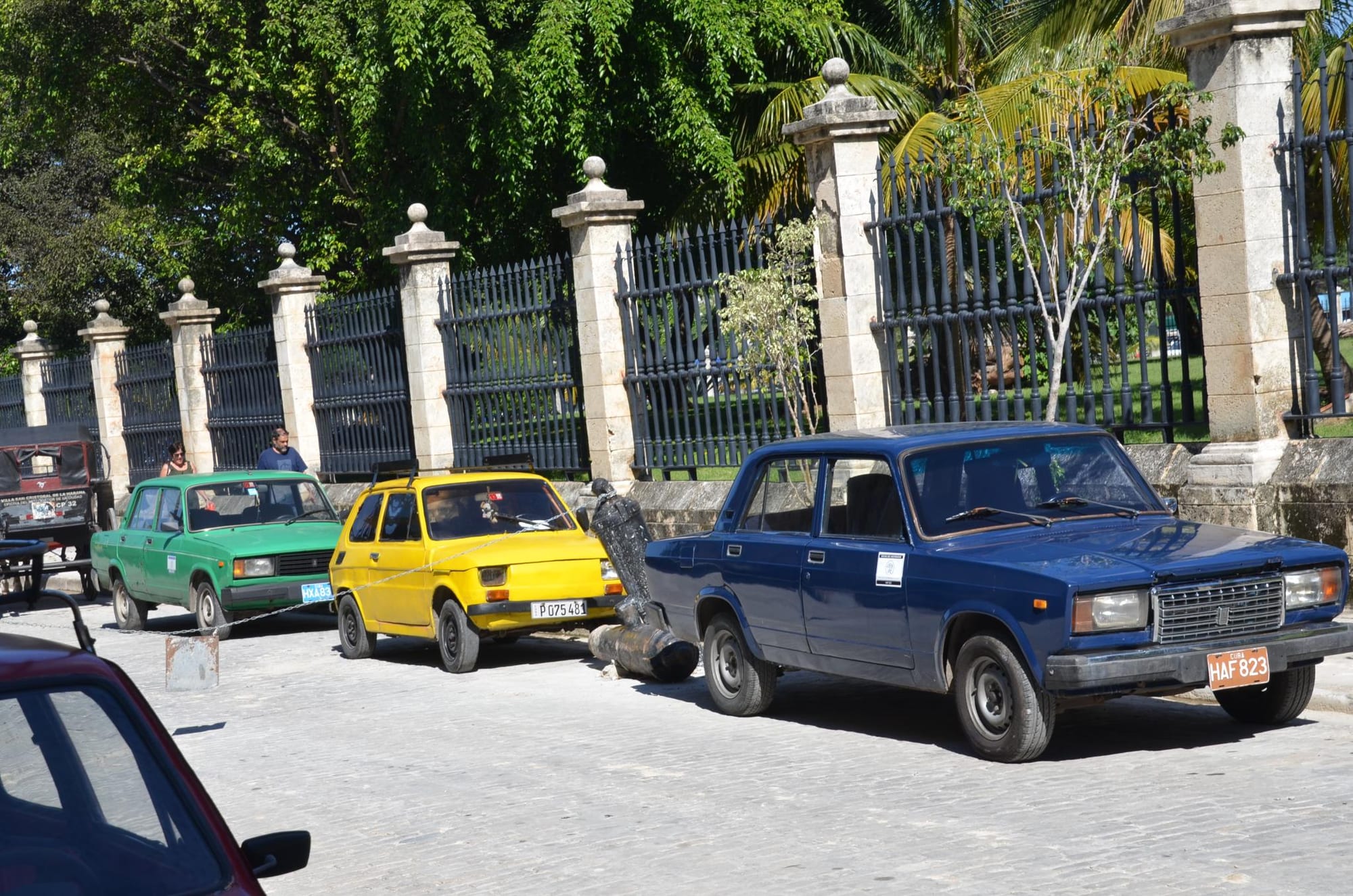
The embargo explains why American cars stopped coming. It does not explain why Cubans did not simply switch to other makes, and here the answer lies in Cuba's own rules. As the country aligned with the Soviet Union, it imported Ladas, Moskvitches and Volgas, as well as Soviet trucks, but mainly for state use. For many years Cubans could acquire a new car only with special government permission.
The cars bought before the revolution were different. They remained the private property of their original owners and their descendants, and they could be sold to other Cubans as long as the paperwork, a transfer certificate called a traspaso, was in order. That made a 1950s Chevrolet one of the few valuable things a family could own outright and pass on, and a strong reason to keep it running at almost any cost.
The collapse of the Soviet Union in 1991 tightened the squeeze further. The crisis that followed, known as the Special Period, brought severe shortages of fuel and spare parts, and hitchhiking and car-sharing became a normal part of getting around.
Kept alive by ingenuity
Many of the old cars on the road today are no longer original under the bonnet. Many have been fitted with newer engines, disc brakes and other parts, often taken from Soviet cars, and taxis in particular have been converted to Soviet diesel engines. The reason was cost: in the summer of 2002 petrol cost roughly 75 US cents a litre in Cuba, against roughly 15 to 20 cents for diesel. A car that cannot be repaired is either parked to wait for parts or broken up and sold piece by piece, which brings in extra income and keeps other cars on the road.
The cost shows in how the cars are used. Average distance driven fell from nearly 3,000 kilometres a year in the mid-1980s to less than 800 kilometres in 2000 to 2001, and when the cars do travel they are often loaded beyond their limits on poorly maintained roads. Cubans call them máquinas, or almendrones, "big almonds".
Cuba's streets today
The rules have loosened. In 2011 the government legalised the buying and selling of used cars made after 1959, and from December 2013 Cubans were allowed to buy new cars from state dealerships for the first time. Since 2009 Chinese Geely saloons have served as police cars, taxis and rental cars. In 2004 there were an estimated 173,000 cars in the whole country, and how many of the old American ones are still roadworthy is not known.
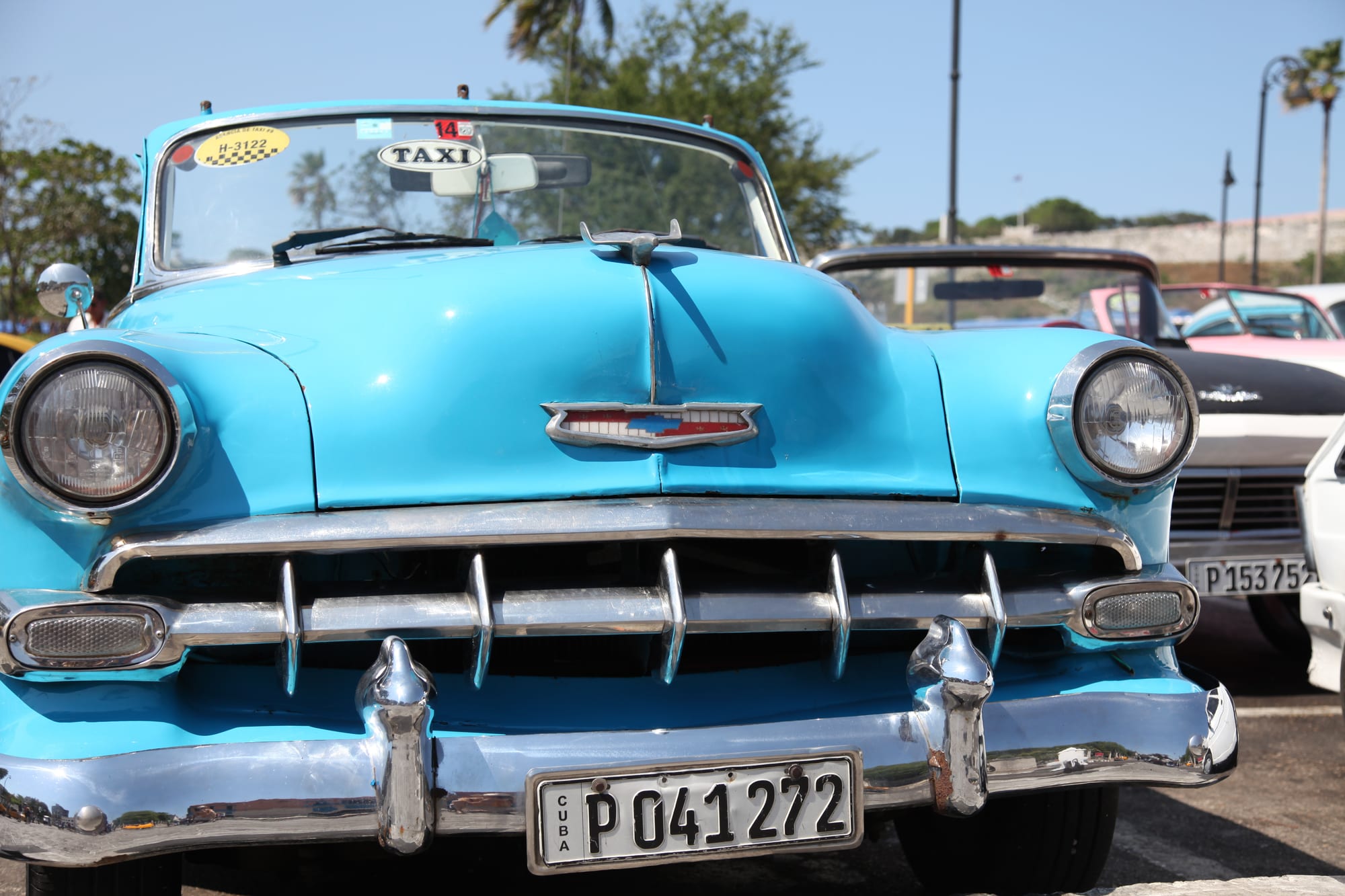
So the classic cars are a striking minority rather than the whole traffic, but they remain the most visible. In Havana and other cities vintage cars serve as taxis, from brightly painted, restored convertibles to battered almendrones. Fuel has become the biggest problem: since January 2026 the United States has blocked fuel shipments to the island, deepening an energy crisis that regularly disrupts taxis and buses.
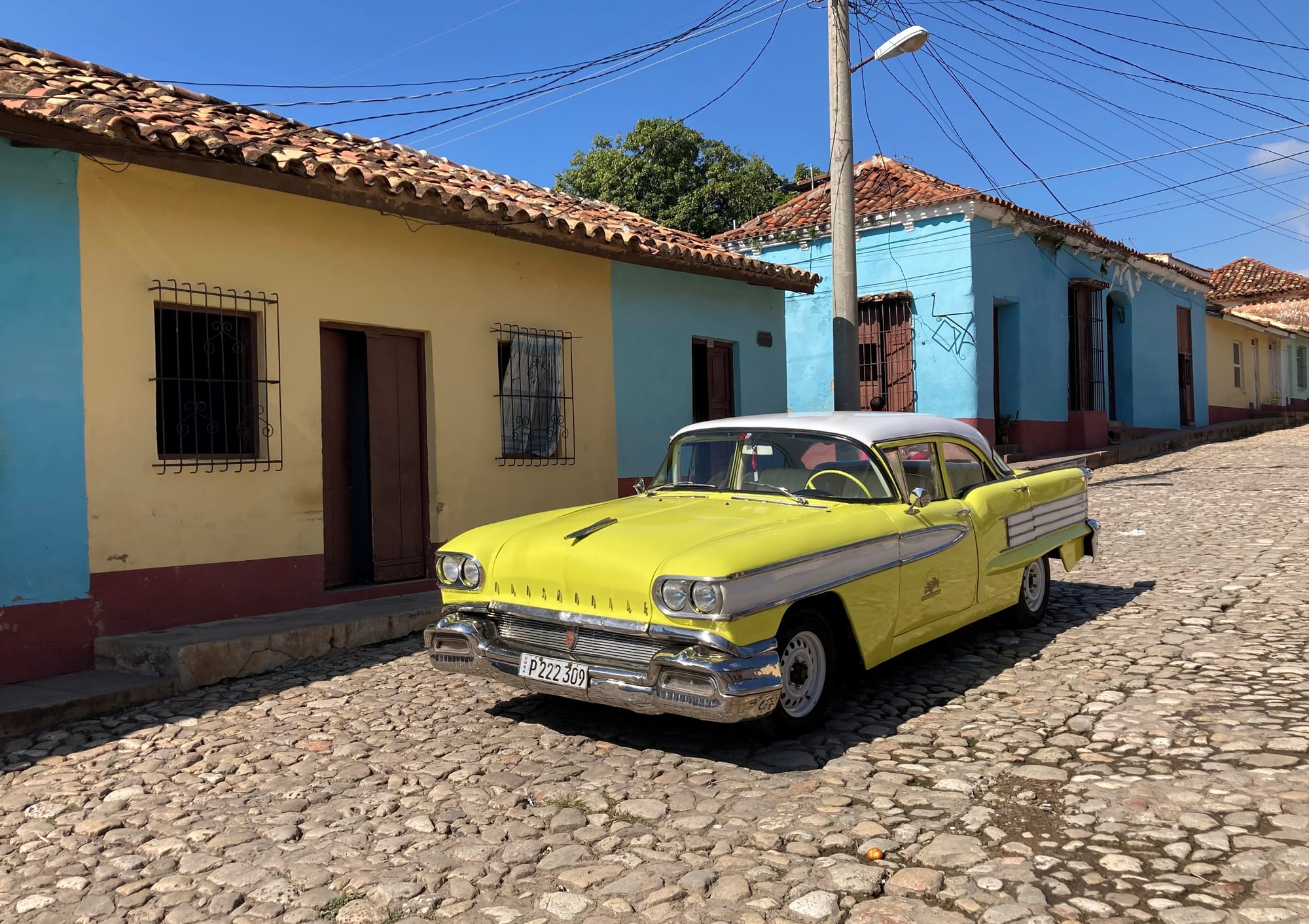
The irony is that the embargo which stranded these cars also turned them into treasures. Owners of the best-kept examples are sometimes said to be sitting on a potential gold mine, should the day come when collectors in the United States can buy them.