History · Poland
Why is Kraków's old town intact when Warsaw's had to be rebuilt?
Germany blew Warsaw up as punishment for its 1944 uprising, while Kraków, the occupiers' own capital, was abandoned in a hurry in January 1945.
By Globeway Editorial · 13 October 2026
The short answer
Warsaw's old town was destroyed on purpose. After the Warsaw Uprising of 1944, German forces expelled the population and spent months burning and blowing up what remained, as an act of reprisal. By January 1945 between 85 and 90 per cent of the city's buildings had been destroyed. What visitors see in Warsaw's Old Town today is a careful post-war reconstruction.
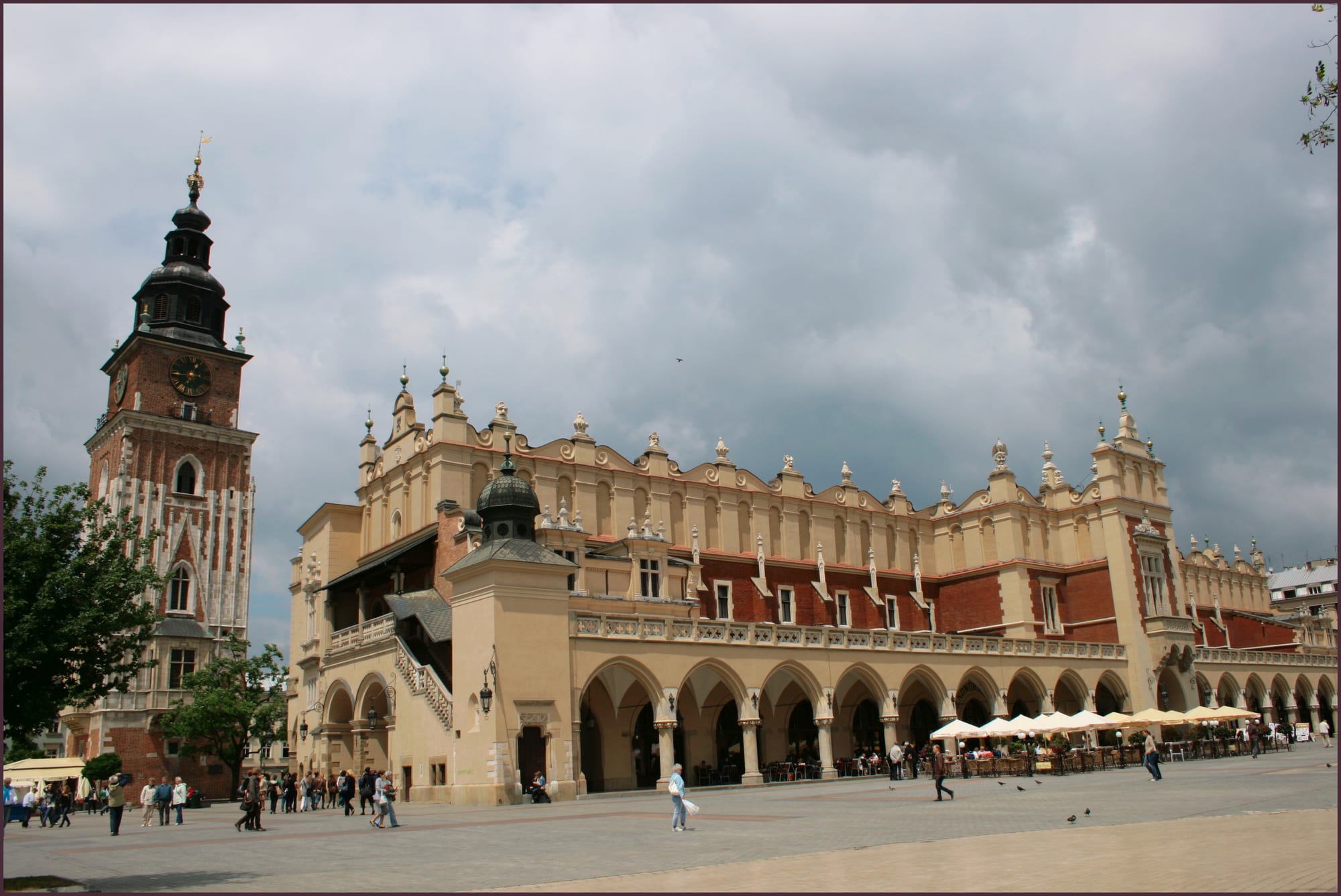
Kraków never went through anything comparable. It was the seat of the German occupation government, and when the Soviet army arrived in January 1945 it encircled the city so quickly that the German defenders withdrew in a hurry. The city was looted and its people suffered terribly, but its buildings were left largely undamaged.
Two cities, two roles in the occupation
The two cities were treated differently from the start of the occupation. After the invasion of 1939, Germany ruled central and southern Poland as the General Government, and it placed the seat of that government in Kraków rather than Warsaw, for security reasons. The governor-general, Hans Frank, made Wawel Castle, the old residence of Polish kings, his own residence. By 1942 Hitler and Frank had agreed that the Kraków district, with what they called its "purely German capital", would be among the first areas resettled with German colonists. The occupiers had plans for the city, not plans to erase it.
Warsaw was marked for a very different fate. In June 1939, before the war began, Hitler was shown a project for a "New German City of Warsaw", a provincial town of 130,000 people in which only a handful of landmarks would survive.
Warsaw destroyed in stages
Warsaw's destruction came in waves. In September 1939 the German Luftwaffe bombed the city, including the Old Town and the Royal Castle, during the siege. In 1943 the Warsaw Ghetto Uprising brought further destruction. On 1 August 1944 the Polish Home Army rose against the occupiers, and for 63 days the city was under constant bombardment by German artillery and aircraft.
When the uprising failed, the Germans deported the remaining civilians and set about erasing the city. Burning squads used flamethrowers and demolition squads used explosives, going from house to house and paying special attention to historic monuments, national archives and places of interest. By then the war was clearly lost and plans for German settlement had been abandoned, so the demolition served no military purpose; it was revenge. Of Warsaw's historic buildings, 923, or 94 per cent, were lost. In the Old Town, whatever had survived the fighting was systematically blown up.
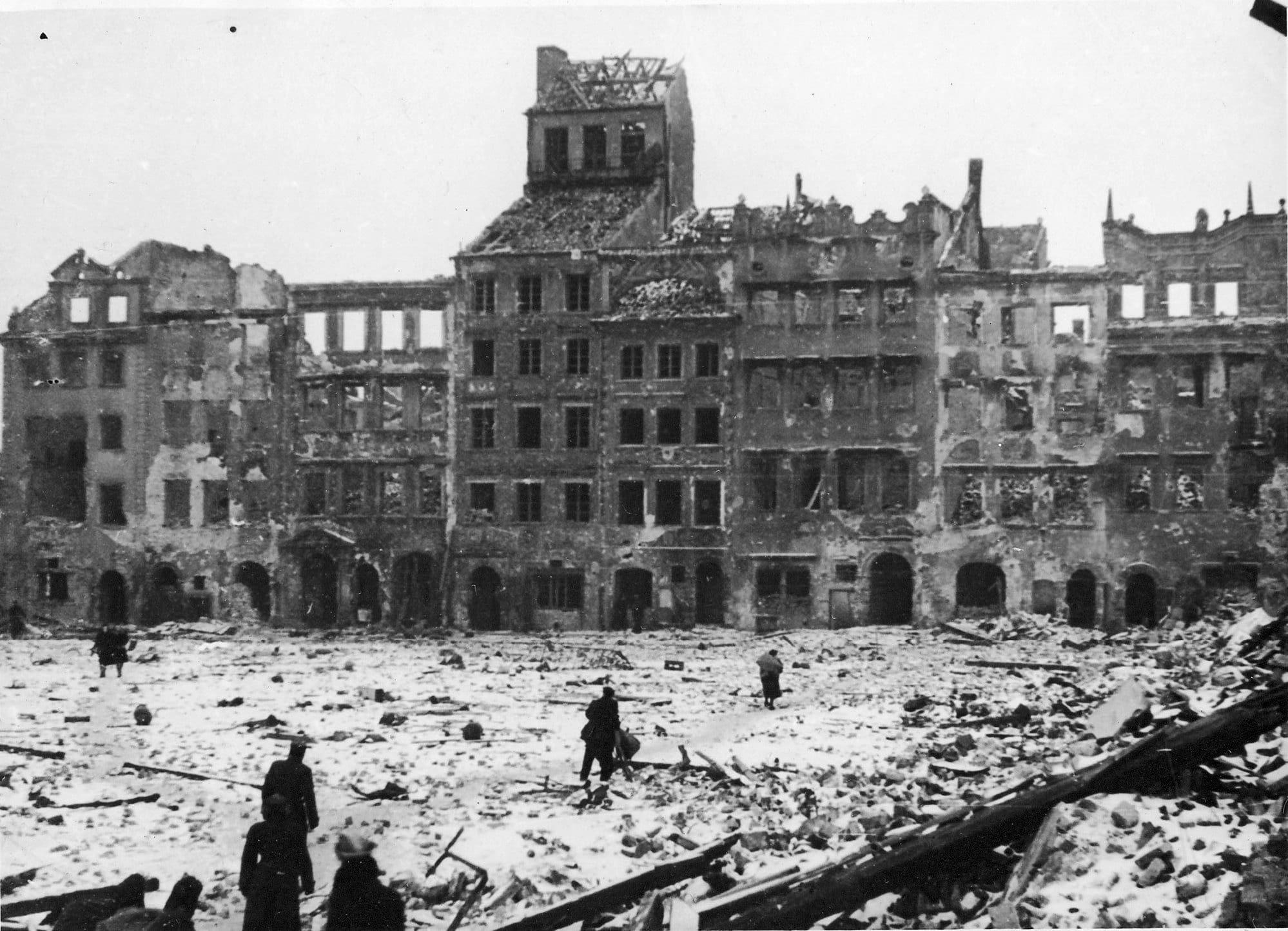
Estimates of the share of buildings destroyed by January 1945 include up to 10 per cent in the 1939 campaign, up to 15 per cent during the Ghetto Uprising, 25 per cent in the 1944 Uprising and 40 per cent in the deliberate demolition that followed.
Kraków's January 1945
Kraków's turn came in the great Soviet winter offensive that drove the Germans from the Vistula to the Oder. Troops under Marshal Ivan Konev entered the city on 18 January 1945. Rather than storming it street by street, Soviet armies and a tank corps encircled it, which forced the German defenders to withdraw hurriedly, and Kraków was secured undamaged the next day.
Soviet and Russian accounts later credited Konev personally with saving Kraków from destruction the Germans had planned, by ordering a lightning attack, though Polish historians have questioned the story and call it a myth of Soviet propaganda. A monument to Konev was unveiled in Kraków in 1987 and dismantled in January 1991. The Soviet arrival also brought arrests of Poles loyal to the government-in-exile and of former Home Army fighters.
Intact is not the same as untouched
Kraków's survival was architectural, not human. Under occupation the city was looted, and many relics and monuments of Polish culture were stolen or destroyed. In November 1939 the Germans arrested more than 180 university professors and academics and sent them to concentration camps. The city's Jews were forced into the Kraków Ghetto and sent to camps including Auschwitz and Płaszów, and synagogues were stripped and turned into storehouses.
Kraków's own historic fabric had also changed long before the war. Its medieval wall, 3 kilometres long with 46 towers, was largely demolished in the 19th century, and its line became the green ring of the Planty park. Only a short northern stretch survived, thanks to Professor Feliks Radwański.
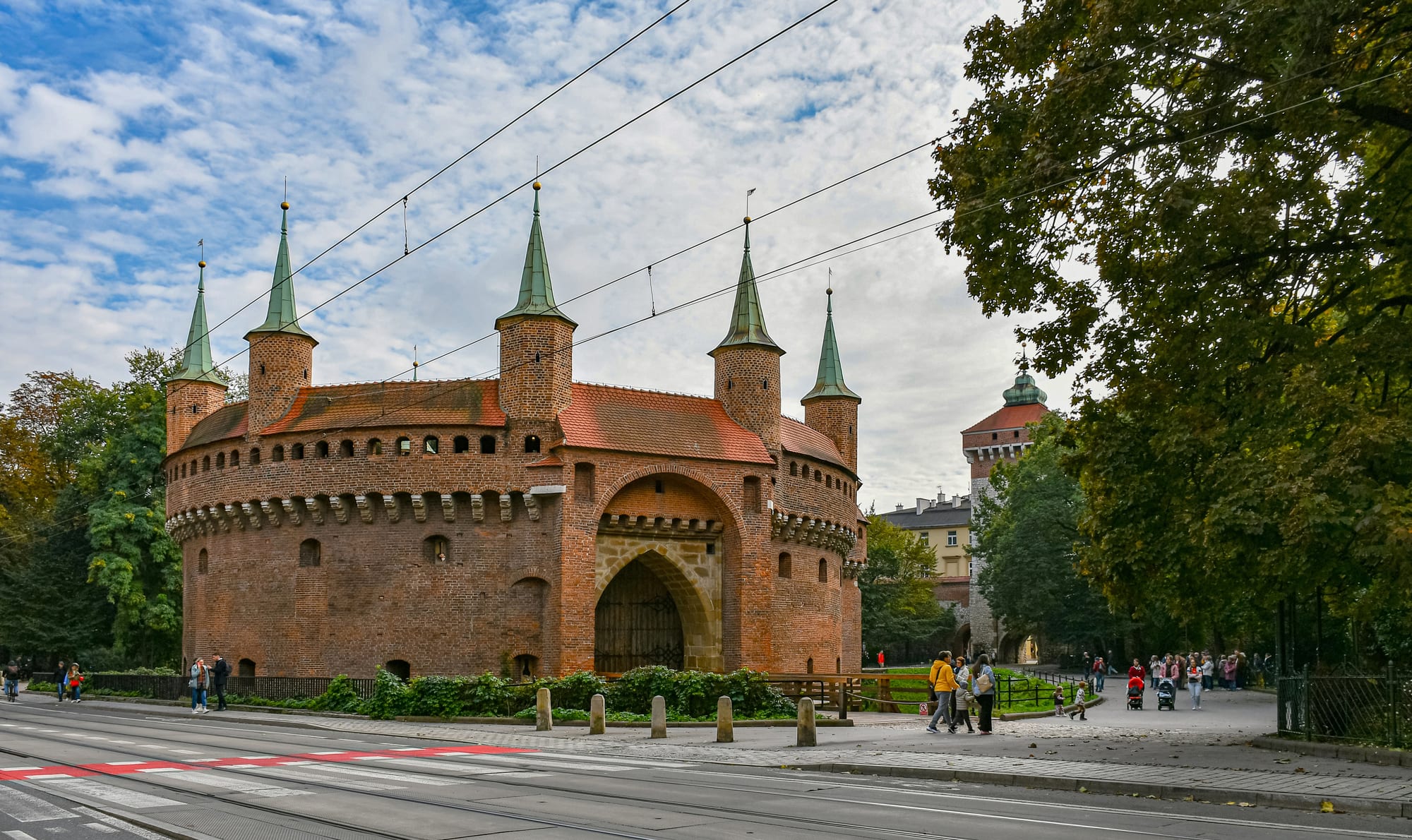
The Royal Road, along which new monarchs once paraded to their coronation at Wawel Cathedral, passed through here and ran on through the Main Market Square.
In 1978 the Historic Centre of Kraków was among the first sites placed on UNESCO's original World Heritage List, its medieval street plan still in place.
Rebuilding Warsaw from paintings and drawings
After the war, Poland chose to rebuild its capital's historic heart rather than replace it. A Warsaw Reconstruction Office was created for the job. Preparatory work ran from 1945 to 1947, most of the building from 1947 to 1951, and the rebuilt Old Town was formally inaugurated on 22 July 1953. As many original bricks as possible were reused, and the rubble was sifted for carved details that were set back in their old places.
The builders worked from pre-war drawings by architecture students and from the 18th-century city views of the painter Bernardo Bellotto. The result was not always a faithful copy: some buildings were returned to an earlier period, some were improved on, and some modern buildings were given historic-looking fronts. The Royal Castle was not rebuilt until 1971 to 1984.
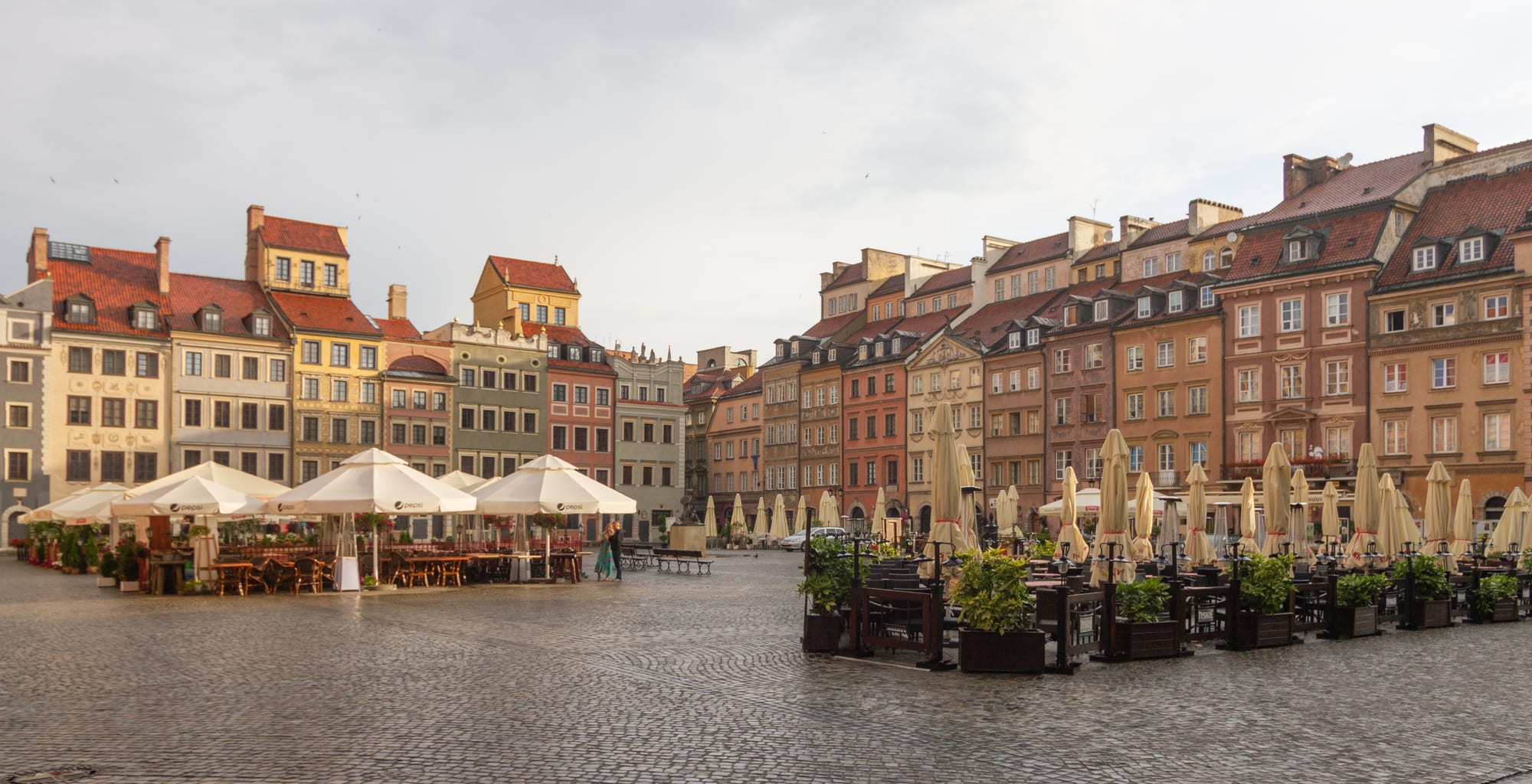
The square dates back to the end of the 13th century; its houses were rebuilt in late-Renaissance style after a great fire in 1607.
UNESCO listed Warsaw's Old Town in 1980 as "an outstanding example of a near-total reconstruction", the world's first attempt to resurrect an entire historic city core. The two old towns now tell complementary stories: Kraków's of continuity, Warsaw's of a city that refused to disappear.
Two cities, 1939 to 1980
- 1939
Occupation
German forces enter Kraków on 6 September; Warsaw is bombed during the siege.
- 1943
Ghetto Uprising
Fighting in the Warsaw Ghetto destroys more of the city.
- 1944
Warsaw Uprising
The Home Army rises on 1 August; after 63 days the Germans begin razing the city.
- 1945
Kraków taken
Soviet troops enter Kraków on 18 January as the Germans withdraw.
- 1953
Warsaw reborn
The rebuilt Old Town is formally inaugurated on 22 July.
- 1978
Kraków listed
The Historic Centre of Kraków joins UNESCO's first World Heritage List.
- 1980
Warsaw listed
Warsaw's reconstructed Old Town becomes a World Heritage Site.