History · Germany
Why was Berlin divided by a wall?
East Germany built the Wall in 1961 to stop its own people escaping to the West through the one open door left, the divided city of Berlin
By Globeway Editorial · 13 October 2026
The short answer
The Berlin Wall was built by the government of communist East Germany, the German Democratic Republic, to stop its own citizens leaving. By 1961 about 3.5 million East Germans, roughly a fifth of the population, had fled to the West, many of them young and highly trained. Most of the border between the two Germanys had been sealed since 1952, but Berlin, still shared by the four victorious powers of the Second World War, remained an open door. Anyone who crossed from East Berlin into West Berlin could travel on to West Germany.
On the night of 12 to 13 August 1961, East German troops and police closed that door with barbed wire, and within days began building in concrete. The regime called it the Anti-Fascist Protection Rampart and claimed it kept out Western aggression, but it faced inward, and most people understood it as a barrier to keep East Germans in. It stood until 9 November 1989.
A city marooned in the Soviet zone
After Germany's defeat in 1945, the Allies split what was left of the country into four occupation zones, run by the United States, Britain, France and the Soviet Union. Berlin, the capital, was split the same way into four sectors, even though the whole city lay deep inside the Soviet zone.
The wartime allies soon fell out. In 1948, as the Western powers moved to set up a separate government in their zones, the Soviets blockaded West Berlin, cutting its road and rail links. The West answered with a huge airlift of food and supplies, and in May 1949 Stalin lifted the blockade. That year two German states were born: the Federal Republic of Germany in the west, and on 7 October the German Democratic Republic in the east, a one-party state on the Soviet model. West Berlin was left as an island of the West surrounded by East Germany.
The loophole in the Iron Curtain
Life in the West quickly pulled ahead. West Germany's economy boomed, and East Germans left in huge numbers: 187,000 in 1950 and 331,000 in 1953. In 1952, on Stalin's advice, East Germany closed the long border between the two German states with barbed wire. Berlin, run jointly by all four powers, could not be sealed so easily. It became the main escape route.
A new East German passport law in 1957 cut the overall number of people leaving, but pushed the share who went through West Berlin from 60 per cent to well over 90 per cent by the end of 1958. The people leaving tended to be young and educated: engineers, doctors, teachers, lawyers and skilled workers. By 1960 only 61 per cent of East Germans were of working age, against 70.5 per cent before the war. The flight of professionals threatened both the economy and the credibility of the state.
There was also a practical obstacle to closing Berlin. Much of East Germany's railway traffic ran through the western sectors. Only when a new line around West Berlin, the Berlin outer ring, was completed in 1961 did shutting the border become workable.
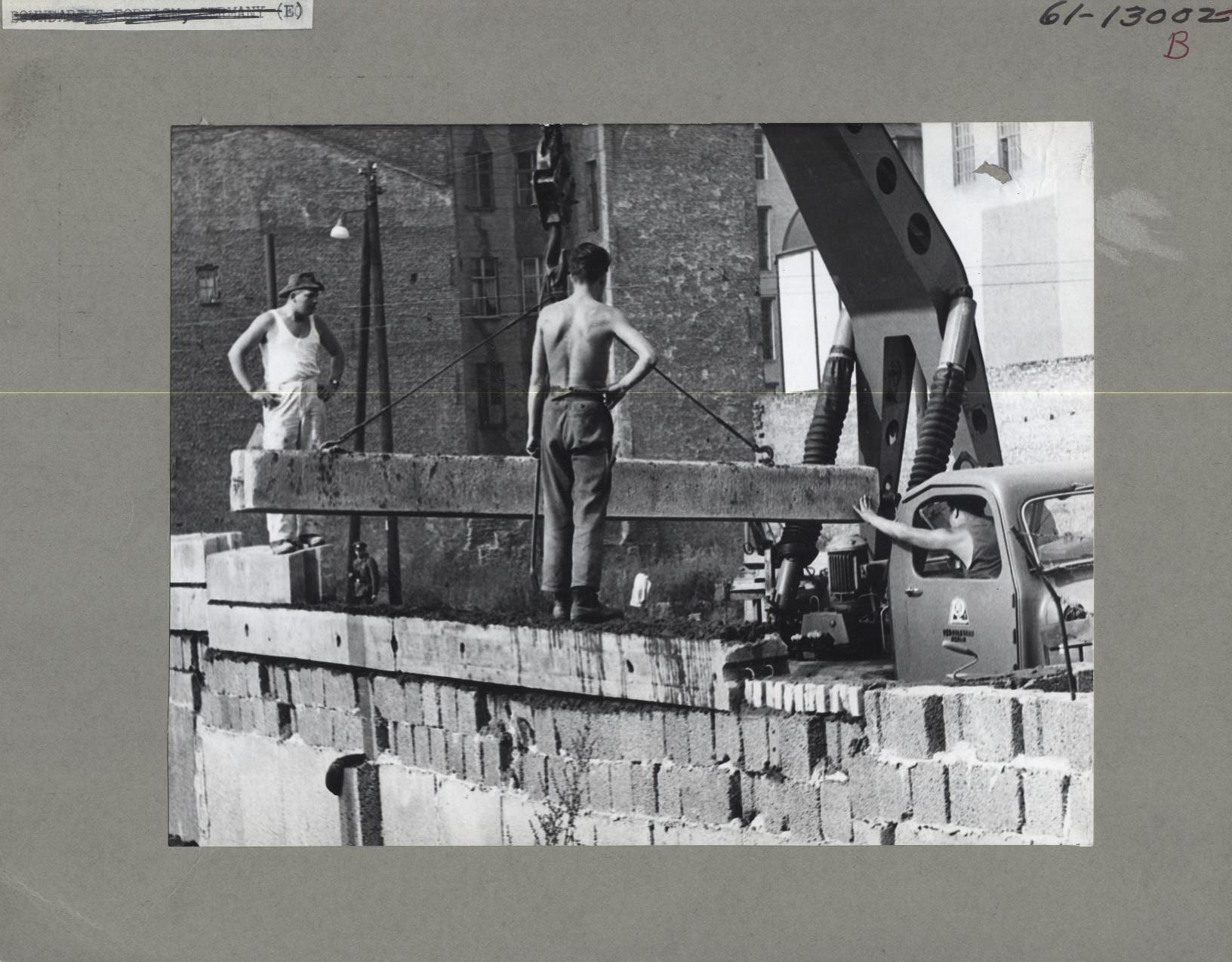
The first concrete elements and large blocks went in on 17 August 1961, four days after the barbed wire.
Barbed Wire Sunday
On 15 June 1961 the East German leader Walter Ulbricht told an international press conference: "No one has the intention of erecting a wall." It was the first time the word Mauer, wall, had been used in that context. Ulbricht had been pressing for a border closure for some time, arguing that East Germany's existence was at stake; the Soviet leader Nikita Khrushchev may have been more cautious at first, though a record of their call on 1 August suggests the initiative came from Khrushchev himself. At the Vienna summit that June, President John F. Kennedy had admitted that the United States would not actively oppose a barrier.
On Saturday 12 August, at a government guest house at Döllnsee, north of the city, Ulbricht signed the order. At midnight police and army units began tearing up streets and stringing barbed wire along the 156 kilometres around the three western sectors and the 43 kilometres between East and West Berlin. By Sunday morning the border was closed. Families were split, and East Berliners who worked in the West lost their jobs overnight. Kennedy, while angry at the lack of warning, was relieved that the city had only been divided, without any move against West Berlin's access to the West.
From open city to sealed border
- 1945
Four sectors
Berlin is divided among the US, Britain, France and the Soviet Union.
- 1948–1949
The blockade
The Soviets cut West Berlin off; the West supplies it by air.
- 1949
Two Germanys
The Federal Republic and the German Democratic Republic are founded.
- 1952
Inner border closed
Barbed wire goes up between East and West Germany, but not in Berlin.
- 13 August 1961
Barbed Wire Sunday
East Germany seals West Berlin overnight.
- 9 November 1989
The Wall opens
Crowds pour through the checkpoints.
- 3 October 1990
Reunification
Germany becomes one state again.
A wall that grew deadlier
The Wall was rebuilt again and again. From 1962 a second barrier was added about 100 metres farther into East Berlin; houses in between were razed, and the gap became the death strip, raked sand or gravel that showed footprints and gave guards a clear field of fire. The final version, begun in 1975, used 45,000 reinforced concrete sections, each 3.6 metres high, topped with a smooth pipe to defeat climbers, and backed by more than 116 watchtowers, dog runs, trenches and beds of nails.
More than 100,000 people tried to escape across it and over 5,000 succeeded. Estimates of those killed by East German authorities in and around Berlin range from 136 to more than 200. The first death came on 22 August 1961, when Ida Siekmann jumped from her third-floor flat on Bernauer Straße. In August 1962 the 18-year-old Peter Fechter was shot and left to bleed to death in the strip, in full view of the Western press, prompting angry protests in West Berlin. The last person shot dead while trying to cross was Chris Gueffroy, on 6 February 1989.
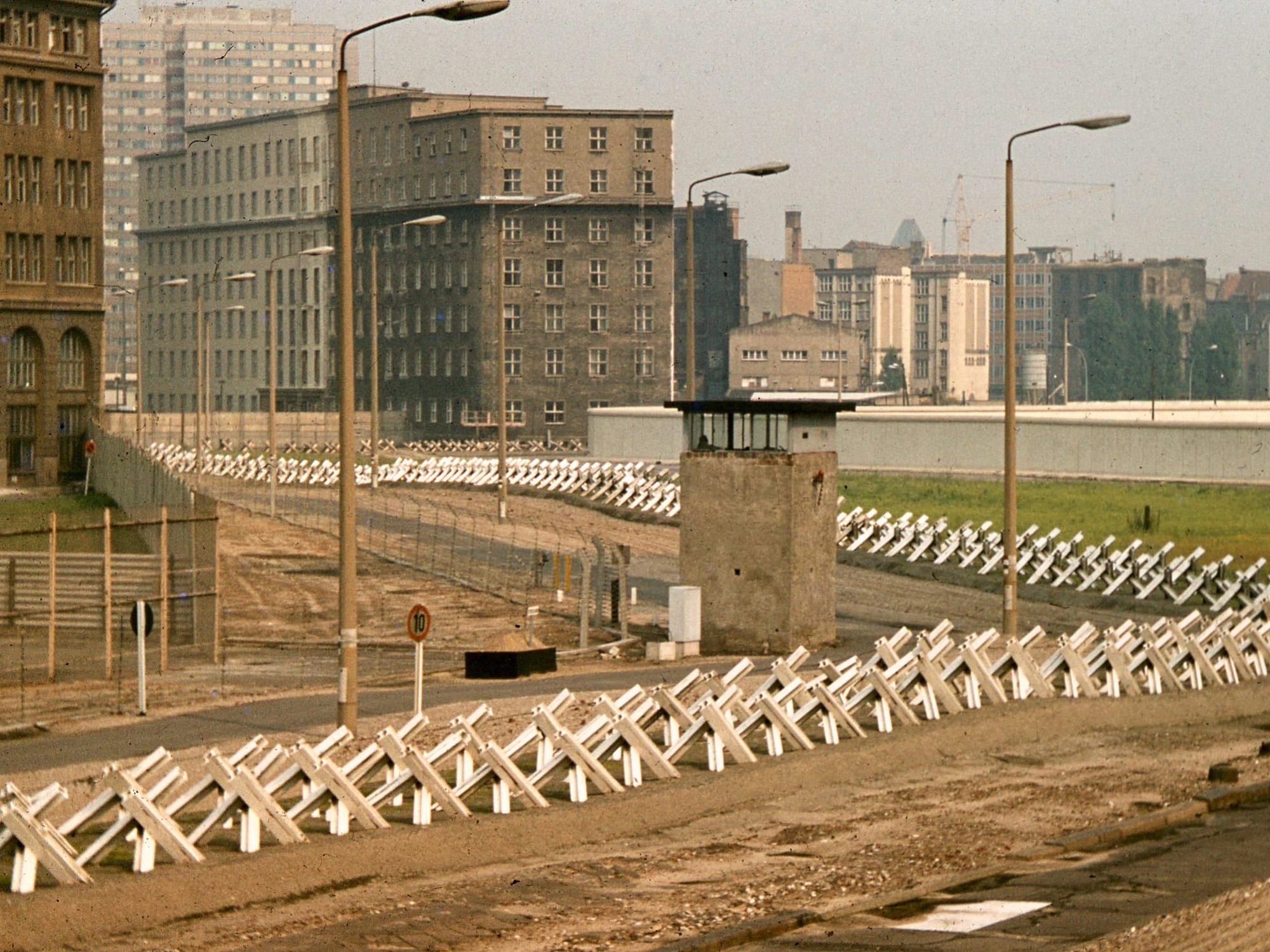
Unlike the inner German border, the Berlin Wall had no landmines or spring-guns.
How the Wall came down
In 1989 revolutions in neighbouring countries, especially Poland and Hungary, cracked the Iron Curtain, and East Germans took to the streets. On the evening of 9 November, the party spokesman Günter Schabowski announced new travel rules at a televised press conference. He had not been fully briefed, and when asked when they took effect, he replied that as far as he knew it was immediately. West German television broadcast the news, and crowds gathered at the checkpoints. At 22:45, by one account, the commander of the Bornholmer Straße crossing, Harald Jäger, gave in and let them through.
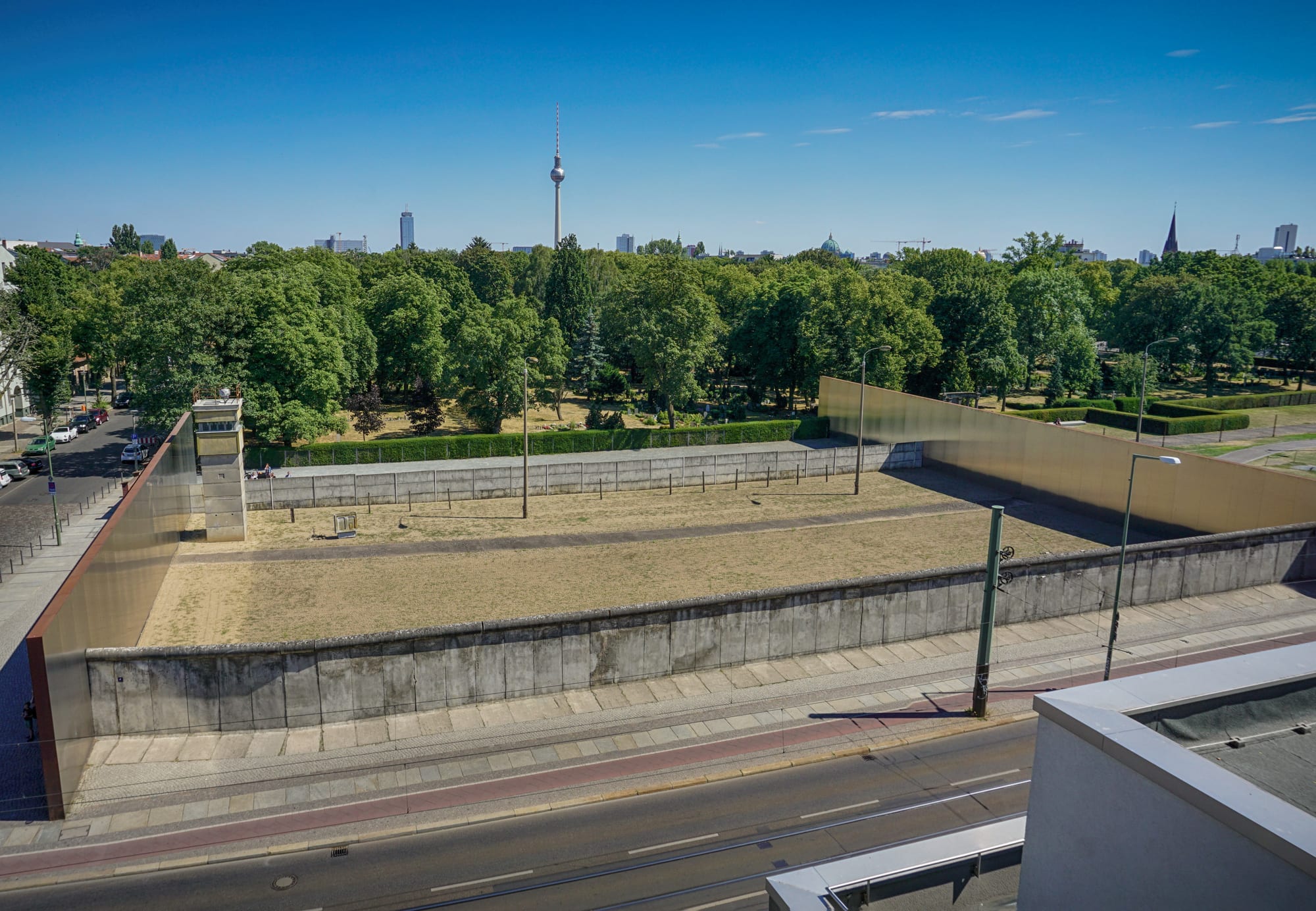
Full demolition began on 13 June 1990 and was finished in 1994, and Germany was reunified on 3 October 1990. Today the Berlin Wall Memorial on Bernauer Straße keeps a 60-metre section of the border strip, and the East Side Gallery, the longest surviving stretch at 1,316 metres, carries murals first painted in 1990 by 118 artists from 21 countries.
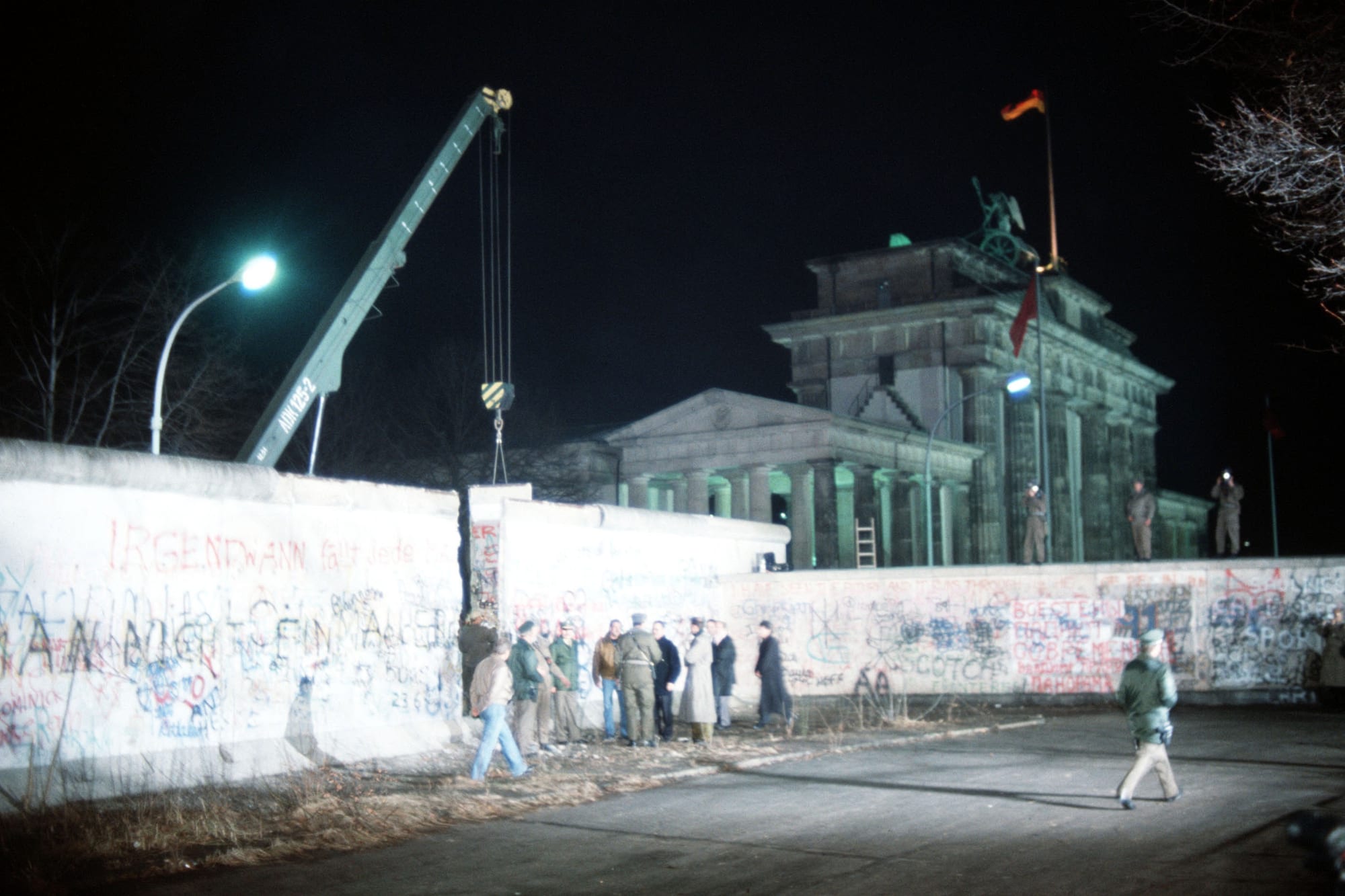
The Brandenburg Gate crossing reopened on 22 December 1989.