Daily Life · Estonia
How did Estonia become one of the world's most digital countries?
Starting almost from scratch in 1991, Estonia wired its schools, gave every citizen a digital identity and linked its databases into one secure network.
By Globeway Editorial · 13 October 2026
The short answer
No single ranking crowns one country the most digital in the world, but Estonia ranks very high in international rankings for online public services and is often cited as one of the most "wired" countries in Europe. Nearly all public services can be used online at any hour, Estonians have voted over the internet since 2005, and since 2014 people anywhere in the world can become Estonian "e-residents".
It got there because it had to start again. When Estonia restored its independence in 1991, it inherited worn-out Soviet systems, and fewer than half of its people even had a telephone line. Its young governments chose to skip the old technology and build new, cheap digital systems instead. Three decisions mattered most: putting computers and the internet into every school in the 1990s, giving every citizen a chip-based identity card from 2002, and linking the state's databases through a secure network called X-Road from 2001.
Starting with nothing, on purpose
Independence was restored on 20 August 1991. The first prime minister, Mart Laar, saw the country's empty starting point as an opportunity to build low-cost systems based on access and efficiency. In 1992 Finland, which was replacing its own analogue telephone exchange with digital connections, offered Estonia the old equipment for free. Laar refused. Estonia would build its own digital system, and many people went from having no phone at all to owning a mobile phone, skipping the analogue era entirely.
In 1994 the country began drafting its first information technology strategy, which parliament approved four years later. It set aside a permanent 1% of gross domestic product for IT, protecting digital projects from changes of government.
The Tiger Leap into the classroom
The best-known early project was Tiigrihüpe, Estonian for "Tiger Leap". It was proposed in 1996 by Toomas Hendrik Ilves, then Estonia's ambassador to the United States and later the country's president, and Jaak Aaviksoo, the minister of education. President Lennart Meri announced it on 21 February
- The idea was to invest heavily in computers and networks, especially in
schools, in partnership with private companies. By 1997, 97% of Estonian schools had an internet connection.
Estonia was not starting from zero in the classroom. From 1988 its schools had used a home-built computer called the Juku. It was outdated by the 1990s, but it had given Estonian pupils a head start in learning on computers. The Tiger Leap replaced it with modern machines and brought a generation of children online. The same years saw the first internet banking services and, in 1996, an "e-cabinet" for government business. Since 2000 Estonians have been able to file their taxes online.
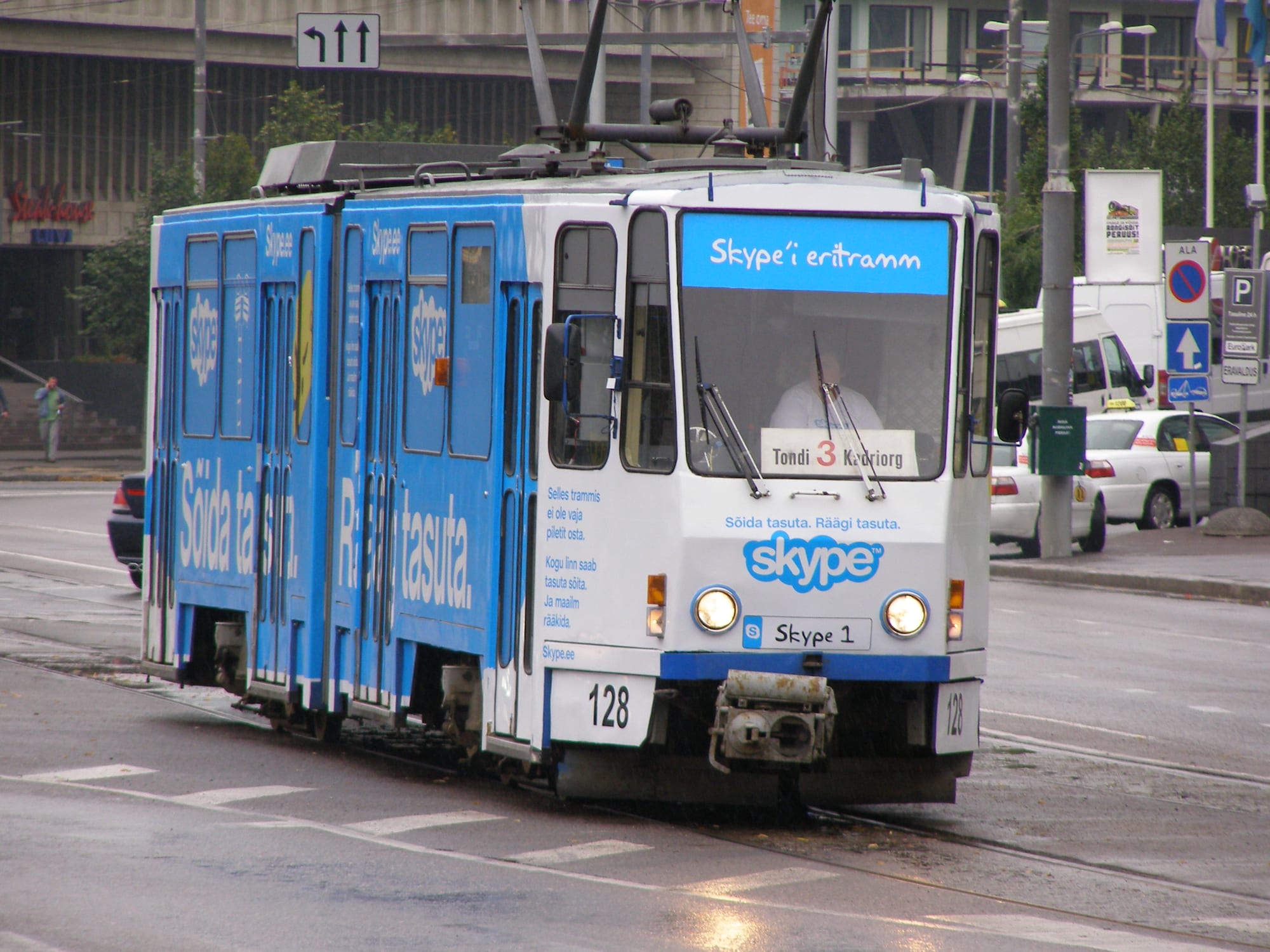
Estonia's strong technology industry is partly credited to the Tiger Leap. Skype, first released in 2003, was created with four Estonian developers, Ahti Heinla, Priit Kasesalu, Jaan Tallinn and Toivo Annus. In January 2022 Estonia had 1,291 start-ups, including seven "unicorns" valued at over a billion dollars, close to one start-up for every 1,000 people.
X-Road and the digital identity card
The real foundation is less visible. X-Road is a data exchange layer, a set of secure connections that lets government offices, and approved private companies, ask each other for information over the internet. It began as a pilot in 1998 and was launched in 2001. Crucially, it does not gather everything into one central database. Each office keeps its own data and shares it peer to peer, with every exchange secured by digital keys. One reason for this design was a scandal in 1996, when a government contractor built and sold a "superdatabase" of personal information drawn from several state sources.
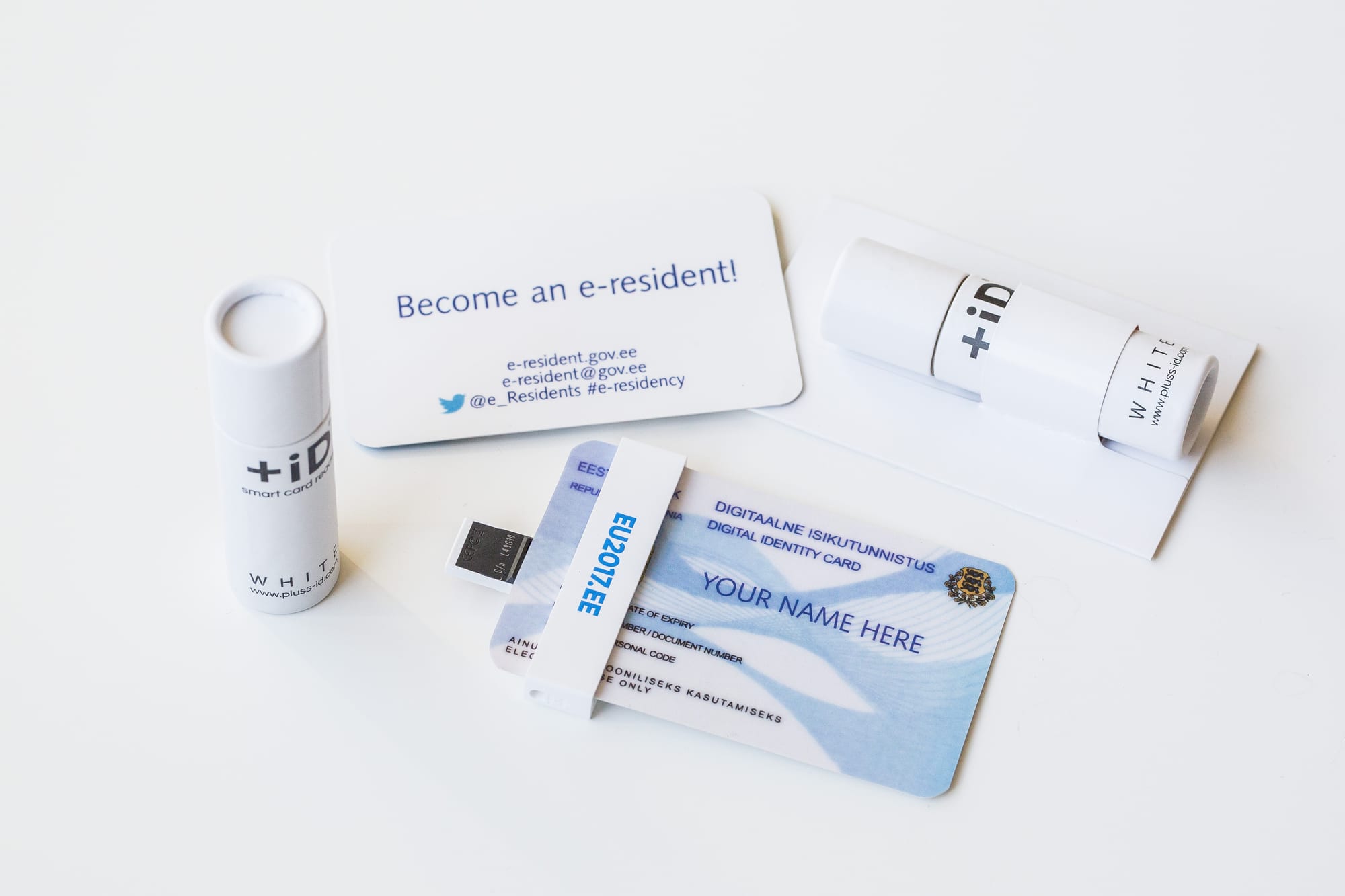
The identity card is compulsory for Estonian citizens. Its chip holds cryptographic keys that let the holder prove who they are online and give a legally binding digital signature, recognised across the European Union.
The second piece was identity. In 2002 Estonia introduced a digital identification system built on its compulsory ID card. Every citizen and resident has a state-issued electronic identity, used to pay bills, sign contracts, see health records and vote. Together, X-Road and the ID card mean that 99% of public services are available online around the clock. Since 2010 prescriptions have been electronic, and 99% are now handled online. Around 98% of people file their income tax electronically, a task that takes less than five minutes, and since 2020 parents of a newborn no longer need to apply for child benefits, which arrive automatically.
1991 | Estonia restores its independence on 20 August. 1996 | President Lennart Meri announces the Tiger Leap programme. 2001 | X-Road, the state's secure data exchange, is launched. 2002 | The chip-based ID card brings a digital identity for all. 2005 | Estonia holds the world's first legally binding nationwide internet vote, in local elections. 2007 | Cyberattacks hit parliament, banks, ministries and the media. 2014 | e-Residency opens on 1 December.
Voting online, and the arguments about it
In 2005 Estonia became the first country to hold legally binding elections over the internet, for municipal councils, and in 2007 it did the same for parliament. Use grew steadily. In the 2023 parliamentary election, 51.1% of votes were cast online, the first election anywhere in which more than half the votes came over the internet. In the 2025 local elections the share was about 45.8%.
Internet voting is also Estonia's most contested digital service. Election observers from the OSCE, the Organization for Security and Co-operation in Europe, have raised concerns at every parliamentary election, and after 2023 they and local observers said the system still did not let voters or outsiders fully verify the result. After the disputed 2023 vote, distrust of e-voting reached 40% of the population.
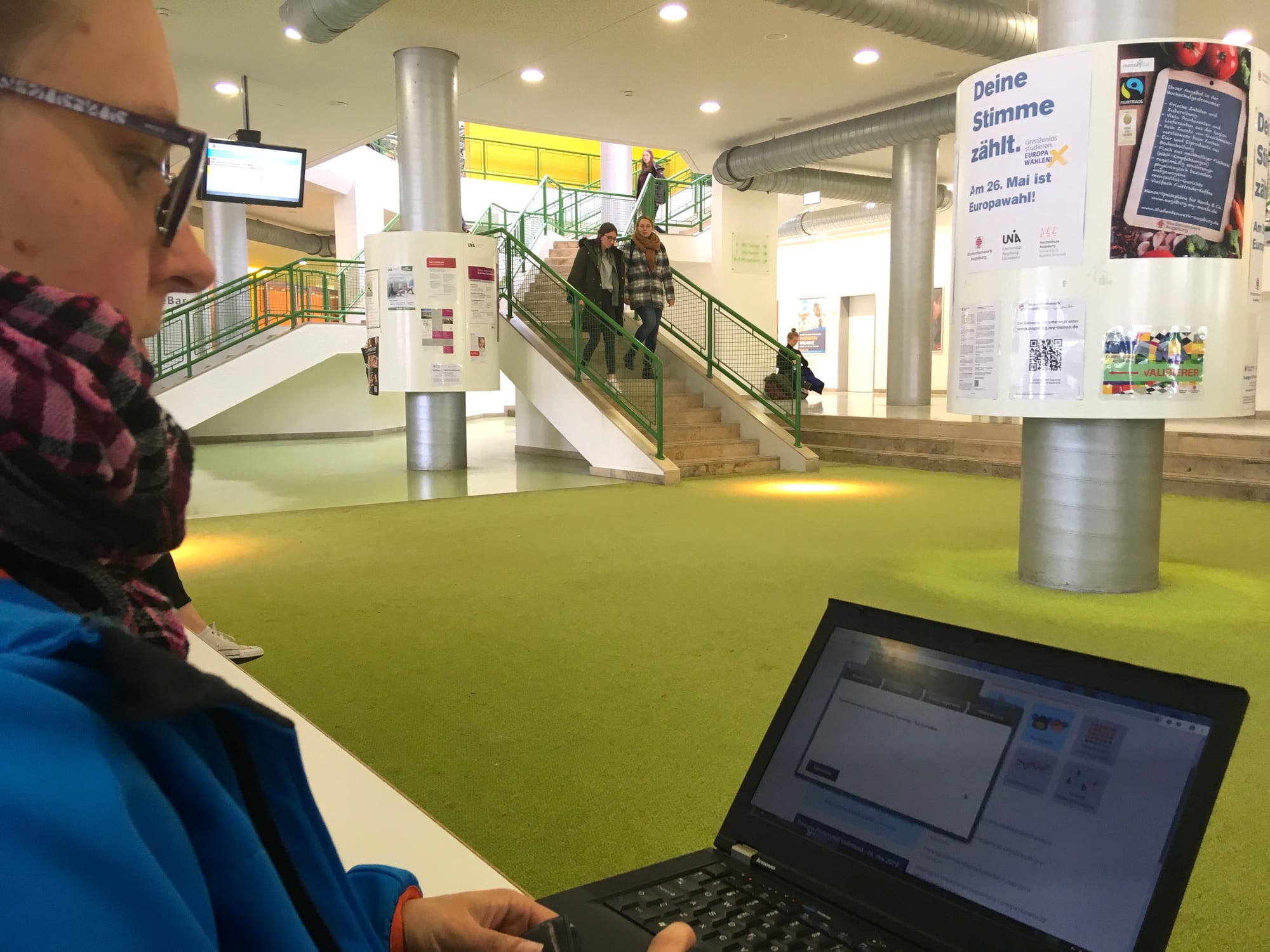
Because the vote uses the ID card rather than a polling station, Estonians can take part in elections from anywhere with an internet connection.
Defending a country that lives online
Being digital also made Estonia a target. Beginning on 27 April 2007, during a bitter dispute with Russia over the moving of the Bronze Soldier, a Soviet-era war memorial in Tallinn, waves of cyberattacks hit the websites of the Estonian parliament, banks, ministries, newspapers and broadcasters. Most were denial-of-service attacks, which flood a site with traffic until it stops working, many sent through botnets, networks of hijacked computers.
Estonia responded by folding network defence into its military planning, and in 2008 NATO established its Cooperative Cyber Defence Centre of Excellence in Tallinn. The state has also had to fix its own flaws: in 2017 researchers found a weakness in the chips of many ID cards, and the affected certificates were blocked, with no known cases of it being exploited.
Then, on 1 December 2014, Estonia opened its digital state to outsiders. e-Residency gives people from other countries a smart ID card that lets them use Estonian online services, sign documents and run an Estonian company from anywhere. It does not give the right to live in or even enter Estonia. By the end of 2023 more than 100,000 people from 181 countries had become e-residents, and they had set up more than 27,000 Estonian companies.