History · Egypt
How was the Great Pyramid built without machines?
Copper tools, wet sledges, Nile boats, ramps, levers and a superbly organised workforce raised 2.3 million blocks in about a quarter of a century.
By Globeway Editorial · 13 October 2026
The short answer
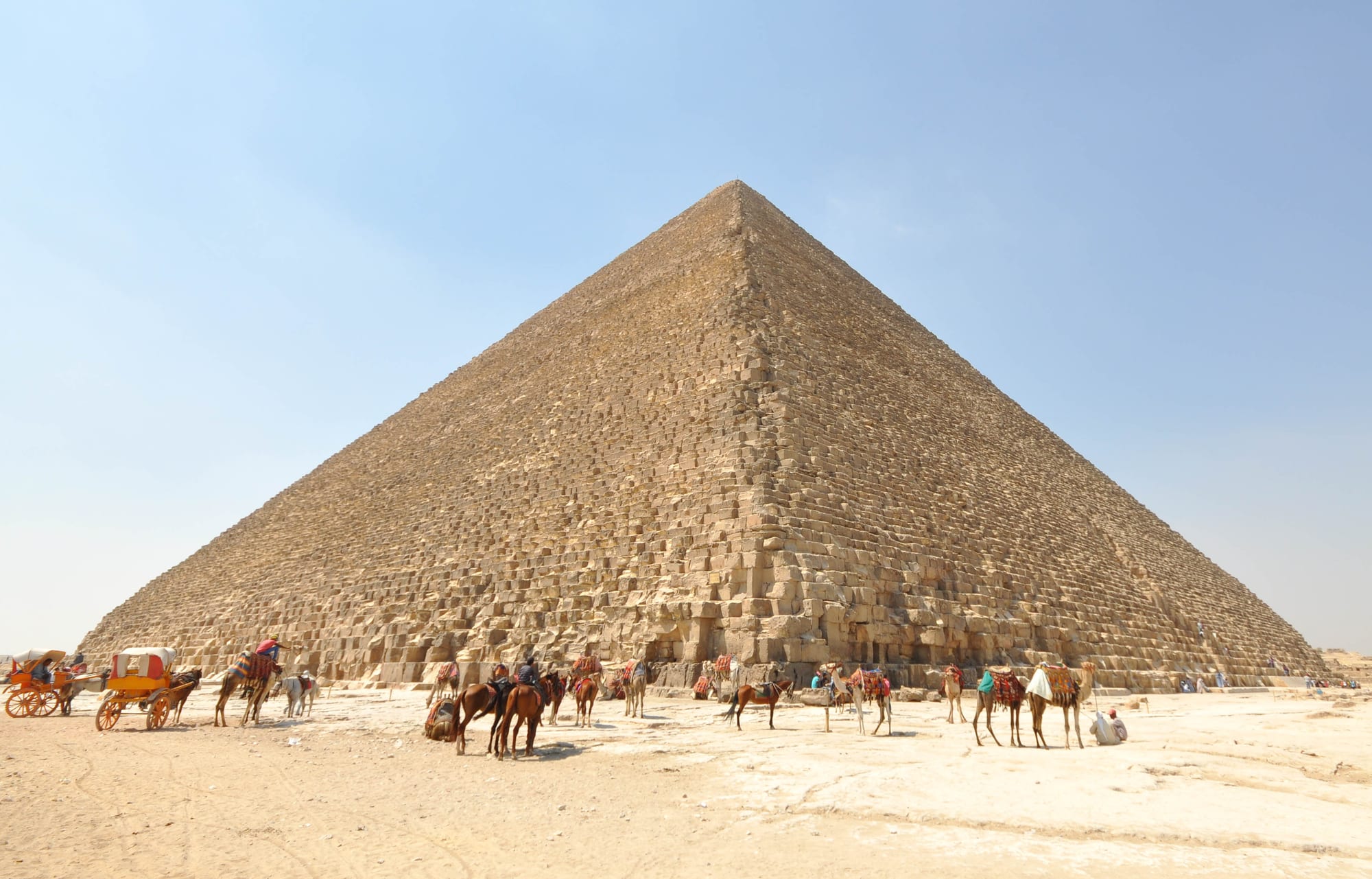
With muscle, simple tools and extraordinary organisation. Around 2600 BC, workers for the pharaoh Khufu cut limestone with copper chisels and saws, dragged the blocks on wooden sledges over wetted ground, and shipped stone from distant quarries along the Nile in boats. The blocks were then raised course by course, most likely with ramps of earth and rubble, helped by levers for the last stages. The Egyptians had no pulleys, no wheels and no iron tools; their lifting aids were the lever and the ramp, the simplest machines of all.
The work was done not by slaves but by paid labourers and conscripts, perhaps 40,000 at the peak, who camped near the site. What Egyptologists still argue about is the exact arrangement of the ramps that carried millions of blocks to the top, because the ancient builders left no description of it.
A mountain of 2.3 million blocks
The scale explains why the question persists. The Great Pyramid was built as the tomb of Khufu, over a period of about 26 years. It originally stood 146.6 metres (481 feet) high, the tallest structure made by humans for more than 3,700 years, and each side of its base measured about 230 metres. It contains an estimated 2.3 million blocks weighing some 6 million tonnes in total, averaging about 2.5 tonnes each.
Most of the stone was limestone quarried locally at Giza. The fine white limestone for the smooth outer casing came by boat across the Nile from the quarries at Tura, about 10 kilometres to the south-east, and the granite for the King's Chamber came from Aswan, more than 900 kilometres to the south. Some of those granite blocks weigh between 25 and 80 tonnes. The Egyptians called the finished monument Akhet-Khufu, the "Horizon of Khufu", and Khufu's vizier Hemiunu is believed by some to have been its architect.
Copper, sand and patience
The tools were simple. Workers probably used chisels, drills and saws of arsenical copper, an alloy harder than plain copper that could be toughened further by hammering, to cut the softer limestone. Granite cannot be cut with copper alone, so it was pounded with a hard stone called dolerite, and drilled and sawn with the help of sand, the grit doing the cutting as the copper blade moved back and forth.
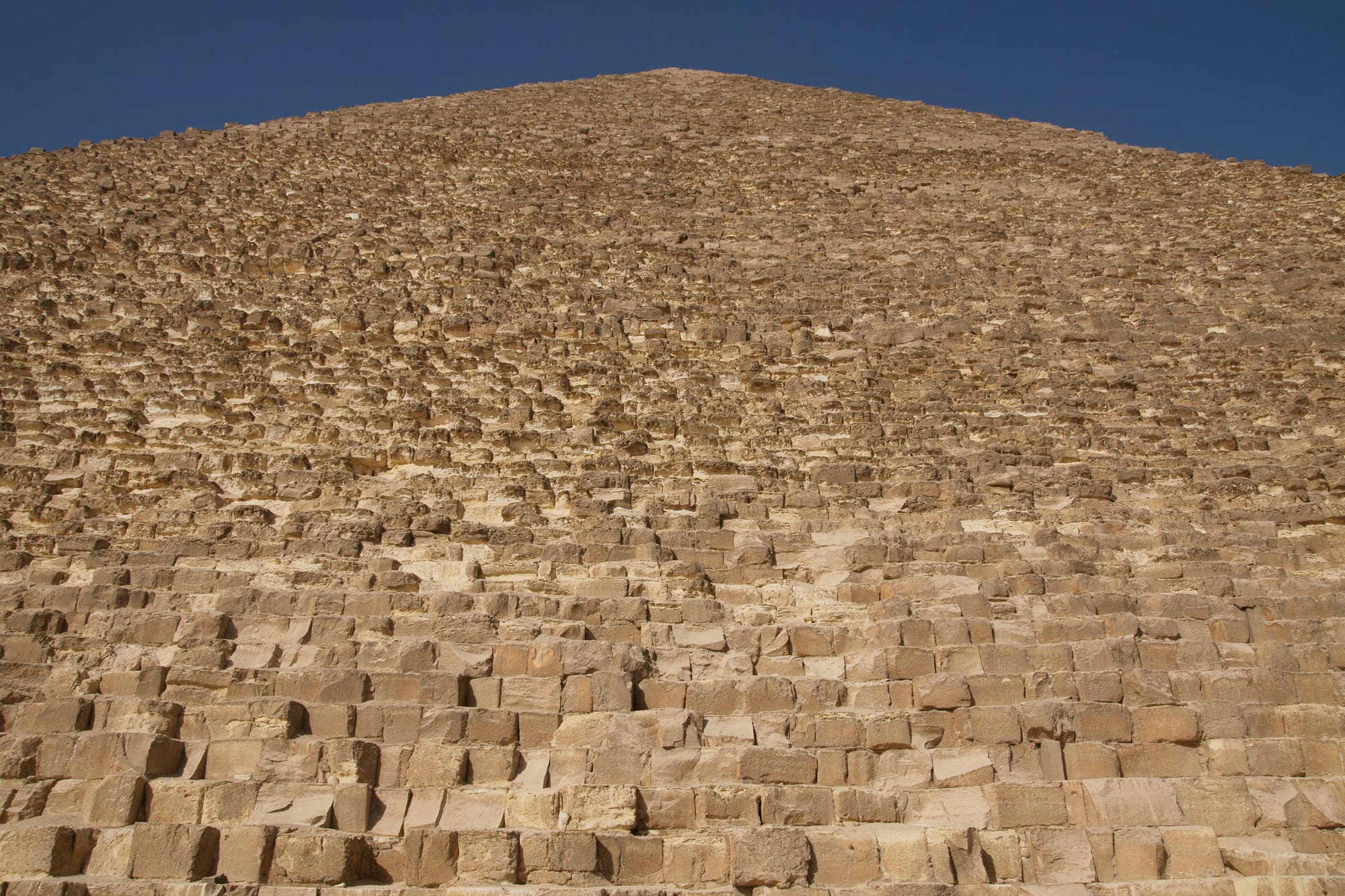
The core stones were only roughly shaped, and the gaps between them were packed with gypsum mortar and rubble. Making that mortar meant heating gypsum, which required large quantities of wood in a country that had very little.
Could copper really keep up? In an experiment based on a quarry of Khufu's reign found in 2017, the stonemason Franck Burgos used replica tools to cut a 2.5-tonne block. Extrapolating from his results, about 3,500 quarrymen could have produced the 250 blocks a day needed to finish the pyramid in 27 years.
Sledges, water and boats
Moving the stone was the heaviest part of the job. Blocks were dragged on wooden sledges, probably over ground wetted with water to cut the friction. A later tomb painting, from the 12th-dynasty tomb of Djehutihotep, shows 172 men hauling a statue estimated at 58 tonnes on a sledge. In a 1992 experiment the Egyptologist Mark Lehner and the stonemason Roger Hopkins found that, with stones on sledges sliding over wooden tracks, 12 to 20 men could tow a block of two tonnes.
The river did much of the rest. In 2013 French archaeologists led by Pierre Tallet found papyri at Wadi al-Jarf on the Red Sea coast: the logbooks of an official named Merer, the oldest known papyri with writing. They record several months in the 27th year of Khufu's reign, when Merer's crew of about 40 boatmen ferried white limestone from Tura to Giza, making two or three round trips every ten days and carrying perhaps 200 blocks of 2 to 3 tonnes a month. Tallet believes the stone was for the pyramid's casing. A study published in 2024 mapped a long-vanished branch of the Nile, about 64 kilometres long, that once flowed near Giza which researchers suggest was crucial for bringing materials and workers to the pyramids.
Ramps, levers and a lasting debate
Raising the blocks is where certainty runs out. Most Egyptologists consider ramps the most likely method, and evidence of ramps has been found at the Great Pyramid and elsewhere, but only small ones. A single long, straight ramp to the top is widely rejected: it would have been enormous, and no trace of one exists. Instead scholars have proposed zig-zagging ramps, ramps spiralling around the pyramid, and even, in the architect Jean-Pierre Houdin's theory, a ramp hidden inside the pyramid itself, an idea that remains unproven.
Levers are the favoured partner to ramps. The Greek historian Herodotus, writing more than 2,000 years later, described workers using short wooden levers to lift stones from one step to the next, and Lehner suggests levers lifted the top 3 per cent of the material: little stone, but a large share of the height. Modern tests have used levers to raise a block of more than a tonne by one course in under a minute. In 2018 archaeologists at the Hatnub quarry announced a ramp at least as old as Khufu's reign, flanked by staircases with post holes, a system for hauling sledges up slopes of 20 per cent or more, showing that steep hauling was within the builders' skills.
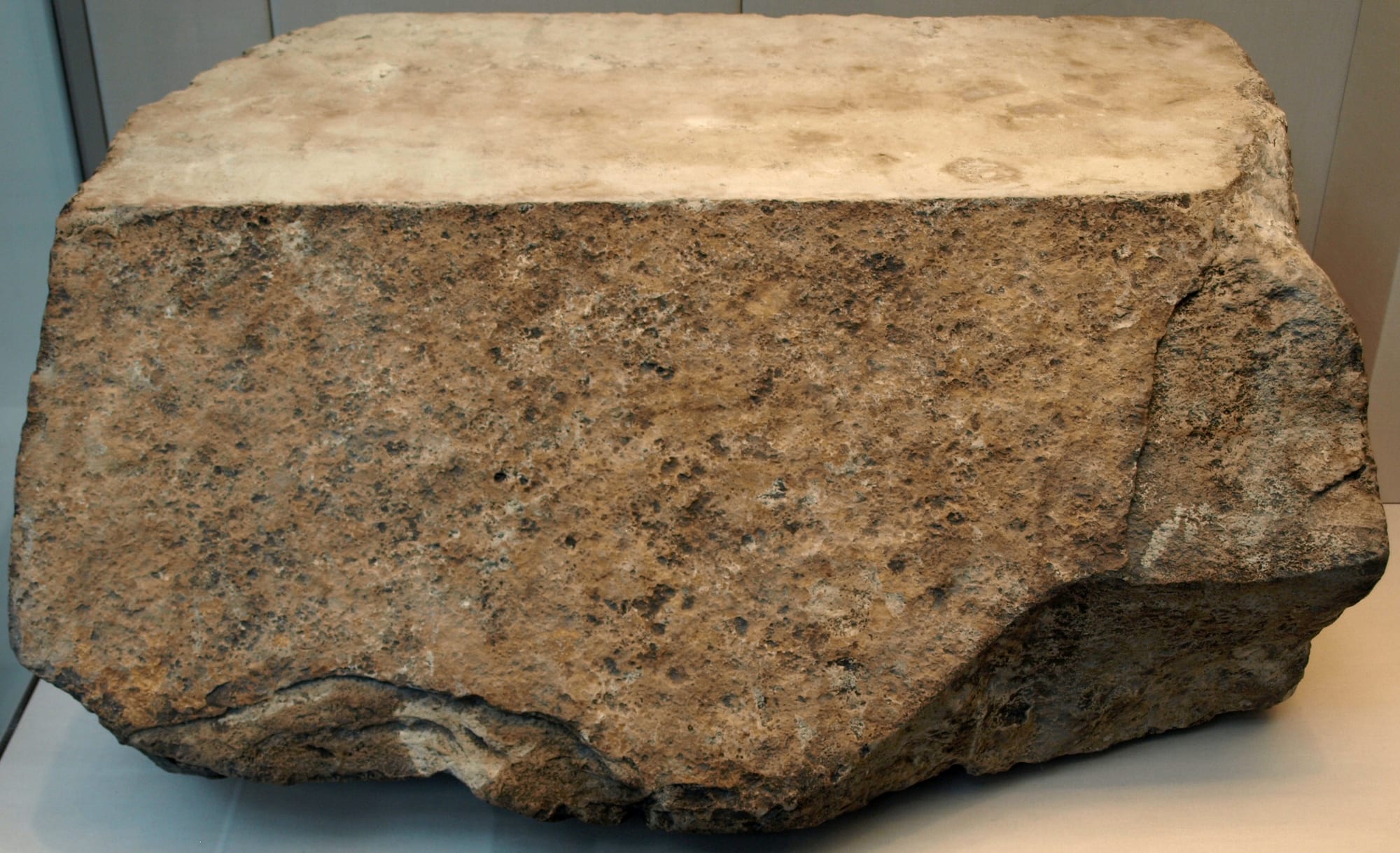
The results were astonishingly precise. Many casing stones fit together with joints averaging just half a millimetre, the levelled strip around the base is flat to within 21 millimetres, and the sides are aligned with true north, south, east and west to within about a tenth of a degree.
The workers who built it
The ancient Greeks believed the pyramids were built by slaves, and the historian Diodorus Siculus put the workforce at 360,000 men. Archaeology tells a different story. A workers' town excavated beside the Giza pyramids, which appears to date from just after Khufu's reign, when his successors were building their own pyramids, had communal sleeping quarters, bakeries, breweries, kitchens, a copper workshop and a hospital, and nearby cemeteries held workers buried with bread and beer for the afterlife, some showing injuries from the building work.
Evidence suggests that around 5,000 workers were permanent and salaried, while others worked three- or four-month shifts in place of taxes, receiving rations of bread and beer. Only about 4,000 actually quarried, hauled and set the stones; most of the workforce were scribes, toolmakers and other support staff. A construction-management study with Lehner estimated a peak workforce of about 40,000, and concluded that, even without pulleys, wheels or iron tools, the pyramid could have been built in roughly ten years.
Seeing it today
What visitors see today is the core. Most of the white casing was removed over the centuries; amid earthquakes, stones were reportedly carted off for building in Cairo in 1356, which lowered the height to 138.5 metres. A few casing stones remain in place on the lowest course, best preserved on the north side. The pyramid is the oldest of the Seven Wonders of the Ancient World, the only one still largely intact, and part of the UNESCO World Heritage Site of Memphis and its Necropolis. The Grand Egyptian Museum, opened in November 2025, stands a couple of kilometres away.
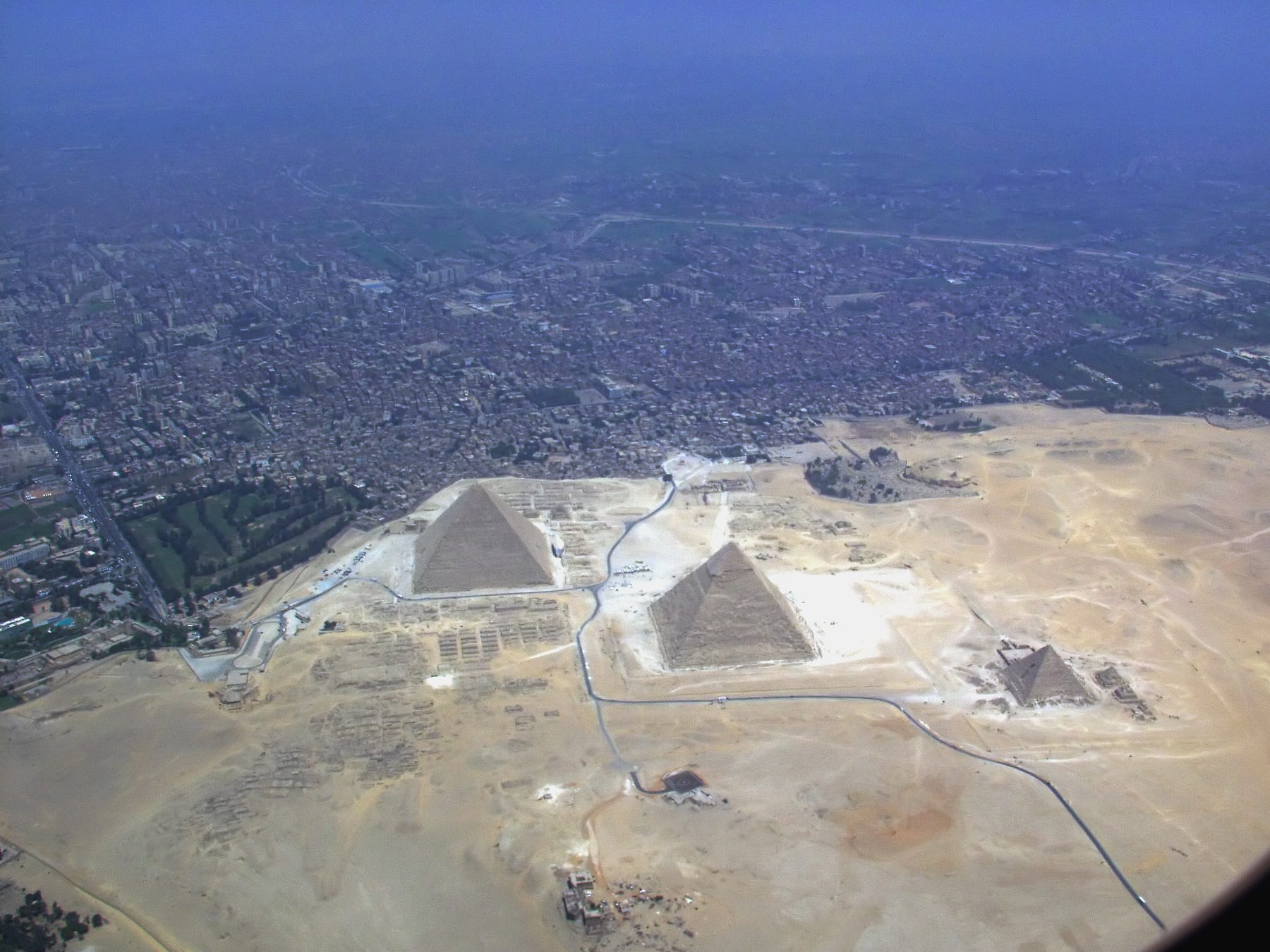
The rows of smaller tombs beside the Great Pyramid belong to members of Khufu's family and court; Hemiunu was buried in the field of tombs to the west.