History
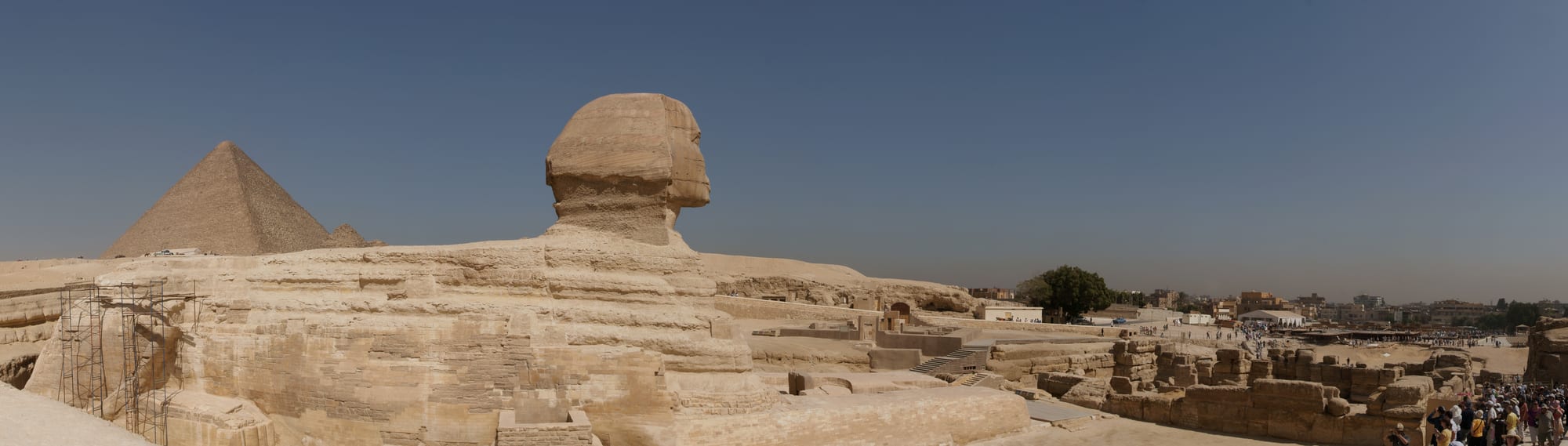
Egypt's recorded history begins around 3100 BC with the unification of Upper and Lower Egypt, and its pharaonic civilisation lasted, in recognisable form, for roughly three thousand years — the Old Kingdom pyramid builders, the Middle Kingdom, the empire of the New Kingdom under Thutmose, Hatshepsut, Akhenaten, Tutankhamun, and Ramesses, and a long decline through foreign rule by Libyans, Nubians, Assyrians, and Persians.
Alexander the Great took Egypt in 332 BC, and the Greek Ptolemaic dynasty ruled from Alexandria until Cleopatra's death and the Roman annexation of 30 BC. Egypt became an early heartland of Christianity — the Coptic Church dates its foundation to St Mark — before the Arab conquest of 641 brought Islam and Arabic.
Under a succession of Islamic dynasties, then the Ottomans, Egypt was often semi-independent. Muhammad Ali built a modern state in the nineteenth century; the Suez Canal opened in 1869; and Britain occupied the country from 1882. A 1952 army coup ended the monarchy and brought Gamal Abdel Nasser to power. Since then Egypt has been led by former military officers — Nasser, Sadat, Mubarak, and, after the 2011 revolution and a brief elected Islamist government, Abdel Fattah el-Sisi.
- Egypt: Five Thousand Years on the Nile — The gift of the river — pharaohs and pyramids, Greeks and Romans, the coming of Islam, Ottoman and British rule, and the republic of the officers