Food · Egypt
Egypt: Food and the National Dish
A carb-on-carb street food built from rice, lentils and pasta, a fava bean breakfast some trace back to the pharaohs, and a fritter that is probably the origin of falafel
By Worldlore Editorial · 30 September 2026
Food from the Nile Valley
Egyptian cooking runs on what the Nile Valley has grown for millennia: fava beans, lentils, rice, bread and a handful of vegetables, seasoned gently with cumin, coriander and garlic rather than heavy spice. Bread — aish baladi, a flatbread the state subsidises — is treated as close to a right rather than a side dish, and the Arabic word aish comes from a root meaning "to live", with a sense of "life" and "livelihood".
The national dish: koshari
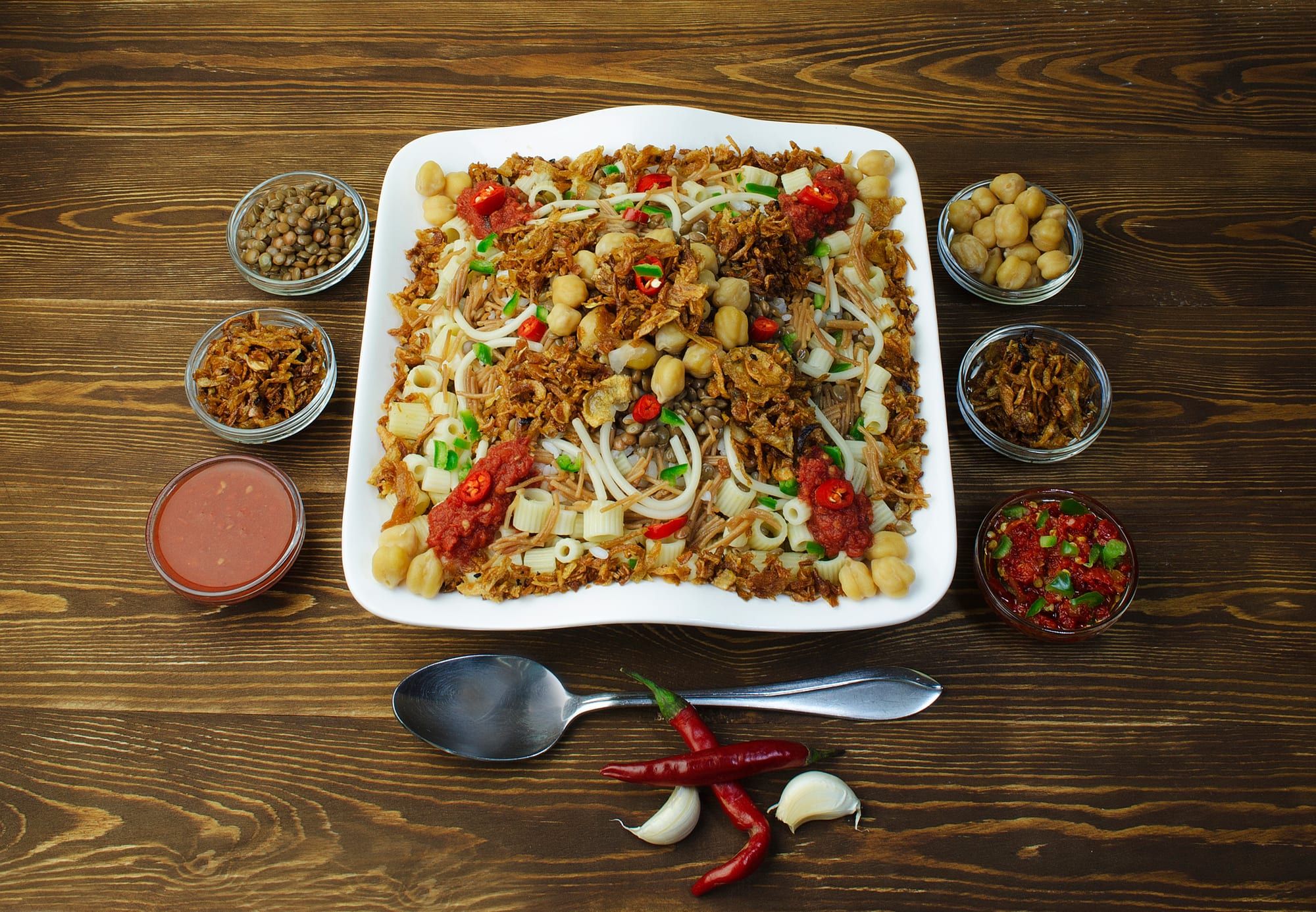
Koshari layers rice, brown lentils, macaroni and chickpeas together, then tops the whole thing with crisp fried onions and a garlicky tomato sauce, with garlic vinegar and hot sauce added to taste. It began as cheap, filling street food and is widely described as Egypt's national dish, sold from dedicated koshari shops across the country; in 2025 UNESCO recognised it as intangible cultural heritage.
Ful medames and other old staples
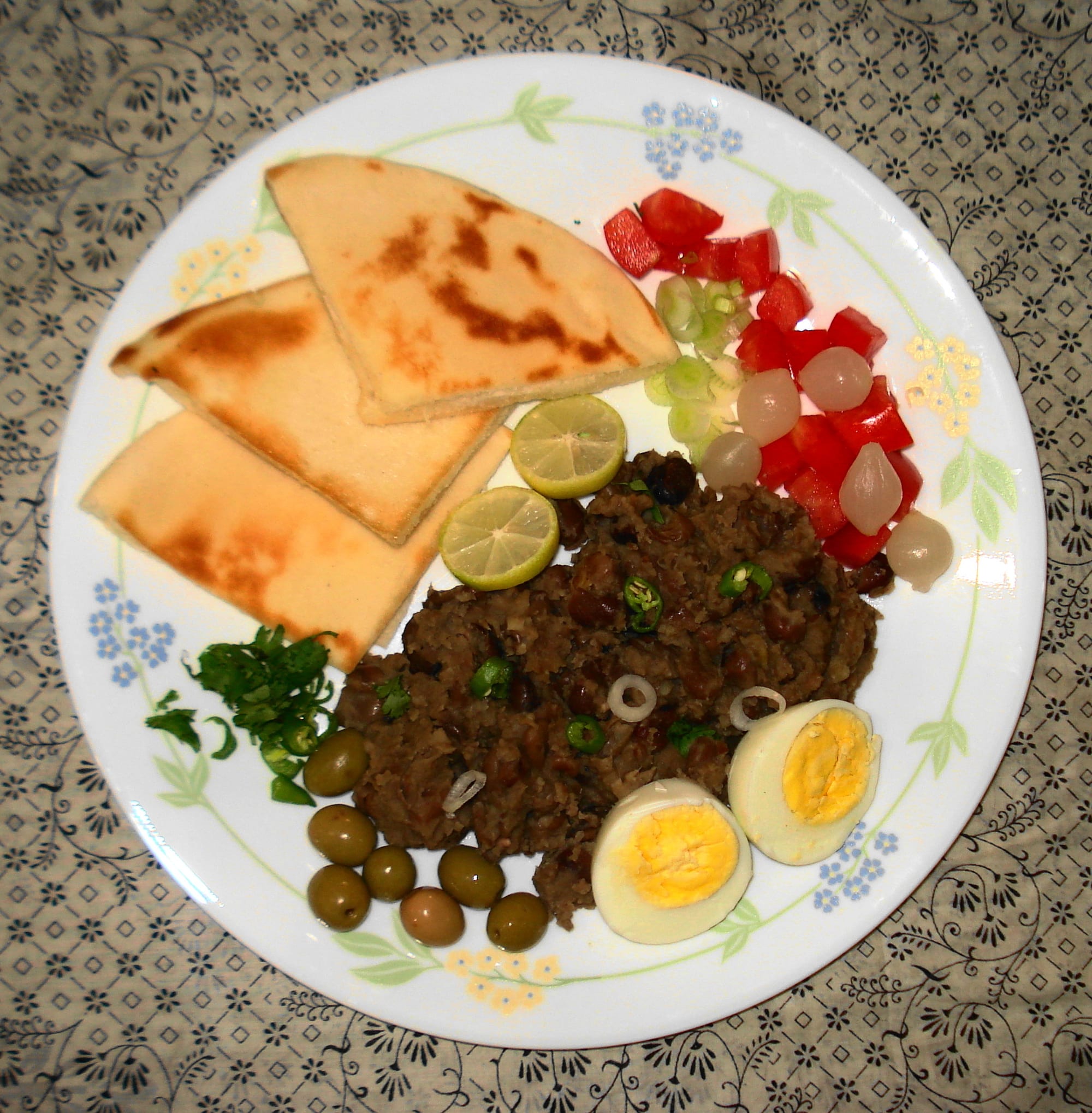
Ful medames — fava beans slow-cooked until soft, dressed with olive oil, lemon and cumin — is also considered a national dish, and some writers have suggested that it dates back to ancient Egypt. It's a standard breakfast, often mashed with garlic and chilli and scooped up with bread.
Dishes to know
Five more to recognise across Egypt:
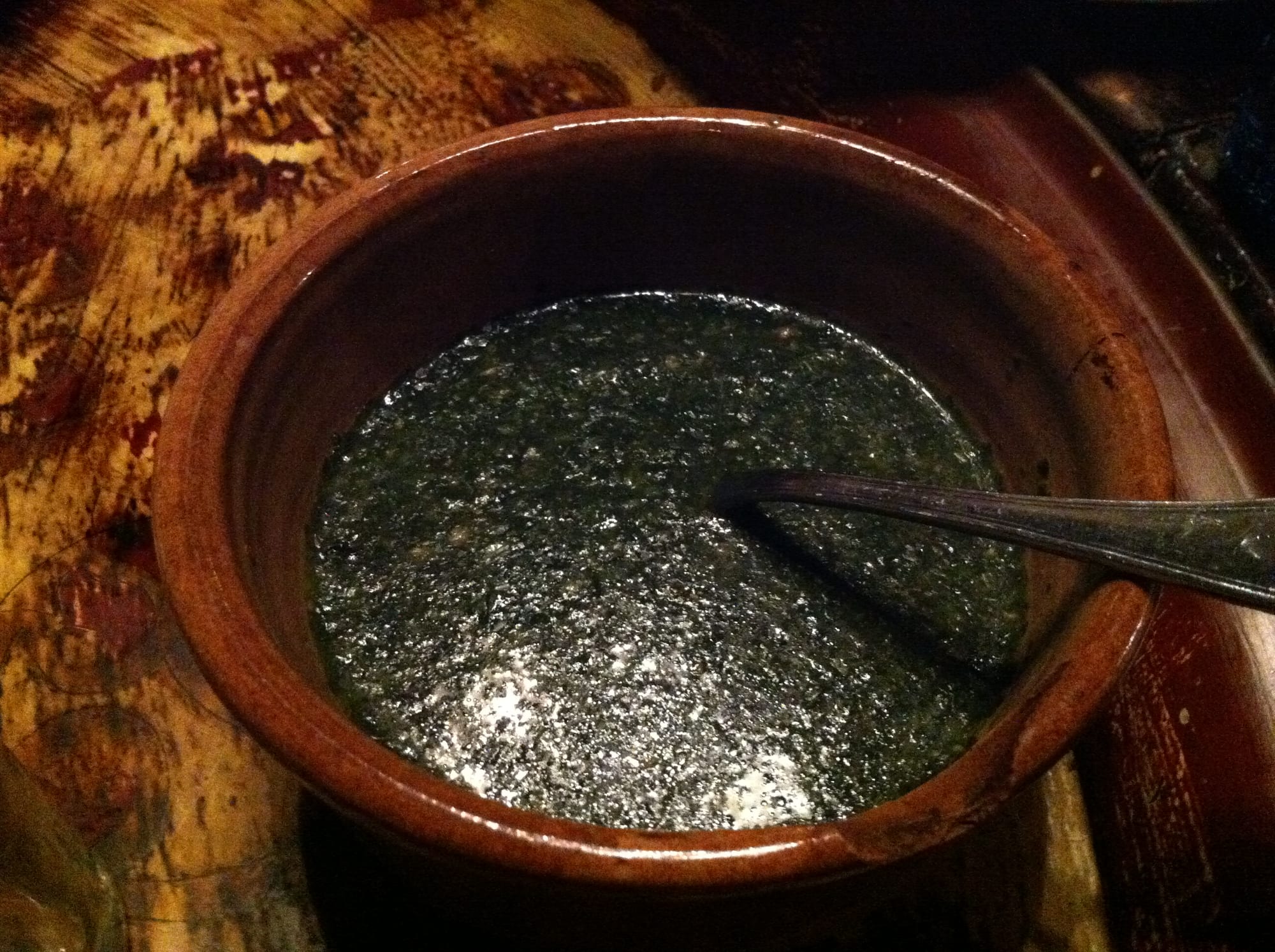
- Molokhia — a soup made from jute leaves, cooked with garlic and
coriander and served over rice, traditionally with chicken or rabbit.
- Ta'meya — Egyptian-style falafel made from fava beans rather than
chickpeas, crisp outside and green inside.
- Mahshi — vegetables such as grape leaves, courgette and pepper stuffed
with rice and herbs, sometimes with minced meat.
- Hawawshi — spiced minced meat with onion and parsley baked inside
Egyptian flatbread until crisp.
- Om Ali — a warm pudding of bread or pastry baked in sweetened
milk with nuts and raisins, often called Egypt's national dessert.
Drinks
Karkadeh, a tart hibiscus tea served hot or cold, is a genuinely Egyptian specialty, alongside shai, black tea drunk throughout the day and counted as the national drink, and strong Turkish-style coffee. Sahlab, a hot, thickened milk drink topped with nuts and cinnamon, is a winter favourite, and fresh sugarcane juice, asab, is sold from street carts in warmer months.
Eating as a traveller
Vegetarians eat very well in Egypt — koshari, ful medames and ta'meya are naturally meat-free and widely available, and mahshi often is. Bottled water is the safer choice for visitors. Street food, especially koshari and ta'meya stands, is cheap and a genuine highlight, and busy, high-turnover stalls are the ones to pick.
What to take from the table
Koshari is the dish to try for its sheer, unpretentious ambition, but ful medames, eaten the way Egyptians actually eat it for breakfast, is a link to a dish some writers trace back to ancient Egypt.