History
The Delta was Lower Egypt, the northern kingdom joined to the valley around 3100 BC, and many of its capitals now lie under fields and villages. Bubastis, near Zagazig, was the city of the cat goddess Bastet; Ramesses II built his capital, Pi-Ramesses, in the eastern Delta; and Tanis became the seat of the 21st and 22nd Dynasties, whose royal tombs yielded silver coffins and gold masks in 1939. Sais, in the western Delta, gave its name to the 26th Dynasty.
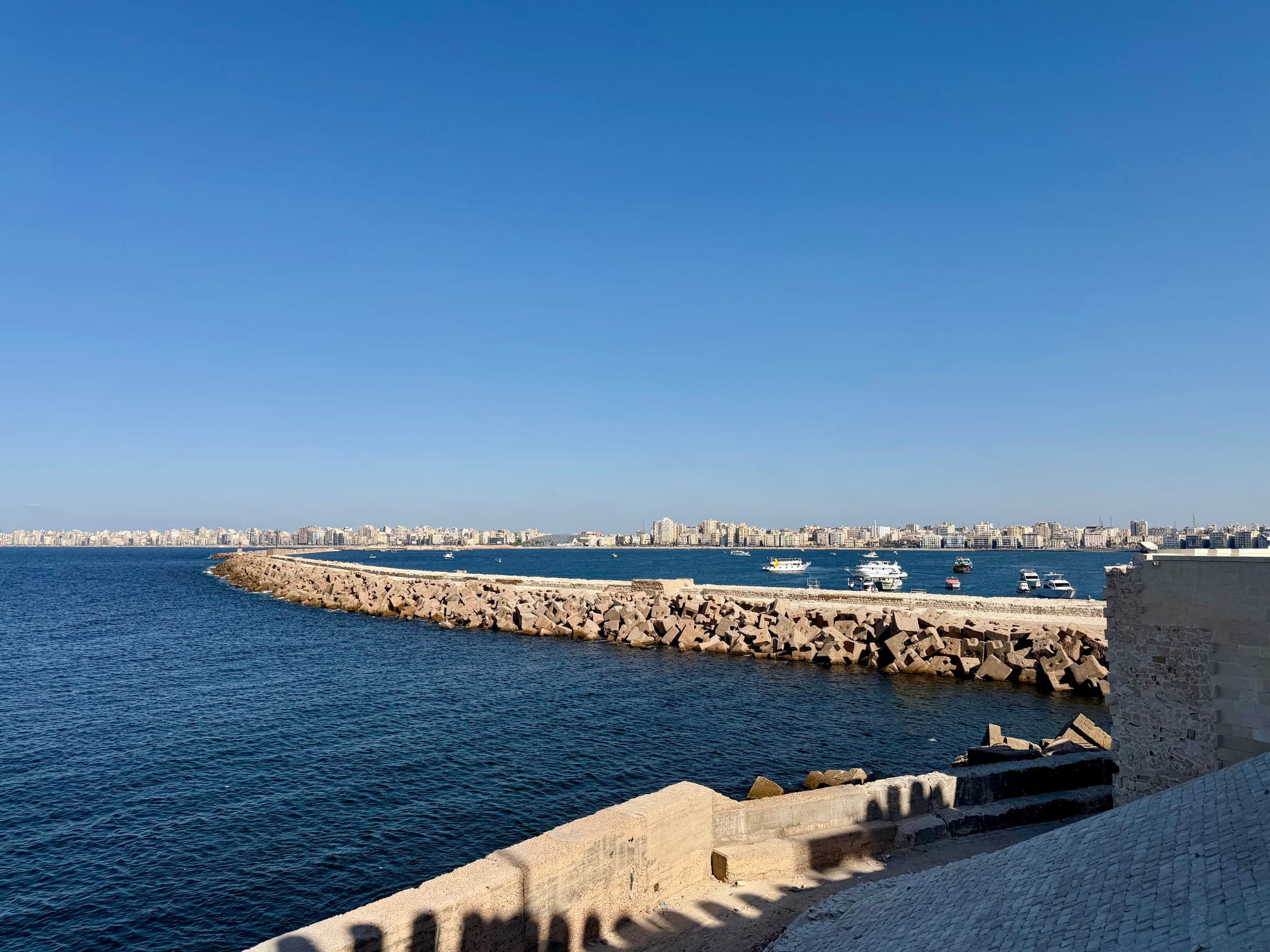
Alexander the Great founded Alexandria in 331 BC, and under the Ptolemies it became the greatest city of the Greek world, with the Pharos lighthouse and the Library and Museum where scholars such as Euclid and Eratosthenes worked. Under Rome it was the empire's grain port and then a centre of early Christian theology and the seat of the patriarchs. After the Arab conquest of 641 the capital moved inland, and the city shrank for centuries. The Crusaders were defeated at Mansoura in 1250, and in 1799 French soldiers found the Rosetta Stone near Rashid.
Muhammad Ali revived Alexandria with the Mahmoudiya canal, and cotton made the Delta rich in the 19th century. Alexandria grew into a cosmopolitan port of Greeks, Italians, Jews and Levantines, most of whom left after 1956. Port Said and Ismailia were founded in 1859 and 1863 to build the Suez Canal. British forces clashed with Egyptian police in Ismailia in January 1952, and in 1956 Port Said was attacked during the Suez Crisis.