💰 Budget
Aswan is inexpensive apart from boats and site tickets. Nubian guesthouses and local restaurants cost little, while river-view hotels, a private felucca or motorboat, the entrance to Philae and the road trip south to Abu Simbel add up. Boat fares are negotiated and vary widely with the season and the hour.
- Daily Budget Midrange
- USD 75–170 (Nile-view hotel or a cruise cabin, a guide, several site tickets, a felucca trip)
- Daily Budget Shoestring
- USD 25–40 (guesthouse, local food, shared boats and minibuses, one or two sites)
Agree the price and the duration of any boat trip before boarding, and buy site tickets at the official offices.
📅 Best Time to Visit
October to April, and December to February above all, when days are warm and dry and the river is at its most pleasant. Summer is severe, with temperatures well above 40°C, and sightseeing is limited to the early morning, though prices and crowds fall sharply.
⏳ Suggested Number of Days
Two days covers the town, the islands and the sites near the dams without rushing in the heat. Three or four suit a slower stay or trips further south, and river journeys towards Luxor start or end here.
- First Visit
- 2 days
- With Surroundings
- 3–4 days
🚆 Transportation
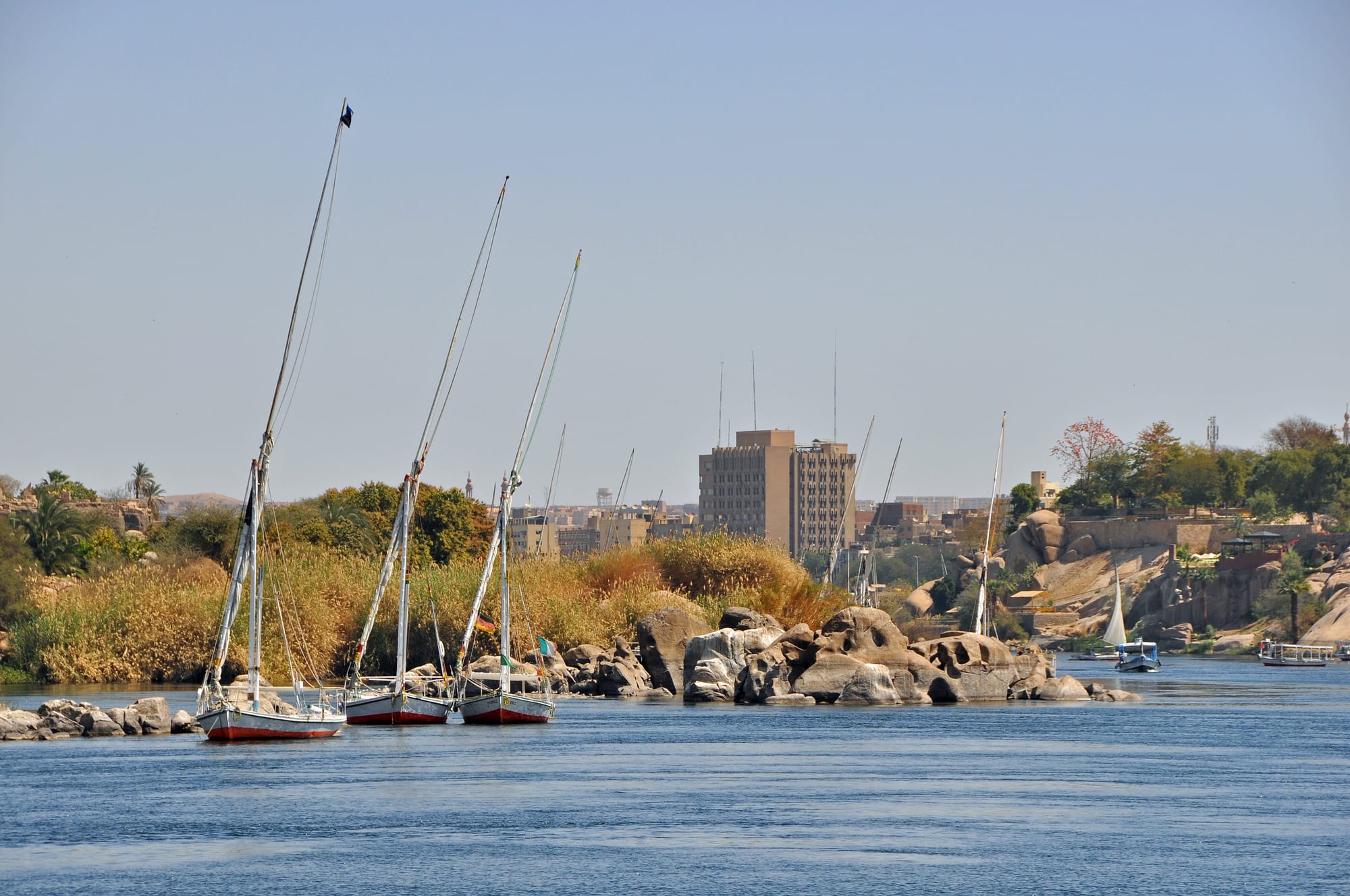
The Corniche and the souq are walked, and everything on the water is reached by small ferries, motorboats or feluccas, which function as local transport as much as excursions. Taxis and minibuses serve the dams, the quarry and the airport, and the temples of Kom Ombo and Edfu lie along the road north. Abu Simbel is about 280 kilometres south, roughly three hours by road or a short flight.
Boat and taxi fares are negotiated; settle the price, the stops and the waiting time in advance, and carry small notes for the public ferries.
🛬 Airport & Station Connections
Aswan International Airport lies in the desert about 16 kilometres south-west of the city, with flights from Cairo and services to Abu Simbel. Trains run north along the valley, reaching Luxor in about three hours and Cairo overnight, including sleeper services. Cruise boats arrive from Luxor, and buses cross the desert to the Red Sea and north through the valley.
🚶 Walkability
The centre is compact and flat: the Corniche, the souq, the station and the museums are within a walk of each other, and Elephantine's villages are covered on foot once the ferry has crossed. Elsewhere distances and heat make transport necessary, and the climb to the west-bank tombs and monastery is steep and unshaded.
🛡️ Safety
Aswan is calm and well policed, with less pressure from touts than Luxor, though boatmen and drivers are persistent along the Corniche. Heat is the main danger, and the Nile has strong currents, bilharzia risk and no lifeguards, so swimming is unwise away from supervised places. The desert south of Lake Nasser towards the Sudanese border is restricted. The war that began on 27 February 2026 between the United States and Israel and Iran and its allies has not been fought in Egypt, but it has disrupted flights and tourism across the region.
Follow police instructions on escorts in Middle Egypt, stay away from the border zone south of Lake Nasser, and drink plenty of water in the heat. Check current official travel advice before travelling.
🌦️ Climate
Among the hottest and driest places on earth, with rain almost unknown and very low humidity. Nights cool sharply in winter, and spring brings dust-laden khamsin winds off the desert.
- Summer
- extremely hot and dry, commonly above 40°C by day and sometimes far higher
- Winter
- warm and sunny, about 23–26°C by day, with nights near 10°C
🤝 Local Customs
Dress modestly away from hotel pools, with shoulders and knees covered, and cover the hair to enter a mosque. Nubian villages are homes rather than exhibits, so ask before entering courtyards or photographing people and children. Small tips, baksheesh, are expected for most services. Photography inside tombs and museums may be restricted or charged for. During Ramadan people do not eat or drink in public in daylight.
Do not photograph the dams, bridges, checkpoints or military installations, where restrictions are enforced.
💳 Common Payment Methods
The currency is the Egyptian pound. Hotels and larger restaurants take cards, but cash rules the market, the ferries, the boatmen and the guesthouses, and small notes are essential. ATMs are on the Corniche and in the centre, and are scarce once across the river.