Attractions & Natural Wonders · Jordan
Why can you float on the Dead Sea?
The Dead Sea is almost ten times saltier than the ocean, which makes its water far denser than a human body, so swimmers bob on top like corks.
By Globeway Editorial · 13 October 2026
The short answer
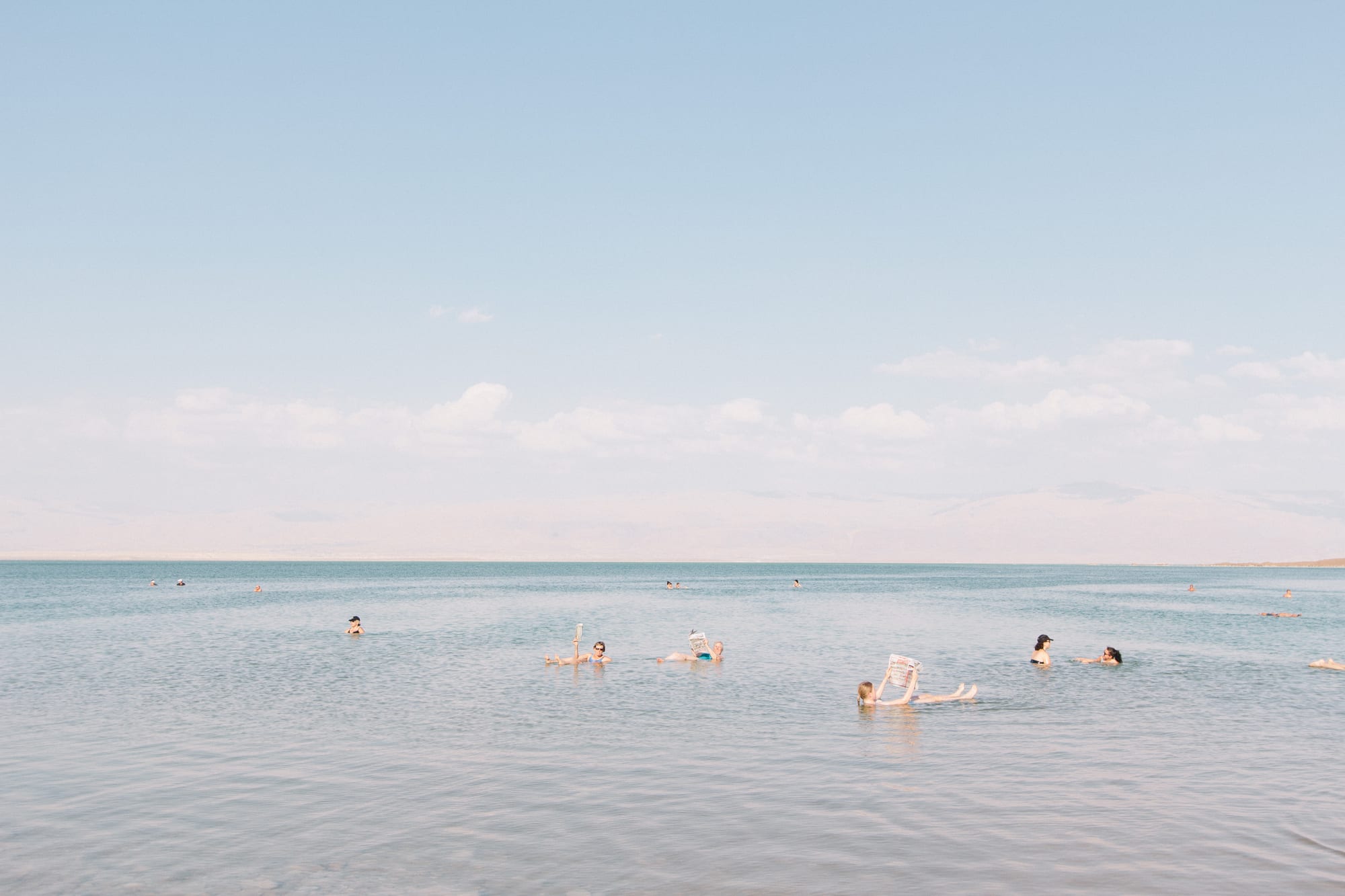
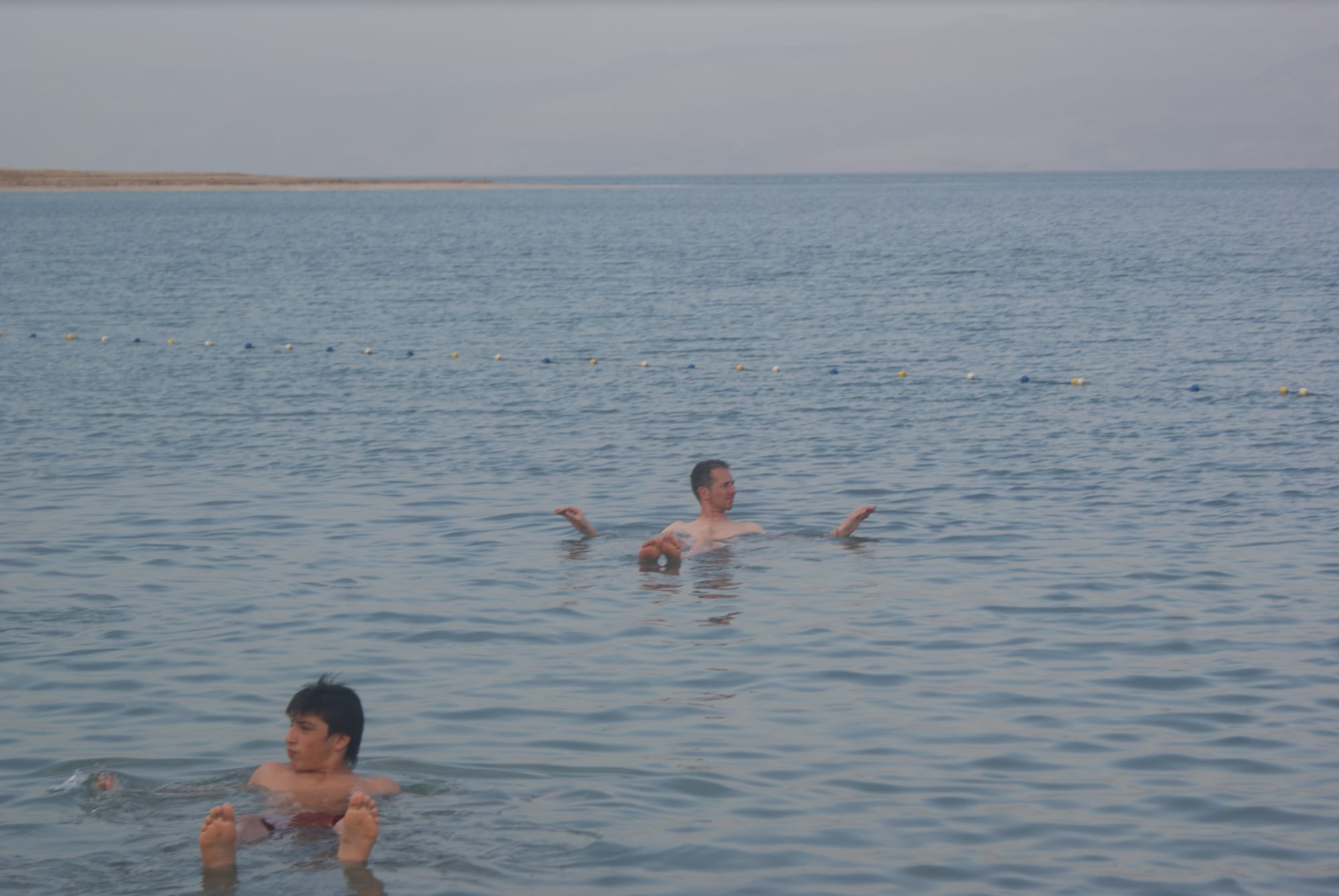
Because the water is much denser than a person. The Dead Sea is one of the saltiest bodies of water on Earth, about 9.6 times as salty as the ocean, and all that dissolved salt makes a litre of its water weigh about 1.24 kilograms, against 1 kilogram for fresh water. An average human body is slightly less dense than fresh water, so in a pool it barely floats. In the Dead Sea it is pushed up so strongly that people lie on the surface as if on a lilo, and swimming feels more like floating.
The lake is so salty because it is a dead end. It lies at the bottom of the Jordan Rift Valley, more than 430 metres below sea level, and has no outlet. Rivers carry dissolved minerals in, the desert sun evaporates the water, and the salt stays behind.
Archimedes in the bath
The physics is the principle the Greek mathematician Archimedes is credited with. Anything placed in a liquid is pushed upwards by a force equal to the weight of the liquid it pushes aside. An object denser than the liquid sinks; one less dense floats, settling until the liquid it displaces weighs exactly as much as the object itself.
The human body is a mix of fat, at about 0.9 kilograms per litre, and muscle, bone and other tissue, which together average about 1.1. Overall, a body has on average a relative density of about 0.98 compared with water, which is why most people just about float in a lake or pool, with only a little of the body showing. Men tend to find floating harder, because they usually carry more muscle and have a lower centre of gravity.
Seawater, at an average of about 1.025 kilograms per litre at the surface, gives a bit more lift. Dead Sea water, at around 1.24, gives a great deal more. On those figures, a floating body needs to push aside only about four fifths of its own volume of Dead Sea water, so roughly a fifth of it rides above the surface. Bathers can sit upright in the water with their feet up, or lie back and read.
A lake with no way out
The Dead Sea is an endorheic lake, meaning water flows in but no river flows out. Its main source is the Jordan River from the north, along with smaller streams from the mountains on both sides and springs beneath the lake. The only way water leaves is by evaporation, and the conditions for that are extreme. The climate is hot desert: barely 50 to 100 millimetres of rain falls in a year, summer averages run between 32 and 39 °C, and on average 192 days a year exceed 30 °C. Every litre that evaporates leaves its minerals behind.
The salt is also very old. Millions of years ago, during the late Pliocene and early Pleistocene, the Mediterranean repeatedly flooded the valley, forming a long, crooked bay that geologists call the Sedom Lagoon. It laid down beds of rock salt that eventually grew 2.3 kilometres thick. Later lakes filled the valley, the last of them Lake Lisan, whose level stood 100 to 250 metres higher than today's sea between about 70,000 and 12,000 years ago. As the climate dried, Lake Lisan shrank and grew saltier, and the Dead Sea is what remains.
Not ordinary salt
Dead Sea water is not simply concentrated seawater. In ocean water about 85 per cent of the salt is sodium chloride, ordinary table salt. Measurements of the Dead Sea's surface water in the early 1980s found that magnesium chloride made up about 51 per cent of its salts, sodium chloride about 30 per cent, and calcium chloride and potassium chloride the rest. It has the highest concentration of bromide of any water on Earth. Near the bottom, the water is so saturated with sodium chloride that salt crystallises out onto the lake floor.
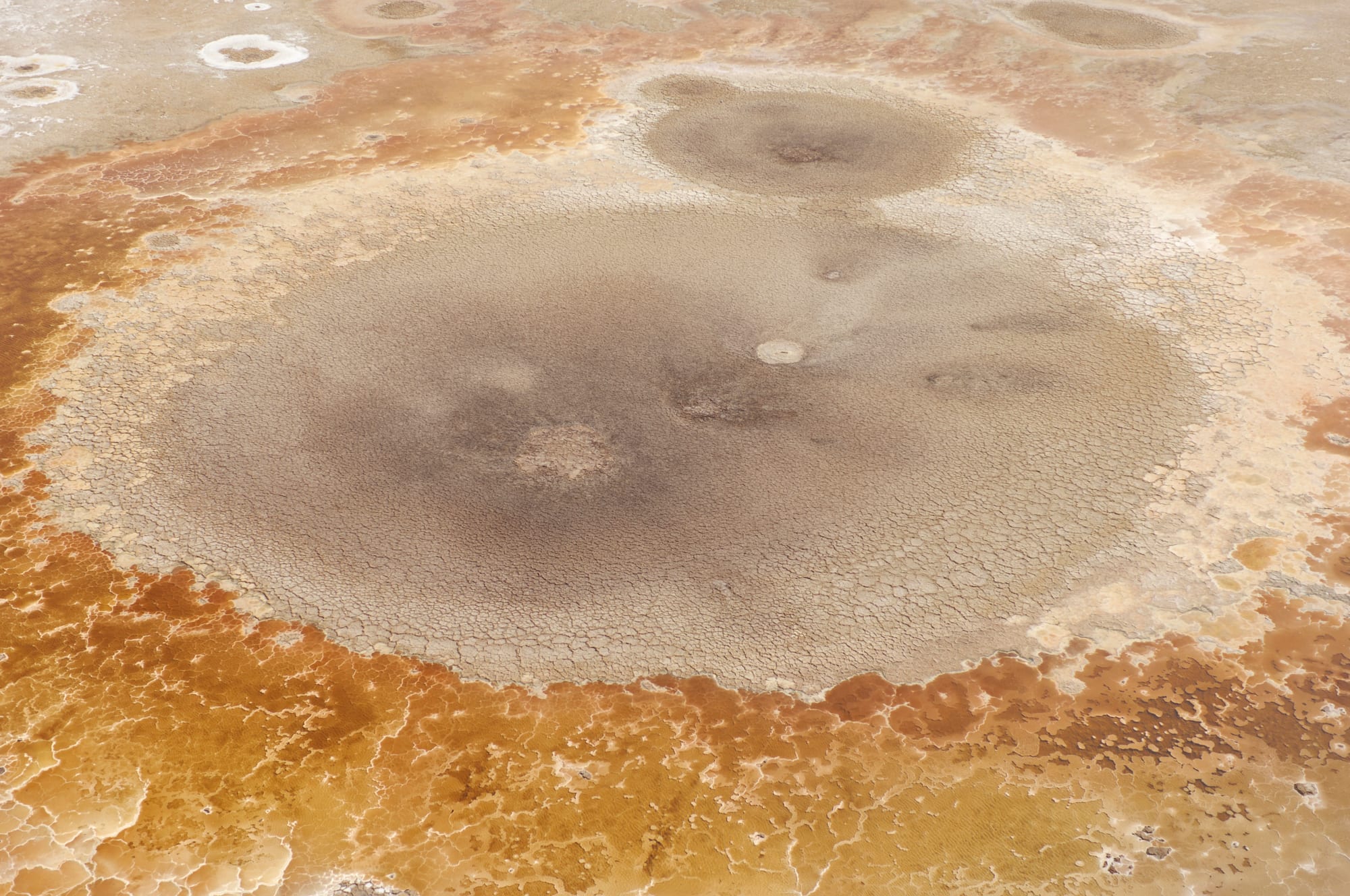
So much salt makes the lake hostile to life. Fish and water plants cannot live in it, which is where the name comes from, although tiny quantities of bacteria and microbial fungi survive.
Saltier, lower, smaller
The water has become denser in modern times. In the 19th and early 20th centuries the surface layers were less salty, with a density of about 1.15 to 1.17 kilograms per litre. From the 1960s, water from the Jordan River was diverted, much of it for large-scale irrigation, notably by the National Water Carrier scheme, completed in 1964. The Jordan now supplies only about a sixth of the lake's inflow, less than direct rainfall.
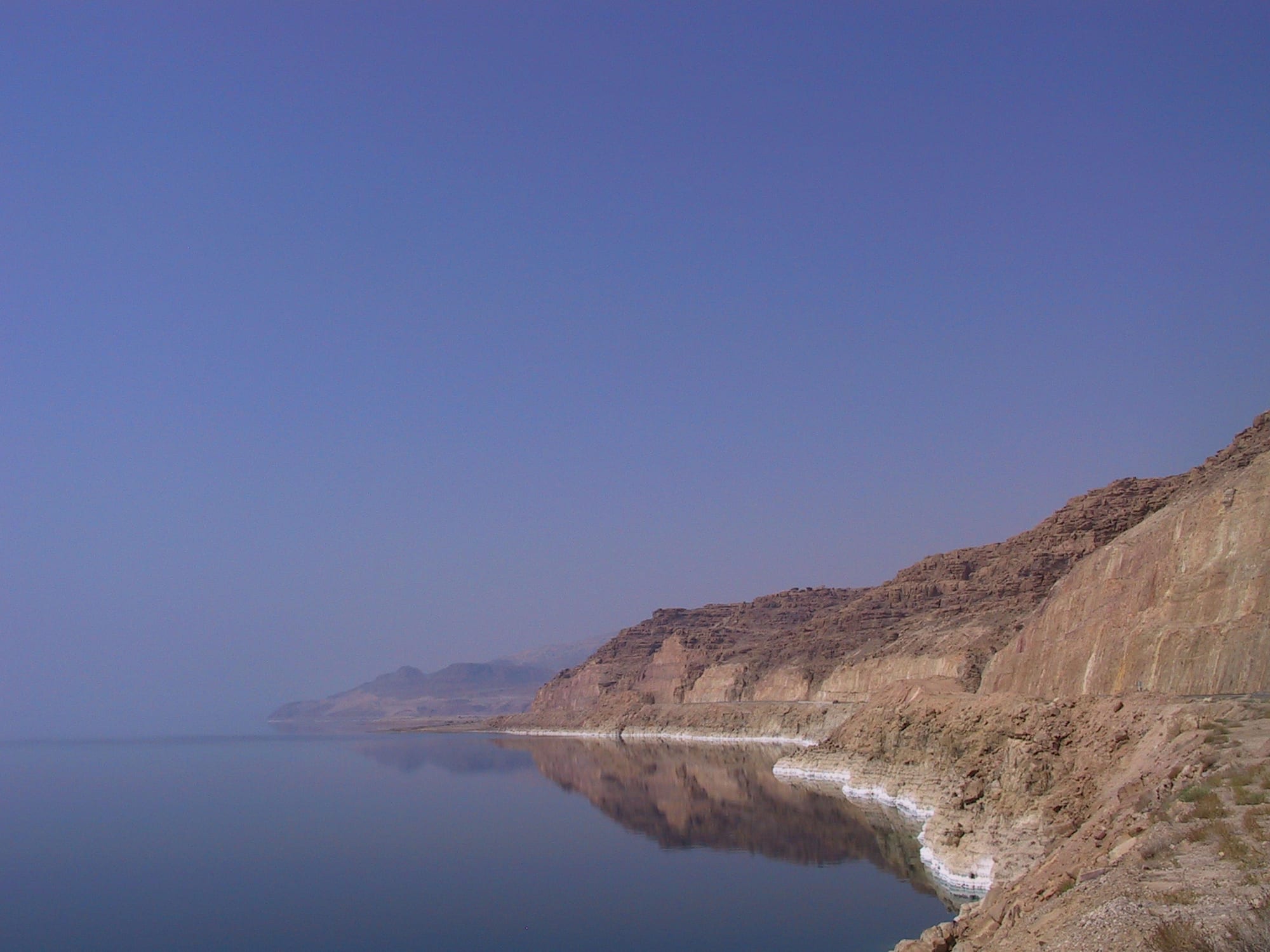
With less fresh water coming in, the Dead Sea is shrinking fast. Its surface was about 395 metres below sea level in 1970 and 439.78 metres below in 2025, and it is now dropping by more than a metre a year. Its area has dropped from 1,050 square kilometres in 1930 to about 605. As the water retreats, fresh groundwater dissolves buried salt layers near the shore, and the ground collapses into sinkholes, which have forced most beach resorts on the western shore of the northern basin to close. Plans to pipe water from the Red Sea to top it up, the Red Sea–Dead Sea Water Conveyance, were scrapped.
Floating today
The shores of the Dead Sea are the lowest land on Earth, and visitors float on its Jordanian, Israeli and West Bank coasts. On the Jordanian side, on the eastern shore, a string of resort hotels stands near the King Hussein Bin Talal Convention Center. The lake has drawn visitors for thousands of years and was one of the world's first health resorts. At this depth the air pressure is about 5 per cent higher than at sea level and the sun's ultraviolet rays are weaker, and the area is used to treat skin conditions such as psoriasis, while its mud has been suggested to ease painful knee joints. Winters are mild, with average temperatures between 20 and 23 °C.