Daily Life · Bolivia
Why does altitude sickness hit visitors to La Paz?
Most visitors fly from near sea level to an airport above 4,000 metres in a few hours, far faster than the body can adjust to thinner air.
By Globeway Editorial · 13 October 2026
The short answer
La Paz is about 3,650 metres (11,975 feet) above sea level, the highest seat of government of any country, and the airport most visitors land at is higher still, at 4,061 metres. The air up there contains the same share of oxygen as at sea level, about 21 per cent, but it is so much thinner that each breath carries far fewer oxygen molecules. A body used to lowland air suddenly gets too little oxygen, and the result, for many people, is headache, nausea, tiredness, dizziness and poor sleep: acute mountain sickness.
What makes La Paz especially tough is the speed of arrival. The body can adapt to altitude, but it needs days to do so. A traveller who flies in from near sea level makes a climb of 4,000 metres in a few hours, while the usual advice is to raise the height at which one sleeps by no more than about 300 metres a day. Fitness offers no protection. Residents have had time to adjust, and Andean highlanders have also adapted to altitude over many generations.
A city in a canyon, an airport on the rim
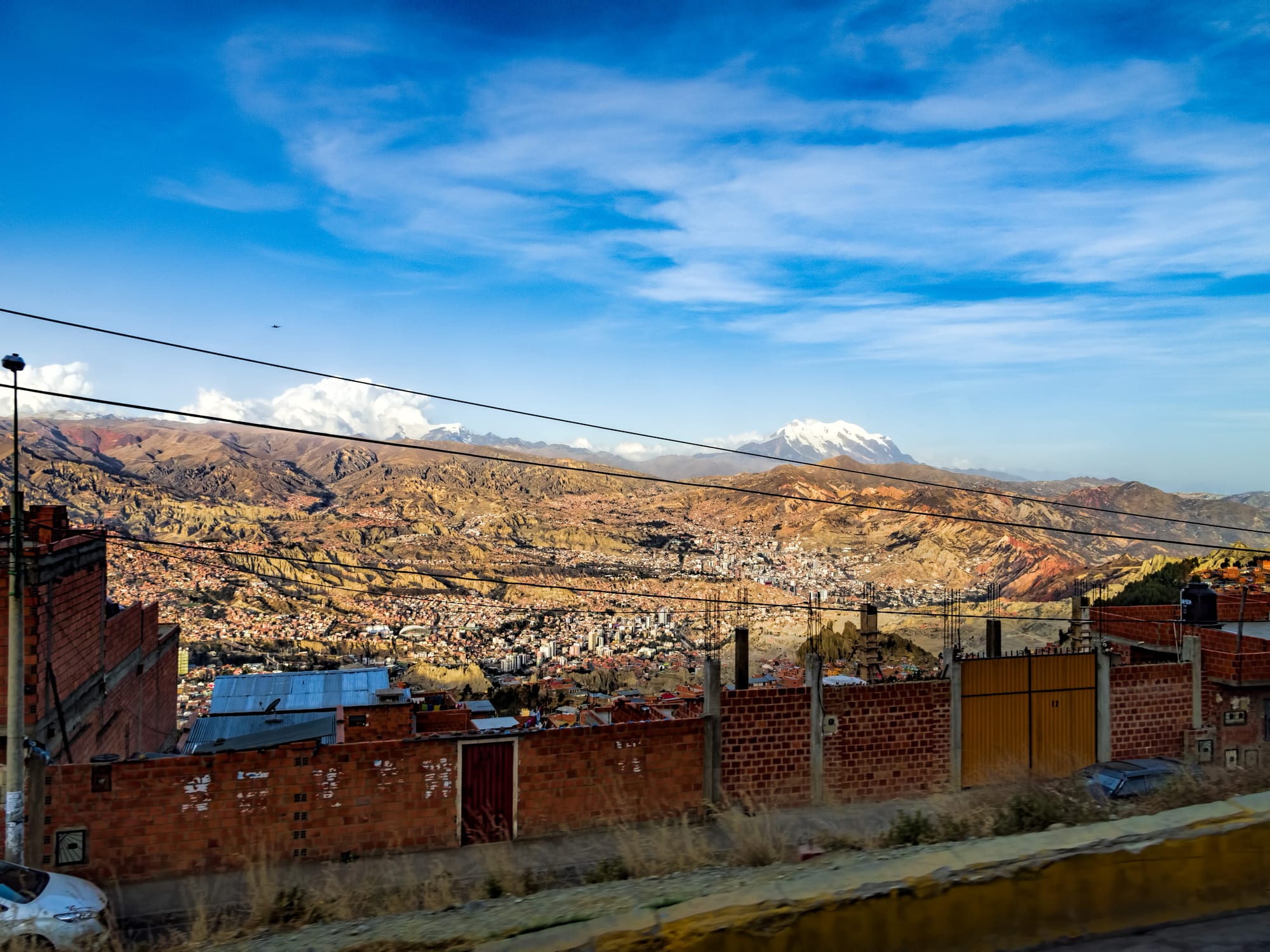
La Paz fills a bowl-shaped canyon cut by the Choqueyapu River into the edge of the Altiplano, the high plateau of the central Andes. The city falls a long way from top to bottom. The centre lies at about 3,600 metres, the wealthier Zona Sur at about 3,250 metres, and the highest neighbourhoods above 4,000 metres. Height follows money here: better-off residents tend to live in the lower, warmer parts of the city, while poorer families build on the surrounding hills.
On the plateau above the canyon lies El Alto, a separate city with an average elevation of about 4,000 metres and parts as high as 4,300 metres. Its airport, El Alto International, at 4,061.5 metres, is the highest international airport in the world. Most visitors therefore meet La Paz at its highest point, step out into the thinnest air of their trip, and only then descend into the city.
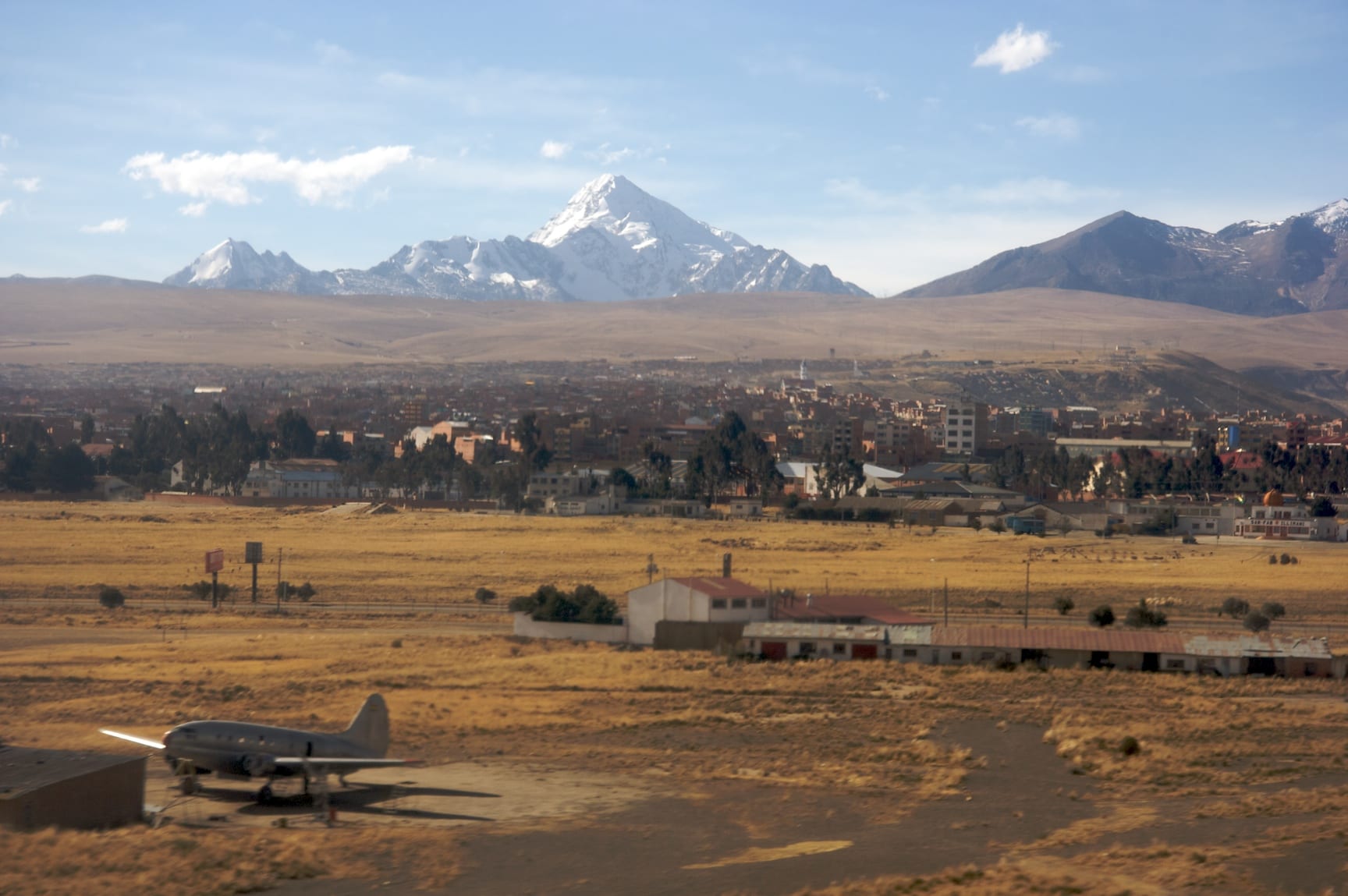
At just over 4,000 metres, the airport sits higher than any other international airport on Earth.
Thin air, not less oxygen
The cause of altitude sickness is air pressure, which falls steadily with height. Oxygen stays at about 21 per cent of it, a share that barely changes up to great heights. But the pressure of that oxygen, which is what pushes it from the lungs into the blood, falls with height. At 4,000 metres, each lungful of air holds roughly 60 per cent of the oxygen molecules of a lungful at sea level. At 5,000 metres the figure is about half.
The body notices quickly. Above about 2,100 metres, the share of haemoglobin in the blood that carries oxygen starts to drop rapidly. Sensors in the neck, the carotid bodies, detect the shortfall and make a person breathe deeper and faster. More water vapour is lost from the lungs at altitude, which can add dehydration to the problem.
Acute mountain sickness usually appears within ten hours of arrival and generally fades within two days. It is common: in one estimate it affects about 20 per cent of people who go rapidly to 2,500 metres and 40 per cent of those who go to 3,000 metres, and La Paz and El Alto are well above both. Strenuous activity makes it worse, and having had it before raises the risk.
In rare cases it becomes dangerous. Fluid can build up in the lungs (high-altitude pulmonary oedema) or the brain (high-altitude cerebral oedema). Breathlessness even at rest, severe headache that painkillers do not touch, confusion or an unsteady walk are warning signs, and the one reliable treatment for these serious forms is to go down to a lower altitude at once.
How the body catches up
Acclimatisation, the body's adjustment to altitude, happens in stages. Faster breathing begins at once. Over the next few days the kidneys excrete more bicarbonate, rebalancing blood chemistry that heavy breathing has thrown off. This first adjustment takes about four days at a given altitude. The slowest step is making extra red blood cells to carry more oxygen. One rule of thumb multiplies the altitude in kilometres by 11.4 to estimate the number of days needed, which means about 46 days to adjust fully to 4,000 metres.
That is why the standard advice is to go up slowly, avoid hard exercise in the first 24 hours, avoid sleeping pills, and skip alcohol for the first 24 to 48 hours, since both slow breathing and delay adjustment. The drug acetazolamide speeds acclimatisation by making the blood more acidic, which drives faster breathing. Mountain doctors caution against using it in place of a sensible ascent, except where flying straight to altitude makes a fast climb unavoidable.
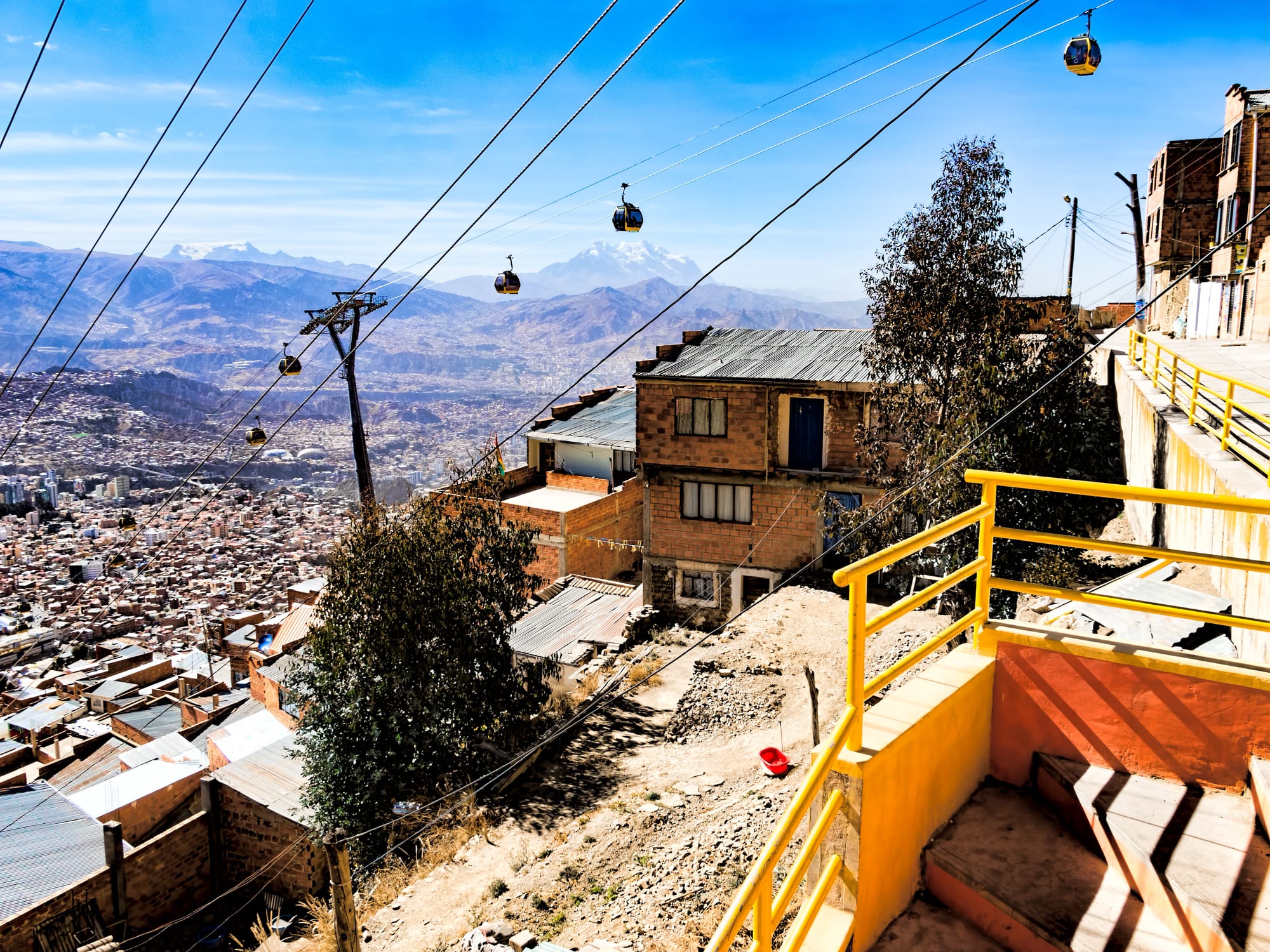
The cable-car network opened in 2014 and links the city in the canyon with El Alto on the plateau above, hundreds of metres higher.
Why locals cope and the coca question
An estimated 6.2 million people in Bolivia live above 2,500 metres. Andean highlanders such as the Aymara of the La Paz Altiplano have adapted over many generations in their own way. Unlike Tibetans, who breathe faster and more deeply than lowlanders, Aymara people have notably high levels of haemoglobin: on average 19.2 grams per decilitre of blood in men and 17.8 in women, well above typical lowland levels, so their blood can carry more oxygen. Highlanders are not immune to altitude either: some develop chronic mountain sickness, a separate condition that comes from living for years at height.
For visitors, La Paz offers its own remedy. Newcomers to the city are often greeted with coca tea, or mate de coca, made from the leaves of the coca plant, and people in the Andes have chewed coca leaves for thousands of years as a mild stimulant against fatigue and hunger. A cup is a mild stimulant, compared to a moderately strong cup of coffee, and there is no evidence that coca tea leads to dependence or addiction. Its real effect on altitude sickness, however, has never been systematically studied.
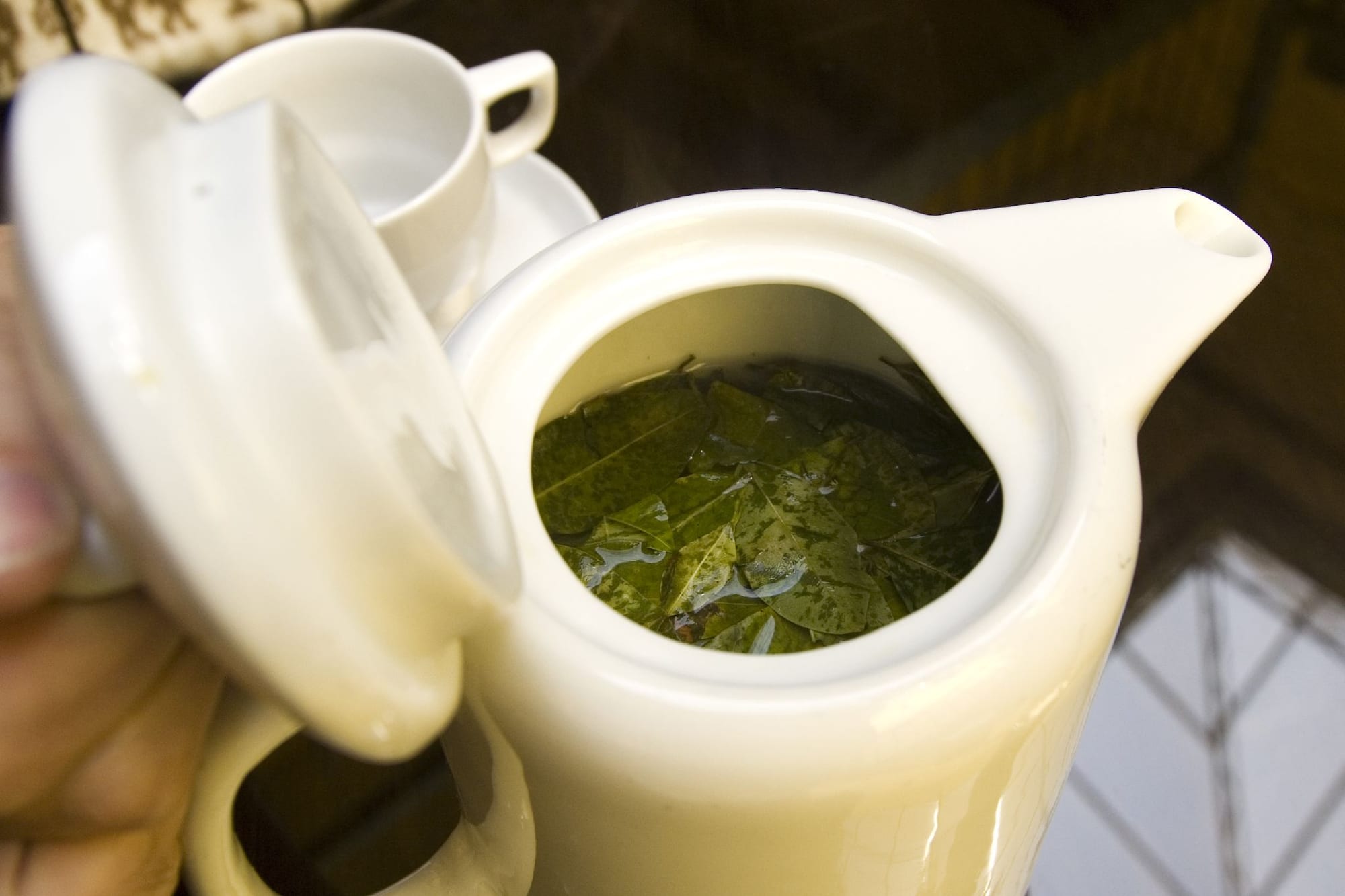
A cup made from one gram of leaves contains about 4.2 milligrams of coca alkaloids, a small fraction of a recreational dose of cocaine.