A vast white salt plain stretching flat to the horizon under a bright blue sky with towering clouds

Bolivia

The Salar de Uyuni, the world's largest salt flat, the bed of a prehistoric lake and a major lithium reserve. (Diego Delso / Wikimedia Commons · CC BY-SA 4.0)

A landlocked country at the heart of South America — the most Indigenous in the Americas — spanning the high Andean Altiplano, the silver mountain of Potosí, and the Amazon lowlands.

Explore Bolivia

History

The Altiplano around Lake Titicaca was the heartland of Tiwanaku, a major pre-Inca civilisation, before the Inca absorbed the region. The Spanish arrived in the 1530s and, in 1545, found silver at Cerro Rico above Potosí. For a century Potosí was the largest and richest city in the Americas, its mines worked under a deadly forced-labour system that killed countless Indigenous and enslaved African people, and its silver bankrolling the Spanish empire.

Independence was won in 1825 and the country named for Simón Bolívar. The next century and a half brought repeated territorial losses — the Pacific coast to Chile in 1879–83, the Acre rubber lands to Brazil, much of the Chaco to Paraguay — and chronic instability. The 1952 National Revolution brought universal suffrage, nationalised the tin mines, and began land reform.

In 2006 Evo Morales, a former coca-growers' union leader, became Bolivia's first Indigenous president, cutting poverty during a commodity boom and rewriting the constitution as a "plurinational state." A disputed 2019 election led to his resignation and departure — his supporters call it a coup — a caretaker government, and a decisive win for his party under Luis Arce in 2020. Since then the party split and the economy deteriorated badly, with dollar and fuel shortages. In the 2025 election Rodrigo Paz of the Christian Democratic Party won the country's first presidential run-off, ending twenty years of MAS dominance, and was sworn in on 8 November 2025 in the middle of the worst economic crisis in decades. The end of fuel subsidies and the slump fed mass protests and road blockades in May and June 2026, and that June the government ended the boliviano's peg to the US dollar and let it float.

Culture & Customs

Culture on the Altiplano is strongly Aymara and Quechua — in language, in dress such as the cholita's bowler hat and layered skirts, and in a worldview where offerings to Pachamama, Mother Earth, sit comfortably alongside Catholic practice. La Paz's Witches' Market sells the herbs, figurines, and dried llama foetuses used in these blessings.

Festivals are spectacular. The Carnaval de Oruro's parade of dozens of dance troupes runs for three days and nights, led by the Diablada devil dance; the Gran Poder parades through La Paz. Music of panpipes, quena flutes, and the small charango lute is everywhere, and "cholita wrestling" has become a spectacle in El Alto, above La Paz, with real roots in women's assertiveness.

The lowland department of Santa Cruz has a distinct camba identity — more tropical, more mestizo, and often at political odds with the highland colla world. Football is a national passion, and Bolivia's team is feared by visitors at altitude.

  • Bolivia: Pachamama and the Patron Saints — A plurinational state with thirty-seven official languages, a Catholic faith laced with Andean belief, miniature wishes blessed for the year ahead, and dance fraternities that rehearse all year for their saint

Daily Life

Bolivia has two capitals in practice: Sucre, the constitutional capital and seat of the courts, and La Paz, the seat of government and the highest administrative capital in the world, set in a canyon with the sprawling city of El Alto on the rim above it. Santa Cruz, in the lowlands, has become the largest city and the economic engine.

The economy has leaned on natural gas exports, mining, and agriculture, and the recent slump in gas output and the dollar shortage have hit hard, bringing queues, shortages, and frequent protest. Much of working life is informal, run through markets and family networks.

Altitude shapes everyday routines on the Altiplano, and the divide between the cool, Indigenous highlands and the hot, fast-growing lowlands runs through the country's politics, economy, and sense of itself.

  • Bolivia: A Day Lived at Altitude — A country where most work happens outside any formal payslip, a leaf chewed nationwide to make the thin mountain air easier to bear, and a cable car doing the job an ordinary metro would do anywhere else

Food

Bolivian cooking is hearty and starch-heavy, built on potatoes — this is part of the potato's homeland, with hundreds of varieties and the freeze-dried chuño — along with corn, quinoa, and, in the lowlands, rice and plantain. Salteñas, juicy baked meat-and-vegetable pasties, are the mid-morning national snack.

The main meal is a set lunch of soup then a main course. Signature dishes include pique macho (a heap of beef, sausage, chips, and egg), silpancho (breaded pounded beef over rice and potato with a fried egg), and fricasé (a spicy pork and hominy soup). Trout comes from Lake Titicaca and llama meat from the highlands.

Singani, a white-grape brandy, is the national spirit and the base of the chuflay. Coca-leaf tea and chewing coca are legal, normal, and genuinely help with the altitude.

  • Bolivia: Food and the National Dish — A baked pastry engineered to hold a whole bowl of stew inside it, a homeland of the potato, and a grape brandy from high-altitude vineyards

Attractions & Natural Wonders

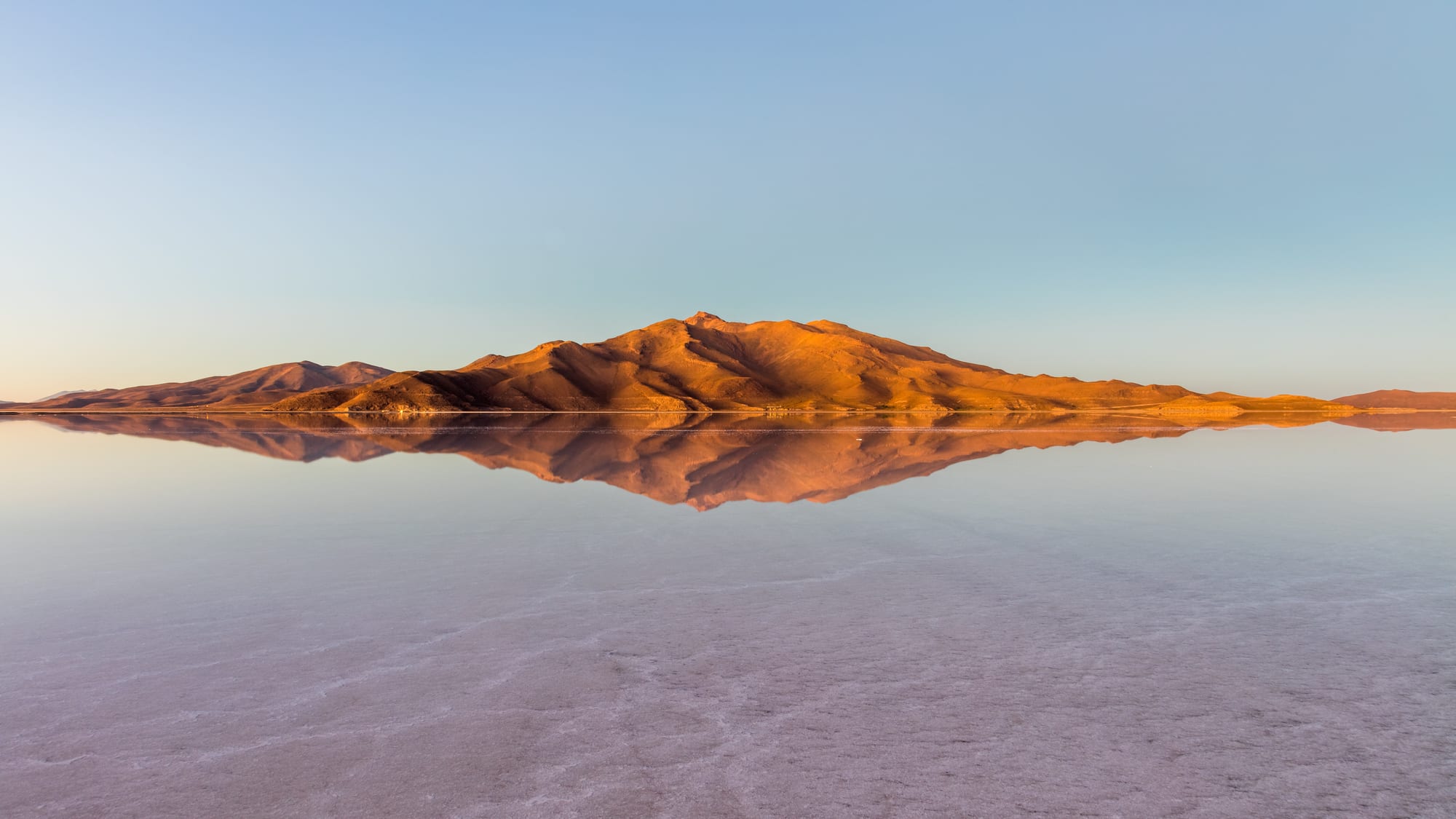
The Salar de Uyuni is the headline: a 10,000-square-kilometre salt flat, usually visited on a one-to-three-day 4x4 tour from Uyuni that also takes in the cactus-covered Incahuasi "island," the Train Cemetery, and, to the south, the red and green lakes, flamingos, geysers, and hot springs of the Eduardo Avaroa reserve near the Chilean border. In the wet season the flat becomes a mirror.

La Paz rewards a few days for its setting, its cable-car network, the Witches' Market, and the eroded Valle de la Luna. Nearby, Lake Titicaca and the roadless Isla del Sol are reached from the pilgrim town of Copacabana, and the ruins of Tiwanaku, with the Gate of the Sun, are an easy day trip.

Potosí offers tours into the still-working silver mines of Cerro Rico and the colonial mint, and Sucre is a white-walled UNESCO city with a cliff of dinosaur footprints on its edge. For wildlife, Madidi National Park and the pampas around Rurrenabaque are the gateway to Amazon rainforest and river life.

Planning basics

Budget

Bolivia has long been one of the cheapest countries in South America, but a severe shortage of US dollars since about 2023, and the boliviano's switch to a floating exchange rate in June 2026, have made prices and payment unpredictable. Bring US dollars cash in good condition and a range of denominations; do not rely on ATMs or cards, and check the current situation before travelling.

Source
Traveller reports and exchange observation, 2024–2025 — this is a fast-moving situation; verify.
Uyuni Tour
Roughly USD 130–250 for a 3-day 4x4 salt-flat and lagoons tour
Daily Budget Midrange
USD 60–120 (hotel, some domestic flights, guided tours)
Daily Budget Shoestring
USD 30–50 (hostel, set-menu lunches, long-distance buses)

Change only what you need, keep small notes — change is perpetually scarce — and expect fuel queues.

Source: Traveller reports and exchange observation, 2024–2025 — this is a fast-moving situation; verify.

Visa Requirements

Bolivia sorts nationalities into three groups: those who need no visa, those who must obtain one in advance from a Bolivian embassy or consulate, and those who need a visa with special authorisation. Many Western and Latin American passports are in the visa-free group, but the lists change and a visa on arrival is no longer the general rule, so check your own nationality well before booking.

Typical Stay
A visa-free short stay for many nationalities; others must apply in advance

Yellow fever vaccination is recommended for the lowland and Amazon regions; check current health advice.

Safety

Violent crime against tourists is relatively low, but manage the risks: fake-taxi and fake-police scams and express robberies occur in La Paz, Cochabamba, and on the Uyuni and Copacabana routes, and petty theft is common on overnight buses and in markets. The bigger disruption is political — roadblocks, strikes, and protests can close highways for days or longer. Mass protests and road blockades against a land law and the economic slump paralysed much of the country for more than 50 days in May and June 2026; in June the government declared a 90-day nationwide state of emergency banning blockades, and protests and roadblocks have continued to flare since.

Source
US Department of State and UK FCDO travel advisories — check for the latest wording.
Altitude
La Paz, Uyuni, Potosí, and Titicaca are all high enough to cause altitude sickness; arrive slowly and rest.

Use radio or app taxis, never show money to anyone claiming to be police, build slack into your plans, and monitor local news for blockades.

Source: US Department of State and UK FCDO travel advisories — check for the latest wording.

Climate

Driven by altitude more than latitude. The year splits into a dry season (roughly May–October — sunny days, cold nights, clear air) and a wet season (November–March — afternoon rain, greener land, some road closures, and the Uyuni mirror effect). The Altiplano is cold; the valleys are spring-like; the lowlands are hot and humid.

Valleys
mild and pleasant year-round (Cochabamba, Sucre, Tarija)
Lowlands
25–35°C, humid, with occasional cold 'surazo' winds
Altiplano
days 10–20°C, nights near or below freezing, fierce sun

Transportation

La Paz (El Alto) and Santa Cruz are the main airports, and flying on Boliviana de Aviación, the state-owned flag carrier, saves days on long, rough routes — though fuel shortages have disrupted schedules in recent years. Long-distance buses are cheap and extensive, with reclining "cama" seats on main routes; mountain roads can be alarming. A scenic railway links Oruro, Uyuni and Villazón on the Argentine border.

La Paz
The Mi Teleférico cable-car network is public transport and a sight in itself

Choose reputable bus and Uyuni-tour operators; the cheapest have a poor safety record.

Best Time to Visit

May to October for reliable weather, open roads, trekking, and clear Altiplano skies, with June to August the peak and coldest at night. For the Salar de Uyuni's mirror reflection, come in the wet season, roughly January to March, accepting some rain.

Events
The Carnaval de Oruro, a UNESCO-listed parade, falls in February or early March

Currency

The currency is the boliviano (BOB), written Bs. The official rate was held fixed against the US dollar for more than a decade, but a dollar shortage from 2023 created a higher parallel rate, and on 29 June 2026 the government ended the peg and let the boliviano float. Card payments sometimes fail or bill at a poor rate.

Symbol
Bs
Cash To Bring
US dollars, in good condition
Currency Code
BOB — boliviano

Language

Spanish is the main official language and lingua franca, but Bolivia recognises 36 Indigenous languages. Quechua (the southern valleys and Potosí) and Aymara (the La Paz Altiplano and Lake Titicaca) are very widely spoken, often as a first language, and Guaraní in the southeast. English is limited to tourism.

English
Limited; not to be relied on
Main Language
Spanish
Widely Spoken
Quechua, Aymara, Guaraní