💰 Budget
Rurrenabaque itself is cheap, with guesthouses and market food at low cost; the main expense is the rainforest or pampas trip, usually sold as a package of one to five days with food, boat transport and a guide, and the flight from La Paz. Park entry fees are often not included in tour prices.
- Daily Budget Midrange
- USD 80–150 (guesthouse or lodge with air conditioning, restaurant meals, a better-equipped tour or a community lodge)
- Daily Budget Shoestring
- USD 30–50 (hostel bed, market meals, a budget pampas or jungle tour shared with others)
Compare several operators, ask whether park fees are included, and choose one that does not handle or feed wildlife.
📅 Best Time to Visit
The dry season, roughly May to October, is best: animals gather at the shrinking water of the pampas, the forest trails are less muddy and there are fewer mosquitoes. Late in the dry season smoke from forest burning can delay flights. The rainy season, December to April, floods the savannas and makes travel harder.
⏳ Suggested Number of Days
Most visitors stay three or four days, long enough for a single rainforest or pampas trip. Doing both, or staying at a remote lodge, takes a week, and a spare day helps when flights are delayed by weather.
- First Visit
- 3–4 days
- With Surroundings
- 5–7 days
🚆 Transportation
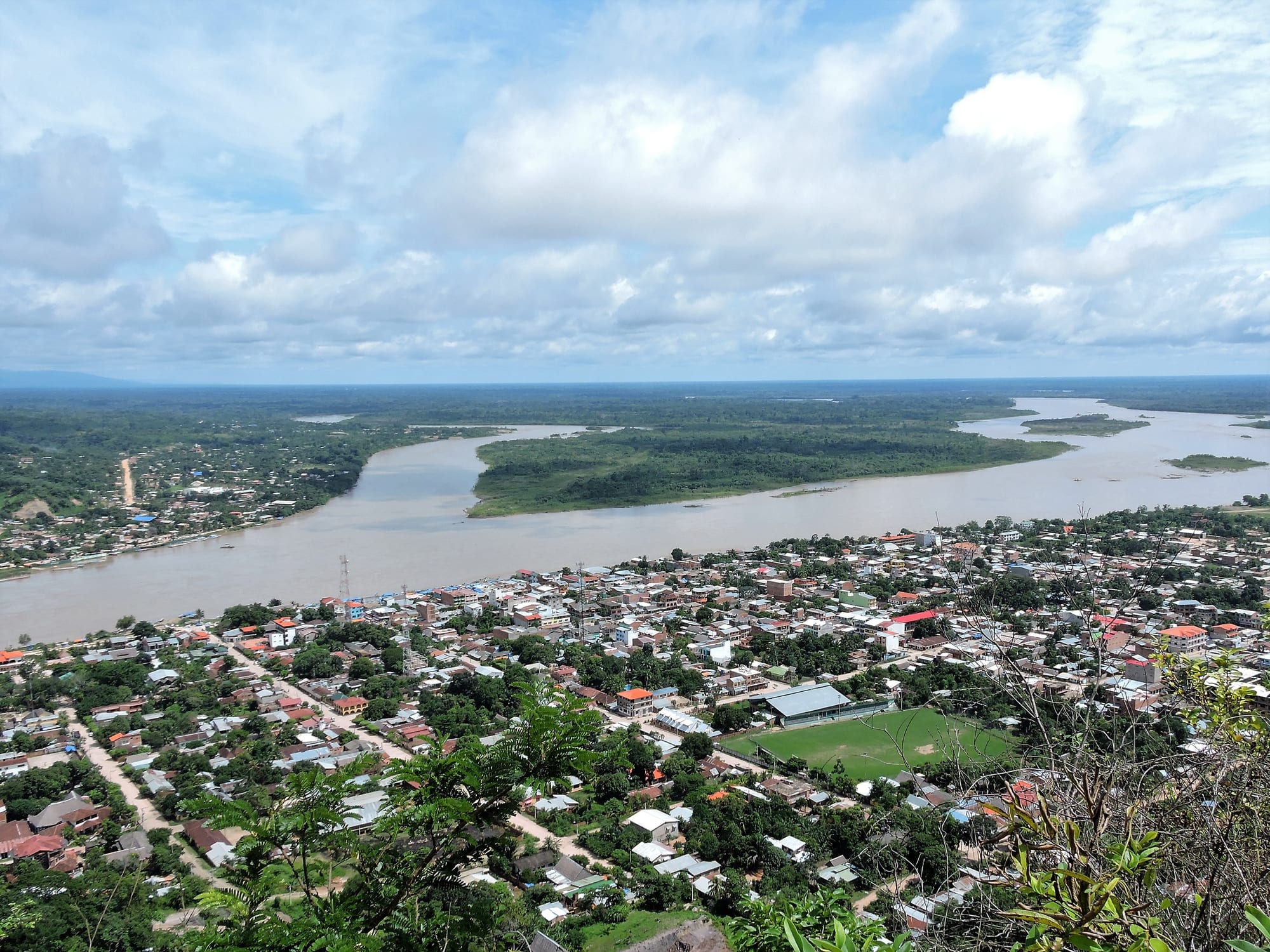
The town is small and walkable. Everything beyond it is reached by boat: motorised canoes run up the Beni and Tuichi into Madidi, while pampas trips start with a road journey east to the Yacuma. Water taxis also cross the river to San Buenaventura.
Agree tour details — boat, guide, meals and park fees — in writing before paying.
🛬 Airport & Station Connections
Rurrenabaque Airport is about 2 km north-east of town, with flights from La Paz taking 45 minutes to an hour; low cloud, heavy rain and smoke from forest fires often cause delays. Reyes Airport, about 32 km away, is a back-up when the weather is poor. By road the trip from La Paz is about 410 km and takes 14–18 hours by bus.
🚶 Walkability
The whole town can be crossed on foot in a few minutes, on flat streets between the river and the hills, though the heat makes the middle of the day tiring. The La Cruz viewpoint is a climb above the town.
🛡️ Safety
Violent crime against tourists is relatively low, but manage the risks: fake-taxi and fake-police scams and express robberies occur in La Paz, Cochabamba, and on the Uyuni and Copacabana routes, and petty theft is common on overnight buses and in markets. Rurrenabaque is a small, quiet town. The risks lie mostly on tours: there have been reports of theft and of mistreatment by some guides, and some guides handle snakes and other wild animals. Dengue, malaria, yellow fever and other mosquito-borne diseases are present, and smoke from forest fires can delay flights in the dry season.
Use insect repellent, get a yellow fever vaccination, and choose river operators that do not handle wildlife. Check current official travel advice before travelling.
🌦️ Climate
Hot and humid all year. Summer, December to February, falls within the rainy season, which runs roughly from December to April and floods the savannas; winter is drier and slightly cooler, with occasional cold surazo winds and smoke from fires late in the season.
- Summer
- hot, humid and wet, typically 28–35°C
- Winter
- drier and warm, about 20–30°C, with occasional cool surazo spells
🤝 Local Customs
The town's customs are shaped by the Tacana and other lowland Indigenous peoples, many of whom live in the communities around it and run community lodges in Madidi. Dress is light and informal, and a greeting on entering a shop or office is expected.
Ask before photographing people in the communities, follow guides' instructions on wildlife, and never feed or touch the animals.
💳 Common Payment Methods
The currency is the boliviano (Bs). There are a couple of cash machines in town, but the national dollar shortage and the floating exchange rate since June 2026 make cards unreliable. Bring enough cash for tours and park fees from La Paz.