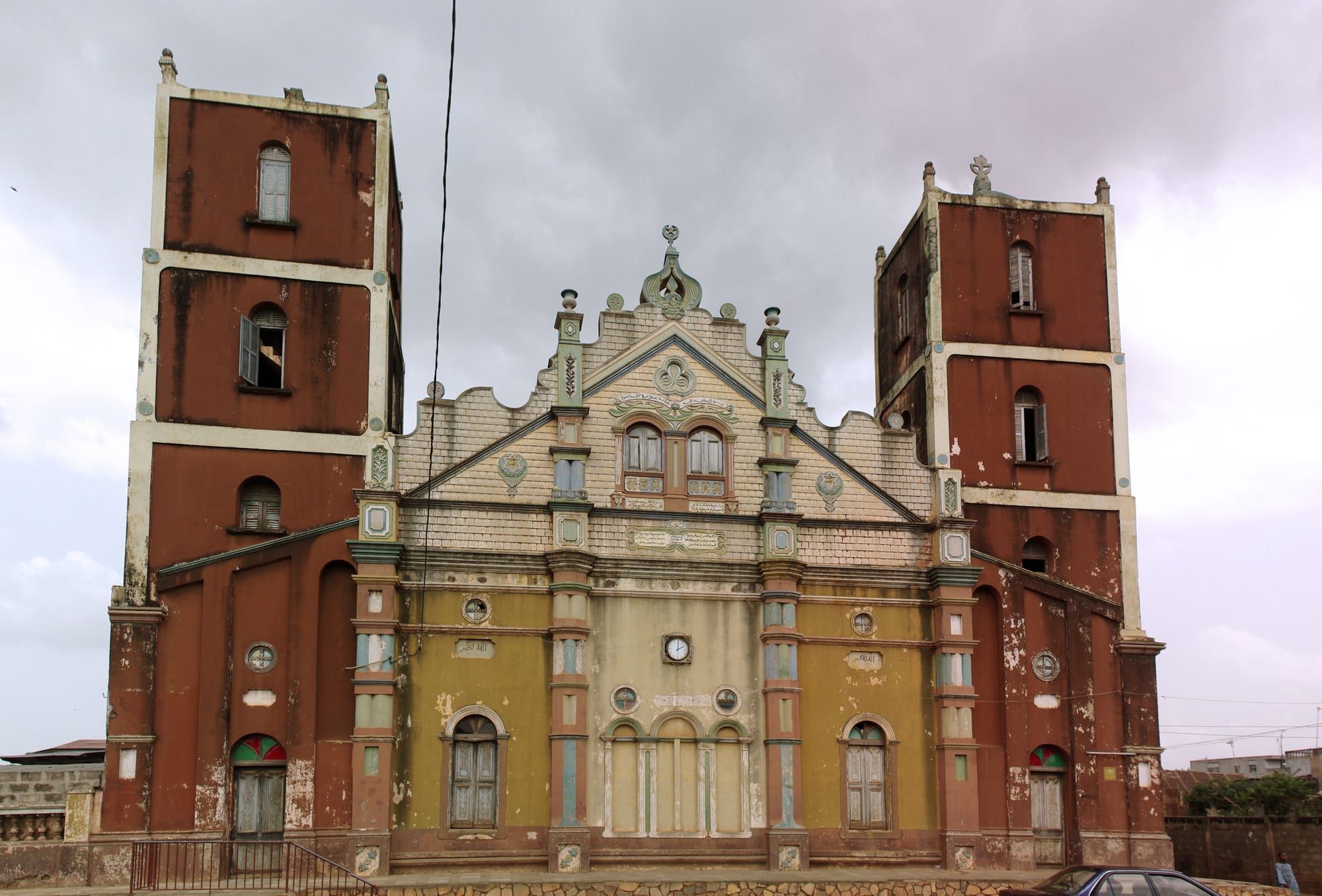
The tall stuccoed facade and two square towers of a mosque built in Brazilian church style, painted red, ochre and cream

Cotonou, Ouidah & the South, Benin

Porto-Novo

The Great Mosque of Porto-Novo, built in the Afro-Brazilian style brought back by returnees from Brazil. (Babylas / Wikimedia Commons · CC BY-SA 3.0)

Benin's official capital, set on a lagoon inlet in the south-east near the Nigerian border. Founded as a Gun kingdom and named by Portuguese traders, it accepted French protection in the 19th century and became the colonial capital. It keeps the national assembly, a royal palace museum, museums and streets of Afro-Brazilian houses, while government business has moved to Cotonou.

Neighbourhoods

  • The old town and palace quarter
    • First-time visitors
    • Historic district
    • Museums

    The compact centre north of the lagoon, holding the royal palace museum, the ethnographic collection, the Great Mosque and streets of 19th-century Afro-Brazilian merchant houses with shutters and plaster ornament. Most of what visitors come for is within a short walk.

    Open in Maps
  • The lagoon shore
    • Local life
    • Markets
    • Photography

    The waterfront where pirogues unload fish and firewood from the Ouémé delta and Lake Nokoué. Stilt structures, landing stages and fish smokers line the bank, and the road along it carries the traffic towards Cotonou.

    Open in Maps
  • The administrative quarter
    • Architecture
    • Quiet and residential

    The part of town laid out under French rule around the national assembly, ministries and old colonial offices, with wide streets, mature trees and public gardens. It is calm and low-rise, and busiest on weekday mornings.

    Open in Maps
  • Ouando and the eastern quarters
    • Markets
    • Local life

    Residential districts spreading east towards Adjarra and the Nigerian border road, built around a large market and busy with cross-border trade. The atmosphere is that of a working provincial town rather than a capital.

    Open in Maps

Things to do

Palaces and museums

  • Royal Palace (Musée Honmè)museum

    The former residence of King Toffa, now a museum of the Gun royal court, with displays on the king's period and the courtyards of the old palace.

    Open in Maps
  • Alexandre Sènou Adandé Ethnographic Museummuseum

    The town's ethnographic collection, established in 1957, known above all for its large holding of Yoruba masks and for items on the history of the city and of Benin.

    Open in Maps
  • Da Silva Museummuseum

    A private museum opened in 1998 in an Afro-Brazilian merchant house of 1890 between the lagoon and the cathedral, devoted to Afro-Brazilian heritage and the memory of the slave trade.

    Open in Maps

Religious architecture

  • Great Mosque of Porto-Novolandmark

    A mosque built between 1912 and 1925 in Afro-Brazilian style, laid out like a chapel with a long central hall and a stuccoed facade of floral and scrolled mouldings.

    Open in Maps

Gardens and the water

  • Jardin Place Jean Bayolpark

    A large open plaza in the centre of town, planted and shaded, with a statue of the first king of Porto-Novo at its heart.

    Open in Maps
  • Songhai Centreattraction

    An agro-ecological farm and training centre at Ouando, founded in 1985 on one hectare and grown to more than 22, where crops and livestock are raised and processed on site and farmers from across Africa come to train.

    Open in Maps
  • Ouémé Riverattraction

    A river of about 510 km, which rises in the Atakora Mountains and comes down to a broad delta of creeks and floodplain villages just north and east of the town.

    Open in Maps

Markets and nearby towns

  • Adjarramarket

    A neighbouring commune just north-east of the town, with about 97,000 people at the 2013 census, whose market is a common outing from Porto-Novo.

    Open in Maps

Short trips from the city

  • Cotonouattraction

    Benin's largest city and economic capital, with the Dantokpa market, the port, the beach and the country's main airport.

    Open in Maps
  • Ganviéattraction

    A town of stilt houses standing in Lake Nokoué, founded by Tofinu people escaping Dahomey's slave raids and reached by pirogue.

    Open in Maps
  • Ouidahattraction

    The old slave port and centre of Vodun on the coast west of Cotonou, with a Portuguese fort museum, a python temple and the Slave Route to the beach.

    Open in Maps
  • Kétouattraction

    The seat of an old Yoruba kingdom north of Porto-Novo, founded from Ilé-Ifẹ̀ by tradition and still headed by a ruler titled the Alákétu.

    Open in Maps

Seasonal events

  • Vodun DaysJanuary

    The national Vodun holiday on 10 January is a public holiday here as across Benin, with ceremonies, drumming and masked processions in the quarters, though the largest gathering is at Ouidah.

  • Egungun and Zangbeto masqueradesdry season, roughly December to April

    Masked processions of the Yoruba-derived Egungun and the raffia-covered Zangbeto night guardians belong to family and community occasions, most often held in the drier months.

  • Independence DayAugust

    Benin marks independence from France on 1 August, observed in the official capital with ceremonies at the national assembly and public buildings.

Eat and drink

Long-standing places and food districts in Porto-Novo. Hours, ratings and directions come from your maps app, always current.

Markets and street food

  • Ouando marketmarket

    The town's largest market, selling fish from the lagoon and the delta, maize, gari, peppers, palm oil and cooked food to traders through the day.

    Open in Maps
  • Street stalls of the old townmarket

    Morning stalls fry akara bean fritters and sell ablo, soft steamed maize cakes, with roasted groundnuts, fried plantain and fresh pineapple sold along the main streets.

    Open in Maps

Kitchens and bars

  • Maquis of the town centreneighborhood

    Open-air eateries serving grilled fish and chicken with pepper sauce, akassa and amiwo, with beer, palm wine and music in the evening.

    Open in Maps
  • Lagoon fish kitchensneighborhood

    Simple places near the waterfront cooking tilapia, catfish and shrimp from the Ouémé delta, smoked or grilled and served with gari or maize dough.

    Open in Maps

Experience Porto-Novo

History

Porto-Novo is Hogbonu in Gun and Àjàṣẹ́ in Yoruba, and its kingdom was founded by a branch of the royal line of Allada that moved east to the lagoon in the 16th or 17th century. The site was good for trade: a sheltered inlet connected by creeks to Lake Nokoué, the Ouémé delta and the sea, within reach of the Yoruba towns inland. Portuguese traders gave it the name New Port and used it as an outlet for the slave trade, and Brazilian merchants and, later, formerly enslaved people returning from Brazil settled in the town.

Squeezed between Dahomey to the west and British-held Lagos to the east, the kingdom looked for a protector. After a British bombardment, Porto-Novo accepted French protection in 1863, and by 1900 it was the capital of French Dahomey. The French built their administration here while the wharf and then the port at Cotonou took the commerce, a division that has never gone away.

At independence in 1960 Porto-Novo kept the status of capital, and the national assembly still sits here, but the ministries, embassies and the seat of government remained in Cotonou. The town has therefore aged slowly: colonial offices, the old Afro-Brazilian merchant houses, the royal palace and the mosque survive in a low-rise centre that has not been rebuilt. Restoration projects have worked on parts of the historic fabric, and the town promotes itself as Benin's centre of heritage and museums rather than of business.

Culture & Customs

Porto-Novo sits where Gun, Yoruba and Fon worlds meet, and all three are audible in its streets along with French. Yoruba influence is strong: the Egungun masquerades, in which masked figures representing the ancestors move through the quarters accompanied by drums and attendants who keep the crowd at a distance, come from that tradition, while the raffia-covered Zangbeto, the night guardians of Gun communities, are the town's own. Vodun, Islam and Christianity are all practised openly, often within the same family.

The Agudá, descendants of Brazilian traders and of returnees from Brazil, shaped the town's appearance and its calendar. They brought the craft of the master builders who raised the Great Mosque and the merchant houses with their pilasters and shutters, kept Portuguese surnames such as da Silva, de Souza and Paraíso, and celebrate the Bourian masquerade, a Brazilian-derived carnival with a horse figure and brass instruments.

As a royal town, Porto-Novo kept its own kings until the death of the last of them in 1976, and palace ritual, drumming and funerals of note still draw large crowds. The town is also a centre of education and of the arts, with a long-running tradition of museums and cultural centres and a reputation among Beninese for being conservative, literate and slow-moving — a place, as residents put it, where the capital's status is honoured more than it is used.

Daily Life

About 264,000 people lived in the commune at the 2013 census, and estimates put it near 300,000 by 2023, making Porto-Novo Benin's second city but a fraction of the size of the Cotonou urban area. Many residents work in Cotonou, and the road between the two carries a heavy daily commute.

Work here is administration, education and trade. The national assembly, the prefecture of Ouémé and the public services employ a large share of formal workers; schools and teacher training add more. Everything else turns on markets and cross-border business with Nigeria, whose frontier is about 12 kilometres east: cloth, food, fuel and manufactured goods move both ways, much of it informally, and Nigerian price swings are felt quickly in local shops. Fishing in the lagoon and the Ouémé delta and farming on the plateau supply the markets.

The rhythm is provincial. Mornings are for the market and the offices, the middle of the day is hot and quiet, and evenings gather at the maquis, in churches and mosques and around televised football. Flooding in the rainy season, the state of the older buildings, unemployment among young people and the pull of Cotonou are the town's running concerns.

Food

Porto-Novo eats maize, cassava and fish, with a Yoruba accent that sets it a little apart from the rest of southern Benin. The everyday starch is akassa, fermented maize dough wrapped in leaves, or amiwo, maize dough cooked in a tomato and palm-oil stock and served with chicken or fish. Sauces are built on tomato, okra, groundnut, leafy greens or the pungent fermented néré seed, and fish comes fresh, smoked or dried from the lagoon and the Ouémé delta — tilapia, catfish and shrimp.

Yoruba dishes are part of the repertoire: ata sauces heavy with chilli, moin-moin, a steamed pudding of ground cowpeas, and rice and bean dishes of the kind eaten across the border. Akara, fried cowpea fritters, are a morning staple; ablo, steamed maize and rice cakes, are eaten with fried fish and pepper sauce; and gari, coarse cassava meal, is soaked with sugar or cooked with tomato and egg.

The Agudá kept Brazilian-derived dishes for feast days, and coconut sweets and bean stews still appear at family occasions. Palm wine from the plateau is drunk fresh and distilled into sodabi; bissap, from hibiscus flowers, and pineapple juice are the usual soft drinks, and the town's bakeries turn out French bread every morning.

Planning tools

Budget

Porto-Novo is inexpensive and cheaper than Cotonou. Hotels are simple and few, market and maquis food costs little, and museum entry with a guide is the main sightseeing expense. Many visitors come for the day from Cotonou, so the biggest single cost is usually the car with driver or the shared taxi that brings them.

Daily Budget Midrange
USD 80–170 (comfortable hotel, restaurant meals, a car with driver, museum entry and guides)
Daily Budget Shoestring
USD 25–45 (basic hotel or guesthouse, market and street food, zemidjan and shared taxis)

Bring CFA francs in cash; cash machines are limited and cards are accepted almost nowhere outside a couple of hotels.

Best Time to Visit

November to March is the driest and most comfortable period, and the season for masquerades and family ceremonies. The long rains from April to July flood low-lying streets near the lagoon, and a shorter wet spell returns in September and October, when the delta is high.

Suggested Number of Days

The museums and the old quarter fit comfortably into a day, which is how most visitors see the town. Two or three days allow the lagoon, the delta villages and the market towns along the border road as well.

First Visit
1 day
With Surroundings
2–3 days

Transportation

Zemidjan motorcycle taxis are the usual way to move around, with shared taxis and minibuses for longer runs to Cotonou, Adjarra and the Nigerian border. There is no urban bus network of use to visitors, and the town is small enough that rides are short. Hired cars normally come with a driver.

Agree the fare with a zemidjan rider before setting off, and allow extra time on the Cotonou road, which is slow at the start and end of the day.

Airport & Station Connections

Porto-Novo lies about 30 km east of Cotonou, an hour or so by road depending on traffic, and shared taxis and minibuses run the route constantly. The nearest airport is Cadjehoun in Cotonou. The road east reaches the Nigerian border at Sèmè-Kraké in about 12 km and continues to Lagos; there is no passenger rail service.

Walkability

The old town is flat, compact and pleasant to walk: the palace museum, the ethnographic museum, the Great Mosque and the old Afro-Brazilian houses stand within a few hundred metres of one another. Pavements are patchy and traffic is dense on the main through roads, and the outer quarters and the market are far enough apart to need a motorcycle taxi.

Safety

Porto-Novo is quiet, and the security warnings that apply to Benin's far north are hundreds of kilometres away. The practical risks are petty theft in the markets and after dark, road accidents involving motorcycle taxis and lorries on the Cotonou and border roads, and flooding in the rainy season. Shrines, palaces and ceremonies have their own rules on entry and photography.

Wear a helmet on zémidjan where one is offered, swim only where locals do and in calm conditions, and ask before photographing shrines or ceremonies. Keep valuables out of sight in the market and after dark, avoid road travel after nightfall, and ask before photographing government buildings. Check current official travel advice before travelling.

Climate

Hot and humid all year, slightly less breezy than the open coast, with two rainy seasons — a long one from about April to July and a shorter one in September and October. Temperatures generally sit between about 24°C and 33°C.

Summer
wet and humid from April to July, around 24–30°C, with heavy storms and flooding near the lagoon
Winter
drier and hotter from December to March, around 27–33°C, hazy in the Harmattan

Local Customs

Porto-Novo is a royal town as well as an administrative one, and traditional authority is taken seriously: permission is sought before entering palace or shrine spaces, and guides handle introductions. Yoruba and Gun are spoken alongside French, greetings precede any request, and dress in town is modest. Bargaining is normal in the markets, and tips for guides and drivers are appreciated rather than expected.

Ask before photographing people, shrines, masked figures or official buildings, and dress modestly when visiting the mosque or a palace.

Common Payment Methods

The currency is the West African CFA franc, pegged to the euro. Cash is essential: markets, motorcycle taxis, museums and small restaurants take nothing else. Cash machines exist but are unreliable, so most visitors draw francs in Cotonou. Nigerian naira circulates informally near the border, and mobile money is widely used by residents.