💰 Budget
Local food, markets and shared minibuses cost very little, but hotels of international standard in the centre and hired cars with drivers are priced well above what the rest of the country suggests. Imported goods are expensive because of currency shortages, and most visitors spend more on transport than on anything else.
- Daily Budget Midrange
- USD 70–140 (better hotel in the centre, hired car with driver, restaurant meals)
- Daily Budget Shoestring
- USD 30–50 (basic hotel, local food, shared minibuses)
Bring US dollars in cash, in newer notes, and agree a daily rate for a car and driver in advance; card payment is rarely reliable.
📅 Best Time to Visit
The long dry season from about June to September has the steadiest weather and the best road conditions, and the shorter dry spell in January and February is a second window. The lakeside heat is constant year-round; the wet months bring heavy afternoon storms that can flood streets and make unpaved roads difficult.
⏳ Suggested Number of Days
Two days are enough for the city itself, which is small and quickly covered. Three or four allow the lake shore south of the city and the wetlands north of it to be added. Road conditions and the time taken to arrange a vehicle are what usually stretch a stay.
- First Visit
- 2 days
- With Surroundings
- 3–4 days
🚆 Transportation
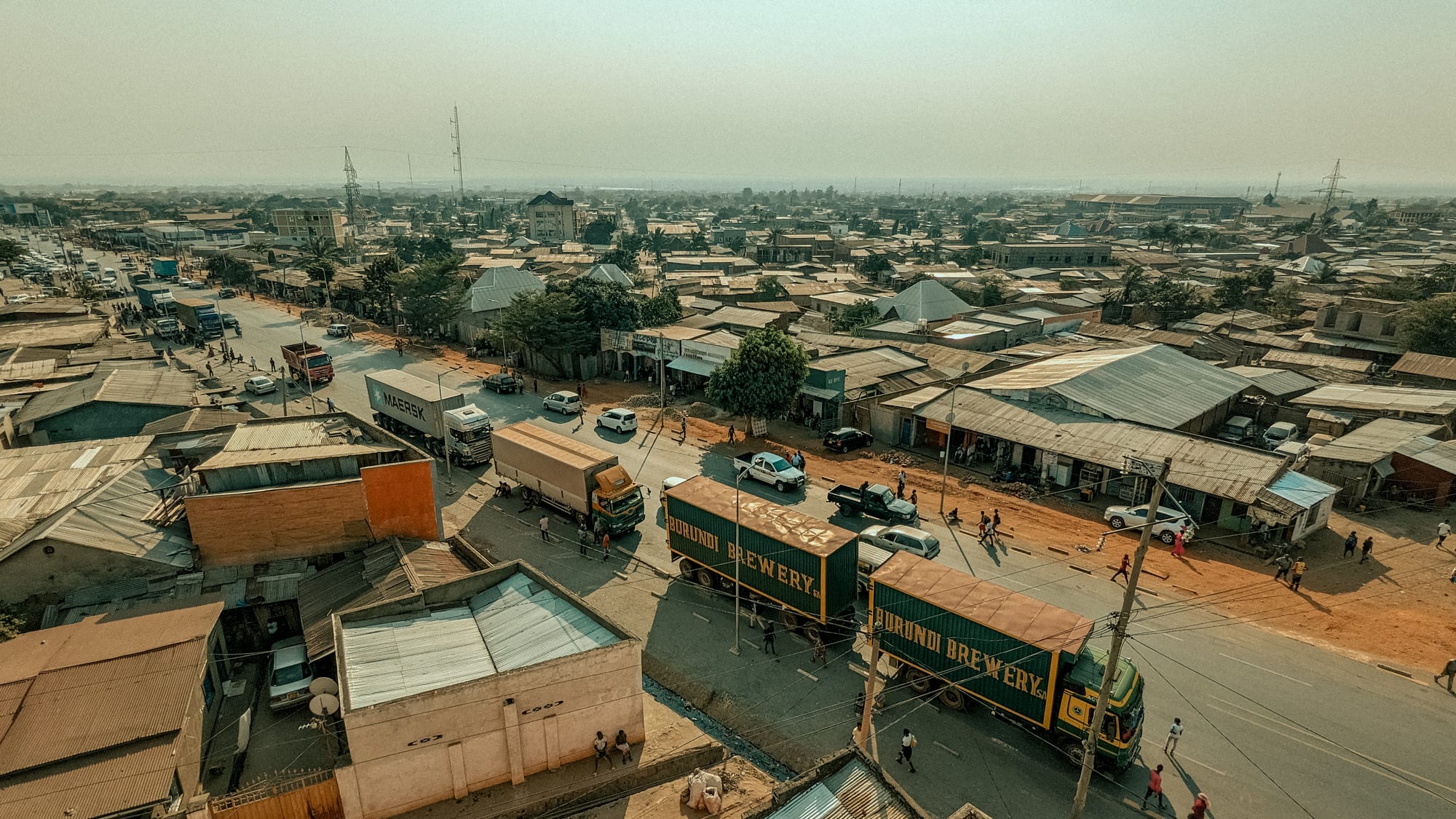
Shared minibuses and taxis cover the city on fixed routes, with motorcycle taxis and bicycle taxis common in the outer quarters, though restrictions on two-wheeled transport in central areas have been applied at times. Most visitors use a hired car with a driver. Traffic is heaviest on the roads north and east out of the centre.
Agree taxi fares before setting off, and allow extra time in the rainy season, when storms flood parts of the plain.
🛬 Airport & Station Connections
Melchior Ndadaye International Airport, about 10 kilometres north of the centre and renamed in 2019 after the president assassinated in 1993, is the country's main airport, with mostly regional connections. Roads run east to Gitega and south along the lake; the land borders with Rwanda have been closed since January 2024. The port, the largest on Lake Tanganyika, mainly handles cargo.
🚶 Walkability
The central grid is flat, shaded and walkable, and the distance from the main avenues to the lake is short. Beyond the centre, pavements give out, traffic is heavy and the hills are steep, so walking is uncomfortable in the heat and the humidity of the plain. Walking after dark is generally avoided.
🛡️ Safety
Burundi has been calmer since the crisis of 2015, but the political situation is tightly controlled and several governments advise caution or against non-essential travel. Petty crime, including bag snatching and theft from vehicles, occurs in Bujumbura, and there have been incidents in rural areas and near the borders with the DR Congo, where the conflict in the east escalated through 2025. Security-force checkpoints are routine.
Political gatherings should be avoided, along with any photography of government buildings, the airport, or military and police, and the western border zone should be kept well clear of. Check current official travel advice before travelling.
🌦️ Climate
Hot and humid by the standards of Burundi, because the city sits low on the lake shore rather than in the highlands. Temperatures vary little through the year; what changes is the rain, with a long dry season from about June to September and a wet season the rest of the year broken by a drier spell early in the calendar year.
- Summer
- hot and humid all year, typically about 28–32°C by day, with heavy afternoon storms in the wet months
- Winter
- the dry season from June to September is a little cooler and much clearer, about 27–30°C by day with warm nights and dusty air
🤝 Local Customs
Greetings are formal and unhurried, and long exchanges of good wishes come before business. Kirundi is the everyday language, French the language of offices, and Swahili common in trade and in the eastern quarters. Dress is neat and modest, and the political situation is not a subject for casual conversation with strangers.
Ask before photographing people, and never photograph soldiers, police, checkpoints, the airport or government buildings; tipping is not expected but small amounts are appreciated in restaurants.
💳 Common Payment Methods
The currency is the Burundian franc. This is a cash economy: cards are accepted only in a few hotels, cash machines are unreliable for foreign cards, and hard currency is scarce. US dollars in good condition are the practical thing to bring, changed at banks or bureaux in the centre.