💰 Budget
There is almost no tourist economy, which keeps some things cheap and makes others awkward: hotel choice in the capital is small and prices are higher than local incomes suggest, while market food, street meals and shared taxis cost very little. A hired car with a driver for a day around the island, and guides for the Karthala climb, are the main discretionary expenses.
- Daily Budget Midrange
- USD 80–160 (small hotel or better guesthouse, restaurant meals, a hired car with driver)
- Daily Budget Shoestring
- USD 35–60 (basic guesthouse, market and street food, shared taxis)
Bring enough euros in cash for the whole stay — ATMs are few and unreliable and cards are rarely accepted outside a couple of hotels.
📅 Best Time to Visit
May to October, the cooler and drier season, is the most comfortable time and the best for walking on Karthala, boat trips and diving. November to April is hot, humid and wet, and coincides with the regional cyclone season, when heavy rain can cut roads on the island.
⏳ Suggested Number of Days
The city itself is small and a day or two covers it. Longer stays are about the island and the country beyond — the volcano, the coasts, and boats or flights to Mohéli and Anjouan, which are unreliable enough that spare days are worth building in.
- First Visit
- 1–2 days
- With Surroundings
- 4–6 days
🚆 Transportation
Shared taxis and minibuses run along the coast roads and between the capital and the island's villages, leaving when full from stands in the city; there are no formal timetables. Taxis within the city are cheap and usually shared unless hired outright. Most visitors use a car with a driver for a day around the island. Roads are narrow and rough in places, and driving after dark is best avoided.
Agree a fare before setting off, and arrange a driver through a hotel or guesthouse rather than on the street.
🛬 Airport & Station Connections
Prince Said Ibrahim International Airport at Hahaya is about 20 km north of the capital, some thirty to forty minutes by taxi, with a handful of international flights from East Africa and the Indian Ocean islands. Passenger boats and small aircraft link Grande Comore with Anjouan and Mohéli, both weather-dependent and frequently delayed or cancelled.
🚶 Walkability
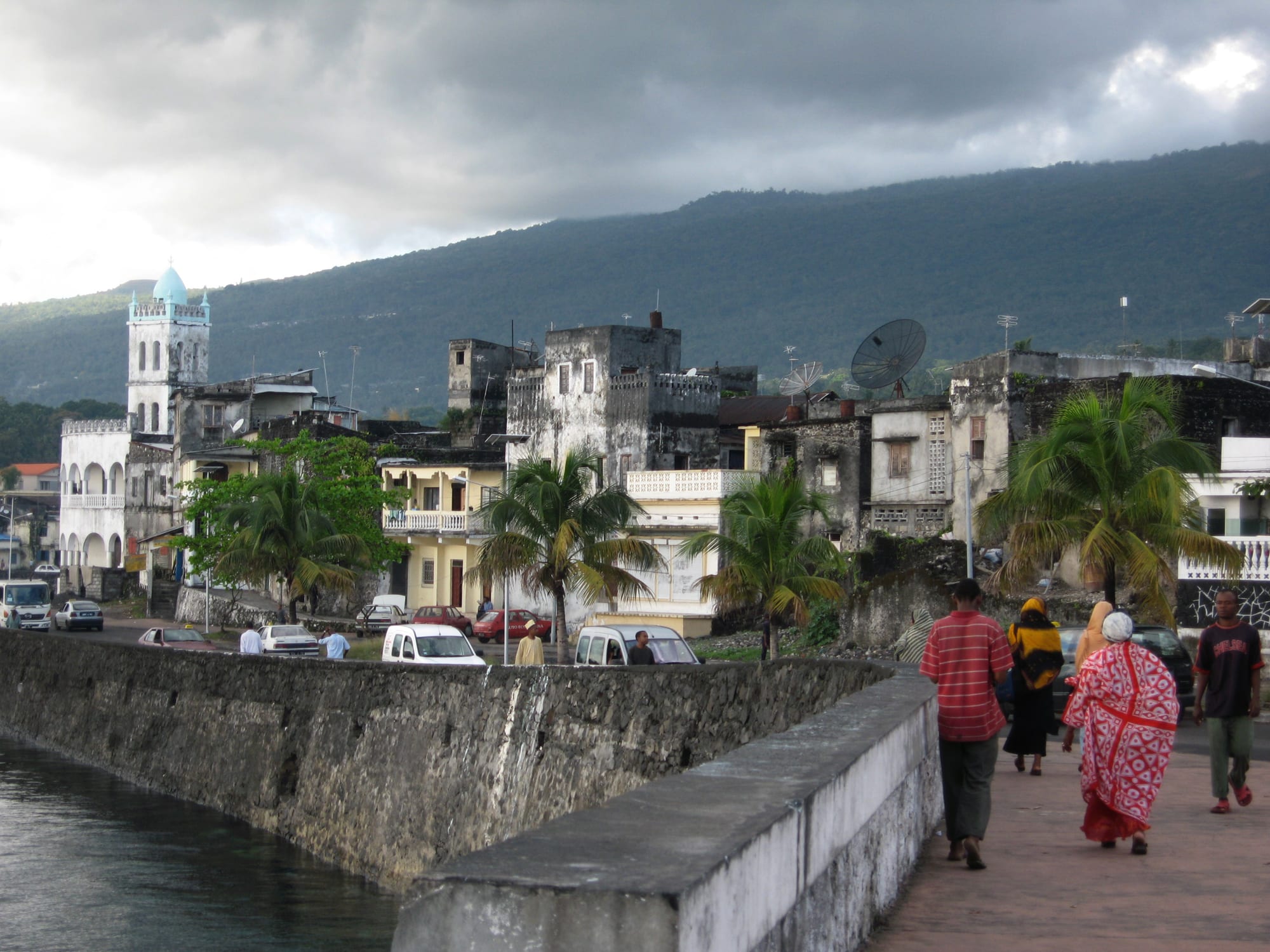
The centre is easily walked: the medina, the port, the old mosque and the administrative streets are within a few hundred metres of each other, although the medina's lanes are narrow, uneven and easy to lose direction in. Beyond the centre the city climbs and spreads over old lava, pavements are patchy, and the heat and humidity make longer walks tiring.
🛡️ Safety
Violent crime is uncommon and casual visitors rarely have trouble, but petty theft occurs in Moroni, particularly around the market and the port. The country's politics are volatile, and demonstrations, election periods and security operations can flare with little notice. Sea crossings on small, overloaded boats are a genuine risk, and the Karthala climb needs a guide and proper preparation.
Avoid political demonstrations, don't photograph government or military sites, and choose reputable operators for boat transfers and the Karthala climb. Check current official travel advice before travelling.
🌦️ Climate
Tropical maritime, with a hot, humid, wet season from about November to April that coincides with the wider region's cyclone season, and a cooler, drier season from May to October with sea breezes. Coastal temperatures stay around 23–28°C through the year, and the slopes above the city are wetter and cooler than the shore.
- Summer
- the hot, wet months from November to April are around 26–30°C by day, with heavy rain, high humidity and a regional cyclone risk
- Winter
- May to October is drier and cooler, around 23–28°C, and is the usual time for walking and boat trips
🤝 Local Customs
Comorian society is Sunni Muslim and conservative, and Islam sets the rhythm of the day and the week; Friday prayers empty the streets around midday. Dress modestly, with shoulders and knees covered away from the beach, and expect greetings and small talk before any transaction. Shikomori is the everyday language, French is used in administration and Arabic in religious life. Public drinking is frowned upon.
Ask before photographing people, and do not photograph inside mosques, at the airport, or near government and military buildings; remove shoes where required and avoid eating in public during daylight in Ramadan.
💳 Common Payment Methods
The currency is the Comorian franc (KMF), pegged to the euro at about 492 to one, and it is hard to obtain outside the country, so euros in cash are brought in and changed on arrival. This is a cash economy: cards are accepted at only a few hotels, ATMs are few and not always working, and small notes are useful for taxis, the market and street food.