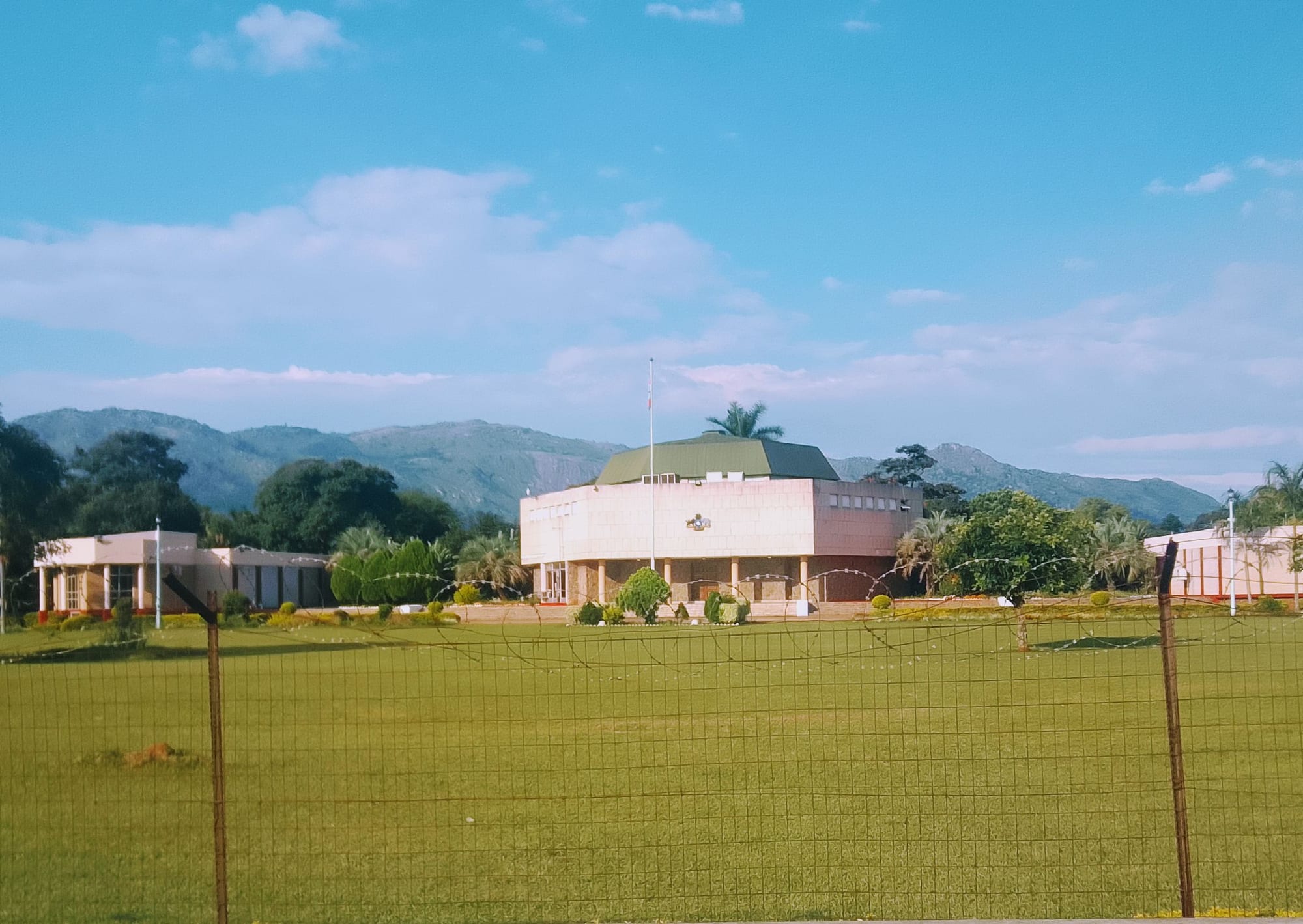
The low white parliament building of Eswatini standing on mown lawns at Lobamba, with green hills behind under a blue sky

Eswatini

Lobamba

The Parliament of Eswatini at Lobamba, below the hills of the Ezulwini valley. (ZS Khumalo / Wikimedia Commons · CC BY-SA 4.0)

The royal and legislative seat of Eswatini, in the Ezulwini valley between Mbabane and Manzini. Parliament, the national stadium and the national museum stand within a few hundred metres of one another, and the queen mother's residence at Ludzidzini nearby is the setting for the kingdom's two great annual ceremonies.

Neighbourhoods

  • The national precinct
    • First-time visitors
    • History
    • Sport

    The open ground on the valley floor where parliament, the national museum, the memorial park to King Sobhuza II and the Somhlolo National Stadium stand close together. It is a formal, spacious place of lawns and flagpoles rather than a built-up centre.

    Open in Maps
  • Ludzidzini
    • Traditional life
    • Ceremonies

    The royal village that holds the residence of the Ndlovukati, the queen mother, and the cattle byre and arena used for the Incwala and the Umhlanga. It is a working royal homestead, not an attraction, and is visited with respect and at the right moments of the year.

    Open in Maps
  • The Ezulwini valley
    • Accommodation
    • Best for food
    • Crafts

    The stretch of valley running north-west from Lobamba towards Mbabane, where most of the area's lodges, restaurants, craft workshops and markets are found, along with the Mantenga cultural village.

    Open in Maps
  • Malkerns side
    • Quiet and residential
    • Crafts
    • Music

    South of the village, the farming valley of pineapple fields and craft studios around Malkerns, an arts and crafts centre and the home of the House on Fire venue.

    Open in Maps

Things to do

The royal and national sites

  • Parliament of Eswatinilandmark

    The kingdom's two-chamber legislature, established in 1967, whose buildings stand on the valley floor; the building is occasionally open to visitors.

    Open in Maps
  • National Museum of Eswatinimuseum

    The national museum beside parliament, built in 1972, with Swazi artefacts, historical photographs, a natural history wing and a recreated Swazi homestead in the grounds.

    Open in Maps
  • King Sobhuza II Memorial Parkattraction

    A memorial park to Sobhuza II, who reigned from 1899 to 1982 and led the country to independence in 1968, holding his mausoleum and an exhibition of photographs of his life.

    Open in Maps
  • Somhlolo National Stadiumattraction

    The national stadium, built in 1968 and the largest in the country, used for football, rugby and athletics.

    Open in Maps
  • Ludzidzini Royal Villageattraction

    The queen mother's residence and the ceremonial arena a short way from the national precinct, where the Incwala and the closing days of the Umhlanga take place.

    Open in Maps

Reserves and falls nearby

  • Mlilwane Wildlife Sanctuarypark

    Eswatini's oldest protected area, established in 1964 on former farming and tin-mining land just outside the village, where zebra, antelope and hippo can be seen on foot, by mountain bike or on horseback.

    Open in Maps
  • Mantenga Cultural Villageattraction

    A Swazi cultural village in the Ezulwini valley, run by the Eswatini National Trust Commission, where traditional homestead life is shown to visitors.

    Open in Maps

Short trips from the village

  • Mbabaneneighborhood

    The executive capital and largest city, about 16 kilometres up the valley, with shopping plazas, banks and government offices.

    Open in Maps
  • Malkernsneighborhood

    A farming town of pineapple fields and craft workshops about seven kilometres south of the village, and the setting of the House on Fire venue.

    Open in Maps
  • Manzinineighborhood

    The commercial centre of Eswatini, known as "The Hub", a short drive east along the main road.

    Open in Maps
  • Ngwenya Minelandmark

    An iron ore working on Bomvu Ridge where haematite was dug in the Stone Age at the Lion Cavern, considered the oldest known mine in the world.

    Open in Maps

Seasonal events

  • IncwalaDecember to January

    The kingship ceremony of the Swazi year, held at Ludzidzini around the summer solstice, with public parts in which every Swazi may take part.

  • Umhlangalate August or early September

    The Reed Dance, in which tens of thousands of young women cut reeds and carry them to the queen mother's residence at Ludzidzini across eight days of song and dance.

  • Somhlolo DaySeptember

    Independence Day, 6 September, the anniversary of independence in 1968, which was proclaimed at a cattle byre in Lobamba.

  • MTN BushfireMay

    A three-day music and arts festival staged at the House on Fire venue in the neighbouring Malkerns valley, drawing performers from across southern Africa and beyond.

Eat and drink

Long-standing places and food districts in Lobamba. Hours, ratings and directions come from your maps app, always current.

Around the valley

  • The Ezulwini valley roadneighborhood

    Lodges, grills and roadside restaurants along the valley between Lobamba and Mbabane, serving Swazi dishes, braai meat and the Portuguese-influenced seafood that comes up from Mozambique.

    Open in Maps
  • Malkerns valley kitchensneighborhood

    Farm and craft-centre cafés among the pineapple fields, several attached to workshops and to the House on Fire venue.

    Open in Maps

Markets and stalls

  • Ezulwini craft and produce marketsmarket

    Roadside markets and the Ezulwini Handicrafts Centre, selling basketry, carvings and cloth alongside fruit and groundnuts, with roasted maize and meat cooked at the stalls.

    Open in Maps

Experience Lobamba

History

Lobamba's importance is dynastic rather than commercial. The name was first borne by an older royal settlement, Old Lobamba, established in 1750 in the south of the country; the present Lobamba was created by Sobhuza II, and with Ludzidzini it became the seat of the Ngwenyama, the king, and the Ndlovukati, the queen mother, whose dual monarchy is the foundation of the Swazi state. The king now lives at Lozitha Palace, about ten kilometres away, but the royal kraal and parade ground at Ludzidzini remain the ceremonial heart of the country.

Under British protection in the twentieth century the administration was run from Mbabane on the escarpment above, while the monarchy kept its own seat here — a division that survived independence. King Sobhuza II, who came to the throne as a child in 1899 and reigned until 1982, spent much of that long reign consolidating royal authority and pressing for the return of land taken by settlers, and it was at a cattle byre in Lobamba that Prince Makhosini, the first prime minister, announced independence on 6 September 1968.

Independence gave the village its modern shape. The Somhlolo National Stadium (1968), the national museum (1972), the houses of parliament and a memorial park to Sobhuza II stand on the valley floor, making Lobamba the legislative capital and the place where the country performs its public life. In 1973 the king annulled the constitution by decree, and parliament has sat since under a system in which the monarch holds ultimate power; the pro-democracy protests of 2021 were the latest chapter in a long debate over that settlement.

Culture & Customs

No other place in Eswatini is so closely identified with tradition. The Umhlanga, or Reed Dance, brings tens of thousands of young women to Ludzidzini at the end of August or the start of September, cutting reeds and carrying them to the queen mother's residence over several days of song, procession and dance. The Incwala, around midsummer, is a weeks-long sacred ritual of first fruits and kingship, the most solemn event of the Swazi year, in which the monarch and the nation are renewed. Both are religious and national occasions with strict rules about behaviour, dress and photography; they are not staged for visitors.

Around these, the valley has become the country's cultural showcase in a gentler sense. The national museum holds Swazi artefacts and historical photographs; the cultural village at Mantenga shows traditional homestead life; and craft studios in Ezulwini and Malkerns turn out basketry, carving and woven goods, part of a handcraft industry that employs many women.

Everyday manners in the village follow the same grain: greetings before business, deference to elders and chiefs, neat dress near the royal precinct, and a readiness to explain custom to outsiders who ask politely. Church attendance is high, often alongside ancestral observance, and football at the national stadium draws big crowds.

Daily Life

Lobamba had about 11,000 people in 2006, strung along the valley road rather than gathered into a centre. Households combine small-scale farming and cattle with wages from government offices, the schools and the tourism businesses of the Ezulwini and Malkerns valleys; others commute to Mbabane or Manzini, both within half an hour by minibus taxi.

Much of the land around is Swazi Nation Land, on which most rural Swazis farm, and the homestead — a cluster of houses around a cattle byre — remains the basic unit of family life even where brick has replaced older building. Royal service is part of the local economy in a way found nowhere else: regiments, attendants and workers are called on for ceremonies, and preparations for the Umhlanga and Incwala occupy the village for weeks.

The rhythm of the day is early. Taxis and school children are on the road before seven, offices and the museum open in the morning, and the valley grows quiet in the evening apart from the lodges and bars up the road at Ezulwini. Poverty, youth unemployment and the country's HIV burden are present here as everywhere in Eswatini, tempered by the steadier employment that government and tourism bring to this particular stretch of valley.

Food

Cooking in the valley is Swazi and maize-based. Sishwala, a thick maize porridge, accompanies almost everything: a relish of beans, stewed beef or chicken, or umbidvo wetintsanga, pumpkin leaves cooked with groundnuts. Sidvudvu, pumpkin simmered with maize meal, and incwancwa, a sour porridge of fermented maize, are the older household staples, and emahewu, a drink made from thin fermented porridge, is widely drunk.

Beef matters here more than most places, since cattle are wealth and ceremony, and an animal slaughtered for a feast is shared through the homestead. Roadside grills along the valley sell braai meat, boerewors and chakalaka relish; lodge kitchens and the cultural village serve Swazi dishes to visitors; and the Malkerns valley supplies pineapples, maize and vegetables, with pineapple juice a common drink.

Traditional beer, umcombotsi, belongs to gatherings and ritual rather than to restaurants. Otherwise the drinks are commercial lager, soft drinks made locally, and strong sweet tea taken with bread at almost any hour.

Planning tools

Budget

Lobamba itself has few places to stay, and most visitors sleep in the surrounding Ezulwini and Malkerns valleys, where backpacker lodges and mid-range guesthouses sit close together. Prices track South Africa's because the lilangeni is tied to the rand. Reserve entry, cultural village admission and car hire are the main extras; food from markets and roadside grills costs very little.

Daily Budget Midrange
USD 80–160 (valley lodge or guesthouse, hire car, restaurant meals, reserve fees)
Daily Budget Shoestring
USD 30–55 (backpacker lodge or camping, market and takeaway food, minibus taxis)

Accommodation across the valley fills for the Bushfire festival in May and for the Umhlanga in late August, so book far ahead for those periods.

Best Time to Visit

The dry winter from May to September brings clear, mild days, easy walking in Mlilwane and cold nights. Visitors who want to see the great ceremonies come at the end of August for the Umhlanga or around midsummer for the Incwala, when the valley is hot, green and stormy in the afternoons. May also brings the Bushfire festival next door at Malkerns.

Suggested Number of Days

The national precinct can be seen in a few hours. Two or three days suit visitors who add the reserve, the cultural village and the craft workshops of the two valleys, and anyone timing a visit around a ceremony should allow extra days.

First Visit
1 day
With Surroundings
2–3 days

Transportation

Minibus taxis run along the valley road between Mbabane and Manzini and stop near the national precinct, leaving when full rather than to a timetable; they are cheap but do not reach the reserves or the craft valleys directly. Most visitors have a hire car or use lodge transfers, and some lodges rent bicycles. Driving is on the left.

The main valley road carries fast traffic and has little in the way of pavement, so walking along it after dark is best avoided.

Airport & Station Connections

Lobamba lies on the main road between Mbabane, about 15 kilometres north-west, and Manzini, about 17 kilometres east, so almost everyone arrives by road. King Mswati III International Airport at Sikhuphe, in the east of the country, is the only airport handling commercial flights; the great majority of visitors drive from South Africa, crossing from the Johannesburg road at the Ngwenya border post.

Walkability

The national sites — parliament, the museum, the memorial park and the stadium — stand within a few hundred metres of each other and are easily walked between. Beyond that the village is spread out along a busy road with few pavements, and the lodges, falls and reserves of the valley are several kilometres apart, so getting around generally means a vehicle.

Safety

Eswatini is relatively safe for visitors, with the tourist valleys quiet and welcoming, though petty theft, vehicle crime, and occasional armed robbery occur, more so around Manzini and Mbabane. Political protests since 2021 have at times turned violent and drawn a heavy security response. Eswatini is an absolute monarchy. Around the royal residences a discreet and respectful manner is expected at all times.

Demonstrations and any public criticism of the monarchy are best avoided, valuables should not be left in cars, and photography near royal residences, police and government buildings requires care and, where anyone is unsure, permission. Check current official travel advice before travelling.

Climate

The Ezulwini valley lies lower and warmer than Mbabane on the escarpment above, with rain falling mainly in the hot months from October to March, often as afternoon thunderstorms. Winter is dry and sunny with cool nights. This is the southern hemisphere, so summer runs from December to February and winter from June to August.

Summer
hot and humid — December to February days commonly reach the high 20s °C, with heavy afternoon storms
Winter
dry and mild by day, in the low 20s °C, with cold nights that can fall close to freezing

Local Customs

This is the ceremonial heart of the kingdom and the customs are taken seriously. Modest dress is expected around parliament and the royal village, quiet is kept at ceremonies, and the Umhlanga and Incwala are religious and national events rather than performances for visitors. Photography of the king, of royal residences and of participants at ceremonies is restricted, and instructions from officials on what may be filmed are to be followed exactly.

Greetings come first in any conversation — sawubona in siSwati — and elders are addressed before others. Tipping of about 10 per cent is usual in restaurants, and permission should always be asked before photographing people.

Common Payment Methods

The currency is the Swazi lilangeni (SZL, plural emalangeni), fixed at one to one with the South African rand, which is also accepted in Eswatini. Lodges, larger restaurants and the cultural village take cards, but market stalls, craft sellers and minibus taxis are cash only, and cash machines are found in the larger centres such as Mbabane.