💰 Budget
Apia is inexpensive by Pacific standards. Market food, the local buses and guesthouses cost very little, while imported goods, hotel rooms and hire cars are the main expenses. Prices rise a little during the Teuila Festival and around Independence Day, and many of the town's attractions are free or charge a small village fee.
- Daily Budget Midrange
- USD 110–235 (mid-range hotel or resort, restaurants, a hire car, tours)
- Daily Budget Shoestring
- USD 40–70 (guesthouse or beach fale, market and bakery food, local buses)
Carry small tālā notes for buses, markets and the custom fees charged at natural sites; cards are of little use outside hotels and supermarkets.
📅 Best Time to Visit
May to October is drier, less humid and outside the cyclone season. September brings the Teuila Festival and early June the independence celebrations. The wetter months from November to April are hotter and stickier, with heavy afternoon rain and a cyclone risk.
⏳ Suggested Number of Days
The town itself is small and can be seen in a day or two. Most visitors base themselves in or near Apia for longer and use it for the rest of Upolu, or move on to the south coast and Savai'i; a hire car shortens the time needed.
- First Visit
- 1–2 days
- With Surroundings
- 4–6 days
🚆 Transportation
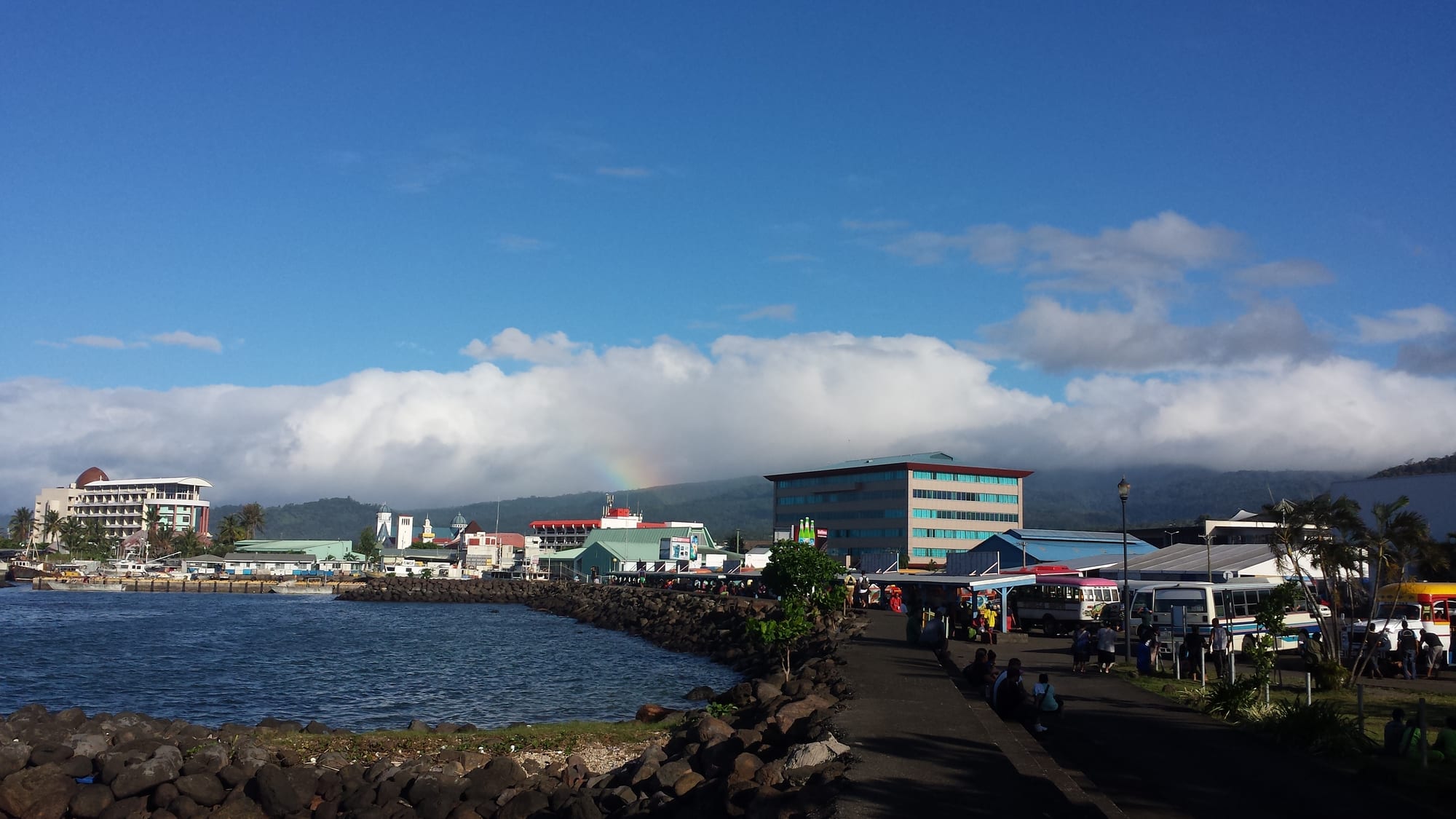
Apia is served by brightly painted wooden-bodied buses that run from the market at Savalalo to villages around Upolu, stopping when waved down and following no timetable. Taxis are plentiful, cheap and unmetered, with the fare agreed first. Hire cars are widely available, and driving is on the left, a change made in 2009.
Buses thin out sharply in the late afternoon and barely run on Sunday, so plan returns from villages early in the day.
🛬 Airport & Station Connections
Faleolo International Airport lies about 40 kilometres west of Apia, roughly an hour by road, with flights from New Zealand, Australia, Fiji and American Samoa. Buses, shuttles and taxis meet arrivals. The Mulifanua ferry terminal for Savai'i is close to the airport, and cruise ships and cargo vessels berth at the wharf in Matautu.
🚶 Walkability
The centre is flat and compact, and the stretch of Beach Road from Mulinu'u past the market and cathedral to the port is an easy walk, though pavements are patchy and shade is scarce in the middle of the day. Anything beyond the harbour front — Vailima, Apia Park, the eastern suburbs — is better reached by bus or taxi in the heat.
🛡️ Safety
Apia is a low-crime town where the main problems for visitors are opportunistic theft from rooms, cars and beach fales, and occasional trouble outside bars late at night. Dogs roaming the streets, uneven pavements and open drains cause more trouble than crime. The serious risks are natural: cyclones and flooding from November to April, and strong currents and sharp reef outside the sheltered lagoon.
Leave valuables locked away, treat a felt earthquake as a reason to move inland or to high ground at once, and swim only where local people swim. Check current official travel advice before travelling.
🌦️ Climate
Tropical, hot and humid all year, with temperatures usually between about 24 and 31°C and heavy rain in the wetter half of the year. Apia sits on the drier, leeward north coast, so the hills behind the town catch far more rain than the waterfront.
- Summer
- the wetter season, December to February in the southern hemisphere — humid, around 31°C by day, with heavy downpours and the main cyclone risk
- Winter
- May to October is the drier, slightly cooler trade-wind season, with days near 29°C and fresher nights
🤝 Local Customs
Sunday is kept for church and rest, and much of Apia closes. In the villages around the town an evening prayer curfew, sa, is signalled by a bell or conch, and people stop where they are until it ends; visitors should do the same. Dress is modest away from resort pools — shoulders covered and shorts to the knee, and always neat clothing in church. Removing shoes before entering a house or fale is expected.
Tipping is not a Samoan custom and is never expected; ask before photographing people, ceremonies or a village, and ask permission before crossing village land or using its beach.
💳 Common Payment Methods
The currency is the Samoan tālā (WST). Cards are accepted at hotels, supermarkets and larger restaurants in Apia, but the market, buses, taxis and family-run places are cash only. ATMs and banks are found along Beach Road and in the shopping streets behind it, and changing money is straightforward in town.