💰 Budget
Nukuʻalofa is inexpensive by Pacific standards for food and local transport, and moderately priced for rooms. Guesthouses are simple and cheap; the few hotels and resorts cost far more. The real outlays are whale-swim trips in season, boat transfers and the domestic flights that reach the other island groups. Almost everything in the shops is imported, which keeps grocery prices high.
- Daily Budget Midrange
- USD 120–260 (small hotel or resort, restaurant meals, boat trips, a whale-swim tour or a domestic flight)
- Daily Budget Shoestring
- USD 50–90 (guesthouse room, market food and bakery meals, minibuses and shared taxis)
Carry paʻanga in cash, as card acceptance is limited outside hotels, and plan meals around Sunday, when shops and most kitchens close.
📅 Best Time to Visit
May to October is the cooler, drier half of the year and the most settled time for boats and diving, and July to October is the humpback whale season. July also brings the Heilala Festival. November to April is hotter and wetter and carries the cyclone risk, which peaks between January and March.
⏳ Suggested Number of Days
Two or three days cover the town itself and a circuit of Tongatapu. Allow four to six to include a boat trip, an island day and slower travel. A whale trip or a flight to another island group needs extra days of slack, since weather and schedules change.
- First Visit
- 2–3 days
- With Surroundings
- 4–6 days
🚆 Transportation
The town is small enough to cross on foot. Minibuses run along the main roads from the central bus station on Vuna Road to the villages of Tongatapu, stopping when flagged down, and thin out in the afternoon. Shared taxis, rental cars and rented bicycles and scooters cover the rest of the island, and boats leave the eastern wharves for the offshore islands, and inter-island ferries sail north.
Almost no public transport runs on Sundays, so arrange a taxi or a hire car in advance for that day; a local driving permit is required for visitors who hire a car.
🛬 Airport & Station Connections
Fuaʻamotu International Airport lies on the south side of Tongatapu, about 35 km from the capital by road, with taxis and hotel transfers meeting flights. Flights arrive from Auckland, Nadi and Suva, with domestic services to the Haʻapai and Vavaʻu groups and ʻEua. Inter-island ferries and the occasional cruise ship use the wharves on the eastern waterfront.
🚶 Walkability
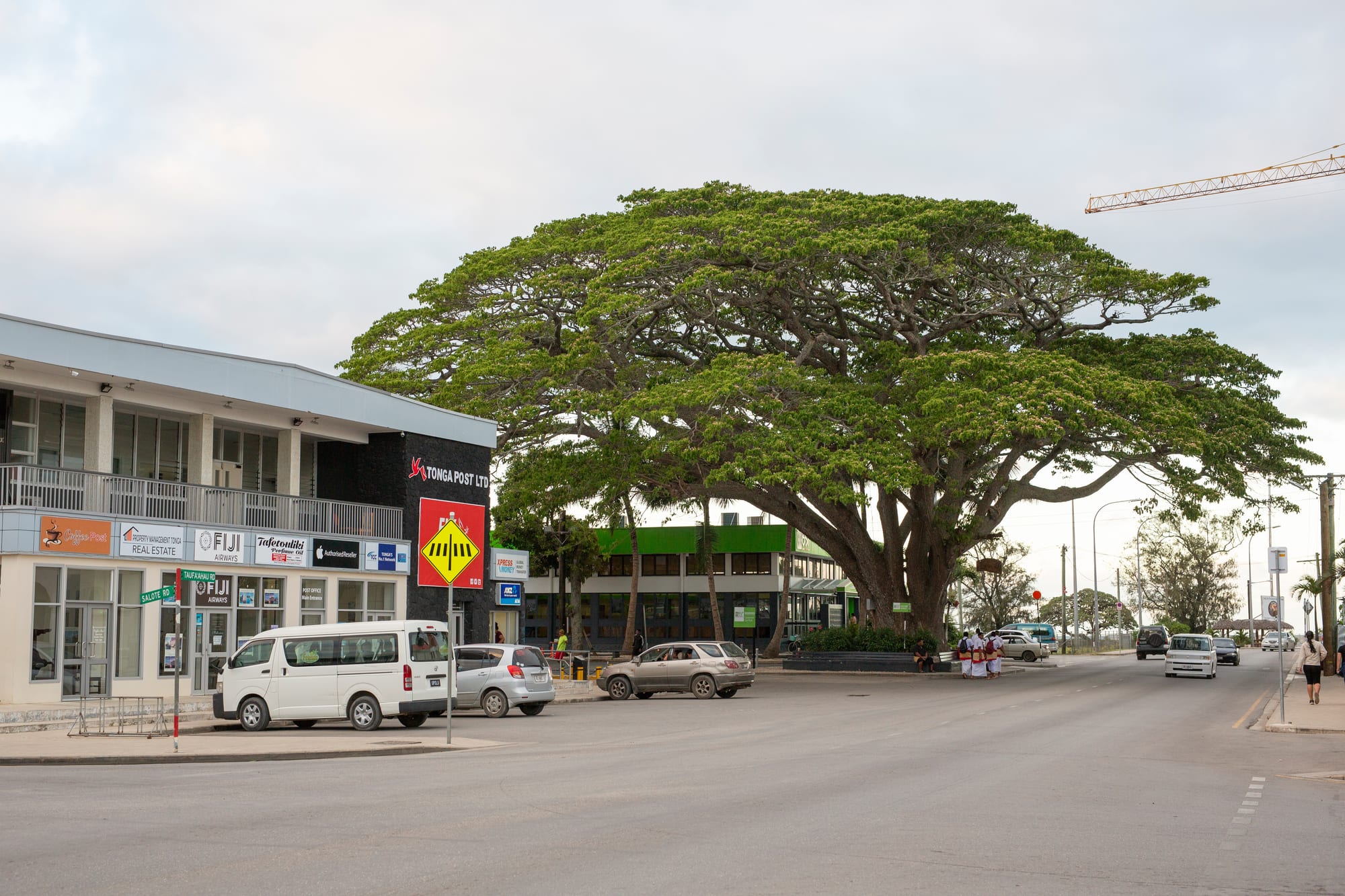
Flat, compact and easy to walk: the centre, the market, the palace grounds and the waterfront are all within about 20 minutes of each other. Footpaths are patchy, drainage ditches run beside some roads, and there is little shade, so walks are best early or late in the day. Anything beyond the town needs a bus, a taxi or a bike.
🛡️ Safety
Crime is low and the town is generally calm, though petty theft and break-ins occur and central Nukuʻalofa saw serious rioting in 2006. Natural hazards matter more: cyclones in the wet season, earthquakes, tsunamis and volcanic activity in the region, including the 2022 Hunga Tonga–Hunga Haʻapai eruption, whose tsunami flooded low-lying parts of the coast. Medical facilities are basic, and strong currents run in the reef passages.
Learn the tsunami warning arrangements and the route inland from the waterfront, follow cyclone advice between November and April, keep valuables out of sight, and carry insurance that covers medical evacuation. Check current official travel advice before travelling.
🌦️ Climate
Tropical and humid, cooled by trade winds, with a warm wet season from November to April and a cooler, drier season from May to October. Rain falls in heavy bursts rather than all day, and tropical cyclones are possible in the wet months.
- Summer
- hot and humid — summer runs December to February in the southern hemisphere, with daytime temperatures around 29 to 31°C, high humidity and the heaviest rain
- Winter
- warm and drier — June to August days are typically around 24 to 26°C, with cooler nights, lower humidity and more wind
🤝 Local Customs
Sunday is kept strictly: shops, offices and most restaurants close, trading is restricted by law, and the town is given over to church and family meals. Dress is modest, and shoulders and knees are covered in town, in churches and in villages; swimwear stays at the beach. Older Tongans wear the taʻovala, a woven waist mat, as formal dress. Kava drinking is a men's social institution in village halls.
Ask before photographing people, church services or funerals, dress modestly for any visit to a church or a village, and avoid loud behaviour and sport in public on Sundays. Tipping is not expected.
💳 Common Payment Methods
The currency is the Tongan paʻanga (TOP). Cash is used for nearly everything; cards are accepted in hotels, some restaurants and larger shops in the capital but rarely elsewhere. Banks and ATMs are in central Nukuʻalofa, and the outer islands have very few, so cash should be drawn before leaving Tongatapu.