💰 Budget
Colonia Tovar is mostly a day or weekend trip from Caracas, and the main cost is getting there safely — usually a private driver for the slow mountain road. Guesthouses and chalets charge in US dollars, and prices rise at weekends and holidays when the town is busiest.
- Daily Budget Midrange
- USD 120–250 (chalet room, restaurant meals, a private driver from Caracas)
- Daily Budget Shoestring
- USD 50–90 (simple guesthouse room, sausages and strawberries from stalls, shared transport where running)
Bring US dollars in small notes, and visit on a weekday to avoid the worst of the weekend traffic.
📅 Best Time to Visit
The dry season from December to April brings more sun and clearer mountain views, though nights are cool. The rest of the year is wetter and mist is frequent, especially at dawn and in the evening. The feast of St Martin in November and the chamber music festivals are the town's main events; security and road conditions matter more than the season.
⏳ Suggested Number of Days
Most visitors come for the day from Caracas. Staying a night makes the long drive less rushed and leaves time for walks in the surrounding forest; weekend traffic adds hours to the journey.
- First Visit
- 1 day
- With Surroundings
- 2 days
🚆 Transportation
Most of the town is reachable on foot, and parking is limited, so drivers usually leave the car on arrival. Some restaurants and guesthouses lie on the edge of town and are easier to reach by car, especially on cold evenings.
Drive the mountain roads only in daylight, and confirm fuel before setting out.
🛬 Airport & Station Connections
Colonia Tovar lies about 65 km west of Caracas by road. The usual route climbs through El Junquito on a winding, congested road; by bus it means about two hours or more to El Junquito and a change there for roughly another hour. An alternative road climbs from La Victoria, in the valleys of Aragua, in a little over an hour. The nearest international airport is Maiquetía, on the coast near Caracas.
🚶 Walkability
The centre is small, and everything in it is within a few minutes' walk, though streets are steep. Walks into the hills and cloud forest start from the edge of town.
🛡️ Safety
The road from the capital passes through some of Caracas's outer suburbs, and robbery at night is a known risk across the region. After the United States strikes of 3 January 2026 pro-government colectivos set up roadblocks and searched cars and people. Power and water cuts are common in the region.
Most governments advise against all or all-but-essential travel. Anyone who does go should travel only in daylight with a trusted driver, avoid all demonstrations, and never photograph police, soldiers or checkpoints. Check current official travel advice before travelling.
🌦️ Climate
Between about 1,600 and 2,200 metres up, the town has a subtropical highland climate with a mean temperature of about 16.8°C, a daily range of about 8°C, and frequent mist, especially at dawn and in the evening.
- Summer
- the wet season, May to November: cool and often misty, with a mean around 16.8°C and frequent rain
- Winter
- the dry season, December to April: sunnier, with cool nights; the mean stays around 16.8°C
🤝 Local Customs
Spanish is the town's native language, though many people speak German and some keep the local Alemannic dialect. Restaurant bills may include a service charge; where they do not, a tip of around 10 per cent is customary. Warm clothing is needed for the evenings.
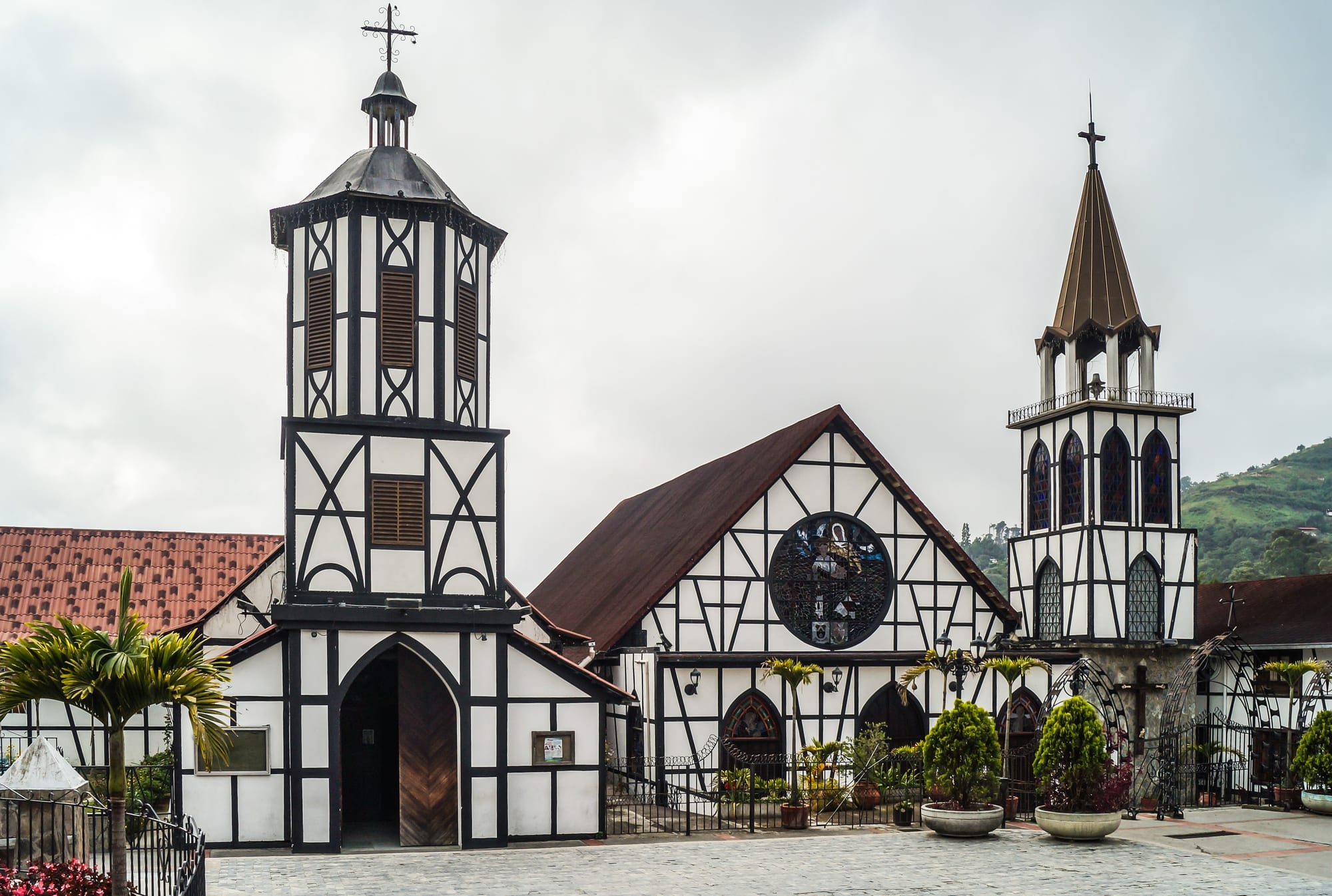
Ask before photographing people, and dress modestly inside the church.
💳 Common Payment Methods
The currency is the bolívar, but prices are in practice set and paid in US dollars. Cards and ATMs rarely work for foreigners, so visitors need enough small, clean US dollar notes for the whole trip.