Attractions & Natural Wonders · Guadeloupe
Guadeloupe: Ten Attractions and Natural Wonders
A butterfly-shaped piece of France in the Caribbean — a steaming volcano, rainforest waterfalls, a marine reserve named for Jacques Cousteau, and a scatter of smaller islands with old sugar windmills
By Worldlore Editorial · 30 September 2026
A département in the Caribbean
Guadeloupe is an overseas region of France — part of the European Union, using the euro — in the eastern Caribbean, between Antigua and Dominica. Its two main islands, joined by bridges over a narrow channel, form a butterfly shape: low, dry, sugar-and-beach Grande-Terre on the east, and mountainous, forested Basse-Terre with its volcano on the west. Add the smaller islands of Les Saintes, Marie-Galante, and La Désirade and the population is nearly 400,000. Creole culture and French administration run through it all, and a national park protects the forested heart of Basse-Terre.
The ten below run from the city across both wings of the butterfly and out to the dependencies. The dry season (January to June) is the prime time; the rest of the year is wetter, with the hurricane risk peaking from August to October.
1. Pointe-à-Pitre and the Mémorial ACTe
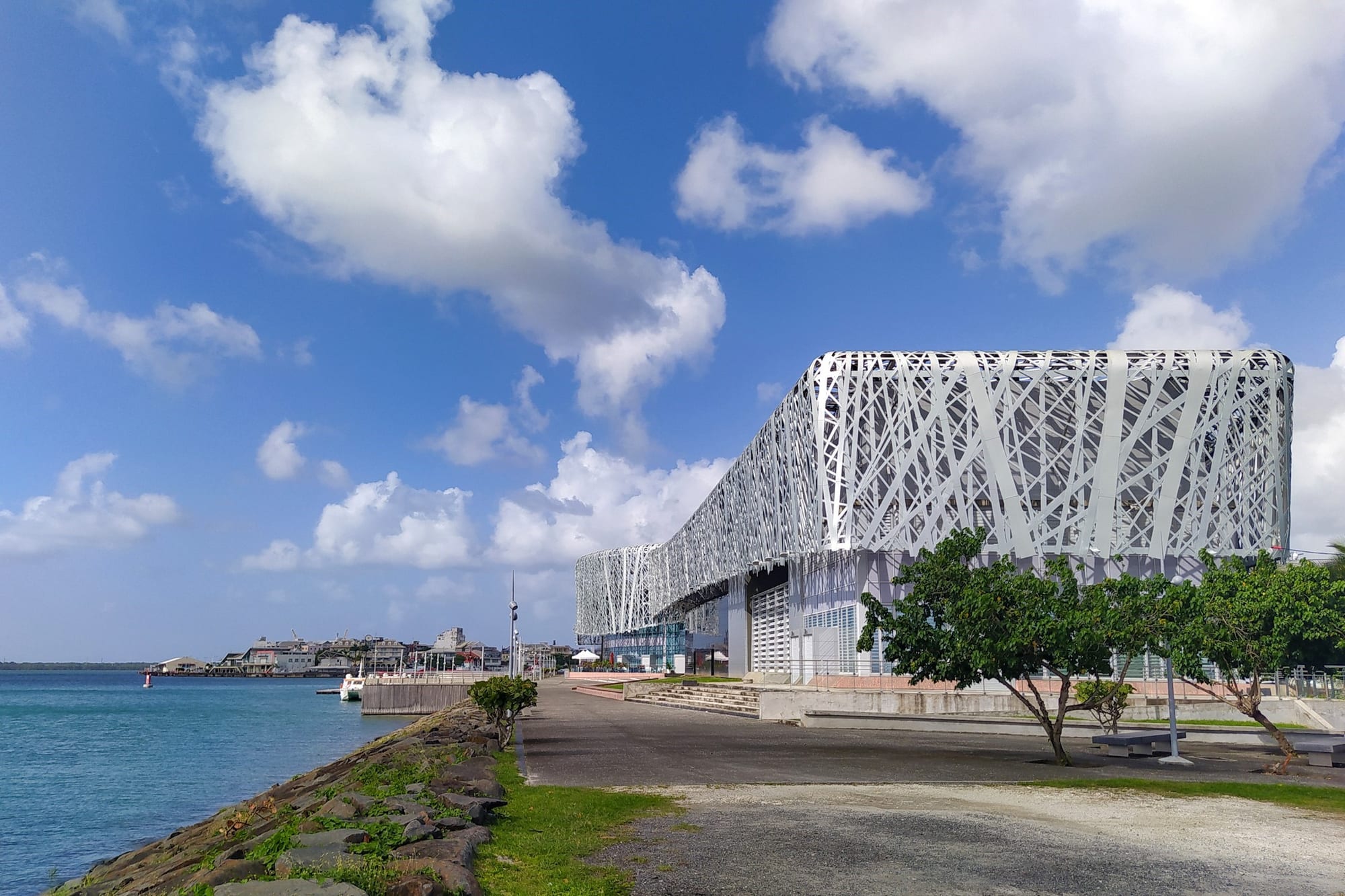
Pointe-à-Pitre, the commercial hub on Grande-Terre, is a busy, slightly worn port city with a lively covered market, the Place de la Victoire, and old townhouses. Its standout is the Mémorial ACTe, a striking waterfront museum opened in 2015 on the theme of slavery and its abolition, built on the site of the old Darboussier sugar factory.
The nearby town of Le Moule and the Edgar Clerc archaeology museum cover the island's Amerindian past.
2. La Grande Soufrière
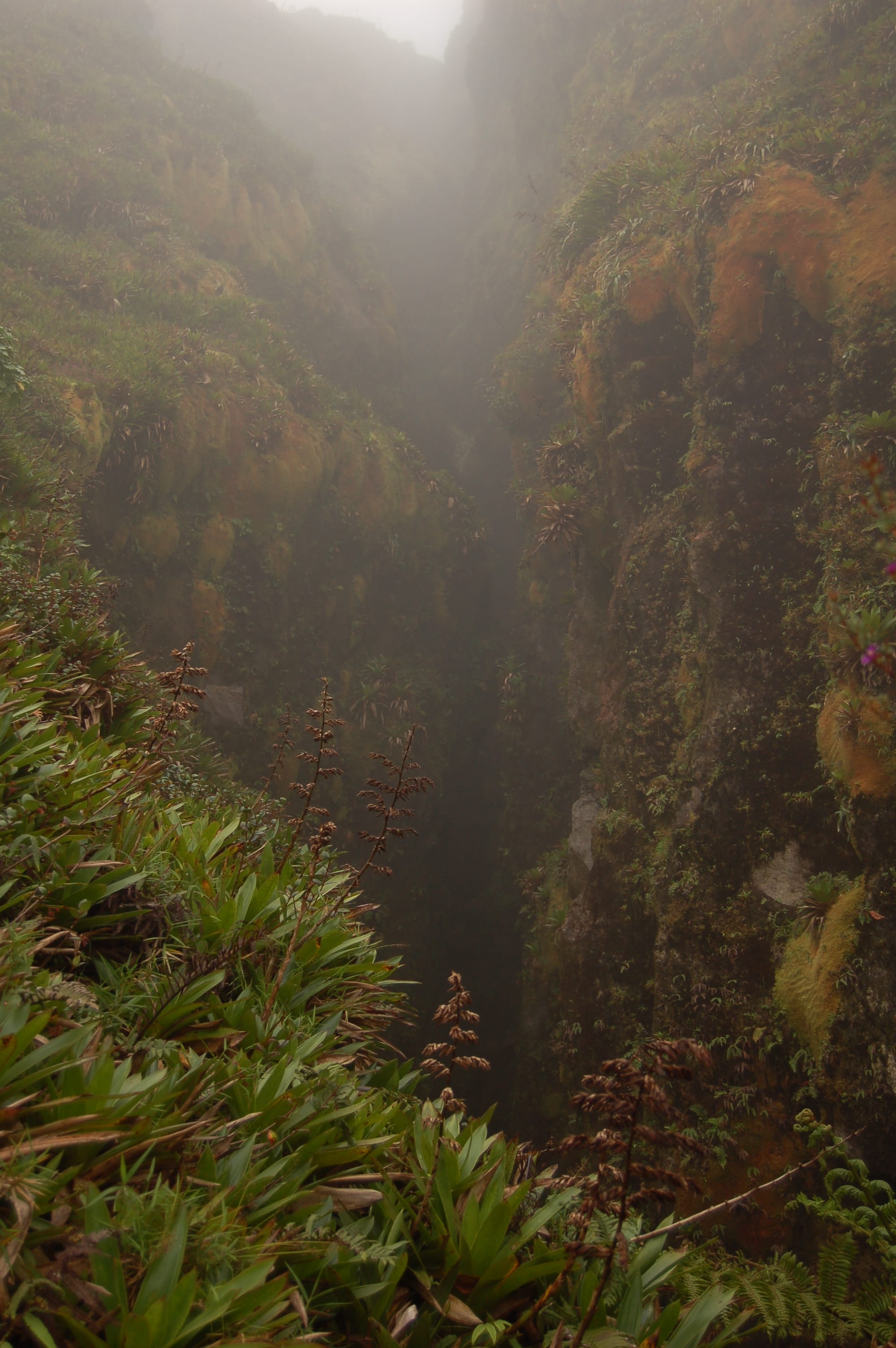
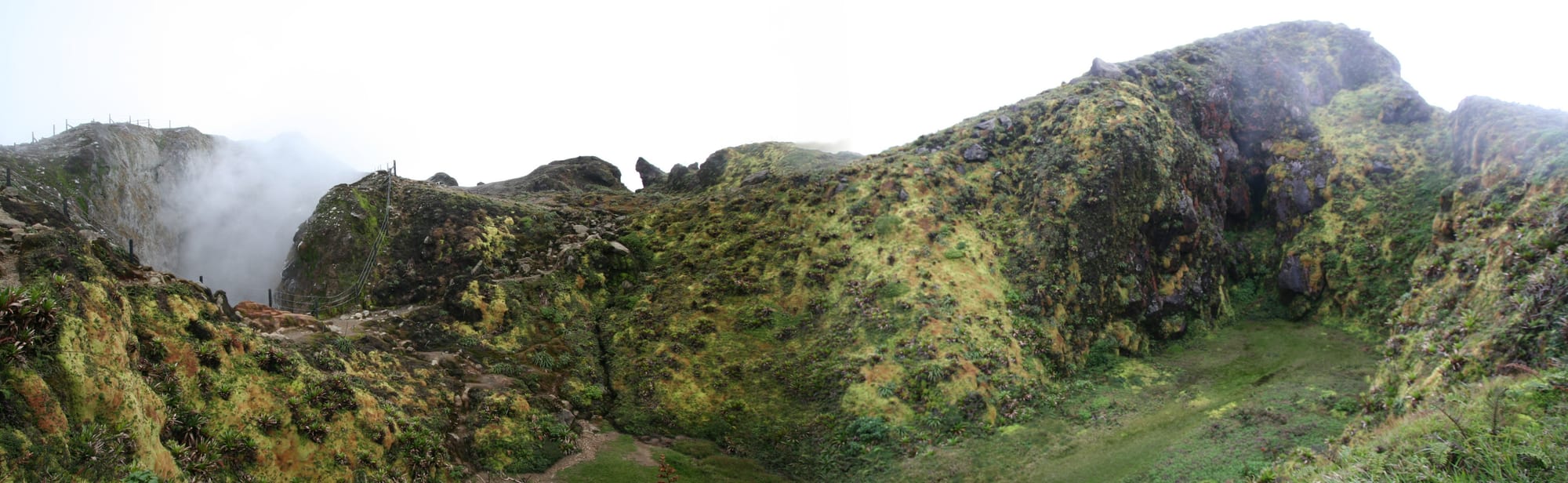
"La Soufrière", the brooding, cloud-wrapped volcano at the south end of Basse-Terre, is the highest peak in the Lesser Antilles and very much active — its upper slopes hiss with sulphur vents and hot springs. A steep, often muddy trail climbs towards the summit, though the most active part of the summit area is closed to the public because of volcanic gases, and trails and access roads are closed at times for rockfall or landslide risk. The 1976 crisis, when 70,000 people were evacuated for an eruption that stayed small, is still debated.
Nearby are the hot pools of the Bains Jaunes and the town of Saint-Claude.
3. The Chutes du Carbet
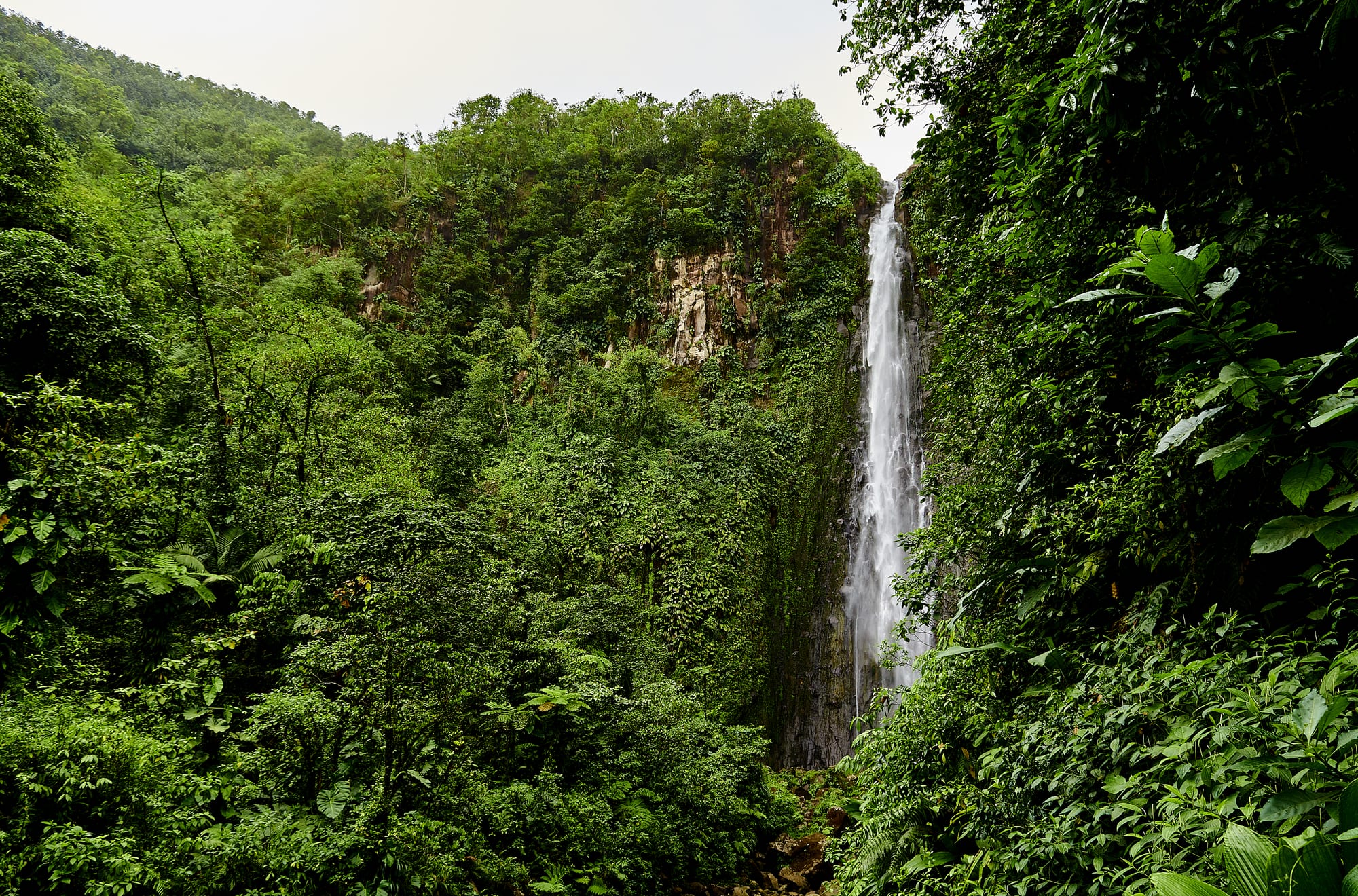
On the eastern side of the volcano, the Carbet river drops in three big steps through the rainforest. The second fall (110 metres) is the easiest to reach, a 20-minute walk from the car park, though since a 2004 earthquake visitors may go no closer than a bridge below it; the first (more than 115 metres) needs a longer, tougher hike, and the third, only 20 metres high but the most powerful, a separate trail. Columbus noted them from his ship in 1493.
Landslides and volcanic activity sometimes close the upper trails; check at the park office.
4. The rainforest and the Route de la Traversée
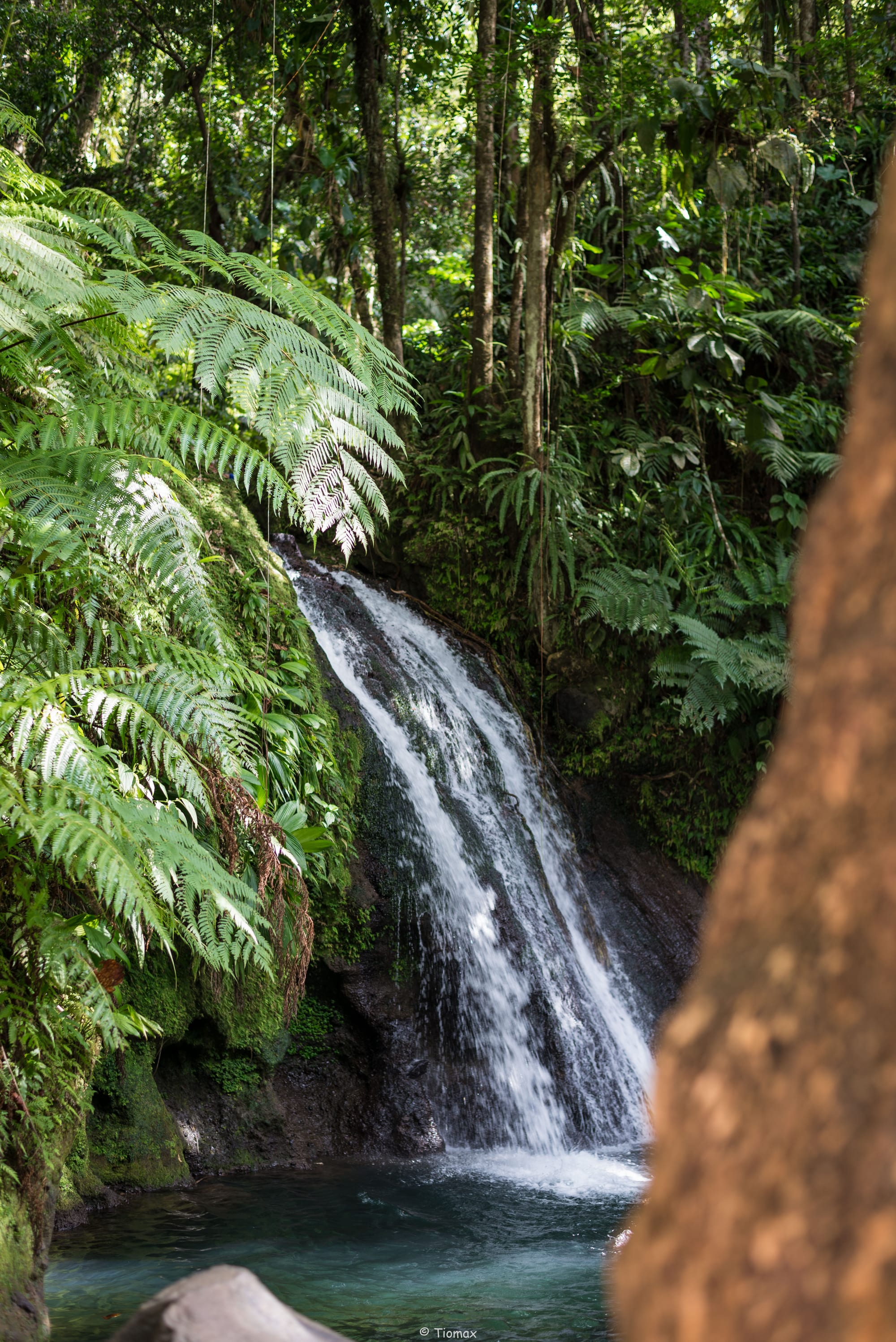
The Guadeloupe National Park protects the heart of Basse-Terre — dense tropical forest of ferns, mahogany, and white gum (gommier), laced with rivers and trails. The Route de la Traversée cuts across it, with a short walk to the Cascade aux Écrevisses, one of the island's best-known waterfalls. Longer forest trails and the climb of the twin Mamelles peaks are for keener walkers.
It is cool and often rainy up here; bring layers and grippy shoes.
5. The Réserve Cousteau
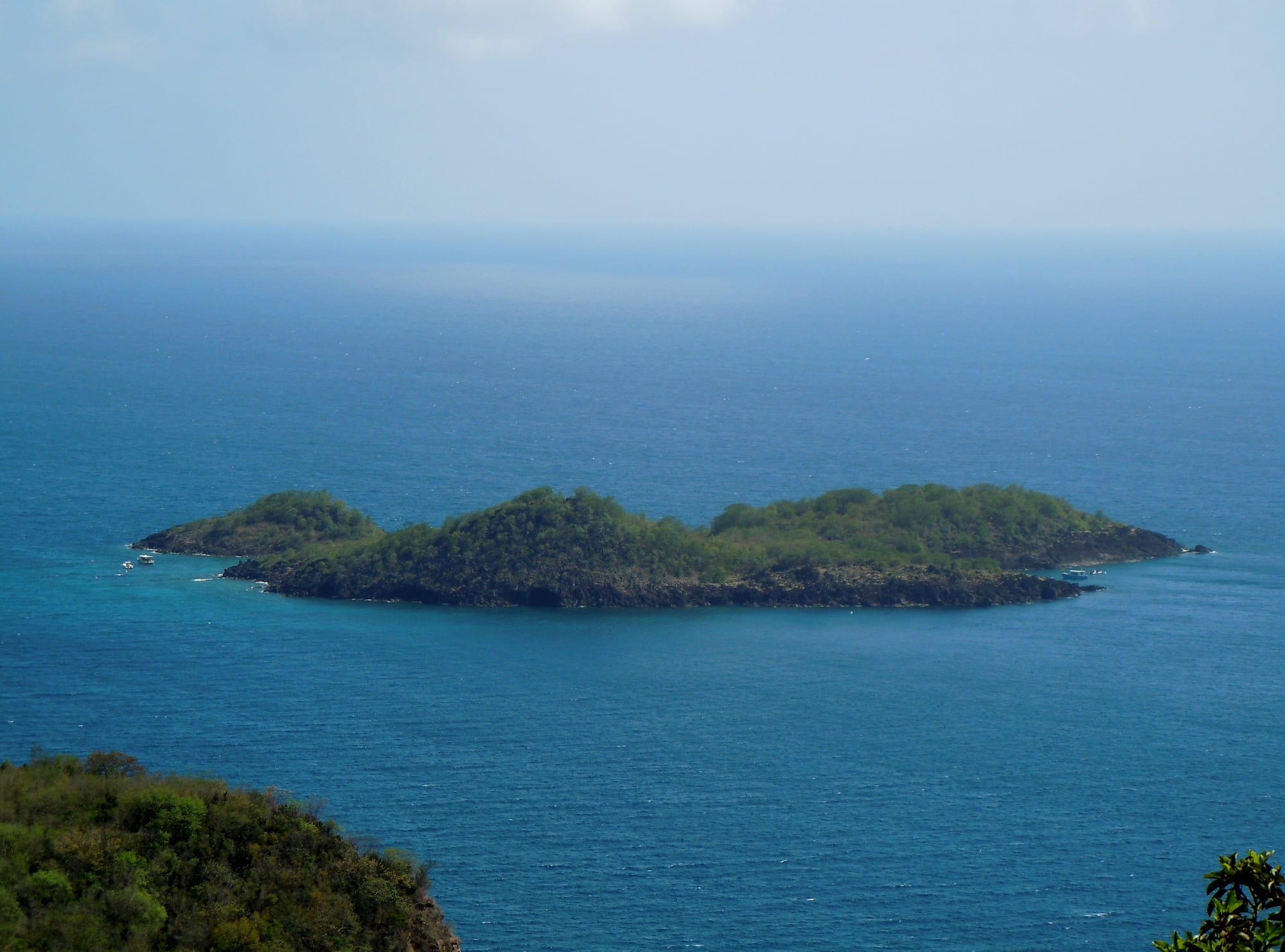
Off the west coast at Malendure, the two Îlets Pigeon and the water around them form the Réserve Cousteau, a protected marine area named after the diver and filmmaker Jacques Cousteau. Turtles, parrotfish, and reef life are easily seen; glass-bottom boats, snorkelling trips, and dive schools all leave from the black-sand Malendure beach.
It is one of the most popular dive areas in Guadeloupe.
6. Grande Anse and Deshaies
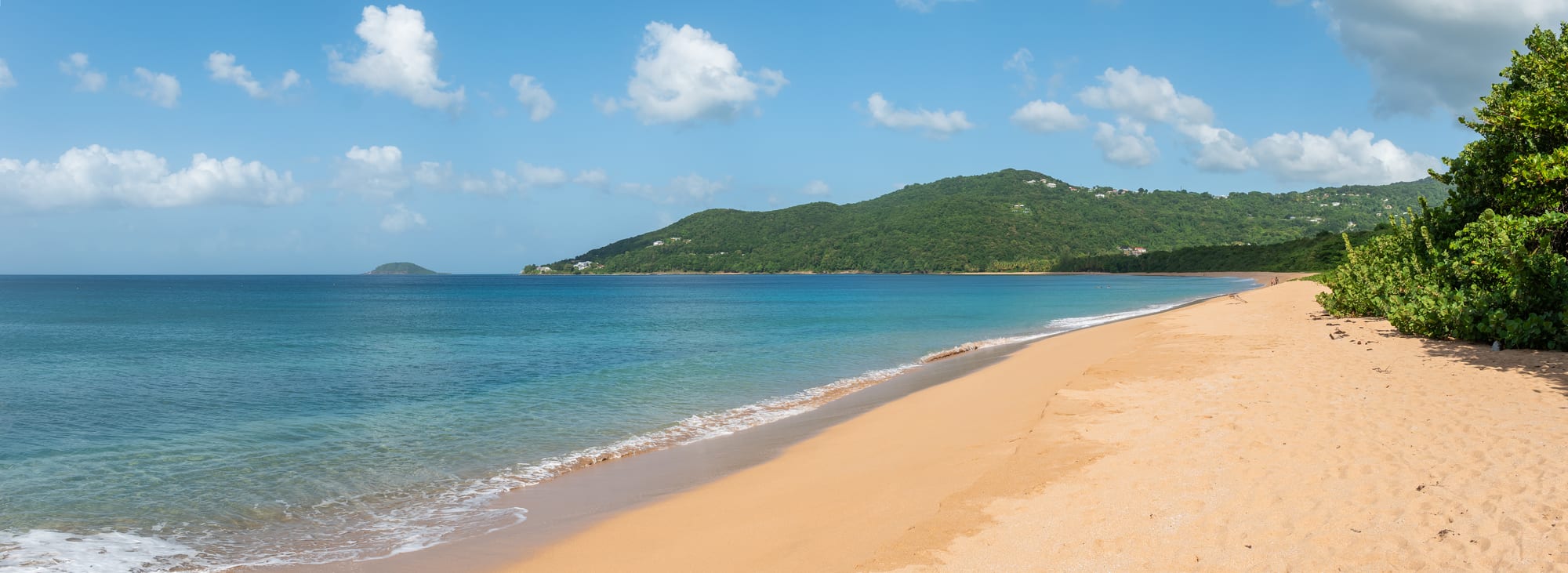
Deshaies, a pretty fishing village on the northwest coast (and the setting for the TV series Death in Paradise), sits beside Grande Anse — a broad golden beach backed by palms and sea grapes, one of the best on the main island. Just inland is the Jardin Botanique de Deshaies, a lush hillside garden on land once owned by the comedian Coluche.
The drive north from Pointe-Noire along this coast is one of the island's prettiest.
7. Pointe des Châteaux
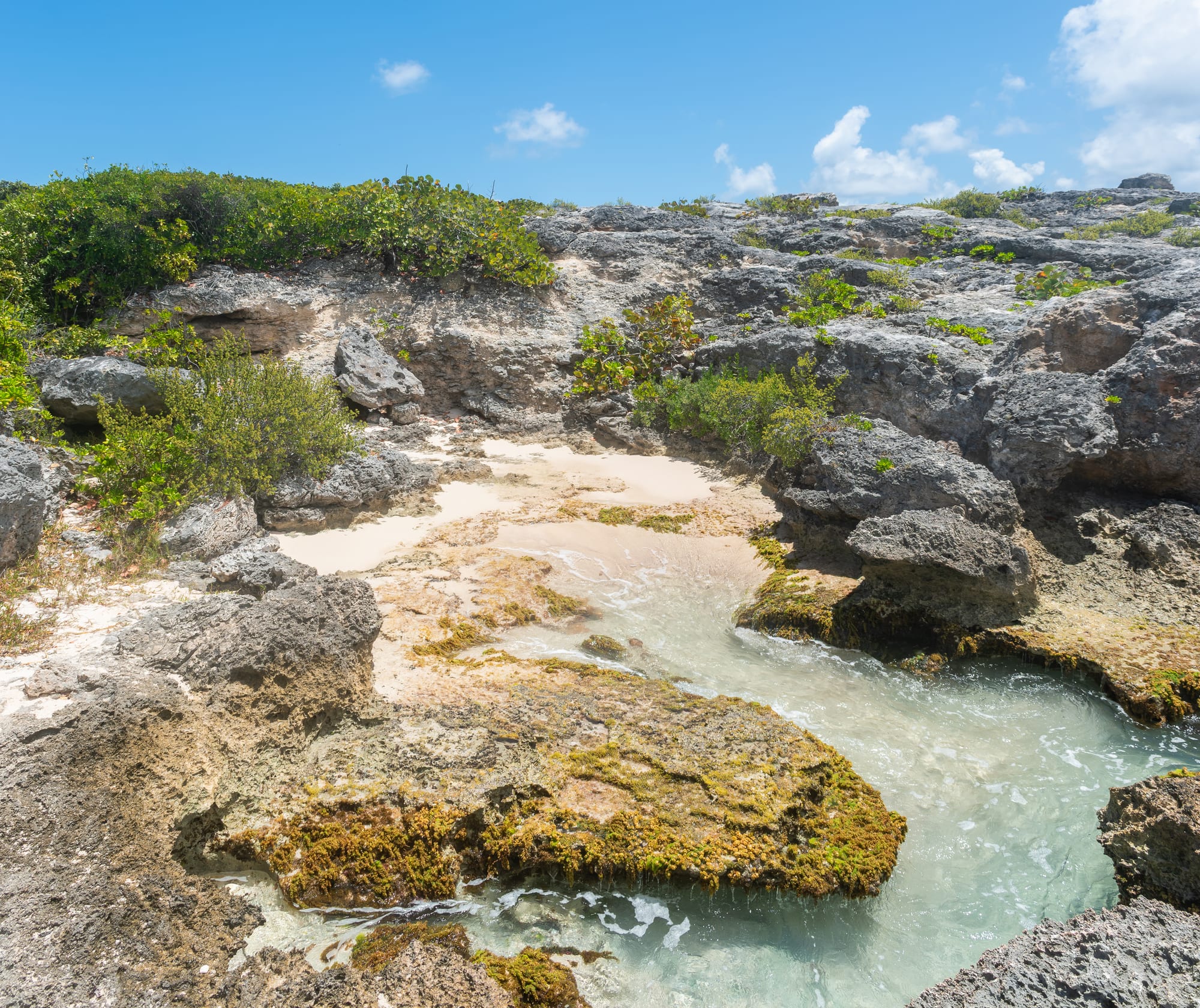
The far eastern point of Grande-Terre is a dramatic contrast to the island's calm lagoons: a narrow limestone peninsula where the Atlantic meets the Caribbean in a chaos of surf, sea stacks, and cliffs, with a short walk up the headland for the view back along the coast and out to La Désirade. Nearby are the calm beaches of Saint-François and, beside the point, the beach of Les Grandes Salines.
It is a popular spot for sunset and can be windy.
8. Les Saintes
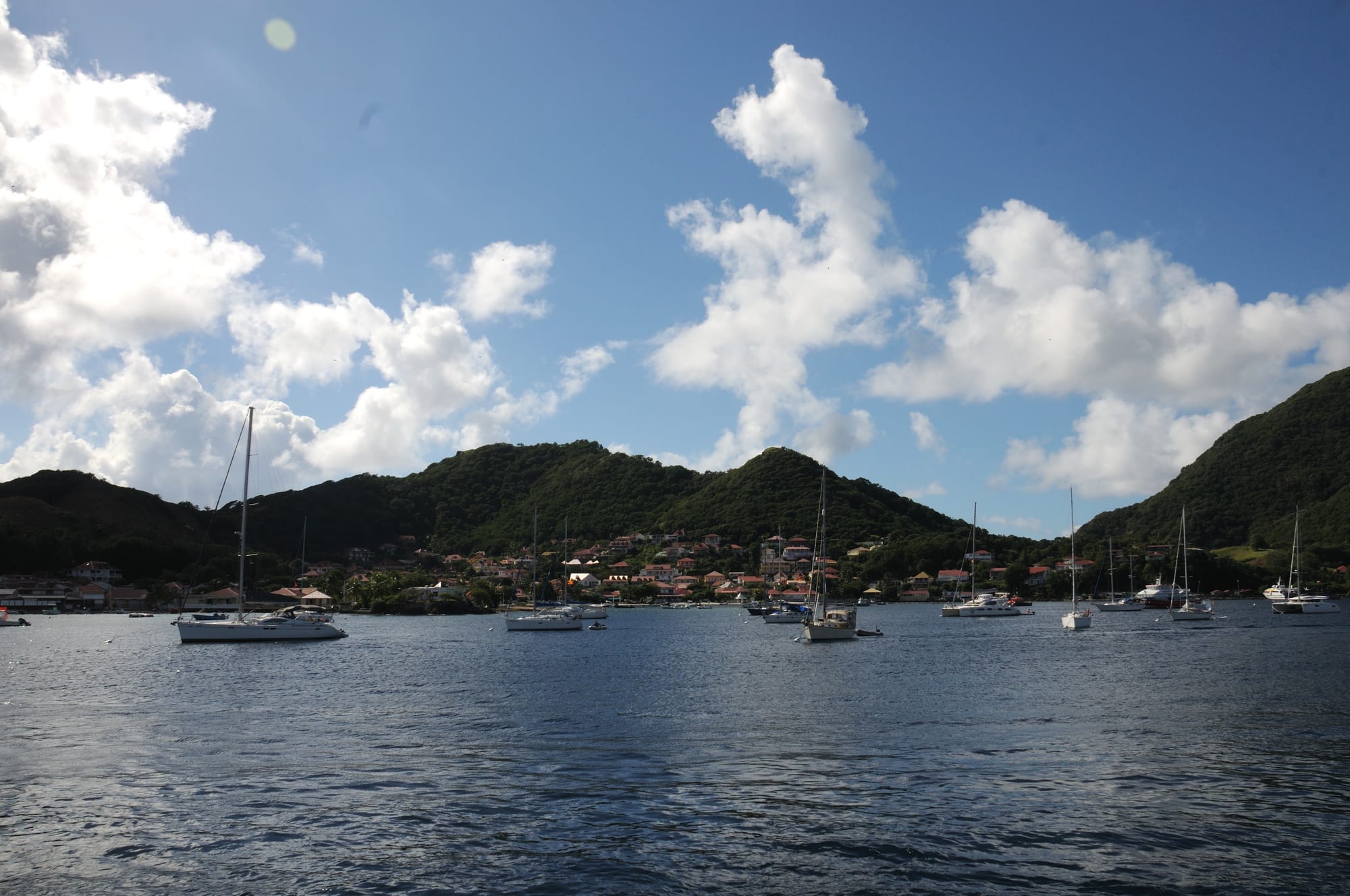
Les Saintes, a cluster of small islands reached by ferry, belong to the Club of the Most Beautiful Bays of the World. Terre-de-Haut, the main one, has a small village of red-roofed cottages, the hilltop Fort Napoléon (finished in 1867) with its museum, and the near-perfect beaches of Pain de Sucre and Pompierre.
It gets busy with day trippers; the island is far quieter once the last day boat leaves.
9. Marie-Galante
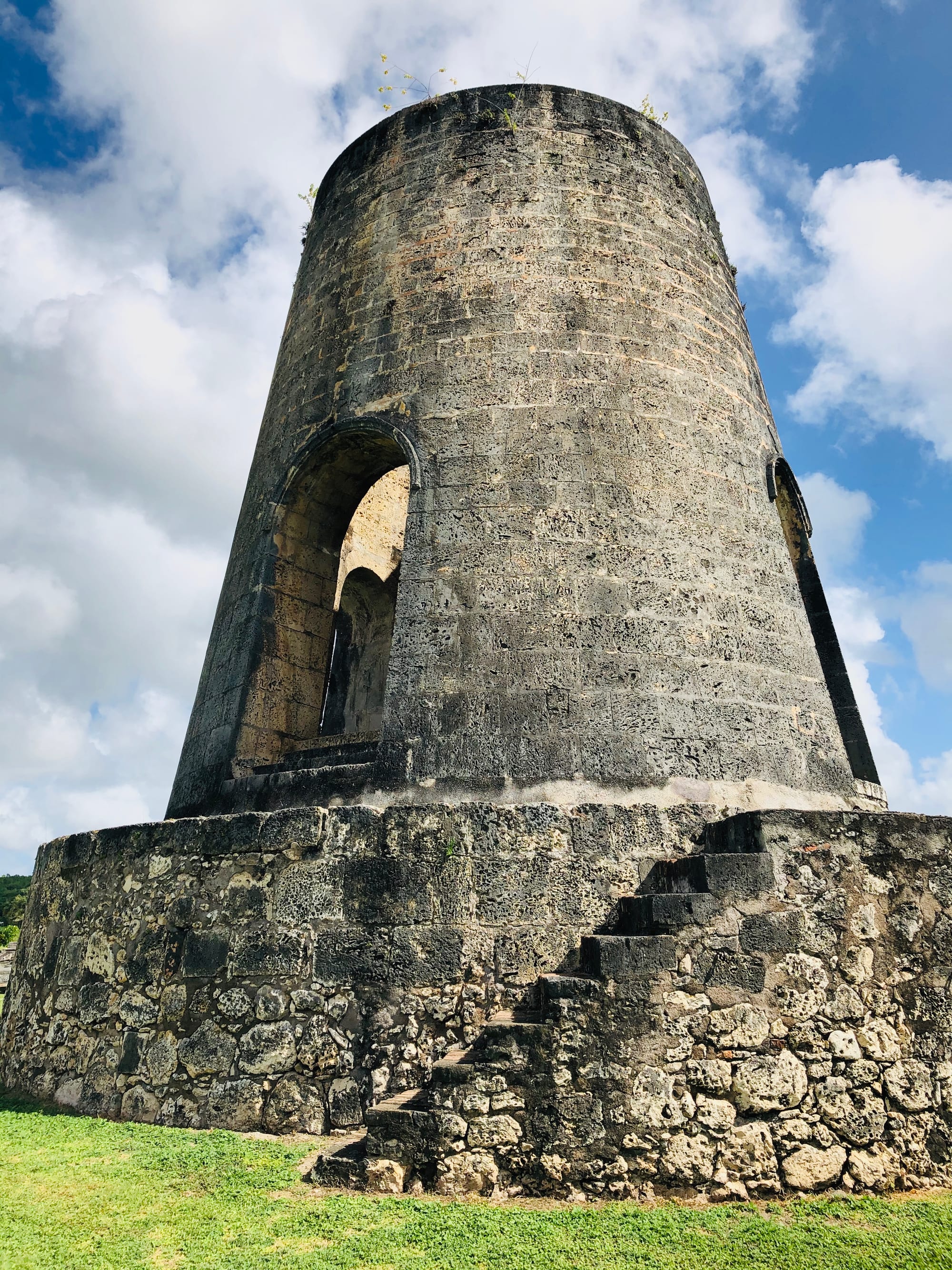
Marie-Galante, a flat, round island (nicknamed 'the Big Biscuit') an hour by ferry from Pointe-à-Pitre, is the most rural corner of Guadeloupe — sugar cane, empty white beaches, and the ruins (and a few restored examples) of the many windmills that once ground the harvest. Three distilleries (Bellevue, Bielle, and Poisson) still make a highly regarded rhum agricole; the Habitation Murat preserves an old sugar estate house and mill.
Its beaches are among the quietest in the whole territory.
10. Le Gosier, La Désirade, and the lagoons of Grande-Terre
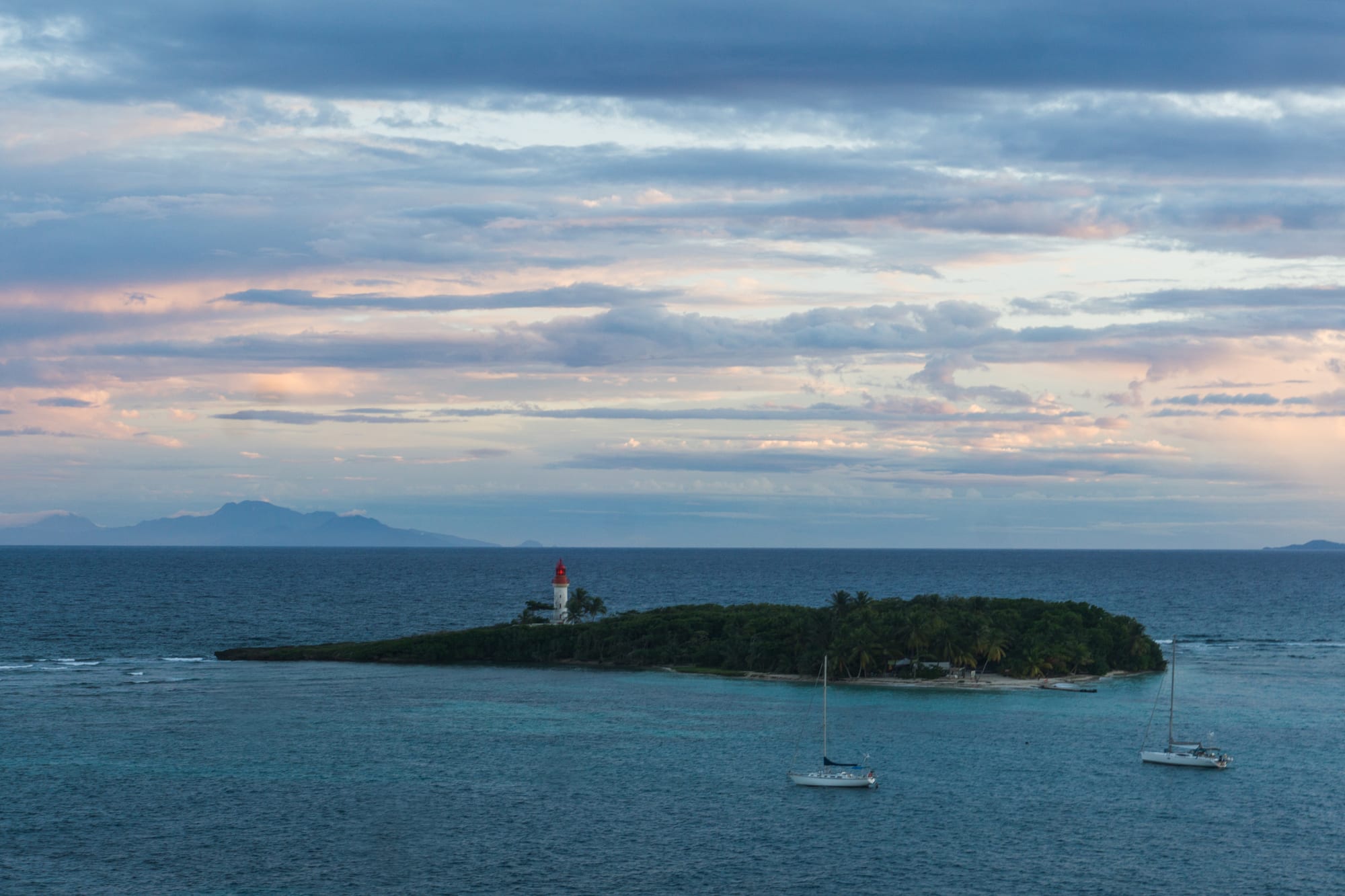
The south coast of Grande-Terre, around Le Gosier and Sainte-Anne, is the resort belt, with reef-protected lagoon beaches and a short boat hop to the Îlet du Gosier for a swim. Further out, La Désirade — a dry limestone plateau of an island, reached by boat from Saint-François — is the back-of-beyond of Guadeloupe, the oldest island in the Lesser Antilles geologically, with the offshore Petite-Terre nature reserve and its Lesser Antillean iguanas nearby.
These are the easiest add-ons from a base near Pointe-à-Pitre.
Guadeloupe suits a two-island trip: a few days on forested Basse-Terre for the volcano, waterfalls, and Cousteau reserve, and a few on Grande-Terre for the beaches, plus a day or overnight on Les Saintes or Marie-Galante. Ten days covers it comfortably.