Attractions & Natural Wonders · Nicaragua
How did sharks end up in a lake in Nicaragua?
They swim in from the Caribbean, up the San Juan River and over its rapids, because bull sharks can switch their bodies between salt and fresh water.
By Globeway Editorial · 2 November 2026
The short answer
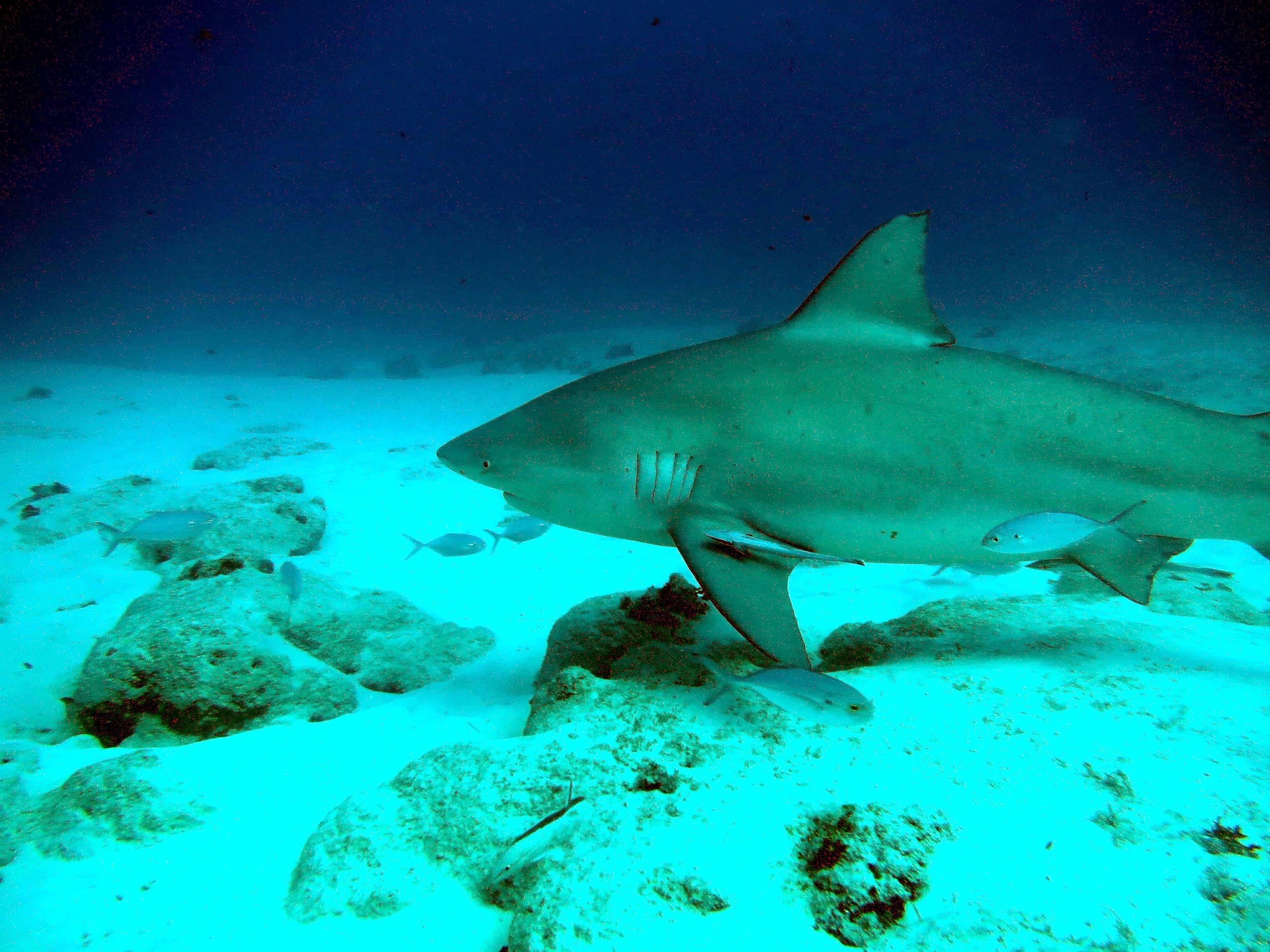
The sharks of Lake Nicaragua were not trapped there, and they are not a separate lake species. They are bull sharks, a species found along warm coasts around the world, and they swim into the lake from the Caribbean Sea. Their road is the San Juan River, which drains the lake eastwards for 192 kilometres to the coast. On the way upstream the sharks pass a series of rapids, and in the late 1960s scientists found that they get over them by jumping along the rapids almost like salmon.
What makes this possible is the bull shark's unusual body chemistry. Most sharks cannot survive in fresh water, but the bull shark can retune its kidneys, gills and salt glands to live in both salt and fresh water. Sharks tagged inside the lake have later been caught in the open ocean, and sharks tagged at sea have turned up in the lake, some making the journey in as little as seven days.
A sweet sea with marine fish
Lake Nicaragua, which Nicaraguans also call Cocibolca, is the largest freshwater lake in Central America, covering 8,264 square kilometres. Its surface lies just 32.7 metres above sea level and it is no more than 26 metres deep. Nicaraguans also call it the Mar Dulce, the "Sweet Sea", from the Spanish for fresh water, agua dulce.
Geographically the lake sits much closer to the Pacific than to the Caribbean: from the mountains of Ometepe, its largest island, the Pacific is visible. Yet all its water flows the other way. It drains east through the San Juan River, which made Granada, on the north-western shore, historically an Atlantic port. That eastward outlet is the key to the whole puzzle, because it is an open door to the sea.
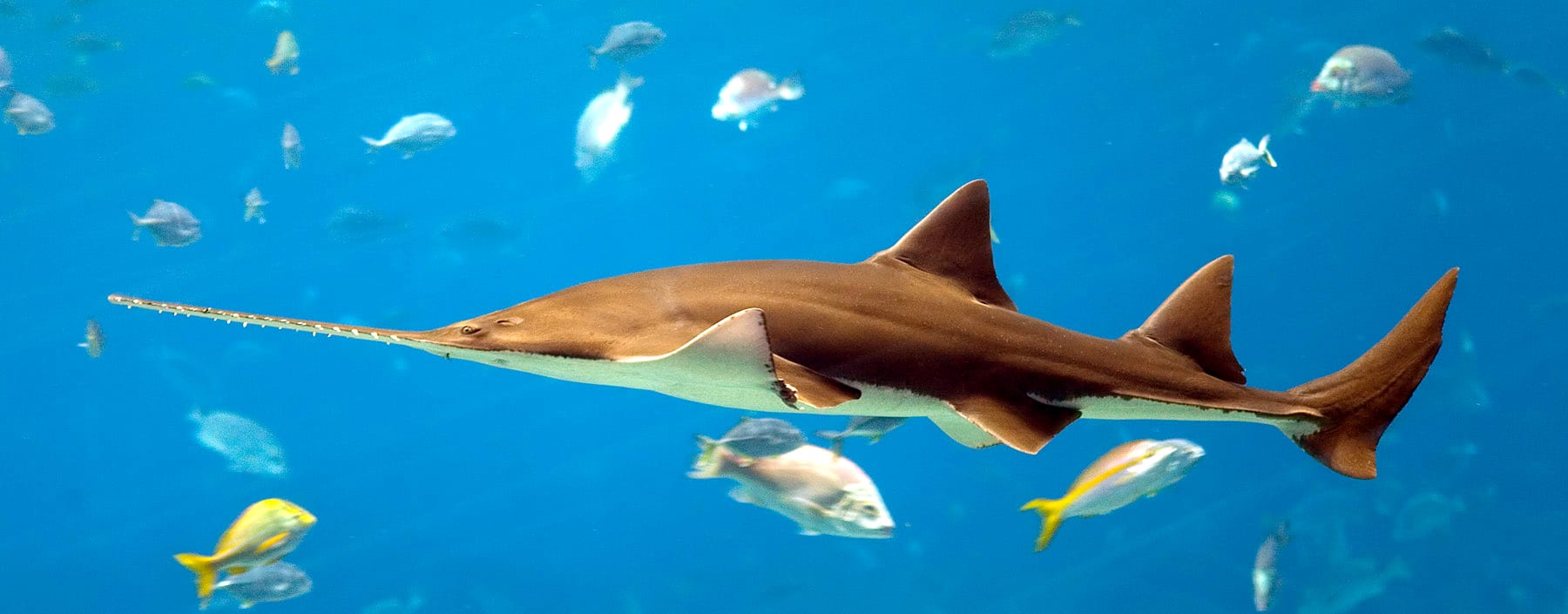
Sharks are not the only sea creatures to use it. The lake also holds tarpon and sawfish, both fish better known from coasts and estuaries.
The mystery of the lake shark
For a long time scientists believed that the lake's sharks were a species of their own. They named it the Lake Nicaragua shark, Carcharhinus nicaraguensis, and assumed it was found nowhere else. It was also presumed that these sharks were prisoners, cut off from the ocean and living out their lives in the lake.
Both ideas fell apart. In 1961, after specimens were compared, the Lake Nicaragua shark was folded into the bull shark, Carcharhinus leucas, a widespread species already known for entering fresh water elsewhere. Then, in the late 1960s, researchers found that the sharks were not trapped at all. They were moving up and down the San Juan River, jumping along its rapids. Tagging later proved the point: sharks marked in the lake were caught in the ocean, and the reverse, some of them completing the trip in seven to 11 days.
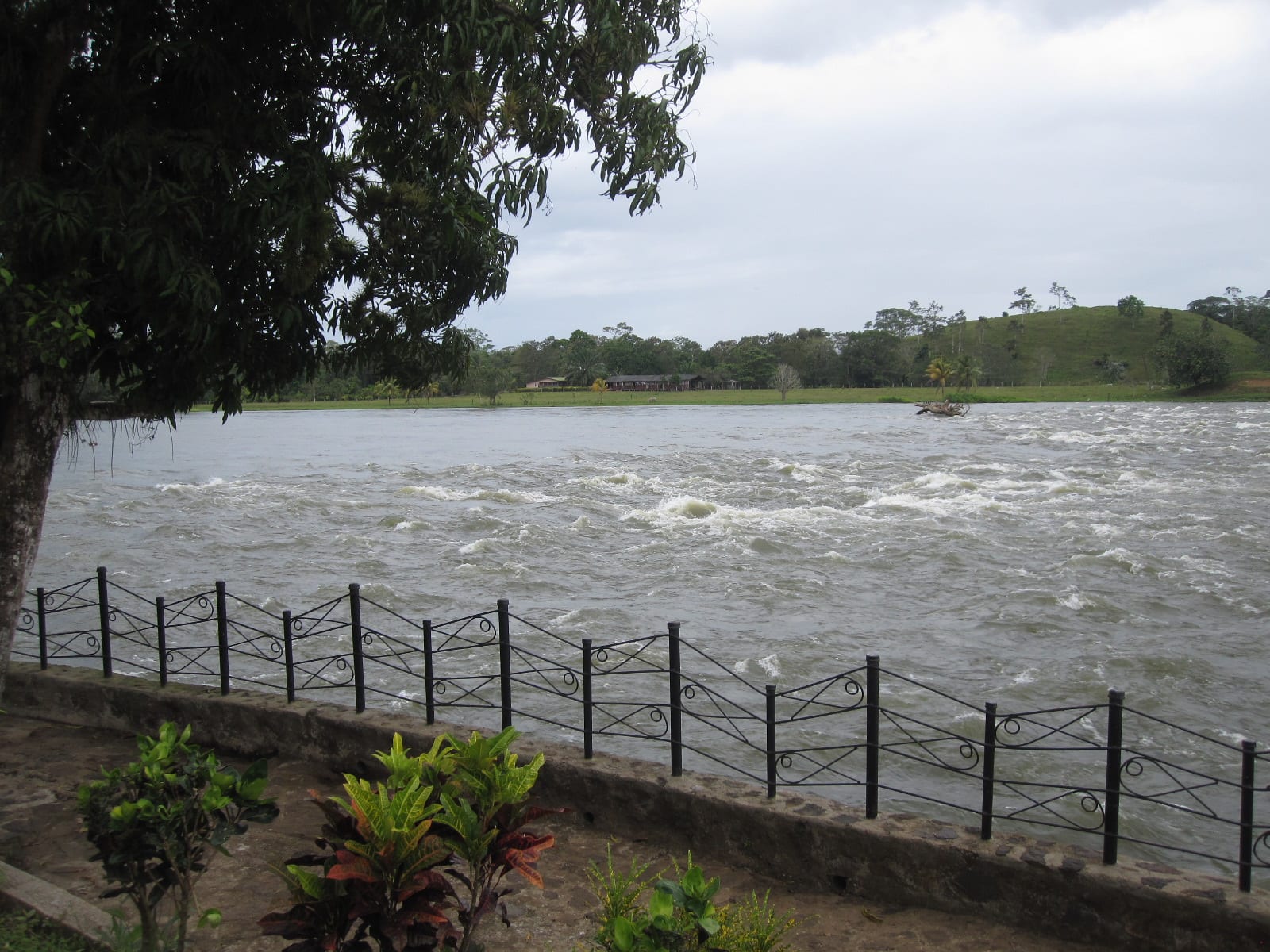
The river's rapids, named from the sea upwards, are the Raudal de Machuca, Raudal del Mico, Raudal Los Valos, Raudal del Castillo, also called the Raudal del Diablo, and Raudal del Toro. The same channel carried other visitors from the Caribbean. Pirates came up the San Juan to raid the lake and assaulted Granada three times, and in 1673 the Spanish began a fortress beside the rapids at El Castillo to guard the route.
- 1673
Construction begins on the Spanish fortress at El Castillo, beside the San Juan River rapids.
- Before 1961
The lake's sharks are described as an endemic species, the Lake Nicaragua shark.
- 1961
Specimen comparisons show the "lake shark" is the widespread bull shark.
- Late 1960s
Researchers find the sharks travel up the San Juan River, leaping its rapids.
- 1970s
Tens of thousands of sawfish are caught in the lake, and the population crashes.
- Early 1980s
Nicaragua protects the largetooth sawfish.
How a sea shark survives in fresh water
The bull shark is euryhaline, meaning it can adapt quickly to a wide range of salt levels. That is rare among sharks and rays. Their blood is normally at least as salty as seawater, thanks to dissolved urea and another compound, trimethylamine oxide. Put most sharks in fresh water and water floods into their bodies through osmosis, the movement of water towards the saltier side of a membrane, while precious salts leak out.
Bull sharks manage the switch with four organs. In fresh water they carry much less urea in their blood, which the liver makes as needed. The rectal gland, which normally pumps out surplus salt at sea, slows down so that the shark keeps its sodium and chloride. The kidneys produce large amounts of dilute urine to get rid of the incoming water while reclaiming salts, and the gills probably absorb sodium and chloride from the river around them.
Fresh water brings one more problem: it is less dense than seawater, so a shark sinks more easily and must work harder to stay up. Bull sharks caught in fresh water have been found to have lighter livers, which may help offset the cost.
Why a shark would want to be there
Bull sharks are not true freshwater sharks, and the reason they visit rivers seems to be bound up with their young. Females give birth to live pups in coastal lagoons, river mouths and other low-salt waters, where the young are protected. Newborns cope poorly with very salty water, so they start life in fresher water and move out to sea as they grow and their tolerance increases.
Nicaragua is far from unique. Bull sharks have travelled 4,000 kilometres up the Amazon to Iquitos in Peru, and up the Mississippi as far as Alton, Illinois, about 1,100 kilometres from the ocean. They live in the Ganges and Brahmaputra and have been recorded in the Tigris as far upriver as Baghdad. In principle a bull shark could spend its whole life in fresh water, but in practice it does not, largely because of the needs of breeding.
The lake and the river today
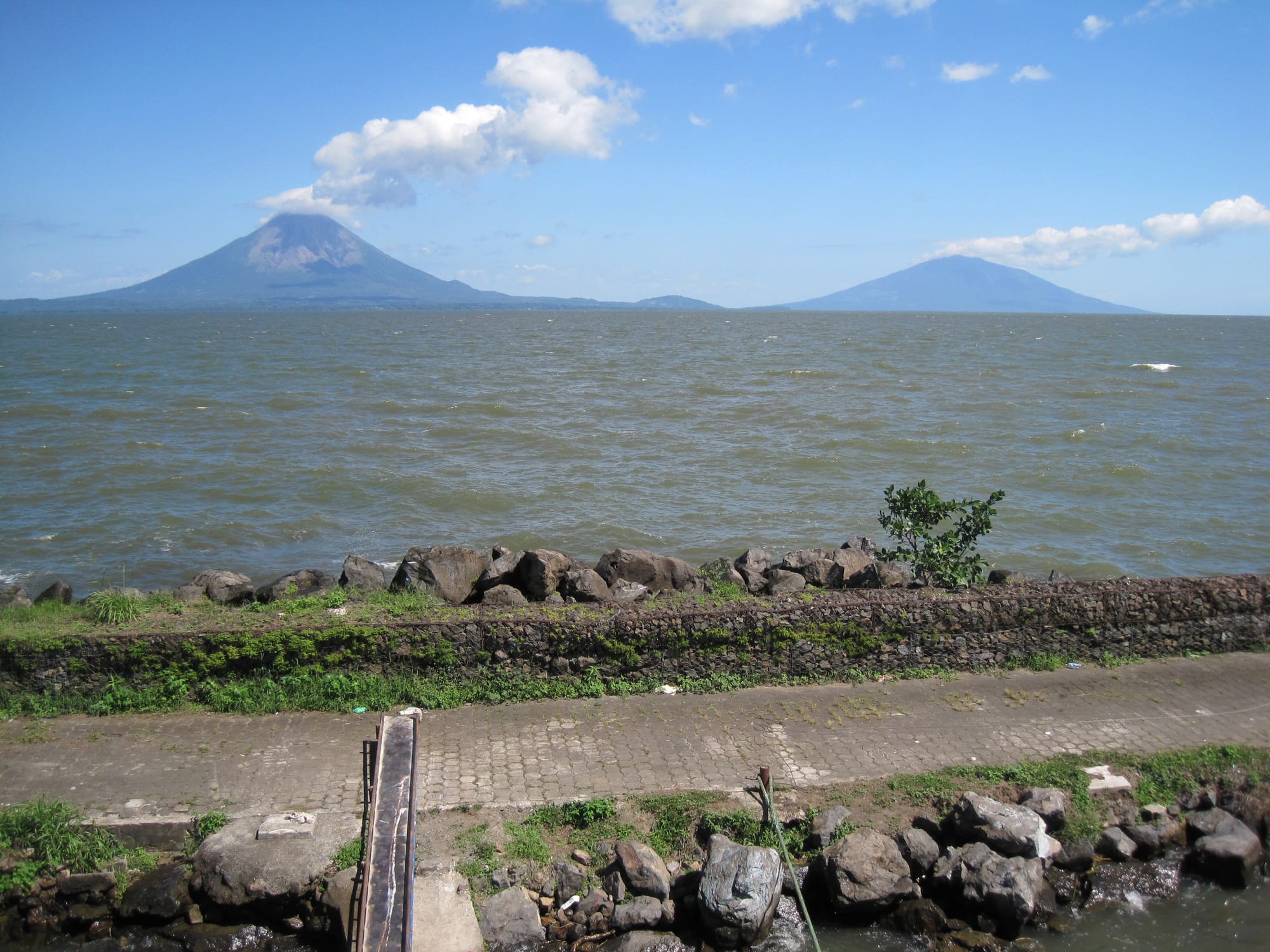
Lake Nicaragua is the country's largest source of fresh water. Granada sits on the north-western shore, Ometepe rises from the water as two joined volcanoes, Concepción and Maderas, and the Solentiname archipelago lies towards the southern end. The lake has a reputation for sudden, powerful storms.
The sharks' route can be followed downstream. The San Juan River leaves the lake and runs towards the Caribbean, with a long stretch of the Nicaragua and Costa Rica border following its southern bank. At El Castillo, the old Spanish fortress still overlooks the Raudal del Diablo, the rapids that bull sharks climb on their way to a lake 192 river kilometres from the sea.
The bull shark itself is listed as vulnerable on the IUCN Red List, with its numbers falling worldwide through fishing, pollution and nets.