History · Taiwan
How did Taiwan come to make most of the world's advanced computer chips?
A government bet in the 1970s, an engineer's radical business idea in 1987 and decades of relentless scale made one island the world's chip factory.
By Globeway Editorial · 2 November 2026
The short answer
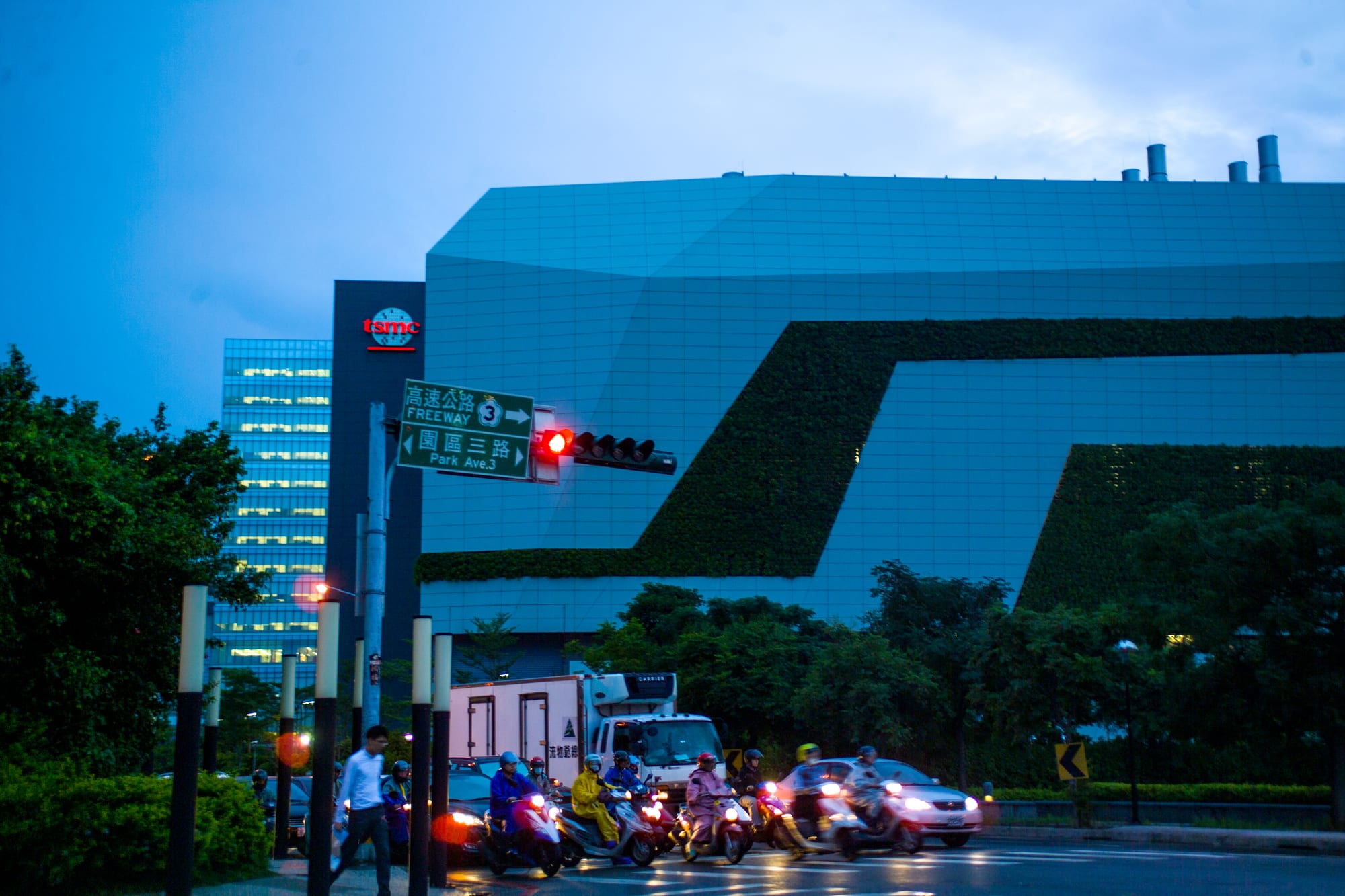
Taiwan planned it, and then one company perfected it. In the 1970s the government decided to move the island beyond cheap manufacturing, bought chip-making know-how from the American firm RCA, trained engineers and built a science park modelled on Silicon Valley. In 1987 it backed Morris Chang, a veteran American chip executive, to found the Taiwan Semiconductor Manufacturing Company, TSMC, with a then-radical idea: a factory that would make chips designed by other companies and never sell chips of its own.
That idea fitted the way the industry was changing. Designing chips and building the plants to make them became separate businesses, and companies such as Apple, Nvidia, AMD and Qualcomm stopped making their own chips and sent their designs to TSMC. Decades of scale and reinvestment followed. By the early 2020s Taiwanese manufacturers made about 60 per cent of the world's semiconductors, and TSMC alone produced over 90 per cent of the most advanced generation of chips.
A government bet on silicon
In the 1970s Taiwan was an export economy built on low-tech manufacturing, and technocrats such as Li Kwoh-ting and the economics minister Sun Yun-suan wanted something more valuable. In 1974 Sun approved a four-year, $10 million project to develop integrated circuits, the tiny wired slices of silicon at the heart of all electronics. The work was given to the government's Industrial Technology Research Institute, ITRI, with orders to aim at commercial products rather than pure science.
In 1976 ITRI signed a technology transfer agreement with the American company RCA, which supplied complete production technology and trained 37 Taiwanese engineers. Back home, the teams built a demonstration factory that achieved higher yields, meaning a larger share of working chips, than RCA's own plants in the United States. In 1980 that factory was spun off as a company, United Microelectronics Corporation.
The same year the government opened the Hsinchu Science Park, deliberately placed beside two universities in imitation of Silicon Valley's ties to Stanford and Berkeley. Li Kwoh-ting consulted the American engineer Frederick Terman on how Taiwan could follow Silicon Valley's example, and Taiwanese engineers who had built careers in the United States began coming home to start companies there.
Morris Chang's new kind of factory
The man who turned this groundwork into world dominance was born in Ningbo, China, in 1931, and educated at Harvard, MIT and Stanford. Morris Chang spent 25 years at Texas Instruments, rising to run its worldwide semiconductor business. In the mid-1980s the Taiwanese government recruited him to lead ITRI, and Li Kwoh-ting offered him what amounted to a blank cheque to build Taiwan's chip industry.
Chang's answer was the dedicated foundry. At the time, chip companies both designed and manufactured their products. A chip factory, or fab, is enormously expensive, and unless it runs almost constantly it drains its owner's finances. Chang's company would build nothing of its own. It would make other firms' designs, so it would never compete with its customers, and it would keep its plants full by serving many of them. The approach had been argued for in the United States but was thought too costly to try.
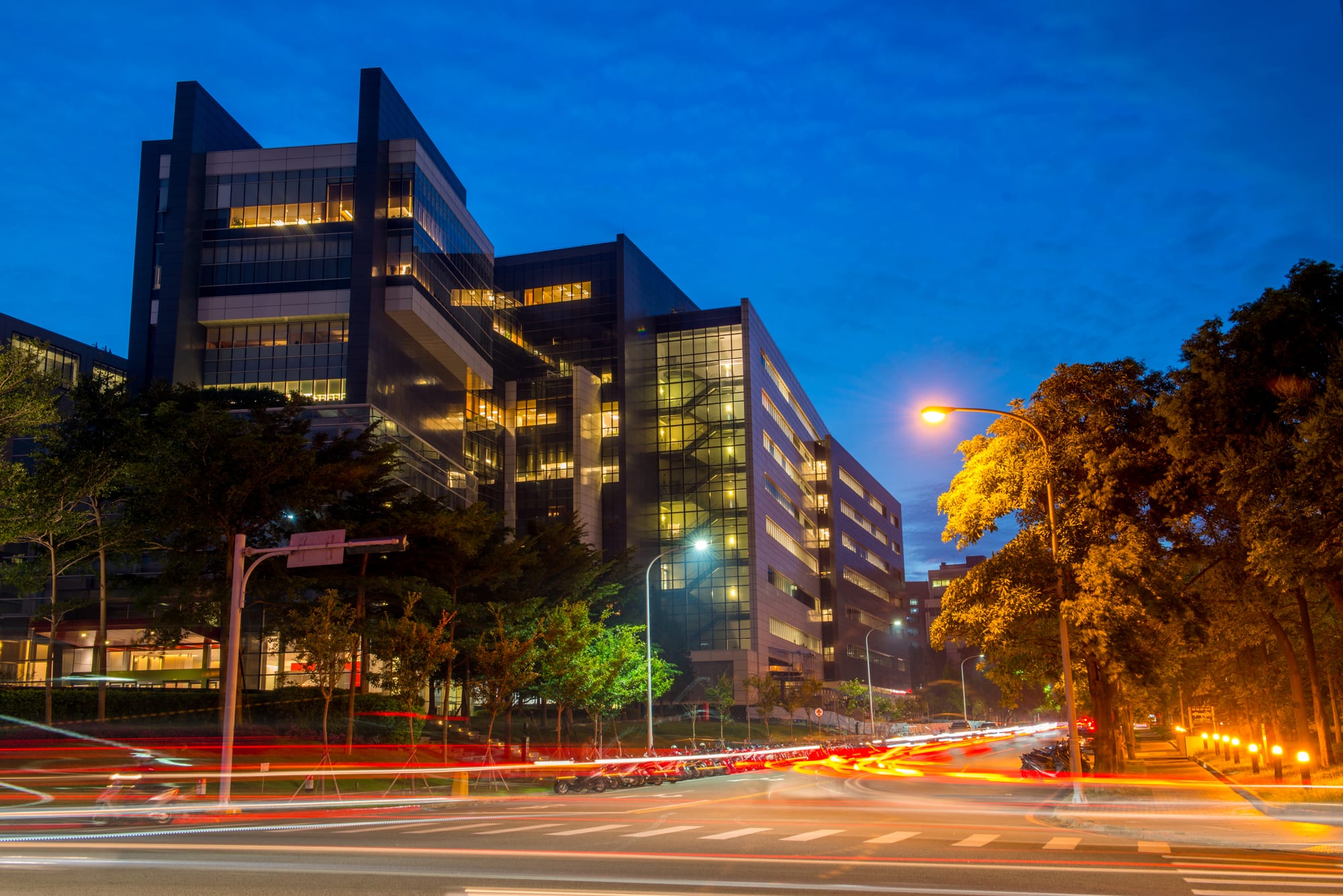
Hsinchu Science Park opened in December 1980 and remains the heart of the industry.
Finding partners was hard. Texas Instruments and Intel turned Chang down. Only the Dutch company Philips agreed to invest, putting up $58 million and transferring its production technology and patents in return for a 27.6 per cent stake. The Taiwanese government provided 48.3 per cent of the starting capital, and wealthy families whose fortunes lay in plastics, textiles and chemicals added most of the rest. TSMC opened in 1987, the first dedicated semiconductor foundry in the world.
The industry splits in two
The timing was perfect. As chips grew more complex, a new breed of "fabless" companies emerged that only designed chips, leaving the manufacturing to foundries. AMD, Apple, Broadcom, MediaTek, Nvidia and Qualcomm all became TSMC customers, and even firms with their own factories, including Intel and Texas Instruments, began sending it some of their work. Apple was buying iPhone and iPad processors from TSMC by 2014, and was then its most important customer.
Taiwan's industry grew around the giant. By 2002 the island had 40 fabs in operation, and its strength lay in having the whole chain close together: design houses, foundries, and the firms that package and test finished chips. In 2009 Taiwan ranked first in the world for chip manufacturing, packaging and testing, and second for chip design.
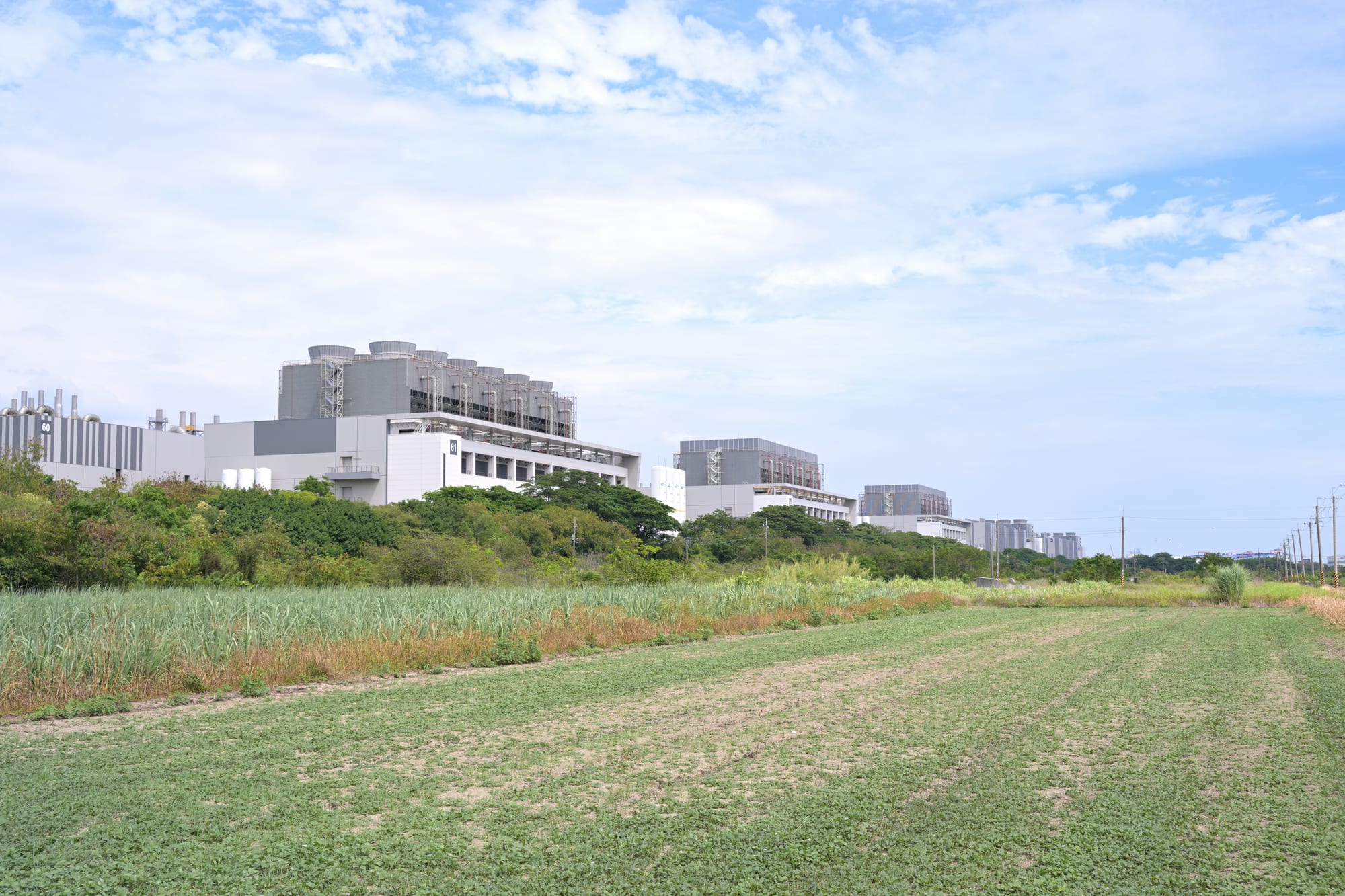
Hsinchu is no longer the only centre: this plant lies far to the south of it.
Staying a step ahead
Chip-making is a race to shrink transistors, the microscopic switches on a chip, measured in nanometres. TSMC was the first foundry to offer 7-nanometre and then 5-nanometre production, and the first to use extreme ultraviolet lithography, the most advanced way of printing circuit patterns, in high volume. It moved on to 3-nanometre chips in 2022 and to 2-nanometre production by late 2025. The cost of staying at the leading edge rises with every generation, and a single new fab costs more than $1 billion. In March 2017 TSMC's stock market value passed Intel's for the first time, and the boom in artificial intelligence, whose processors TSMC makes for Nvidia, pushed it further: by June 2026 it was the most valuable company outside the United States.
The result is extraordinary concentration. TSMC holds about 70 per cent of the world's contract chip-making market, and in 2022 Taiwan's exports of integrated circuits were worth $184 billion, nearly a quarter of its GDP. The industry also strains the island: TSMC alone used an estimated 7.2 per cent of Taiwan's electricity by 2022, and in the severe drought of 2021 water had to be delivered by truck to keep chip production running.
A shield, and a vulnerability
That importance has political weight. Beijing claims Taiwan and has never renounced the use of force, and many commentators speak of a "silicon shield": the idea that the world's dependence on Taiwanese chips deters an attack, or would draw in other powers to defend the island. A United States government analysis estimated that a Chinese blockade could cost the global economy as much as $2.5 trillion. Others doubt the shield's strength, arguing that such calculations may not guide Beijing's decisions.
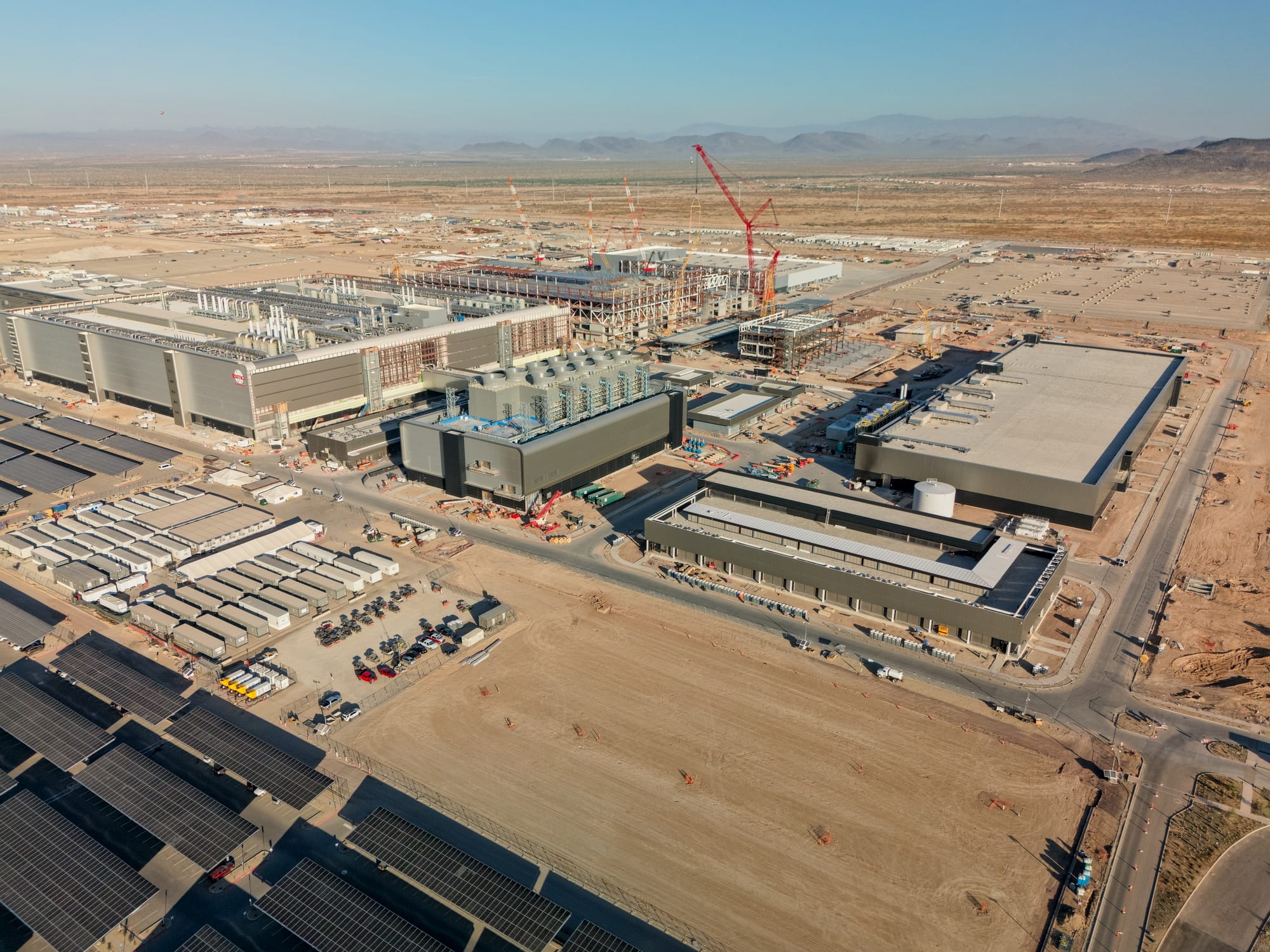
In April 2024 the United States government granted TSMC Arizona $6.6 billion towards its factories there.
Partly to reduce that risk, TSMC has begun building abroad. A plant in Kumamoto, Japan, began production in 2024, a German factory in Dresden is under construction, and the company has pledged $100 billion for new chip and packaging plants in Arizona. Many people in Taiwan worry that moving the most advanced production overseas weakens the island's shield. For now, though, the most sophisticated chips in the world's phones, computers and data centres are still overwhelmingly made in Taiwan.