History · Monaco
How does Monaco pay for itself with no income tax?
A casino rescued a bankrupt principality in the 1860s; today sales tax, company profits tax and state-run businesses keep Monaco in surplus.
By Globeway Editorial · 2 November 2026
The short answer
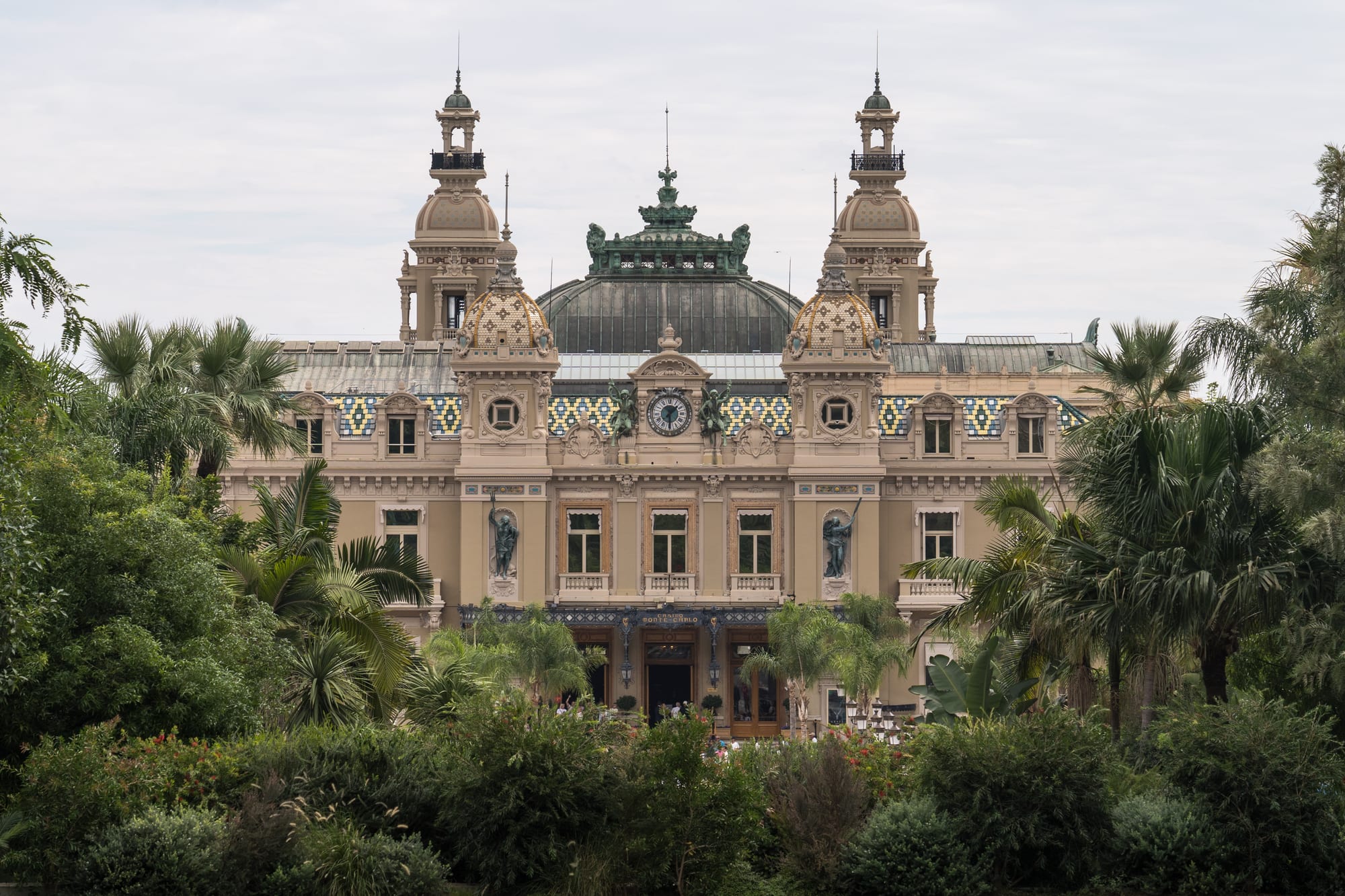
Monaco stopped collecting income tax from its residents in 1869, and it could afford to do so thanks to one spectacular money-maker: the casino at Monte Carlo. For decades gambling profits paid for the state, so taxing residents' incomes simply was not necessary.
Today the casino supplies only a small slice of the budget. The money now comes mainly from a 20 per cent value-added tax (VAT) on most goods and services, a tax on the profits of companies that earn more than a quarter of their turnover abroad, state-owned businesses and monopolies, and duties on property deals, all spent across a territory of just 2.08 square kilometres. In 2023 the government took in €2.19 billion and spent €2.07 billion, a surplus of €126 million. One catch: most French citizens who live in Monaco still pay income tax, to France.
A principality on the brink
In the mid-19th century Monaco was close to ruin. For centuries the ruling Grimaldi family had drawn most of its income from two towns along the coast, Menton and Roquebrune, which together made up the great majority of its territory. The townspeople grew weary of heavy taxation, including taxes on their olive oil and fruit, and in 1848 they broke away and declared themselves free cities, hoping to join the Kingdom of Sardinia.
The loss was made permanent by the Franco-Monégasque Treaty of 1861, under which the towns passed to France and France recognised Monaco's independence. That left the princes with a sliver of rocky coast, a crushing family debt and almost nothing to tax.
The casino that saved the Grimaldis
The rescue plan came from Princess Caroline, the business-minded wife of Prince Florestan: open a gambling casino and let its revenues save the family from bankruptcy. A plan was drafted in 1846, and the first casino opened on 14 December 1856, under Florestan's son Charles III. It struggled, moving between several sites, until 1863, when Charles III founded the Société des Bains de Mer and handed the gambling monopoly for 50 years to the French entrepreneur François Blanc, who already ran a highly successful casino at Bad Homburg in Germany.
Blanc had the run-down district of Les Spélugues, "the caves", renamed Monte Carlo, "Mount Charles", after the prince, and the casino there benefited from the tourist traffic brought by the newly built French railways. The combination worked so well that in 1869 Charles III abolished personal income tax, and the principality's success went on to attract other businesses.
- 1848
Menton and Roquebrune break away from Monaco.
- 1856
Monaco's first casino opens.
- 1861
A treaty with France confirms the loss of the two towns and recognises Monaco's independence.
- 1863
Charles III founds the Société des Bains de Mer and brings in François Blanc.
- 1869
Monaco stops collecting income tax from its residents.
- 1963
After a French blockade, a new agreement makes French residents pay French income tax.
- 1967
The state buys out Aristotle Onassis's stake in the casino company.
The day France lost patience
A tax-free state on the French border was bound to cause friction. In 1962 Monaco's refusal to tax its residents and international businesses soured relations with France, and in 1963 President Charles de Gaulle blockaded the principality, angered by its role as a tax haven for wealthy French citizens.
The settlement still shapes Monaco's finances. Under the 1963 agreements, French citizens with less than five years' residence in Monaco at the time must pay income tax to France as if they lived there, and companies doing more than a quarter of their business outside Monaco pay a tax on their profits. French customs law was also applied in Monaco, which remains fully integrated into a customs union with France.
At about the same time, Monaco's ruler fought to keep control of the casino company. The Greek shipping magnate Aristotle Onassis had bought a controlling stake in the Société des Bains de Mer in 1953. In 1966 Prince Rainier III approved the creation of 600,000 new shares to be held permanently by the state, cutting Onassis's stake from 52 per cent to under a third, and in 1967, after losing in court, Onassis sold out to the state.
Where the money comes from today
The casino has long ceased to be the main source of income: by 2000 Monaco's government put its share of public revenue at only about 4 per cent. In its place are several streams. VAT is among the most important, and the economy that generates it is large for so small a place: Monaco has become a major banking centre holding over €100 billion of funds.
The state also owns businesses outright or in part. It holds a large stake in the Société des Bains de Mer, which runs the casino, the Hôtel de Paris and the opera, and is Monaco's largest employer. The state keeps monopolies in sectors including tobacco, the postal service and the telephone network. There are duties of 4.75 to 10 per cent when older property changes hands, and the profits tax is set to discourage foreign companies from registering there without real local business.
Other costs are carried in other ways. Social insurance is funded by heavy contributions from employers and employees, and Monaco's economy draws on more than 48,000 workers who commute in from France and Italy every day. Most residents, meanwhile, pay no income tax, and more than 30 per cent of them are millionaires.
A rich state with savings to spare
Monaco also has a large cushion of savings. Its Constitutional Reserve Fund held €7 billion in 2023, up from €5.7 billion in 2019, more than three times what the state spent in 2023.
The model has its critics. French parliamentarians accused Monaco of lax policies on money laundering in 2000, and in June 2024 the Financial Action Task Force, the international anti-money-laundering body, placed it under increased monitoring. But the basic formula set in 1869 survives: a tiny state earning enough from visitors, business and spending to leave its residents' incomes untaxed.