Attractions & Natural Wonders
How does Sahara dust end up feeding the Amazon rainforest?
Winds lift the dried bed of an ancient lake in Chad and carry it across the Atlantic, replacing the phosphorus that rain washes out of Amazon soils.
By Globeway Editorial · 2 November 2026
The short answer
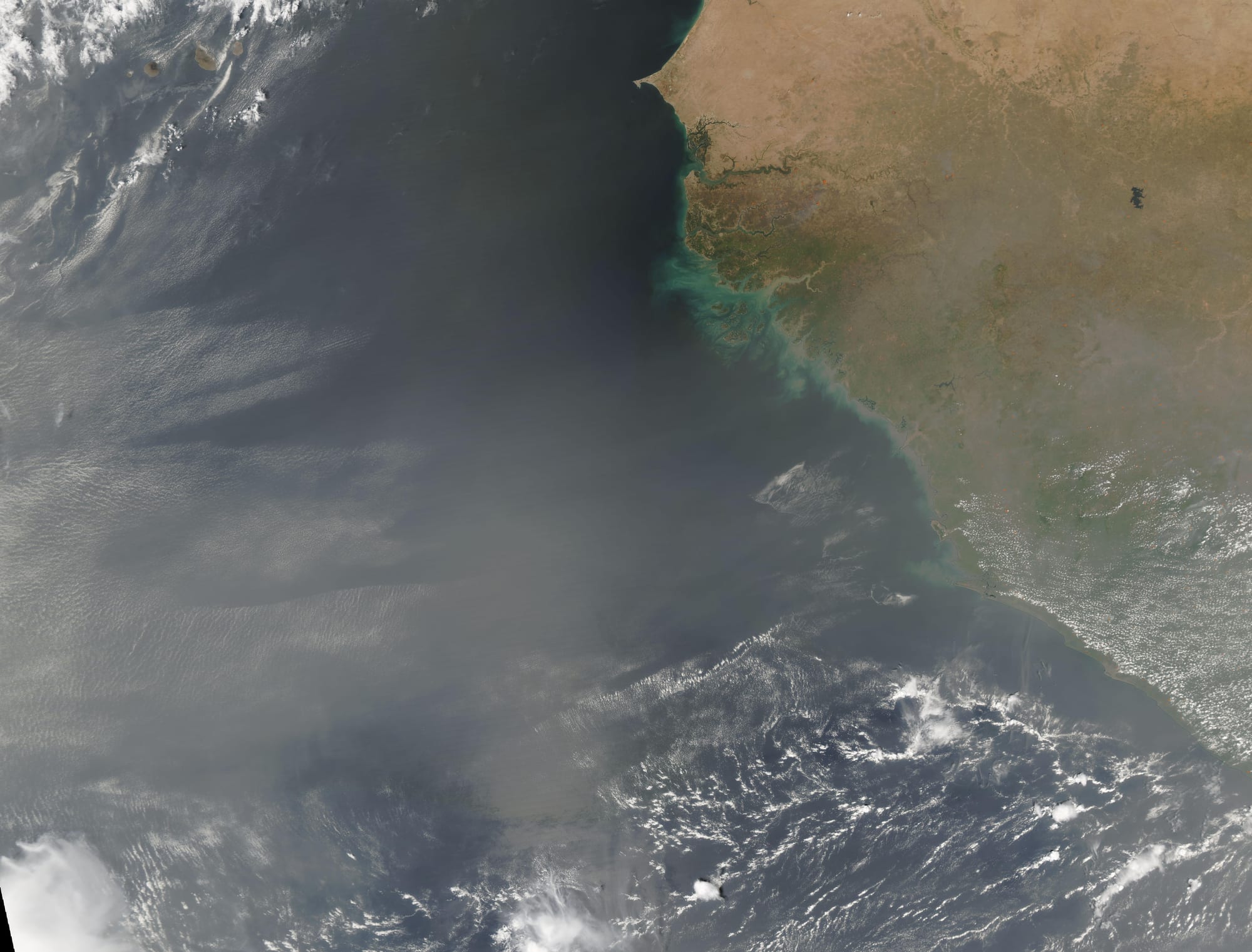
Strong winds sweep across the Sahara and lift fine dust high into the air, where it rides west across the Atlantic in a hot, dry layer of the atmosphere. Measurements by NASA's CALIPSO satellite suggest that an average of 182 million tonnes of dust leaves the Sahara each year, and that about 15 percent of it falls over the Amazon basin, roughly 27 million tonnes. Much of it comes from a single place: the Bodélé Depression in Chad, the dried bed of a vast prehistoric lake.
The dust matters because it carries phosphorus, a nutrient that plants need to grow. Most Amazon soils are short of phosphorus, and every year rain and floods wash some of what is there into the rivers. The dust that arrives from Africa replaces about as much phosphorus as the soils lose, so over the long term the rainforest depends on a desert on the other side of an ocean.
A dried-up lake in Chad
The Bodélé Depression sits at the southern edge of the Sahara in north central Africa and is the lowest point in Chad. It is about 500 km (310 miles) long and 150 km wide. Thousands of years ago it lay under Mega-Chad, a lake that covered roughly 400,000 square kilometres and was more than 180 metres deep. As the Sahara dried out, the water shrank back to today's much smaller Lake Chad, leaving behind a bed of silt and sediment baked in the sun.
That sediment is full of diatoms, single-celled algae with shells made of silica, which once lived in the lake's fresh water. Their fossil remains now form the surface of the depression and are the raw material of its dust.
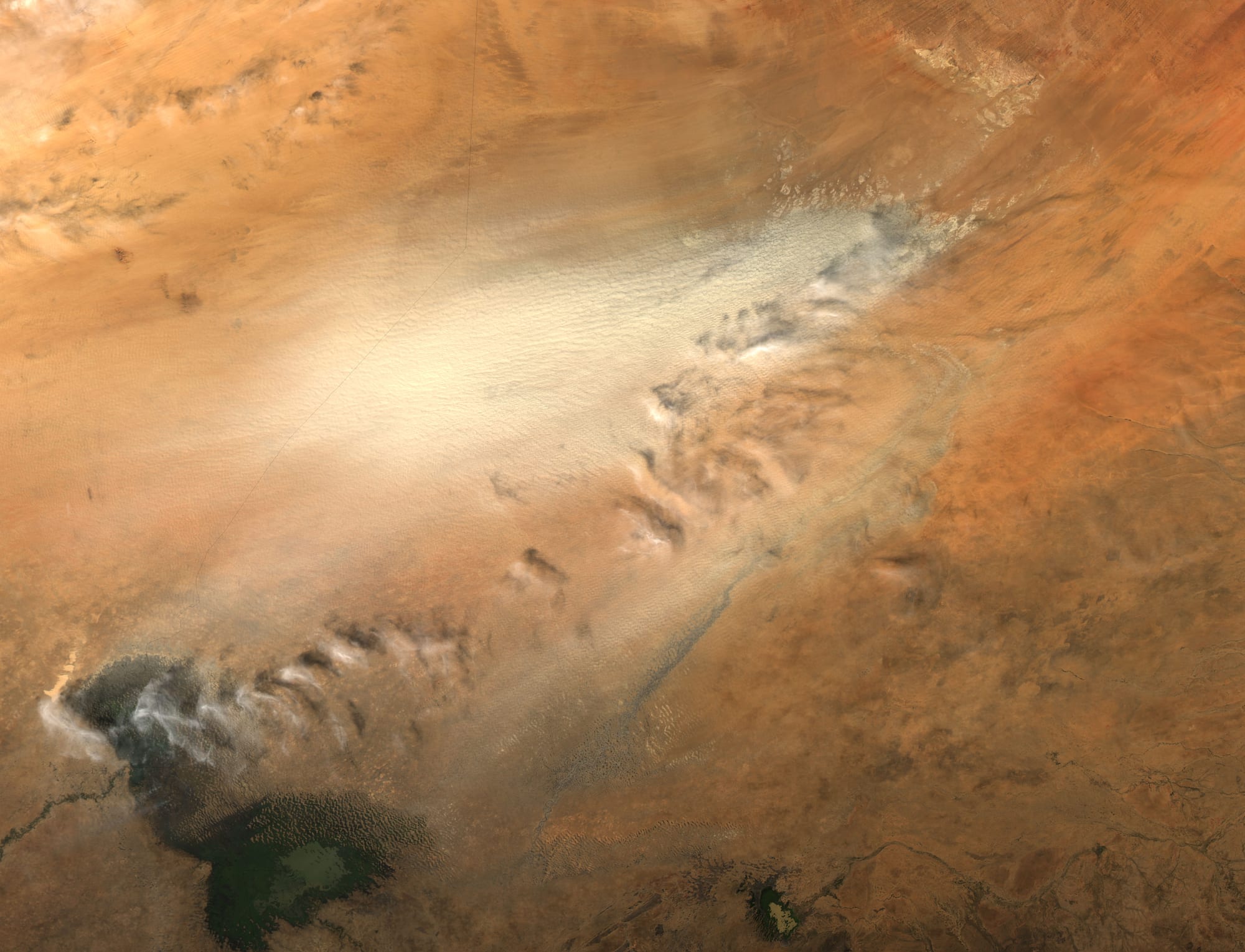
Dust storms rise from the Bodélé on about 100 days a year on average.
A wind tunnel between two mountain ranges
Location is what turns the Bodélé into a dust factory. North-easterly winds are squeezed through the gap between the Tibesti Mountains and the Ennedi massif in northern Chad, and funnelled straight across the depression. Researchers from the universities of Oxford and Sussex identified a fast current of air about a kilometre above the ground, now called the Bodélé Low Level Jet. It is active from October to March and relatively quiet from June to August, closely matching the seasons when the most dust is emitted.
Satellite studies published in 2004 found that storms cross the depression at about 47 km/h (29 mph), twice as fast as previously believed, and that the wind must reach at least 36 km/h to lift a dust storm. The flow is so regular that it has scoured a straight path into the ground. In winter the depression produces an average of 700,000 tonnes of dust a day. Research published by the same team in 2006 concluded that more than half of the dust that fertilises the Amazon comes from this one basin.
Riding the Saharan Air Layer
Once aloft, the dust travels inside the Saharan Air Layer, an extremely hot, dry layer of air that forms over the desert and slides over the cooler, more humid air above the Atlantic. As it moves out over the ocean, the dust-laden air is lifted above the denser marine air, sometimes to around 5,000 metres (16,000 feet). Large thunderstorm systems over North Africa can throw dust as high as 6,000 metres.
The westward route across the Atlantic is the busiest of the Sahara's dust pathways, carrying between 30 and 60 percent of all the dust the desert releases each year. Some reaches the Caribbean in five to seven days, and the largest plumes keep going for up to ten. Along the way much of the dust falls into the ocean, where its iron feeds phytoplankton, the microscopic plants at the base of the marine food chain. The rest continues to South America and settles over the forest.
Why the world's largest rainforest needs dust
The Amazon covers about 6 million square kilometres and makes up more than half of the rainforest left on Earth, yet most of the soil beneath it is poor. Studies have found that phosphorus is the dominant factor in how fertile the soil is for tree growth, and the Amazon's heavy rains and floods steadily wash it away into the rivers.
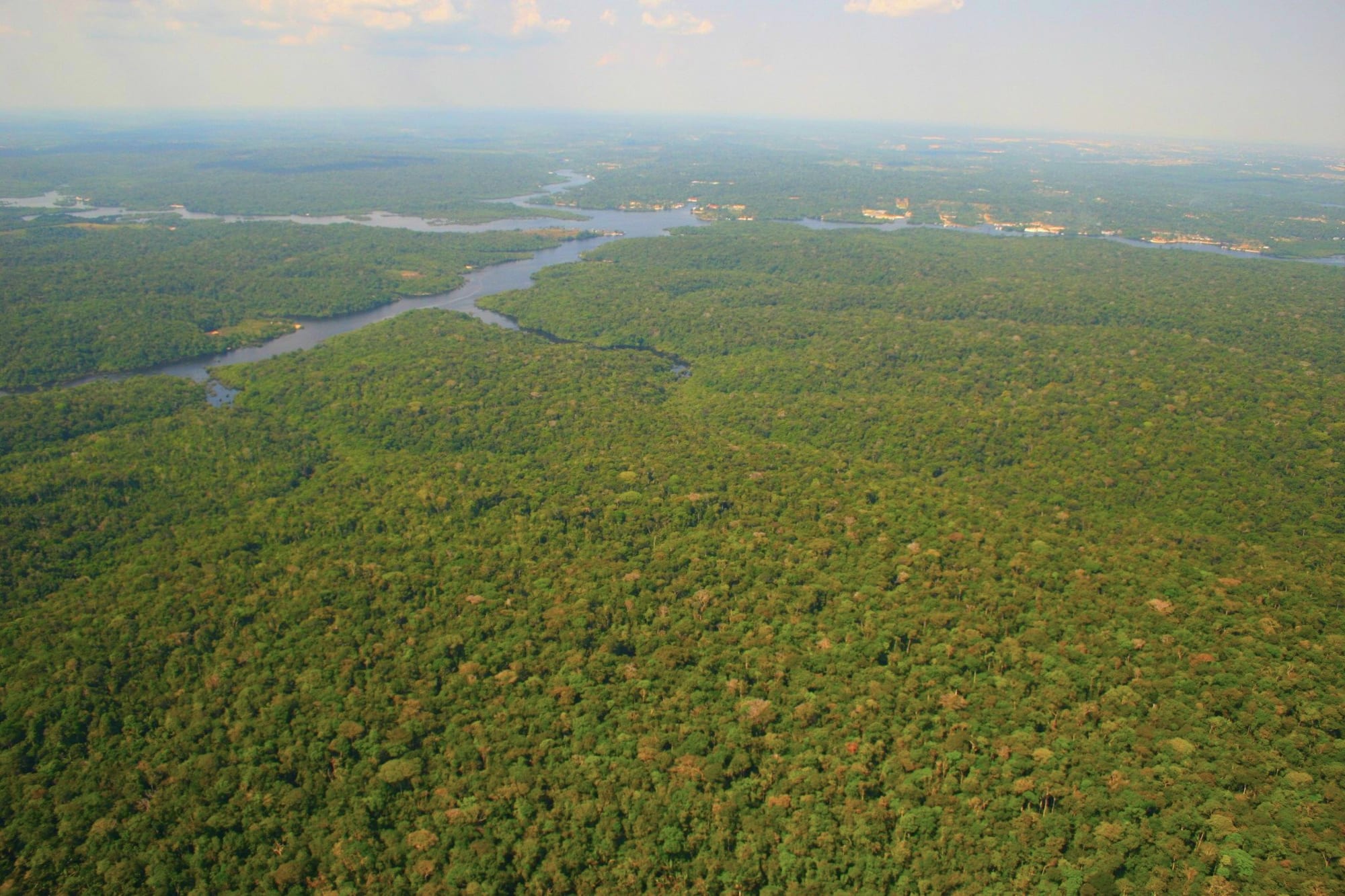
Cleared land in the Amazon stays productive for only a short time, so farmers keep moving on and clearing more forest.
The dust is not the forest's biggest source of airborne phosphorus. Particles released by living things and smoke, including smoke from fires burning in Africa, deliver more. Saharan dust accounts for roughly 13 percent of the phosphorus that settles on the basin from the air. But that amount is about equal to what the soils lose to running water each year. Without it, scientists estimate, the Amazon would slowly be drained of phosphorus, which is why its long-term health and productivity are tied to the desert.
Estimates of the total vary with the method. The CALIPSO figures point to about 27 million tonnes of dust reaching the basin each year, while the 2006 study of the Bodélé put the amount it alone deposits in South America at up to 50 million tonnes.
An ocean-wide link that keeps shifting
The same dust shapes weather and life well beyond the rainforest. By shading the sea surface, Saharan dust cools the North Atlantic and has been linked to as much as 35 percent of the year-to-year variation in its summer sea surface temperature. In June 2020 NASA reported a vast plume, nicknamed the "Godzilla" dust cloud, that spread about 8,000 km (5,000 miles) across the ocean, the largest in 50 to 60 years.
How a warming climate will change the flow is still an open question. The amount of dust that leaves the Sahara depends on the winds and rain in the desert and the Sahel. For now, every year, the bed of a lake that vanished thousands of years ago is still helping to feed a forest across the Atlantic.