Attractions & Natural Wonders · São Tomé and Príncipe
São Tomé and Príncipe: Five Attractions and Natural Wonders
A needle-shaped volcanic spire jutting straight up from the rainforest, a Portuguese fort turned museum on the history of the cocoa trade, and a second, far quieter island reached by a short flight
By Globeway Editorial · 30 September 2026
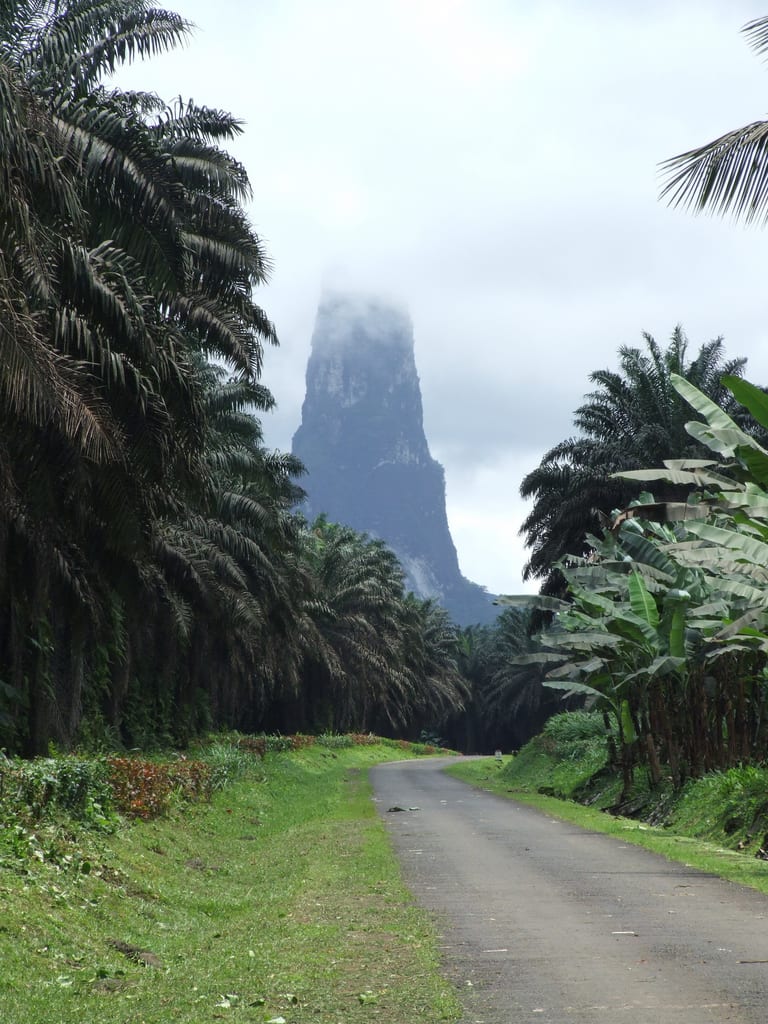
Africa's second-smallest country
São Tomé and Príncipe, a two-island nation in the Gulf of Guinea off the coast of Central Africa, is Africa's second-smallest country by both population and area, and one of its least-visited. Its volcanic terrain, dense rainforest, and history as a major (and historically brutal) Portuguese cocoa colony have left behind a landscape of dramatic peaks, crumbling colonial plantation estates, and beaches that remain remarkably undeveloped compared with much of the rest of the African coast.
The five below run across the main island of São Tomé, with the smaller, even quieter island of Príncipe as a further extension. The dry season (roughly June to September) is generally the most comfortable for hiking and outdoor sightseeing.
1. Pico Cão Grande
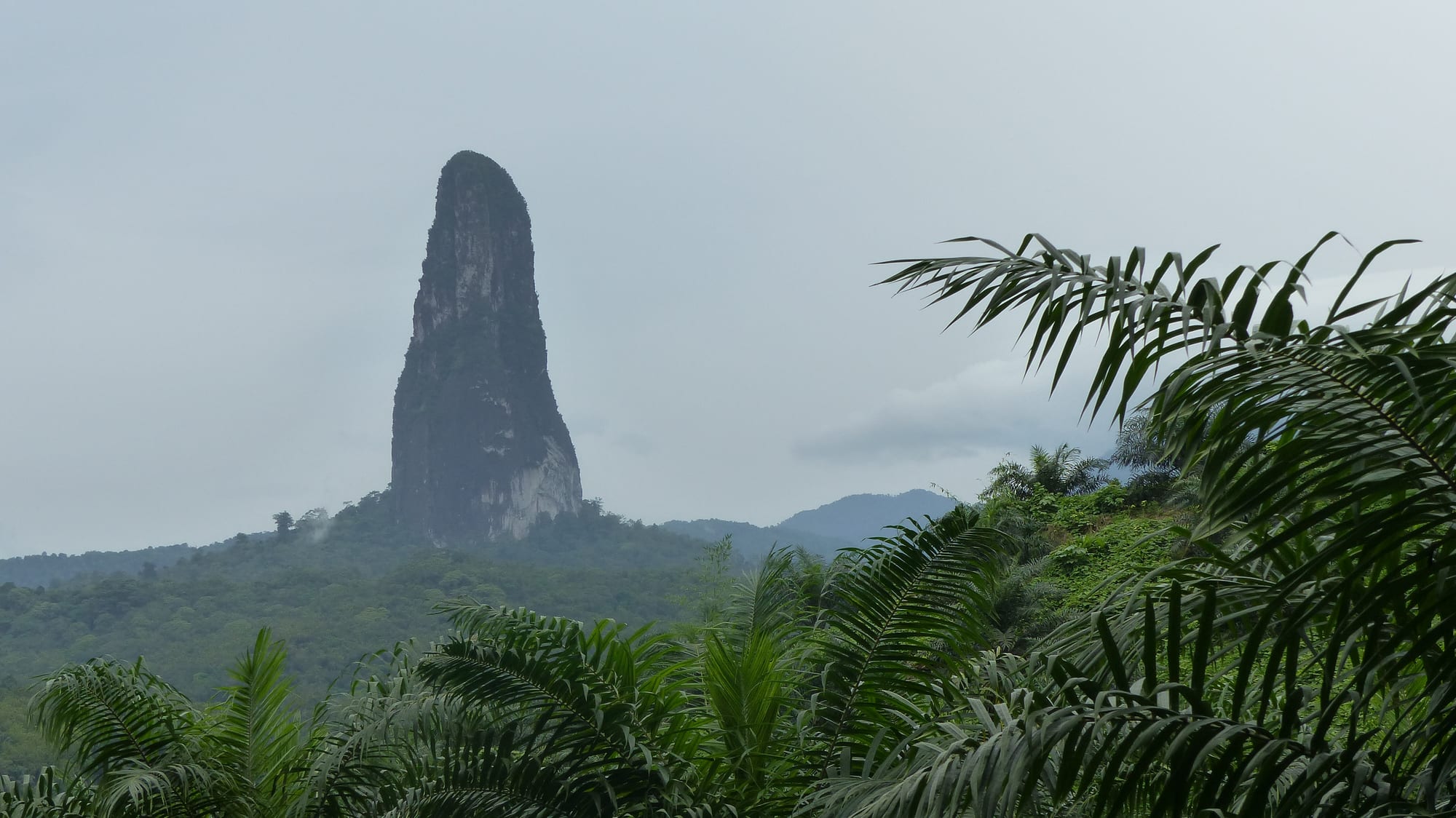
Pico Cão Grande, a sheer volcanic plug rising about 370 metres above the surrounding rainforest in southern São Tomé to a summit of 663 metres, is among the most dramatic natural landmarks in Central Africa — formed by magma solidifying in the vent of a volcano, left standing as the softer surrounding material wore away. It is visible from considerable distances and lies within Obô Natural Park, known among conservationists for its dense virgin rainforest.
2. São Tomé town and its cathedral
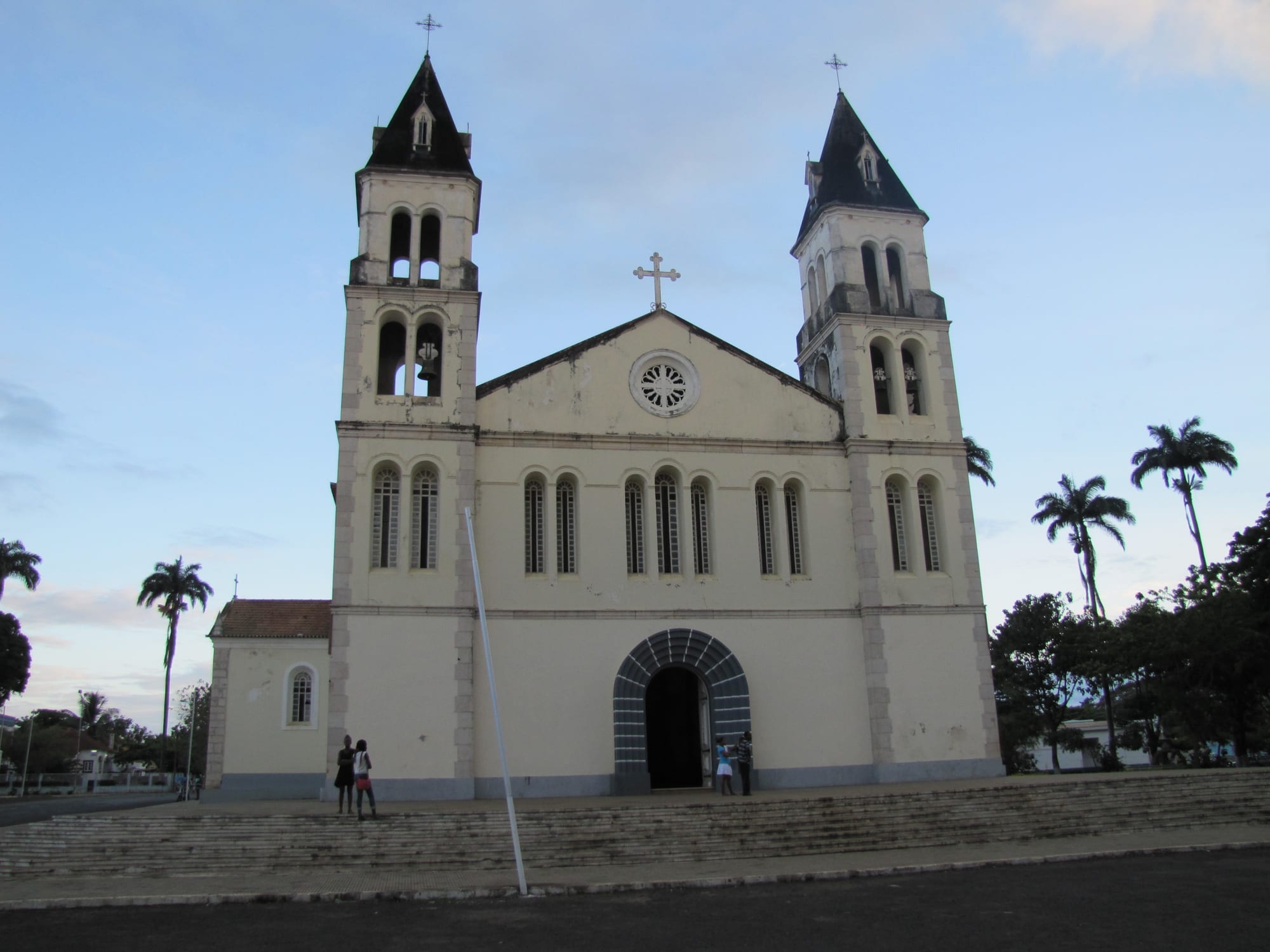
São Tomé town, the small capital, holds a compact core of Portuguese colonial architecture including the whitewashed Sé Cathedral, founded in the 16th century and largely rebuilt in the 19th and 20th centuries, alongside a lively central market and a waterfront that has changed relatively little in scale since the colonial era. It remains the practical base for most visitors before heading out to the island's rainforest and plantation sites.
3. Fort São Sebastião
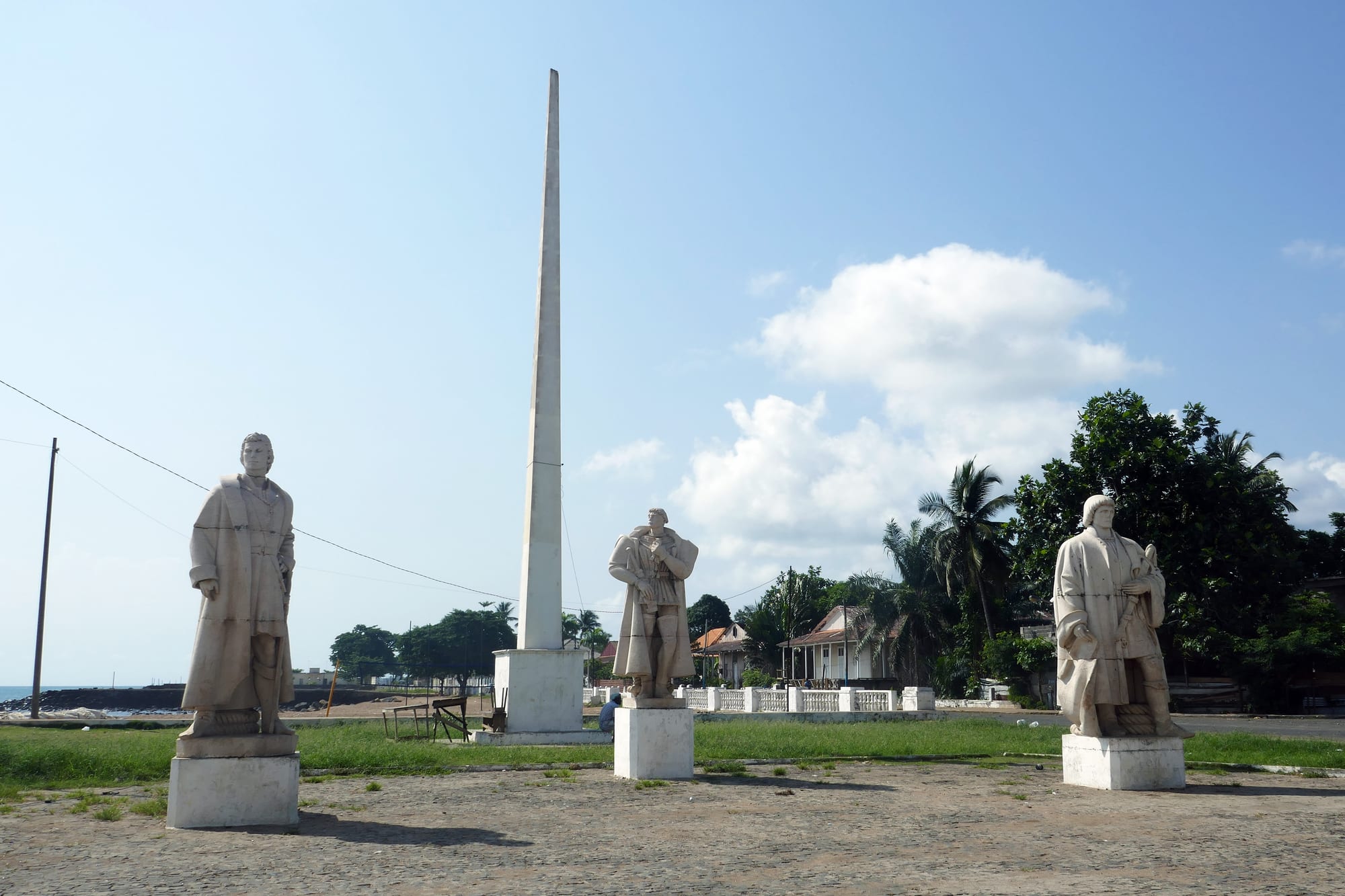
Fort São Sebastião, a Portuguese coastal fortress built in 1566 to guard São Tomé town's harbour, now houses the São Tomé National Museum, documenting the islands' colonial history including the plantation economy built on enslaved and later forced contract labour that defined the territory for centuries. Its seafront walls still look out over the bay.
4. A historic cocoa roça
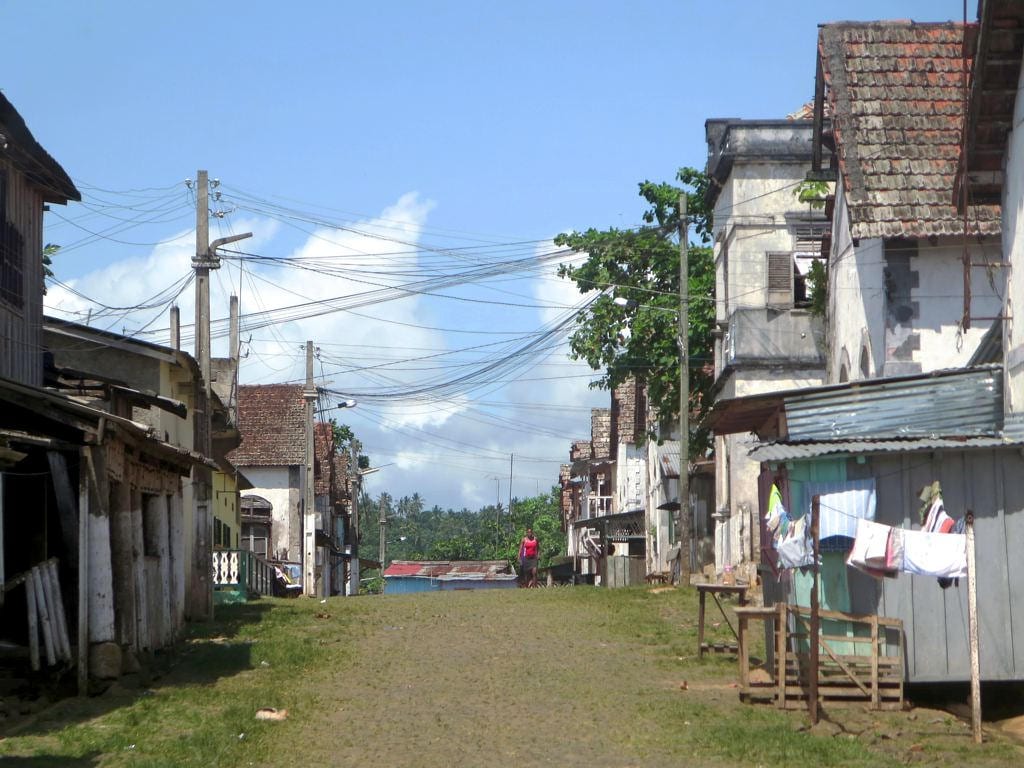
By 1905 São Tomé had become the world's largest cocoa producer, and the islands are still dotted with roças — large colonial-era plantation estates, many now partly abandoned or slowly being restored as boutique guesthouses — that tell a complex history of forced labour under Portuguese rule alongside the cocoa industry that still forms part of the islands' economy and export identity today.
5. Príncipe
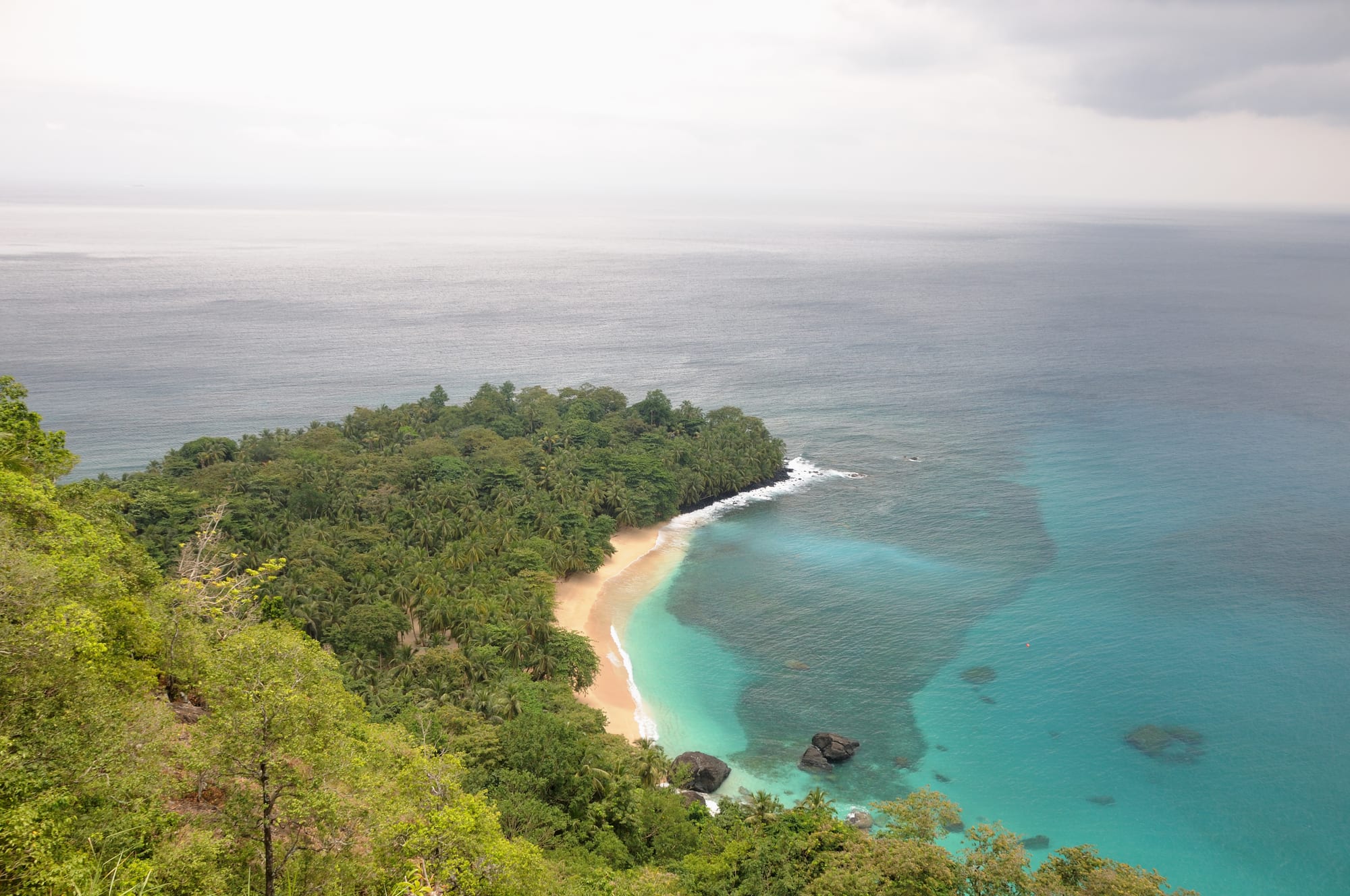
Príncipe, the smaller and far less-visited of the two main islands, is reached by a short flight (or an infrequent boat) and holds beaches such as Praia Banana alongside dense rainforest. Since 2012 the whole island and its surrounding waters have formed a UNESCO Biosphere Reserve, home to numerous species found nowhere else, and its small tourism industry is centred on a few upmarket lodges.
São Tomé and Príncipe rewards travellers with time and flexibility: a week on São Tomé covers the rainforest and colonial history comfortably, with a few further days on Príncipe for those seeking one of Africa's genuinely remote, undeveloped island escapes.