Culture & Customs · Sierra Leone
Sierra Leone: The Mosque Beside the Church
Muslim and Christian families under one roof, a greeting that carries the weight of respect, and women's societies whose masks are among the few in Africa danced by women
By Globeway Editorial · 30 September 2026
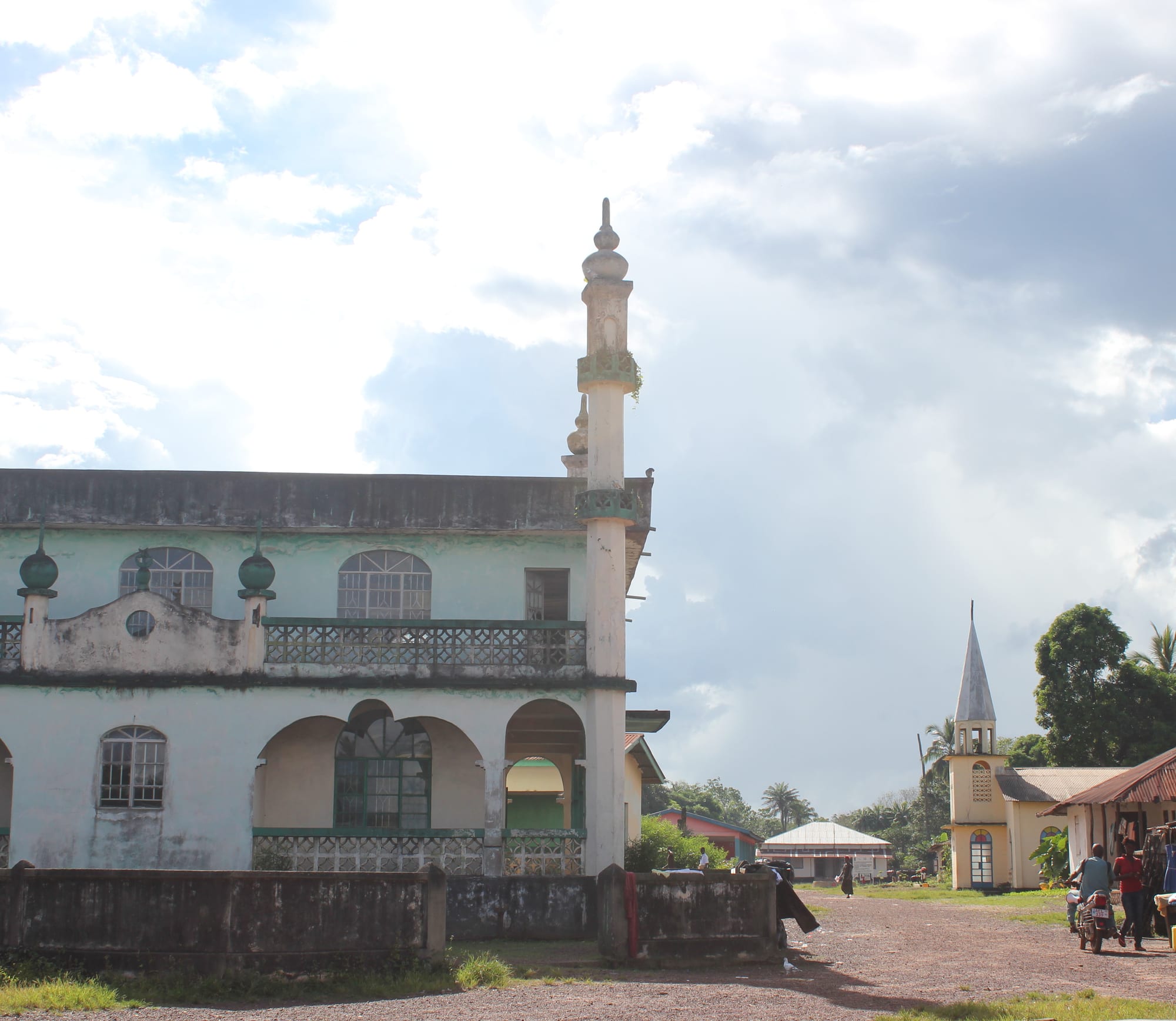
On a village road, the minaret of a mosque and the steeple of a church rise within sight of each other. On Friday the mosque fills; on Sunday the church does, and some of the same families send members to both. When the feasts of either faith come round, neighbours of the other join in without a second thought. Sierra Leone is a country where religious difference is, for most people, a matter of family life rather than division — and where the courtesies that bind a community together, from a proper greeting to a shared bowl of rice, are taken very seriously indeed.
Faith, identity and values
Islam is the majority faith. Government estimates cited by the US State Department put the population at about 77 per cent Muslim, 22 per cent Christian and around 2 per cent following traditional religion. Most Muslims are Sunni, with a substantial Ahmadi community; most Christians are Protestant, with Methodists and Pentecostals the largest groups. Marriages between Muslims and Christians are common, and many households include members of both faiths. Religious holidays of both traditions are celebrated as national occasions.
Belief is often flexible and layered. Accounts of Sierra Leonean religion describe people attending church or mosque while also honouring their ancestors, whose spirits are widely believed to take an interest in the lives of the living. Alongside the world religions sit the initiation societies found across much of the country: Poro for men and Sande, also known as Bondo, for women. They teach proper conduct, custom and practical skills, mark the passage into adulthood, and cut across ethnic lines. Their inner workings are kept secret from non-members.
The country is home to around eighteen ethnic groups, among them the Mende, Temne and Sherbro, as well as the Krio, descendants of the freed and formerly enslaved people who settled the coast from the late eighteenth century. Krio, the English-based language that grew up among them, is now the lingua franca that allows people of every background to talk to one another, and it is one of the strongest threads in a shared national identity. Beneath the diversity lie common values: the importance of the extended family, deep respect for elders, and generous hospitality, values that held communities together through the hardship of the civil war of 1991 to 2002 and the years of recovery that followed.
Greetings and meeting people
Greetings are not a formality to be hurried through. Courteous, even eloquent, greetings are described as a way of life, and taking time over them is part of showing respect. Among Krio speakers, a standard greeting is "Ow de body?" — literally, "How is the body?" — and friends often greet each other with lively handshakes and hand slaps.
Respect for age and status shapes every encounter. An older person may be greeted with a slight bow and more formal speech, and when shaking hands with someone senior it is customary to support the right forearm with the left hand, a gesture that suggests the other person's hand carries great weight. Elders are commonly addressed as ma or pa, auntie or uncle, whether or not they are relatives. The right hand is the proper one for greeting, giving and receiving.
Appearance matters too. Sierra Leoneans generally take care over neatness of dress, and turning up to a meeting, a service or a family occasion looking tidy is itself a sign of respect for the people present.
Hospitality and being a guest
Hospitality is generous and spontaneous. A good host will call a passer-by to come and share a meal, and the invitation is meant sincerely. Food is usually served from one large dish placed in the middle of a circle, and everyone washes their hands before sitting down. Each person eats from the part of the dish directly in front of them, using the fingers of the right hand, and reaching across the dish into someone else's portion is very bad manners. In many homes men and boys eat separately from women and girls.
A guest is expected to thank the host warmly, and generously, for the meal. On ceremonial occasions, the scale grows: large platters of rice are passed round to guests until everyone is full, and a portion may be set aside for the ancestors. Kola nuts carry meaning well beyond the table, and they appear among the gifts a groom's family brings when asking for a bride.
Festivals and life's big moments
Sierra Leone keeps the calendars of both its faiths. Eid al-Fitr at the end of Ramadan, Eid al-Adha and the Prophet's Birthday are public holidays, as are Good Friday, Easter Monday, Christmas and Boxing Day, and it is normal for neighbours of one faith to share in the celebrations of the other. Independence Day on 27 April is the main national occasion, and New Year brings music, gatherings on the beaches and masquerades in the streets.
The lantern parade is one of Freetown's most distinctive traditions. It is said to have been brought from Banjul in the Gambia in the 1930s, and began small; from 1961 its competitions were held in celebration of Ramadan. Over the decades it grew into a procession of large illuminated floats built from tissue paper, wood and wire, with rival groups competing for the best design. The regular competitions were ended by the civil war in 1991 and have since returned only intermittently.
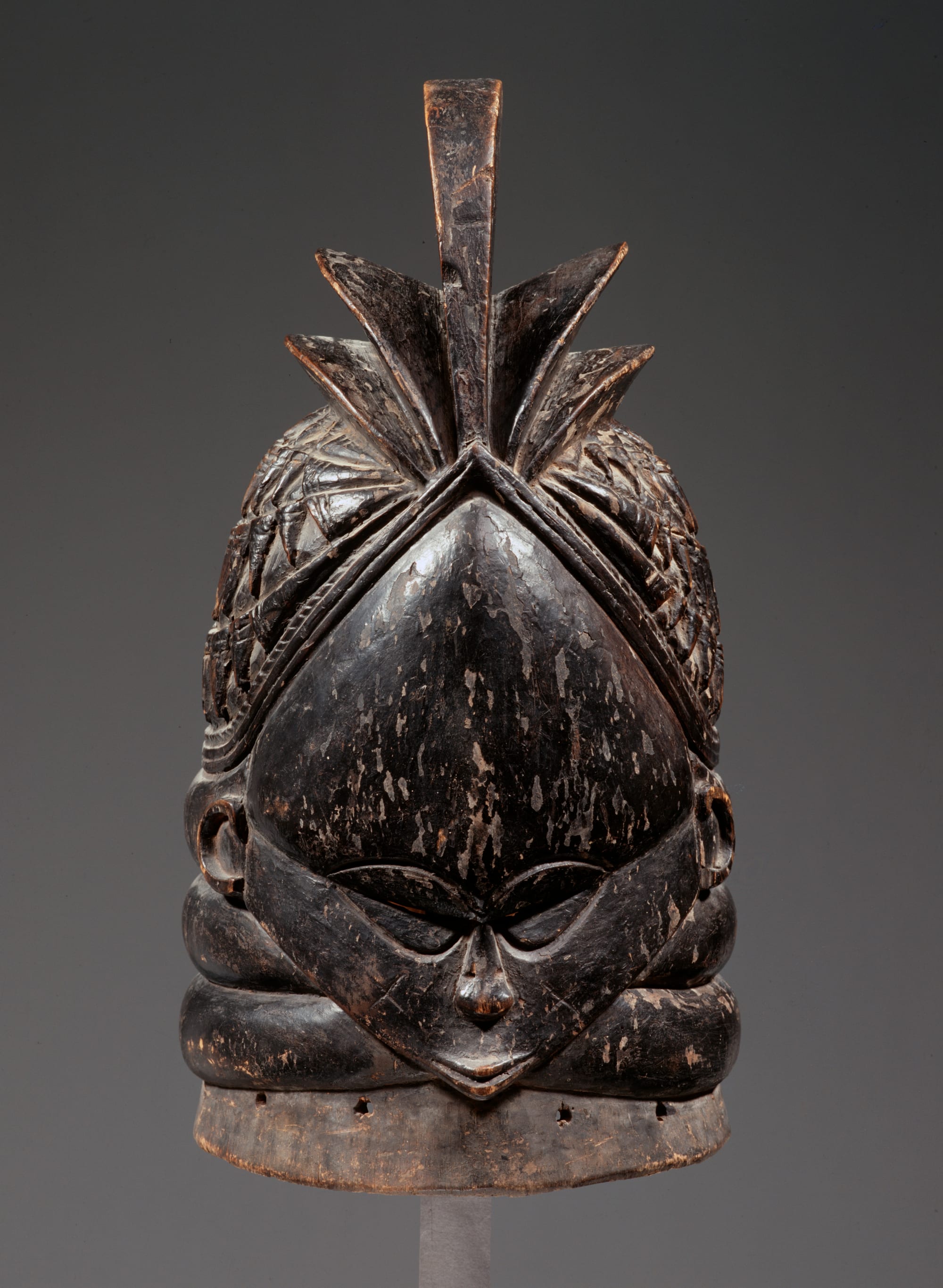
Initiation into Sande or Poro is, in much of the country, the step that turns a child into an adult member of the community, and the sowei mask appears in public when girls complete their initiation, as well as at the installation or funeral of a paramount chief. Bondo initiation has also traditionally included female genital cutting. Sierra Leone has no law banning the practice; a proposed ban for minors was dropped from the Child Rights Act passed in 2024, and the deaths of girls after initiation that year renewed pressure for change. UNFPA and the government are now promoting "Bondo without cutting", which keeps the ceremonies and teaching while removing the physical harm, and some communities have adopted it.
Marriage is central to adult status. Traditionally, the groom's family presents a bride price to the bride's family, often a mixture of money and fine cloth, and gifts such as kola nuts may be wrapped in white cloth as a mark of respect for the family. Among the Krio, the groom's parents set a "put stop" day, after which the young woman is no longer free to entertain other suitors. Marriages arranged by families have increasingly given way to matches of the couple's own choosing.
Funerals reflect a firm belief in God and in a spirit world where the dead remain close. Among the Krio, awujoh feasts, of Yoruba origin, are held in remembrance of the dead, most often on the first anniversary of a death and sometimes on later anniversaries. Washing the body has long been part of preparing the dead for burial. During the Ebola epidemic of 2014 to 2016 such contact spread the virus, and "safe and dignified" burials were introduced in which trained teams handled the body while families watched and prayers were said from a distance — a painful adjustment that many communities came to accept.
Arts, crafts and music
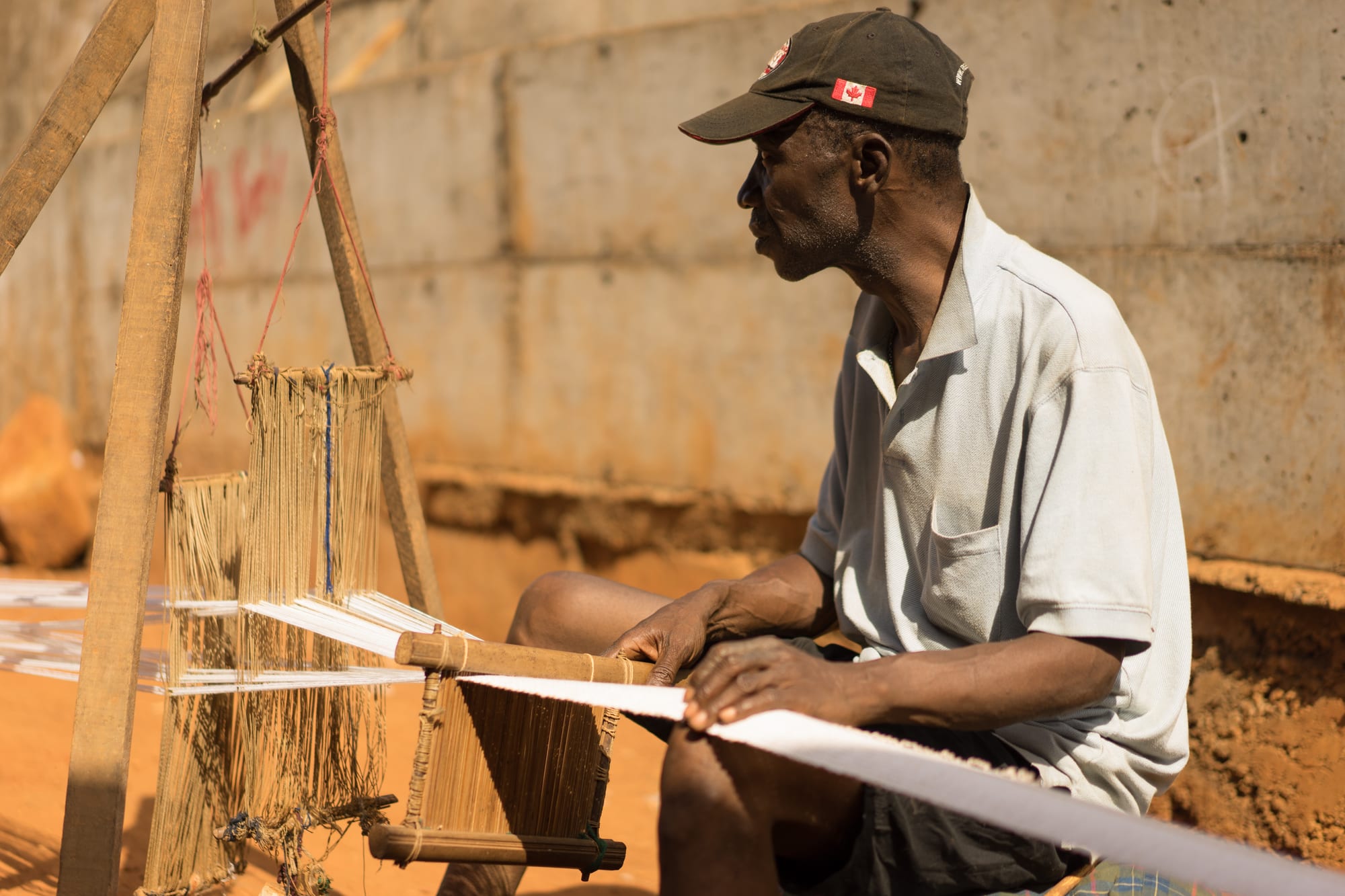
Many of Sierra Leone's arts grew from the life of the societies. Masks, carved figures and costumes are made for their ceremonies, and the sowei mask in particular, with its ringed neck and sculpted coiffure, is prized in museum collections around the world. Woodcarving, basket making, tie-dyeing and batik are all practised, and gara, a tie-dyed cloth, is among the country's best-known textiles. Cotton is also woven by hand, in long narrow strips on simple wooden looms.
Music is part of almost every gathering, and people learn to sing, dance and drum from childhood. Gumbe, the music most closely associated with the Krio, is driven by the gumbe drum, a box or upturned stool on which the player sits, together with small wooden drums, a shaker that may be no more than a bottle and a tin knocked together, and a saw rasped rhythmically with a knife. The square frame drum is thought to have arrived with the Jamaican Maroons who settled in Freetown in the early nineteenth century. Gumbe, maringa and Milo jazz are counted among the important popular genres of Krio culture, and palm-wine guitar music and Afrobeats are part of the national soundtrack too.
Krio masquerade societies bring costumed figures out onto the streets at Christmas, Easter and New Year, and the same competitive creativity once went into the lantern floats. The country has a national dance troupe, but most music and dance is learned and performed in the community rather than on a professional stage.
Dos and don'ts for visitors
- Do greet people before anything else, and greet elders with extra respect — a slight bow, or the right forearm supported by the left hand when shaking hands.
- Do address older people as ma, pa, auntie or uncle; it is polite, not overfamiliar.
- Do use the right hand to eat, greet, give and receive, and wash hands before a shared meal.
- Don't reach across a shared dish; eat only from the portion in front.
- Do keep a respectful distance from society masquerades and initiation ceremonies unless invited, and ask before photographing people.
- Do carry identification; photographing military sites, government buildings, prisons and courthouses is prohibited and has led to arrests.
- Don't become involved with drugs or diamond smuggling; penalties for both are severe and prison conditions are harsh.
- Do be aware that sex between men is illegal and attitudes are conservative, so discretion is advised.
What to take away
Sierra Leone's customs rest on respect — for elders, for guests, for other people's faith — and a visitor who greets properly, eats with the right hand and accepts a place at the shared dish will find that respect returned many times over.