Culture & Customs · Togo
Togo: The Sacred Stone and the Wrestling Ring
Churches, mosques and Vodun shrines in the same neighbourhoods, greetings that always ask after the family, and a calendar marked by a sacred stone's colour and a season of initiation wrestling
By Globeway Editorial · 30 September 2026
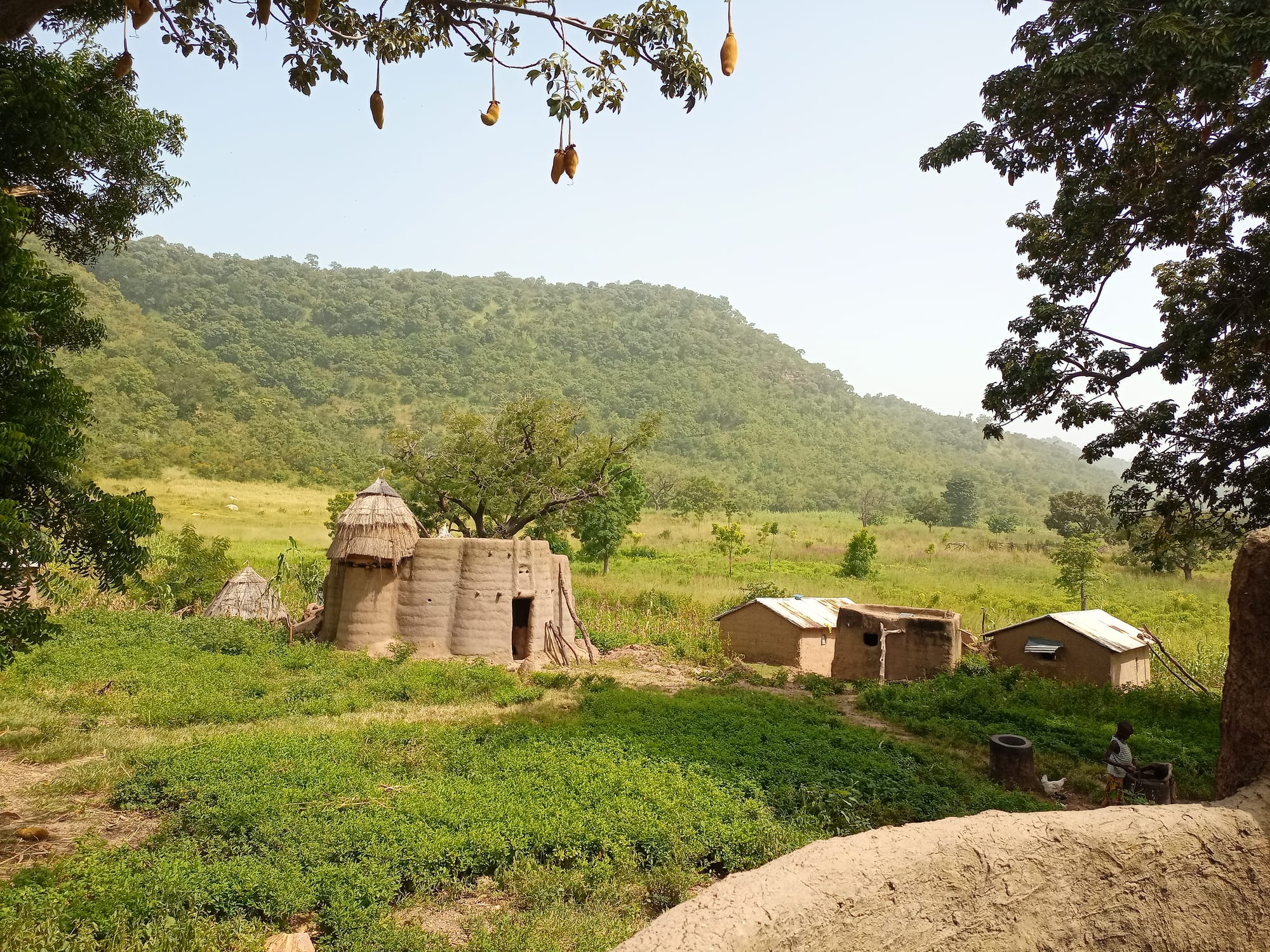
A visitor steps into a family compound in Togo. Before anything else, a cup of water is offered, and before any business is raised comes the greeting: a handshake, then a patient round of questions about the family, the children, everyone's health, each answered and returned in kind. Only when the greeting is complete does the conversation move on. The ritual is small, but it holds a good deal of what matters in Togolese life: a generous welcome for anyone who arrives, a close web of family and neighbours in which sharing is the norm, deep respect for the old, and a sense that relationships come before tasks.
Faith, identity and values
Togo is a country of several faiths living side by side. According to the 2022 census, around 49 per cent of the population is Christian, about 19 per cent is Muslim and 17 per cent follows traditional religions, while close to a tenth report no religion. Roman Catholics make up the largest Christian group, at around a quarter of the population, alongside Lutherans, Methodists, Baptists and the Assemblies of God, and a number of churches, such as the Celestial Church of Christ, that blend Christian worship with older local forms.
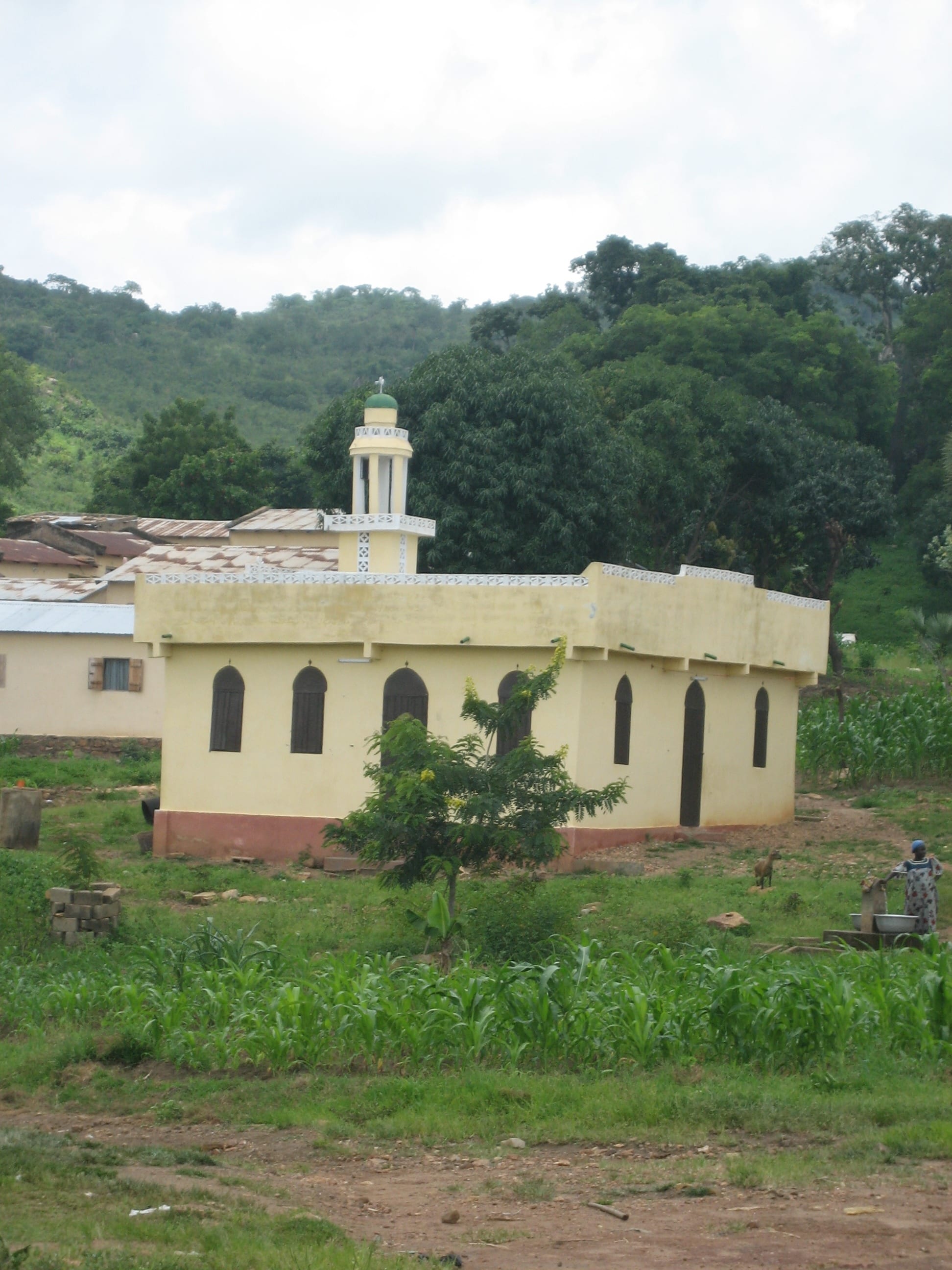
The numbers do not tell the whole story, because belonging to one faith rarely excludes the others. The US State Department notes that about half the population, Christians included, also practise Vodun, and traditional beliefs remain widely followed by people who have converted to Christianity or Islam. Vodun, which Togo shares with neighbouring Benin, is a structured religion of deities, ancestors and spirits, and it shapes ideas about healing, justice and the calendar. Religious officials, whether Catholic priests or Vodun priests, are held in the highest esteem in both towns and villages, and traditional healers remain influential, particularly in matters of health.
The country is ethnically diverse, with dozens of peoples and languages. The Ewe and related peoples are prominent in the south and the Kabye and others in the centre and north, and each group keeps its own ceremonies and forms of initiation. What unites them is a strongly communal outlook. Communities are close and built on networks of extended family and neighbours, and sharing is expected rather than remarked upon. Old people and village elders are highly esteemed, and deference to age is a steady thread in everyday behaviour.
Greetings and meeting people
Greetings matter, and they are rarely hurried. A handshake is the usual opening, followed by the traditional exchange of questions about the other person's family and health. Skipping straight to the point, whether in a shop, an office or a village, can come across as cold. In French, the official language, bonjour and bonsoir serve for good morning and good evening, and people also greet each other in the two principal local languages, Ewe in the south and Kabye in the north. In the countryside, children may call out "yovo", a word for a foreigner or a white person, as a visitor passes; it is usually curiosity rather than hostility.
Physical affection between couples is kept private, and public displays of affection are seldom seen. Friendship between people of the same sex is often shown openly, and men and boys may walk hand in hand without anyone reading anything into it. At many social gatherings men and women keep largely to their own groups.
Appearance is part of courtesy. Dress is read as a sign of respect, and Togolese people are typically well groomed, in clean, pressed clothes, even where the setting is informal. Tight or revealing clothing, and anything exposing the stomach, back, shoulders or knees, is rarely appropriate, and shorts and flip-flops look out of place at any meeting or formal occasion. Togolese people are also known for their sociability, and much of social life revolves around community events. Ceremonies and fêtes of all kinds are held throughout the year, and a visitor who accepts an invitation to one is generally warmly received.
Hospitality and being a guest
Hospitality is taken seriously. When guests arrive, water is offered first, as a welcome, and the greetings follow, with enquiries after each member of the family. Sharing is simply the norm, and guests can expect to be included in whatever the household has.
Meals are most often eaten with the right hand, while cutlery is more common in better-off urban households. Visitors are not expected to bring a grand present. A small token of friendship is more than enough: a souvenir or picture from home, a calendar, something for the house, sweets that will not melt in the heat, or photographs to give away. It is the gesture that counts rather than its value.
Festivals and life's big moments
The national calendar reflects the country's mix of faiths. Christmas, Easter Monday, Ascension, Whit Monday, the Assumption and All Saints' Day are public holidays, as are the Muslim festivals of Tabaski, the Feast of the Sacrifice, and Korité, which marks the end of Ramadan. Independence Day on 27 April recalls independence from France in 1960.
Some of the most striking occasions belong to particular peoples. For the Guin, the new year begins with the taking of the sacred stone, a ceremony known as Ekpessosso, held each year in late August or early September, when crowds gather dressed in white. A procession of priestesses and priests moves with songs and dances, and the climax comes when a priest emerges from a sacred forest carrying the stone, whose colour is read as a message for the year ahead: white for peace and prosperity, sky blue for abundant harvests, red for hardship. The ceremony is also a time of purification, when people are urged to forgive one another and settle their debts, and it has been held for more than three and a half centuries. These New Year rites of the Guin country were added to UNESCO's list of intangible cultural heritage in 2025.
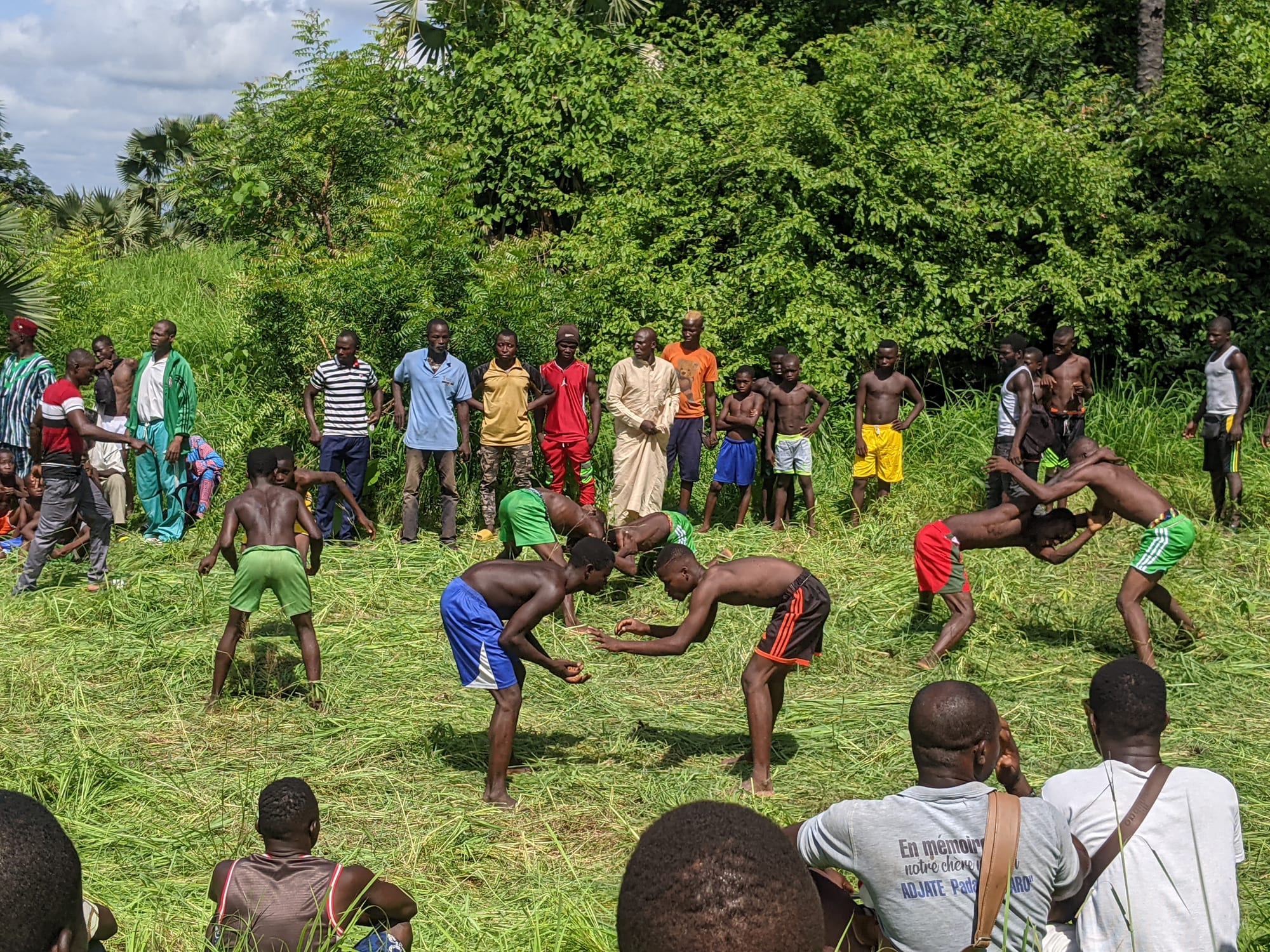
Among the Kabye, the great annual event is Evala, a season of wrestling that marks the passage of young men into adulthood. After weeks of preparation, in mid-July thousands of young men aged around 18 to 20, known as evalo, wrestle in matches held across the Kara region, watched by large crowds amid drumming and song. The contest tests strength, strategy and courage, and coaches pass on both wrestling technique and the rituals that surround it. As one participant put it, the wrestling shows that a young man is ready to marry and to defend his family and community, and by tradition a man should not take a wife before becoming an evalo. Togo has begun the process of seeking UNESCO recognition for the tradition.
Initiation is not confined to one people or one season; among many groups, initiation ceremonies begin in early childhood and continue through adolescence. Childbirth has its own body of knowledge, and Togo is among the countries whose midwifery knowledge, skills and practices are recognised on UNESCO's list. Infants are cared for mainly by their mothers and the women of the household, and among some peoples a newborn is first presented to the father only eight days after birth.
Marriage usually involves both customary and civil ceremonies, with an appearance before a magistrate required for the union to be recognised by the state. Across the country, bride wealth, given by the groom's side to the bride's family, remains important.
Funerals are among the most important events in Togolese life, and they can be lavish by any standard. Ceremonies may continue for more than a month, and families sometimes sell or mortgage land or houses to meet the cost of giving the dead a proper send-off. A sudden death, sometimes called a hot death, is treated differently, with shorter ceremonies.
Arts, crafts and music
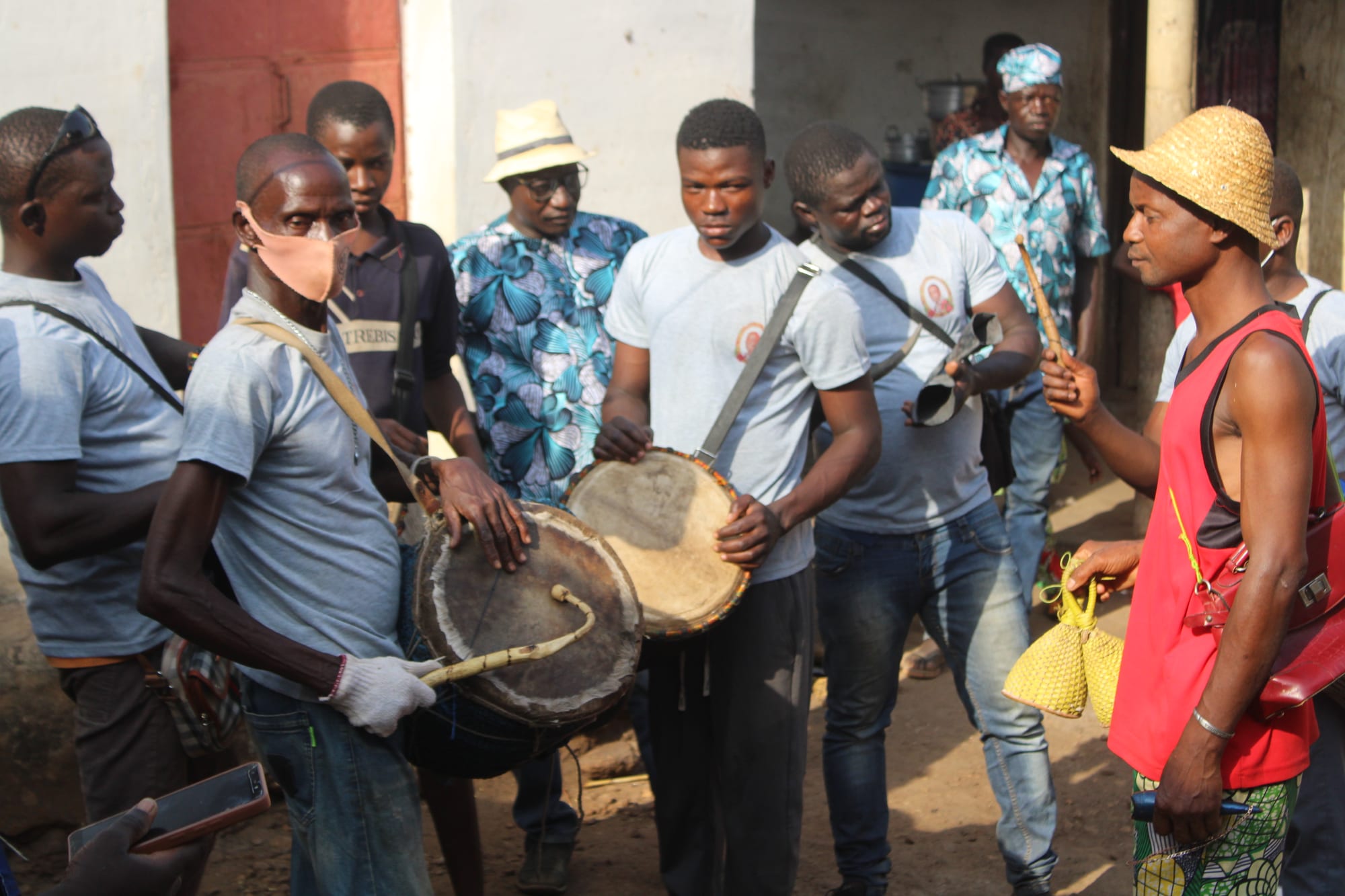
Drumming and dance accompany almost every ceremony, from village fêtes to initiations and funerals, and each people has its own rhythms and dances. Masquerade is an important art in parts of the country. In Gelede, carved masks, often crowned with animals such as the snake, a symbol of power, or the bird, messenger of the mothers, appear with splendid costumes, singing, dancing and drumming. Performances usually take place at night in public squares after the harvest, at important events or at times of drought or epidemic, and their epic and lyric verses mix history with a good deal of irony and satire.
Architecture is an art in its own right in the north-east, where the Batammariba build takienta, mud tower houses, many of them two storeys high, with flat or conical thatched roofs and granaries of an almost spherical form rising above a cylindrical base. Their layout reflects the structure of society, and the villages around them include ceremonial spaces, springs, rocks and sites reserved for initiation. The landscape of Koutammakou, which extends into Benin, is a UNESCO World Heritage Site, and the tower houses have come to be seen as a symbol of Togo as a whole.
Cloth carries meaning too. Brightly coloured kente cloth, whose weaving tradition Togo shares with neighbouring Ghana, is among the country's best-known textiles, and printed wax cloth, sold in every market, is worn for everyday life and chosen with care for ceremonies.
Dos and don'ts for visitors
- Do check the latest government travel advice before any trip; the UK advises against all travel within 30 km of the Burkina Faso border (except Dapaong and the N1 highway) and all but essential travel to the rest of the Savanes region.
- Do take time over greetings, shaking hands and asking after family and health before getting down to business.
- Do show particular respect to elders, who are highly esteemed in Togolese society.
- Do accept the water a host offers on arrival; it is the customary first gesture of welcome.
- Do eat with the right hand when a meal is taken without cutlery.
- Do dress neatly and conservatively, covering shoulders and knees.
- Don't photograph military installations, government buildings or airports; it is illegal.
- Don't make public displays of affection, and be aware that same-sex relationships are illegal in Togo.
What to take away
In Togo the old gods, the church and the mosque share the same streets, and visitors who greet patiently, accept what is offered and honour the elders will find themselves welcomed into a remarkably generous and sociable culture.