Culture & Customs · Turks and Caicos Islands
Turks and Caicos Islands: The Saw, the Straw and the Sloop
A small, church-centred island society whose national music is scraped from a carpenter's saw, whose baskets are stitched from dried grass, and whose manners begin with a good morning
By Globeway Editorial · 30 September 2026
A band sets up in the corner of a celebration. One musician holds a carpenter's handsaw against his body, flexes the blade and scrapes an old knife across its teeth, producing a rasping, rhythmic sound somewhere between a shaker and a washboard. An accordion picks out the tune, a goatskin drum and a triangle join in, and before long couples are on their feet, hips swaying in the bambashay. This is ripsaw, the national music of the Turks and Caicos Islands, and it says a good deal about the place: a culture made from whatever was to hand on a scattering of low, dry islands, carried through slavery and hard times, and still brought out whenever islanders want to celebrate being themselves.
Faith, identity and values
The people with roots in the islands are known as Belongers, or Turks and Caicos Islanders. They are, in the words of the tourism board, primarily the descendants of enslaved Africans brought to work the salt ponds and plantations. Tourism has since transformed the population, and Belongers are now a minority in their own territory, living alongside large communities from Haiti, the Dominican Republic, Jamaica, North America, Europe and elsewhere. That makes questions of identity, and of who belongs, a live subject in everyday conversation.
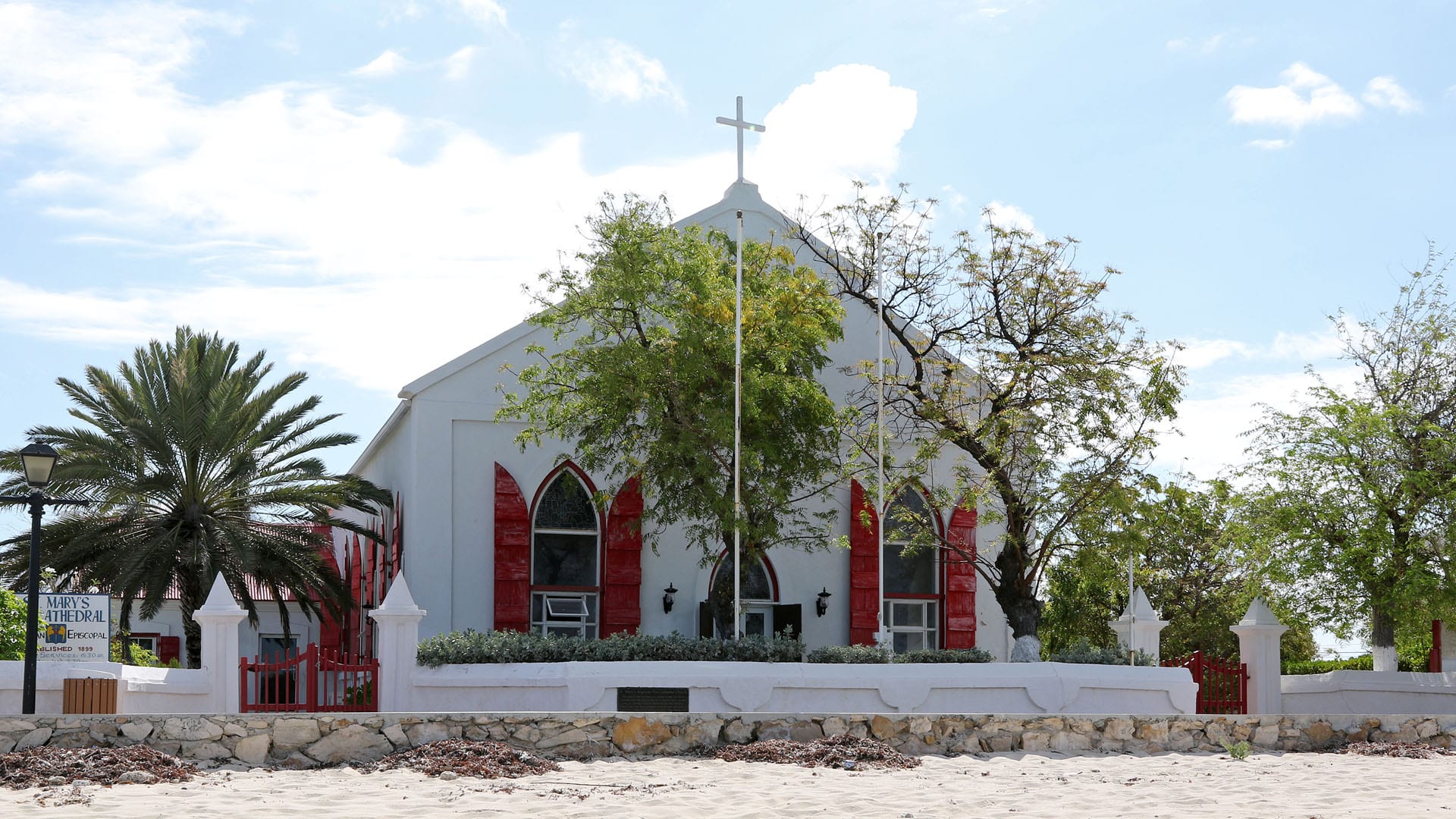
Christianity is the backbone of island life. The preamble to the constitution describes the islanders as "a God-fearing people with convictions based on sound Christian culture, values and principles, tolerant of other religions". Anglican, Methodist, Baptist, Seventh-day Adventist and Pentecostal churches are all well established, many of them rooted in the missionary work of the nineteenth century, and the churches serve as community centres as much as places of worship, hosting cultural events, classes and social gatherings. The islands' growing diversity shows up in the pews too, with a sizeable Roman Catholic community alongside the Protestant churches, and a small Muslim community also exists.
Beneath the faith sit values common to many small Caribbean societies: a strong sense of family, respect for seniority and for elders, and a certain reserve about personal display. Island society is generally described as conservative, if not dramatically more so than in Britain or North America. Belongers themselves take a generous view of the visitors on whom their economy depends. A survey of Belongers by the anthropologists Catherine Cameron and John Gatewood found that most rated their encounters with tourists positively, describing them as friendly, polite and interested in local culture, and felt that visitors generally respected local rules and customs.
Greetings and meeting people
A handshake is the usual greeting, much as in Britain or the United States. What matters more is the order of things: in the islands, a greeting comes before anything else. It is customary to open with "good morning" or "good afternoon" before asking a question or making a request, and when walking into a room where people are already waiting or gathered, such as a government office, it is usual to greet the whole room. Launching straight into business without that small courtesy can come across as abrupt.
Respect for age and position runs through these exchanges. Older people and those in authority are treated with evident deference, and a visitor who shows the same regard will fit in easily. English is the language of daily life, though Haitian Creole and Spanish are widely heard among newer arrivals.
Hospitality and being a guest
With little arable soil and limited land, island farming has always been small-scale, and the traditional table relies above all on the sea. Food is shared in a communal spirit, and one of the easiest ways to join in is at a weekly fish fry, an open-air evening of food stalls, music and junkanoo bands that draws residents and visitors alike.
Dress is the area where visitors most often misjudge local expectations. Swimwear belongs on the beach and by the pool. Several businesses, notably the main supermarkets, do not admit people in beachwear, and security staff will generally turn away women in bikinis and men without shirts. Restaurants, even the most expensive, tend to have a casual dress code, but casual is not the same as beachwear. Photographs of scantily dressed tourists do occasionally circulate on local social media, a sign of how noticeable the difference can be. Modest clothing is expected at church, where visitors are welcome at services.
Tipping is part of the culture here. A tip of around 15 per cent is expected for nearly all service work, including taxi drivers and waiting staff. Environmental manners matter too: many residents strongly dislike seeing visitors feed wildlife, touch or stand on the reef, or fish and collect conch in protected areas.
Festivals and life's big moments
The islands' best-known celebration is Maskanoo, a street festival held on Boxing Day. After an evening of live music, junkanoo bands parade in costumes made from painted and decorated cardboard, built around a different theme each year, and the night ends with fireworks. The festival was created in 2009, but it draws on two older roots. One is junkanoo, the costumed parade music brought back from the Bahamas by islanders who had gone there to work. The other is a local tradition known as the Masses, dating back to at least 1811, when enslaved people, mostly men, spent the early morning of Christmas Day, one of their few days of leave in the year, singing and dancing in the streets in homemade masks and costumes.
The public calendar mixes Christian, British and national dates: Good Friday and Easter Monday, Christmas and Boxing Day, Commonwealth Day and the King's Birthday, alongside Emancipation Day in August, which marks the end of slavery, and Constitution Day. JAGS McCartney Day in late May honours the territory's first Chief Minister, while National Youth Day falls in September and National Heritage Day, formerly Columbus Day, in October. The national costume is worn on many of these occasions. Fishing communities hold their own celebrations with ripsaw bands, and the conch, the islands' emblematic shellfish, has its own festival each November.
Weddings are occasions for music and dancing, and the bambashay, with its energetic, hip-swaying steps, has long been performed to ripsaw at weddings and festivals alike.
Funerals follow a pattern that blends European and African influences: a viewing and wake, a church service, and a graveyard service followed by burial. The wake was traditionally an all-night gathering with singing, dancing and refreshments. Some families keep it a religious occasion filled with gospel music, while others turn it into a celebratory send-off. Printed programmes carrying the obituary and photographs are common. Burial once had to take place very quickly; the arrival of morgues and embalming now allows time for relatives to travel home.
Arts, crafts and music
Ripsaw is the heart of the islands' musical identity. The saw is played with a metal scraper, often an old knife or a screwdriver, and bands may add accordion or concertina, goatskin and cowskin drums, triangle, shakers, box guitar and even glass bottles and conch horns. Its origins are debated: some trace it to contact with Haitian and Dominican music through trade, others to the African-influenced music of those enslaved on Loyalist plantations. It developed mainly in the Caicos Islands and is closely related to the rake and scrape music of the Bahamas, where many Turks and Caicos Islanders went to work in the 1920s, 1930s and 1940s. In the early 1980s the musician Lovey Forbes created combina, a style drawing on ripsaw and on Caribbean and American genres such as reggae, calypso, soca and jazz.
Straw work is the islands' signature craft. Artisans cut fanner grass and palm leaves, dry them, and weave or stitch them into baskets, bowls, bags, place mats, fans and hats. The finest fanner grass baskets are built up in tight coils, sewn with a needle using dried grass in place of thread; a large piece can take a long time to make, and with care the result lasts for years. The craft has been practised for centuries and echoes grass-weaving traditions found across Africa. It is carried on today mostly by women, many of them on North and Middle Caicos, and craftswomen also teach young people so that the techniques are not lost.
Boat-building is the other old skill. Wooden sloops were once essential for fishing and trade between the islands, and children traditionally carved miniature versions from local wood. Model-sloop races are still held, keeping alive the memory of a time when the sea was the only road.
Dos and don'ts for visitors
- Do say "good morning" or "good afternoon" before asking anything, and greet the room when entering an office or waiting area.
- Do show visible respect to elders and to people in authority.
- Do keep swimwear for the beach and pool; supermarkets and other businesses may refuse entry to people in bikinis or without shirts.
- Do dress modestly for church, where visitors are welcome at services.
- Do tip around 15 per cent for service, including taxis and restaurants.
- Don't feed wildlife, touch or stand on the reef, or take conch from protected areas.
- Don't become involved with drugs of any kind; penalties are severe even for small amounts.
- Do be aware that attitudes are conservative: same-sex relationships are legal, but same-sex marriage and civil partnerships are not available in the islands, and public displays of affection may draw disapproval.
What to take away
The Turks and Caicos Islands may look like a place built for visitors, but behind the resorts is a small Belonger society of churches, elders, saws and straw, and a visitor who opens every exchange with a good morning will find it quietly welcoming.