Daily Life · Tristan da Cunha
What is life like on the most remote inhabited island on Earth?
On Tristan da Cunha about 220 people share one village, one road, communal land and a lobster fishery, six days by sea from the nearest city.
By Globeway Editorial · 2 November 2026
The short answer
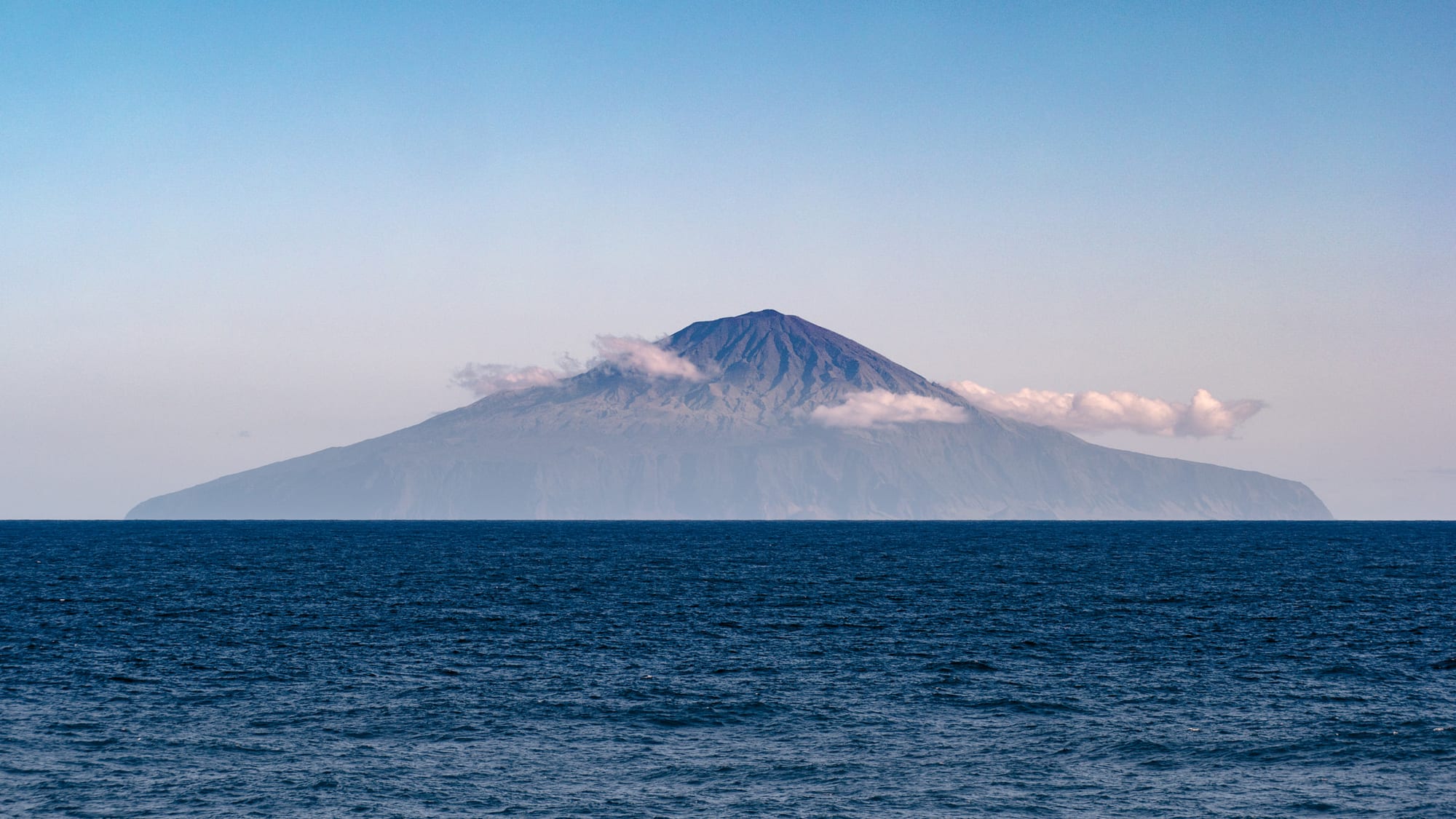
Tristan da Cunha, a volcanic island in the South Atlantic and part of a British Overseas Territory, is considered the most remote inhabited place in the world. Its only village, Edinburgh of the Seven Seas, lies 1,512 miles from Jamestown on Saint Helena, the nearest settlement. In September 2026 the island had 222 permanent residents. There is no airstrip, so every person, letter and spare part arrives by ship, usually on a six-day voyage from Cape Town.
Life there is small-scale, communal and shaped by the sea. Every family farms, all land is owned in common, and the main source of income is the rock lobster fishery. The islanders share a handful of surnames, speak their own variety of English and have a strong voice through an elected Island Council. Modern comforts have arrived, from satellite internet to a modern hospital, but when the weather turns or someone falls seriously ill, the nearest help can still be a week away.
One village, one road, one volcano
The island is roughly round, about 7 miles across, and almost all of it is mountain. Its centre is Queen Mary's Peak, an active volcano 2,062 metres (6,765 feet) high that gathers snow in winter. The only flat ground is a strip along the northwest coast, and that is where everyone lives. Most of the village's buildings are small single-storey houses; the crayfish canning factory is the largest and the Catholic church the tallest. There is a school, a post office, a supermarket, a pub called the Albatross Bar, a golf course and a swimming pool.
A single road, nicknamed the M1 after the English motorway, runs from the village to the Potato Patches, the island's main farmland. A few islanders own cars, all with plates beginning TDC, and a free minibus takes pensioners out to the fields. The weather is mild but rarely pleasant for long: persistent westerly winds bring about as many rainy days as Alaska's Aleutian Islands receive, frost is unknown below 500 metres, and summer never reaches 25°C.
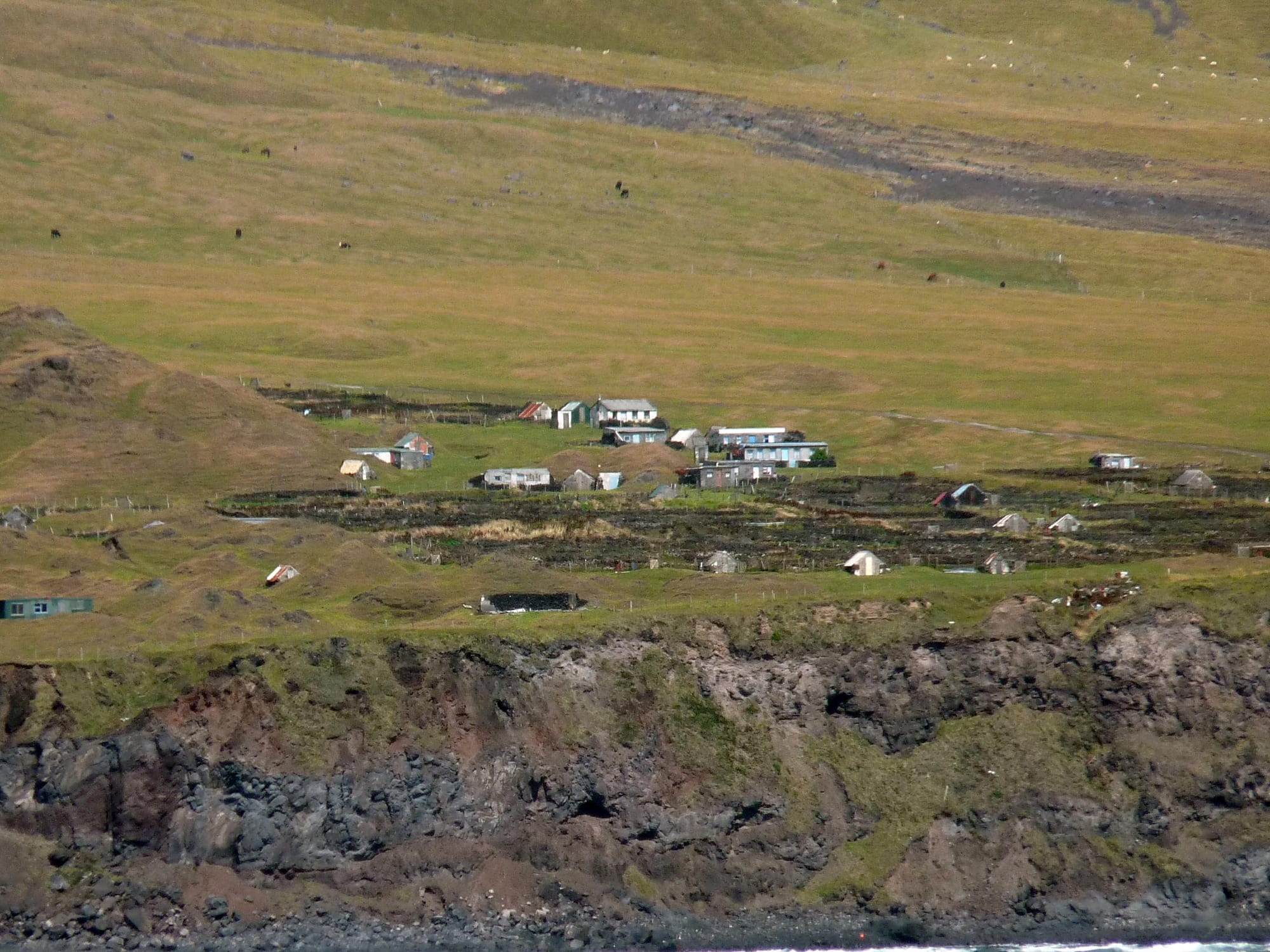
Potatoes have been so central to island life that as late as the 1940s, before cash came into general use, they served alongside cigarettes as a form of currency.
Land held in common, lobster for a living
Tristan's economy is unlike almost any other. All land is owned communally, every resident family farms it, and outsiders are not allowed to buy land or settle. Families keep cattle and sheep on the shared grazing and grow their own potatoes, while paid work comes mainly from government jobs and commercial fishing. The island's main exports are Tristan rock lobster, caught by island boats and processed in the factory, along with postage stamps and coins sold to collectors, and a little tourism.
The ocean around the island is now guarded as closely as the land. In 2020 Tristan declared a Marine Protection Zone of 687,247 square kilometres (265,348 square miles), the largest no-take zone in the Atlantic, where mining and fishing are banned except for the islanders' own lobster fishery. The fishery has its own vulnerabilities: in 2008 a fire destroyed the factory and all four of the island's power generators, and a replacement factory did not open until July 2009.
Seven surnames and a language of their own
The present population descends from a small group of founders who arrived between 1816 and 1908: European men, including a Scottish corporal, William Glass, who stayed on after a British garrison left, and shipwrecked Dutch and Italian sailors, and women of mixed ancestry thought to have come from Saint Helena. The male founders shared seven surnames, Glass, Green, Hagan, Lavarello, Repetto, Rogers and Swain, names still shared by many of the island's eighty families. Marriage within so small a community has left a mark. Some health problems, glaucoma among them, are attributed to it, and 42 per cent of islanders have asthma; three of the original settlers had the condition, and research among the islanders has shed light on its genetic causes.
The islanders speak Tristan da Cunha English, also called Tristanian, the smallest and most isolated community of native English speakers in the world. It has its own grammar, such as "five pound" with no plural after a number, and its own sounds, such as an "h" that turns "island" into "highland". About 80 per cent of the people are Anglican and 20 per cent Roman Catholic. Children attend St Mary's School from 4 to 16, and those who continue their education usually go to the United Kingdom or South Africa.
When help is a week away
Isolation shapes almost every practical decision. Ships from Cape Town call fewer than a dozen times a year, and the harbour, Calshot Harbour, is so small that landing depends on the swell. Visitors need permission from the Island Council in advance. Satellite internet arrived in 1998 but was too slow and expensive for most homes; only in September 2024 did Starlink bring fast connections. Live television came in 2001.
Health care is the sharpest test. Since 2017 the Camogli Healthcare Centre, built to UK National Health Service standards, has allowed mothers to give birth on the island instead of travelling to Cape Town, and two doctors normally provide round-the-clock cover. Serious cases still have to go by sea. In May 2026, when a resident fell ill with suspected hantavirus after a visiting ship's outbreak, a British military team flew from England via Ascension Island and parachuted onto the island with a doctor, a nurse and oxygen; a Royal Navy ship later brought in fresh clinicians.
The island has also been emptied entirely. On 10 October 1961 a volcanic vent opened right beside the village, and all 264 people left in open boats. They spent nearly two years in England, at a former Royal Air Force camp near Calshot in Hampshire, and most families came home in 1963, naming their harbour after the place that had sheltered them.
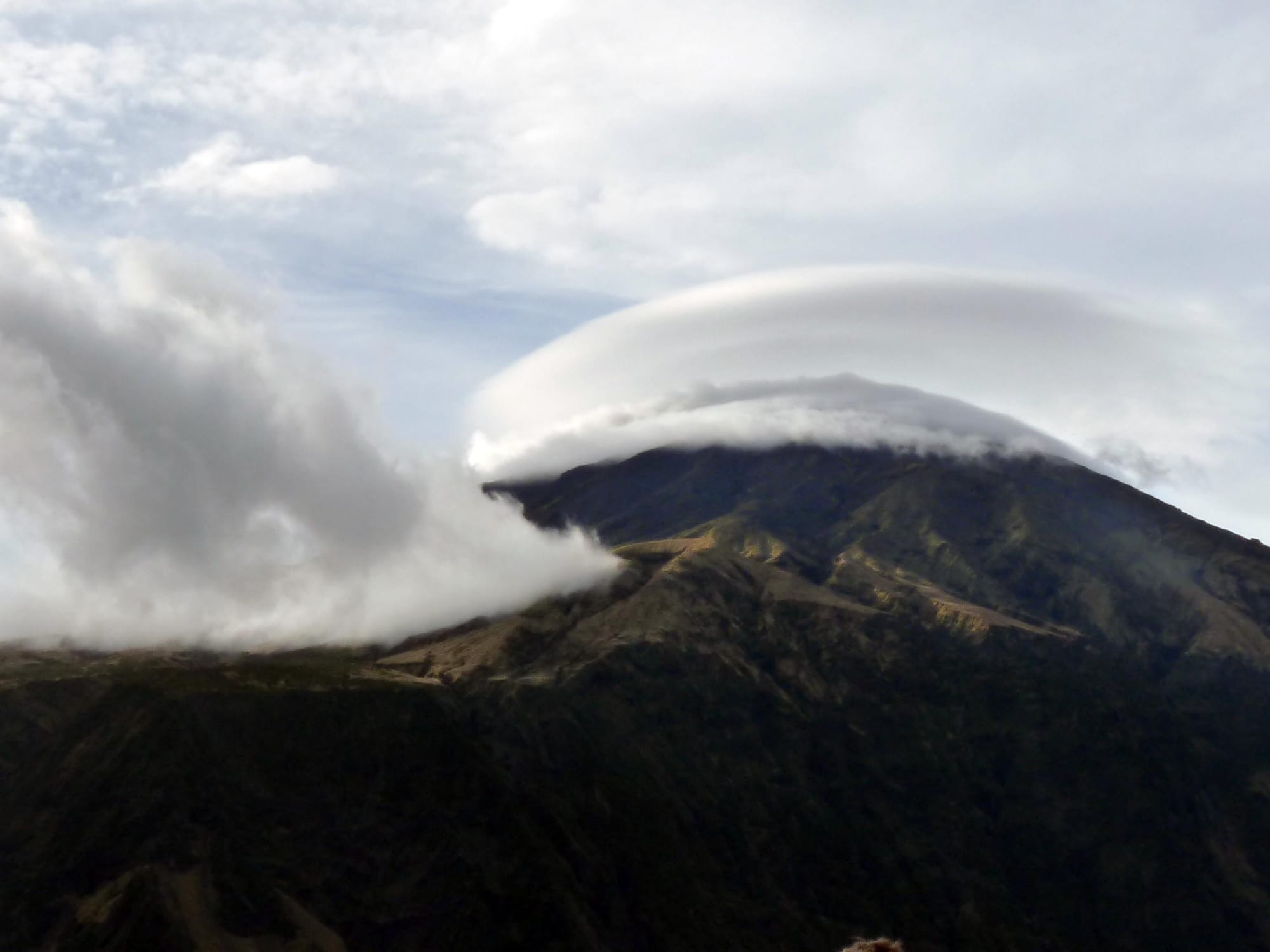
The peak last erupted in 1961, on a parasitic cone, a smaller vent on its flank, just east of the village.
Holidays, football and the long year
Work follows the seasons and the sea, but the island also knows how to stop. Each year government and factory work pauses for three weeks from just before Christmas, beginning with parties on Break-Up Day. On New Year's Eve, islanders traditionally put on masks and disguises and went from house to house as "Okalolies", singing, dancing and playing music until a bell rang in the new year. Football has been played on the island since the 1920s, though matches against outsiders depend on which ship happens to be in.
The population is small, ageing and slowly shrinking, down from 243 at the 2021 census. Yet the community has repeatedly chosen to stay. In 1907, after years of hardship and a bad winter, the British government offered to evacuate the island; the islanders met, talked it over and said no.